Classical mean-variance optimization is powerful in theory but fragile in practice, often producing highly concentrated, high-turnover portfolios. Naive equal-weight (1/N) portfolios are more robust but largely ignore cross-sectional information. We propose a quantum stochastic walk (QSW) framework that embeds assets in a weighted graph and derives portfolio weights from the stationary distribution of a hybrid quantum-classical walk. The resulting allocations behave as a “smart 1/N” portfolio: structurally close to equal-weight, but with small, data-driven tilts and a controllable level of trading. On recent S&P 500 universes, QSW portfolios match the diversification and stability of 1/N while delivering higher risk-adjusted returns than both mean-variance and naive benchmarks. A comprehensive hyper-parameter grid search shows that this behavior is structural rather than the result of fine-tuning and yields simple design rules for practitioners. A 34-year, multi-universe robustness study with rolling re-optimization further demonstrates that the QSW optimizer preserves these advantages across market regimes. Overall, the QSW framework improves risk-adjusted performance while maintaining strong diversification and moderate turnover.
[This corrects the article DOI: 10.1093/nsr/nwaf246.].
Entanglement is crucial for quantum networks and computation, yet maintaining high-fidelity entangled quantum states is hindered by decoherence and resource-intensive purification methods. Here, we experimentally demonstrate entanglement pumping, utilizing bosonic quantum error correction (QEC) codes as long-coherence-time storage qubits. By repetitively generating entanglement with short-coherence-time qubits and injecting it into error-detectable logical qubits, our approach effectively preserves entanglement. Through error-detection to discard error states and entanglement pumping to mitigate errors within the code space, we extend the existence time of entanglement by nearly 50% compared to the case without entanglement pumping. This entanglement pumping scheme can additionally serve as an erasure detection protocol for the dual-rail code. This Letter highlights the potential of bosonic logical qubits for scalable quantum networks and introduces a novel paradigm for efficient entanglement management.
Dirac Cellular Automata (DCA) provide a framework for simulating Dirac dynamics, yet the rigid coupling between spatial and temporal resolutions can introduce artificial phase-matching symmetries on finite grids that suppress interference phenomena such as Zitterbewegung. In this work, we propose a Split-Step Dirac Cellular Automaton (SDCA) that enables continuous-time Dirac evolution at fixed spatial discretization. By employing a Trotterized fractional-step scheme in the momentum representation, SDCA breaks the phase-matching cancellation present in the standard DCA and recovers the interference dynamics of the continuous-time limit. We benchmark the SDCA through analytical and numerical studies and demonstrate its implementation on IBM Quantum processors. Despite the increased circuit depth required for finer temporal resolution, the NISQ implementation reproduces the characteristic velocity oscillations and entanglement-entropy dynamics of the continuous-time model. We further investigate hardware-topology trade-offs and dynamic circuit implementations of the Quantum Fourier Transform (QFT), highlighting the competing effects of gate errors, measurement, and feed-forward latency. These results demonstrate that SDCA provides a practical framework for improving temporal resolution while maintaining a fixed spatial quantum register, enabling the exploration of relativistic quantum dynamics on near-term quantum devices.
Quantum metrology promises measurement precision beyond classical limits by exploiting large-scale quantum states, yet realizing this advantage faces two fundamental challenges: the deterministic preparation of non-trivial quantum probes and the efficient extraction of metrological information in high-dimensional Hilbert spaces. Here, we introduce quantum confocal microscopy in Fock space that simultaneously resolves both challenges. Drawing a direct analogy between classical wave optics and quantum state evolution in a bosonic mode, we construct a confocal system with two Fock-space lenses. The first lens deterministically focuses a coherent state into a quantum probe with a tightly concentrated photon-number distribution, while the second lens maps the metrological information back to the vacuum state for efficient readout. Using a superconducting circuit QED platform, we prepare focused probe states with mean photon numbers up to ${N} = 500$, achieving a 21.5$\pm$1.1 dB compression of the photon-number uncertainty relative to a coherent state, with a scalable quantum circuit of $\mathcal{O}(1)$ operational depth. We demonstrate a displacement sensitivity scaling as $N^{-0.416}$, approaching the Heisenberg scaling ($N^{-0.5}$), and achieve a record metrological gain of 19.06$\pm$0.13 dB beyond the standard quantum limit. This work establishes quantum confocal microscopy as a scalable and practical framework for quantum-enhanced precision measurement, readily extendable to other bosonic platforms and high-dimensional quantum many-body systems.
Distributed quantum computing architectures require high-performance quantum interconnects between quantum information processing units, while previous implementations have been fundamentally limited by transmission line losses. Here, we demonstrate a low-loss interconnect between two superconducting modules using an aluminum coaxial cable, achieving a bus mode quality factor of 1.7e6. By employing SNAIL as couplers, we realize inter-modular state transfer in 0.8 μs via a three-wave mixing process. The state transfer fidelity reaches 98.2% for quantum states encoded in the first two energy levels, achieving a Bell state fidelity of 92.5%. Furthermore, we show the capability to transfer high-dimensional states by successfully transmitting binomially encoded logical states. Systematic characterization reveals that performance constraints have shifted from transmission line losses (contributing merely 0.2% infidelity) to module-channel interface effects and local Kerr nonlinearities. Our work advances the realization of quantum interconnects approaching fundamental capacity limits, paving the way for scalable distributed quantum computing and efficient quantum communications.
Quantum algorithms offer computational advantages, yet incorporating them into quantum sensing and converting these advantages into enhanced information acquisition remains challenging. Here, we realize quantum-computing-enhanced sensing in a spin-oscillator architecture, where a microwave cavity provides a high-dimensional quantum register and a coupled superconducting qubit serves as the sensor. The unknown signal directly generates the phase oracle operation, establishing a natural physical interface between quantum computation and sensing. We experimentally demonstrate the first Grover search in a bosonic mode and observe quantum amplitude amplification in a Hilbert space spanning more than 128 photons. For the same number of sensing iterations, our protocol extracts more information and resolves more frequency candidates than classical sequential search. Our results establish signal-driven oracles as a route for harnessing oracle-based quantum algorithms and realizing quantum-computing-enhanced sensing.
Breaking time-reversal symmetry in integrated photonics without magnetic fields remains a fundamental challenge. We demonstrate phonon-induced non-reciprocity through direct lifting of forward-backward mode degeneracy in microring resonators. Coherent acousto-optic coupling generates differential AC Stark shifts between counter-propagating fundamental optical modes, eliminating the need for intermodal conversion or complex photonic structures. Simple microwave excitation of integrated piezoelectric transducers provides dynamic control of non-reciprocal response, with experimentally demonstrated mode splitting exceeding twice the optical linewidth. The linear relationship between the splitting and acoustic power enables real-time reconfigurability across a wide range of optical wavelengths. This mechanism requires only simple microring resonators and fundamental optical modes, transforming non-reciprocity from a specialized technique requiring careful modal engineering to a universal, electrically-controlled functionality. Our approach establishes a new paradigm for magnetic-free optical isolation and dynamic topological photonics.
High-fidelity two-logical-qubit gates are essential for realizing fault-tolerant quantum computation with bosonic codes, yet experimentally reported fidelities have rarely exceeded 90%. Here, we propose a geometric phase engineering approach for implementing controlled-phase gates for binomially encoded logical qubits. This method leverages the structural simplicity of geometric drives to reduce the numerical optimization dimensionality while fully incorporating system nonlinearities, enabling fast and high-fidelity logical operations. As an example, we experimentally demonstrate a process fidelity of 97.4±0.8% with postselection to exclude leakage (94.9±0.7% without post selection) for a controlled-Z gate between two lowest-order binomial codes, surpassing all previously reported two-logical-qubit gates in bosonic codes. This Letter demonstrates that geometric phase engineering provides an effective and experimentally feasible route to fast, high-fidelity logical operations in bosonic quantum processors.
The principles of wave optics provide elegant and scalable control over classical light in spatial and temporal domains. However, in the quantum regime, engineering Fock states of photons has been largely restricted to only a few photons at a time, hindered by the computational and experimental challenges of large Hilbert spaces. Here we introduce a conceptual framework of wave propagation in the quantum domain by treating the photon number in a microwave resonator as a synthetic dimension. In the large-photon limit, the coupling between adjacent Fock states becomes approximately uniform, allowing us to establish an analogy to light propagation. Using a superconducting cavity, we experimentally demonstrate Fock-space analogues of optical propagation, refraction, lensing, dispersion and interference with up to 180 photons. By mapping intuitive optical concepts onto the domain of high-dimensional quantum state engineering, our work provides an approach to scalable control of large-scale quantum systems with thousands of photons and advanced bosonic information processing.
The manipulation of distinct degrees of freedom of photons plays a critical role in both classical and quantum information processing. While the principles of wave optics provide elegant and scalable control over classical light in spatial and temporal domains, engineering quantum states in Fock space has been largely restricted to few-photon regimes, hindered by the computational and experimental challenges of large Hilbert spaces. Here, we introduce “Fock-space optics", establishing a conceptual framework of wave propagation in the quantum domain by treating photon number as a synthetic dimension. Using a superconducting microwave resonator, we experimentally demonstrate Fock-space analogues of optical propagation, refraction, lensing, dispersion, and interference with up to 180 photons. These results establish a fundamental correspondence between Schrödinger evolution in a single bosonic mode and classical paraxial wave propagation. By mapping intuitive optical concepts onto high-dimensional quantum state engineering, our work opens a path toward scalable control of large-scale quantum systems with thousands of photons and advanced bosonic information processing.
A scalable hybrid cavity quantum acoustodynamics (QAD) platform is proposed. The architecture integrates superconducting transmon qubits with phononic integrated circuits on a single chip made by a lithium niobate-on-sapphire substrate. The platform supports tightly confined and guided phononic modes in unsuspended waveguides and microring structures, while the superconducting qubits reside on the sapphire substrate. Efficient piezoelectric coupling between the phononic modes and transmon qubits can be achieved using interdigital transducers as part of the qubit's shunt capacitance. Numerical calculations demonstrate the feasibility of achieving strong coupling between the phononic microring resonator and the transmon qubit. Remarkably, we show that a single pair of interdigital transducer fingers is sufficient to yield a coupling strength of g/2 pi approximate to 1.3 MHz for the quasi-Love mode. This hybrid cavity QAD platform opens up new opportunities for quantum information processing and the study of novel quantum acoustic phenomena.
We introduce a novel Quantum Walk-based Adaptive Distribution Generator (QW-based ADG) that generates target probability distributions with high precision and efficiency. Our hybrid quantum-classical method integrates variational quantum circuits with discrete-time quantum walks (DTQWs)—specifically, split-step quantum walks (SSQWs) and their entangled extensions—to dynamically tune coin parameters and steer the quantum state evolution. This enables accurate one-dimensional probability modeling for applications such as financial simulation and structured two-dimensional pattern generation, exemplified by MNIST digits. Implemented on the CUDA-Q platform for GPU acceleration, our approach demonstrates significant performance advantages. Benchmarks show the QW-based ADG is not only capable of high-fidelity generation but is also over 10 times faster than a standard Quantum Generative Adversarial Network (QGAN) in 2D tasks while achieving comparable or superior accuracy. These results establish our framework as a powerful and efficient tool that bridges the gap between theoretical quantum algorithms and practical high-performance computing.
Previous demonstrations of quantum acoustic systems have been limited to isolated devices, with limited capability to route phonons and interconnect multi-port acoustic elements for further extension. Here, we demonstrate a scalable architecture for circuit quantum acoustodynamics (cQAD) by integrating superconducting qubits with suspension-free phononic integrated circuits (PnICs). Coherent coupling between tunable transmon qubits and waveguide-integrated phononic cavities, including Fabry-Perot cavities via monolithic integration and microring cavities via flip-chip assembly, has been achieved, producing a pronounced enhancement of phonon emission with a Purcell factor of 19. These devices represent elementary building blocks for scalable phononic circuits, establishing the foundation for phonon-based quantum information processors and the testbed for novel quantum acoustic phenomena.
We demonstrate a giant atom by coupling a superconducting transmon qubit to a lithium niobate phononic waveguide at two points separated by about 600 acoustic wavelengths, with a propagation delay of 125 ns. The giant atom yields non-Markovian relaxation dynamics characterized by phonon backflow and a frequency-dependent effective decay rate varying four-fold over merely 4 MHz, corresponding to a Purcell factor exceeding 40. Exploiting this frequency-dependent dissipation, we prepare quantum superposition states with high purity. Our results establish phononic integrated circuits as a versatile platform for giant-atom physics, providing highly tunable quantum devices for advanced quantum information processing.
With the rapid development of quantum devices across various platforms[1-4],reconstructing quantum many-body states from experimentally measured data posts a crucial challenge.Straight-forward quantum state tomography(QST)is only applicable for small systems[5],since the required classical computing resources,such as the number of measurements and the memory size,grow exponentially as the system size increases.Such expo-nential difficulty comes from the exponential growth of the dimen-sionality of the corresponding Hilbert space,rendering this method inefficient for reconstructing large quantum many-body systems.
Microring resonators (MRRs) are fundamental building blocks of photonic integrated circuits, yet their dynamic reconfiguration has been limited to tuning refractive index or absorption. Here, we demonstrate acoustic control over optical path topology on a lithium niobate on sapphire platform. By launching gigahertz acoustic waves into a hybrid phononic-photonic waveguide, a dynamic Bragg mirror (DBM) is created within the optical path, coupling forward and backward propagating light. Employing a pair of coupled MRRs, we achieve strong coupling between supermodes of the photonic molecule with only milliwatt-level drive power, yielding a cooperativity of 2.46 per milliwatt. At higher power, DBM reflectivity up to 24
Electronic and photonic chips revolutionized information technology through massive integration of functional elements, yet phonons as fundamental information carriers in solids remain underestimated. Here, we demonstrate large-scale programmable phononic integrated circuits (PnICs) for complex signal processing. We developed a comprehensive library of gigahertz-frequency phononic building blocks that control acoustic wave propagation, polarization, and dispersion. Combining these elements, we demonstrate an ultra-compact 1×128 on-chip acoustic power splitter with unprecedented integration density of 3,000/cm^2, a 21-port acoustic frequency demultiplexer with 3.8 MHz resolution, and a four-channel reconfigurable frequency synthesizer. This work establishes scalable phononic integration as the third pillar of information processing alongside electronics and photonics, enabling hybrid chips that combine all three domains for advanced signal processing and quantum information applications.
We experimentally demonstrate a qubit-efficient variational quantum eigensolver (VQE) algorithm using a superconducting quantum processor, employing minimal quantum resources with only a transmon qubit coupled to a high-coherence photonic qubit. By leveraging matrix product states to compress the quantum state representation, we simulate an N + 1-spin circular Ising model with a transverse field. Furthermore, we develop an analog error mitigation approach through zero-noise extrapolation by introducing a precise noise injection technique for the transmon qubit. As a validation, we apply our error-mitigated qubit-efficient VQE in determining the ground state energies of a 4-spin Ising model. Our results demonstrate the feasibility of performing quantum algorithms with minimal quantum resources while effectively mitigating the impact of noise, offering a promising pathway to bridge the gap between theoretical advances and practical implementations on current noisy intermediate-scale quantum devices.
The noise-biased Kerr-cat qubit is an attractive candidate for fault-tolerant quantum computation; however, its initialization faces challenges due to the squeezing pump-induced frequency shift. Here we propose and demonstrate a dynamic compensation method to mitigate the effect of pump-induced frequency shift during the Kerr-cat qubit initialization. Using a nonlinearity-engineered multiloop superconducting quantum interference device, we realize a stabilized Kerr-cat qubit and validate the advantages of the dynamic compensation method by increasing the initialization fidelity from 57% to 78%, with a projected fidelity of 91% after exclusion of state preparation and measurement errors. Our results not only advance the practical implementation of Kerr-cat qubits, but also provide valuable insights into the fundamental adiabatic dynamics of these systems. This work is valuable for scalable quantum processors that leverage the noise-biased properties of Kerr-cat qubits.
 Luyan Sun (孙麓岩)合作论文数Institute for Interdisciplinary Information Sciences, Tsinghua University63
 Chang-Ling Zou (邹长铃)合作论文数Key Lab of Quantum Information, Department of Optics and Optics Engineering, University of Science and Technology of China50
 Weizhou Cai合作论文数37
 Yipu Song (宋祎璞)合作论文数Institute for Interdisciplinary Information Sciences, Tsinghua University29Yuwei Ma合作论文数27Z. Hua合作论文数Ctr Quantum Informat, Tsinghua Univ23
 Yuan Xu (徐源)合作论文数Shenzhen International Quantum Academy20Xiaoxuan Pan合作论文数17X Mu合作论文数Tsinghua Univ, Ctr Quantum Informat, Inst Interdisciplinary Informat Sci, Beijing 100084, Peoples R China16Yifang Xu合作论文数15
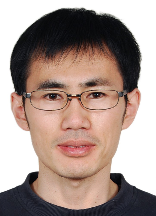 Haifeng Yu (于海峰)合作论文数Division of Quantum Computation, Beijing Academy of Quantum Information Sciences14
 Guangming Xue合作论文数12
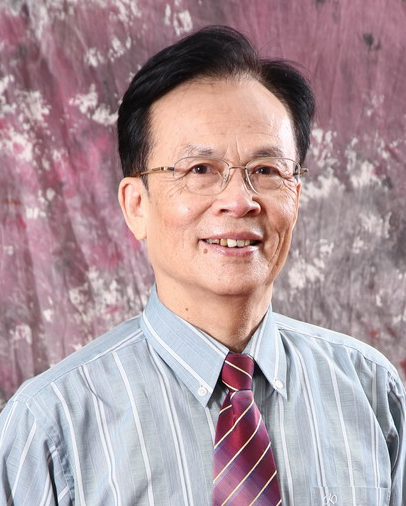 Guangcan Guo (郭光灿)合作论文数School of Physical Sciences, University of Science and Technology of China;Key Lab of Quantum Information, Chinese Academy of Sciences, University of Science and Technology of China12
 Haiyan Wang合作论文数11
 Lianxue Hu合作论文数10H. Wang合作论文数9Zi-Jie Chen合作论文数9
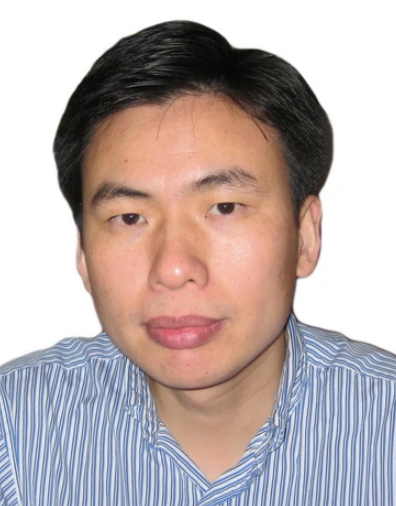 Luming Duan (段路明)合作论文数Institute for Interdisciplinary Information Sciences, Tsinghua University9
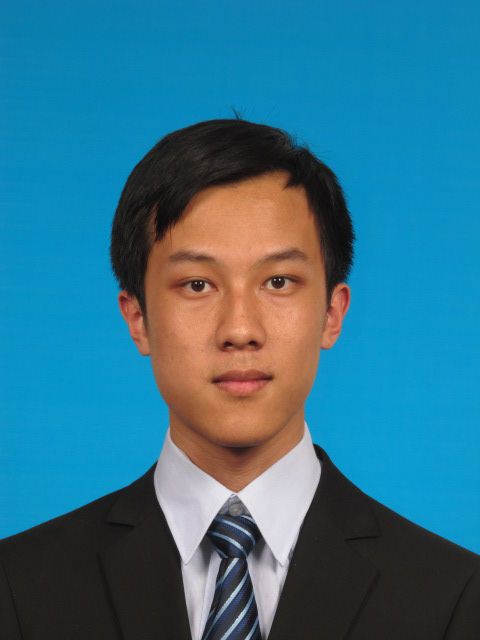 Yukai Wu (吴宇恺)合作论文数Institute for Interdisciplinary Information Sciences, Tsinghua University8
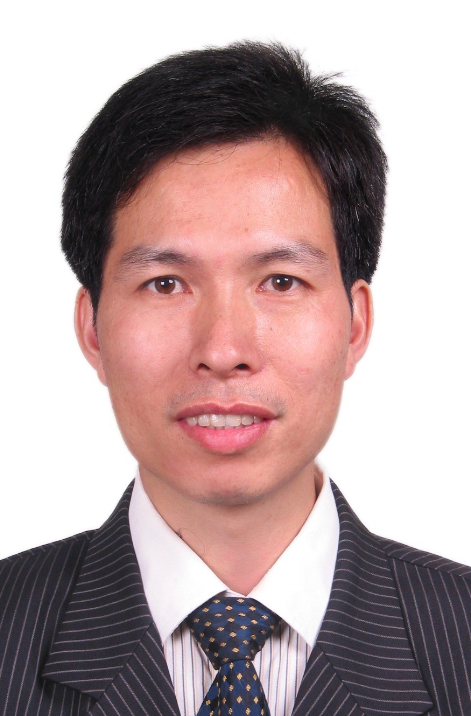 Shi-Biao Zheng (郑仕标)合作论文数College of Physics and Information Engineering, Fuzhou University8Yan-Lei Zhang合作论文数Univ Sci & Technol China, Key Lab Quantum Informat, Hefei 230026, Peoples R China6
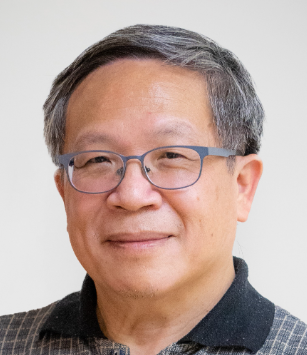 Ching-Ray Chang (張慶瑞)合作论文数Department of Physics, National Taiwan University;IBM Quantum Hub, National Taiwan University;Department of Business Administration, Chung Yuan Christian University;Department of Physics, Chung Yuan Christian University6
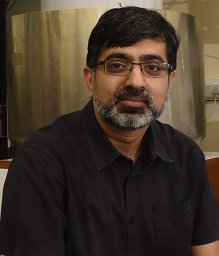 R. Vijay合作论文数Department of Condensed Matter Physics and Materials Science, Tata Institute of Fundamental Research5Liu Ke合作论文数5
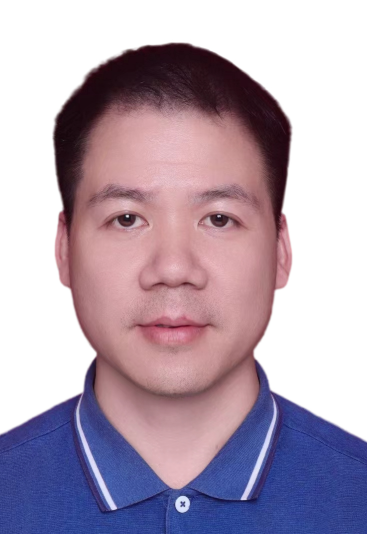 Zhenbiao Yang (杨贞标)合作论文数Department of Physics, College of Physics and Information Engineering, Fuzhou University;Fujian Key Laboratory of Quantum Information and Quantum Optics, Fuzhou University5
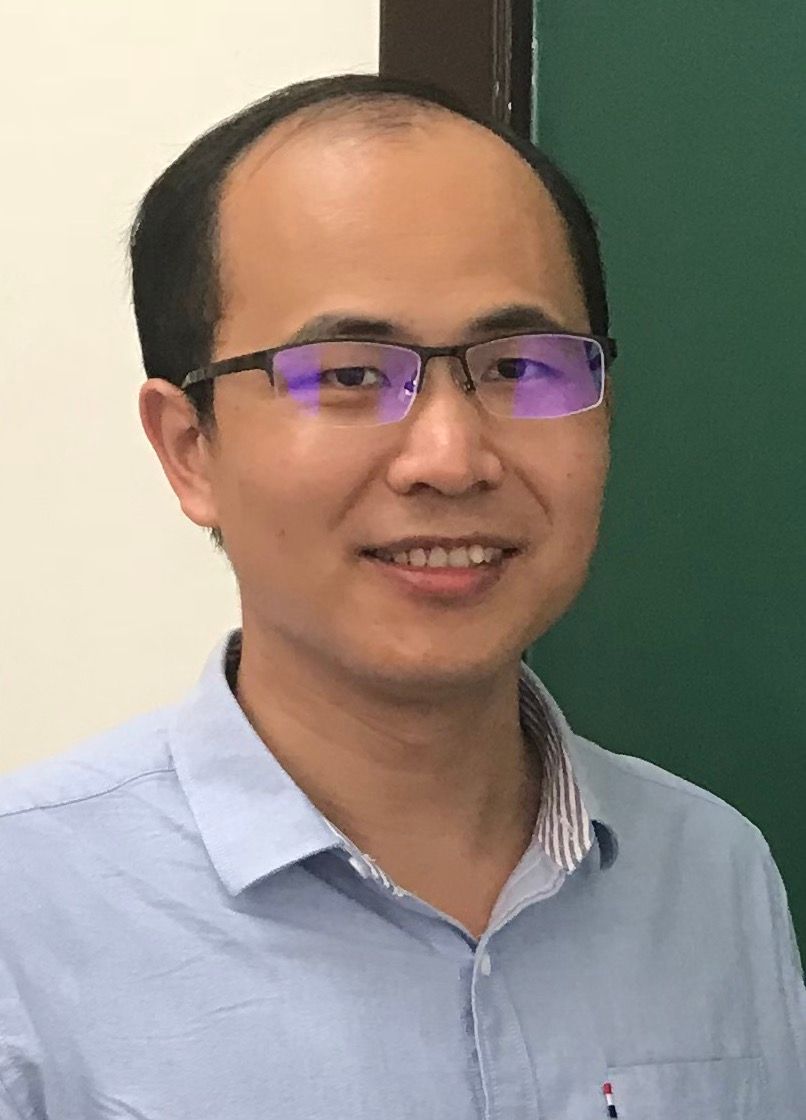 Dongling Deng (邓东灵)合作论文数Institute for Interdisciplinary Information Sciences, Tsinghua University5J Han合作论文数4Bo Zhang合作论文数4Xuegang Li合作论文数4Jie Zhou (周杰)合作论文数4
 Xinbiao Xu合作论文数4
 Hongyi Zhang (张宏毅)合作论文数Institute for Interdisciplinary Information Sciences, Tsinghua University4Yen-Jui Chang合作论文数3Zhide Lu合作论文数3Xiyue Han合作论文数3Jiaxiu Han合作论文数3
 Ming Li (李明)合作论文数Institute of Semiconductors, Chinese Academy of Sciences3
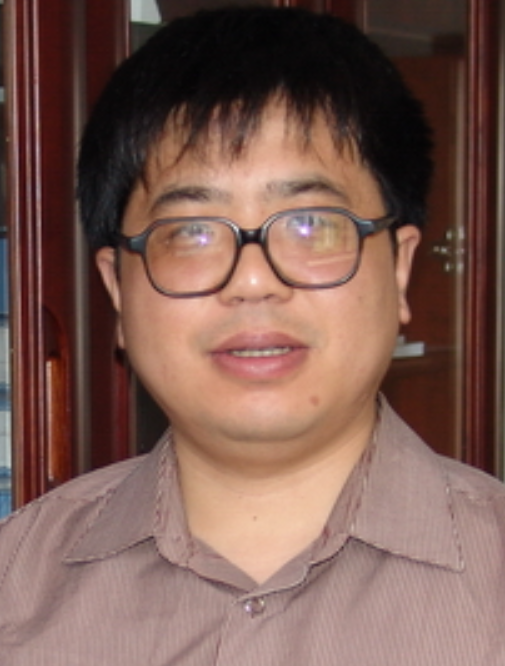 Xubo Zou (邹旭波)合作论文数School of Physical Sciences, University of Science and Technology of China3
 Steven Girvin合作论文数Department of Physics, Yale University;Department of Applied Physics, Yale University;Yale Quantum Institute, Yale University3
 Fei Yan (燕飞)合作论文数Beijing Academy of Quantum Information Sciences;University of Chinese Academy of Sciences3
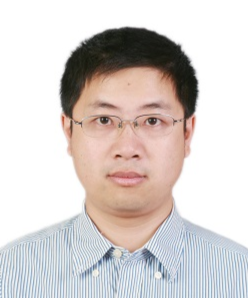 Chunhua Dong (董春华)合作论文数CAS Key Laboratory of Quantum Information, University of Science and Technology of China3
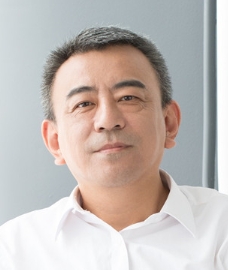 Yan Li (李岩)合作论文数Institute of Opto-Electronic Engineering, Department of Precision Instrument, Tsinghua University3Pan Xiangliang (潘响亮)合作论文数3
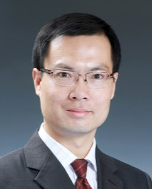 Re-Bing Wu (吴热冰)合作论文数Department of Automation, Tsinghua University3
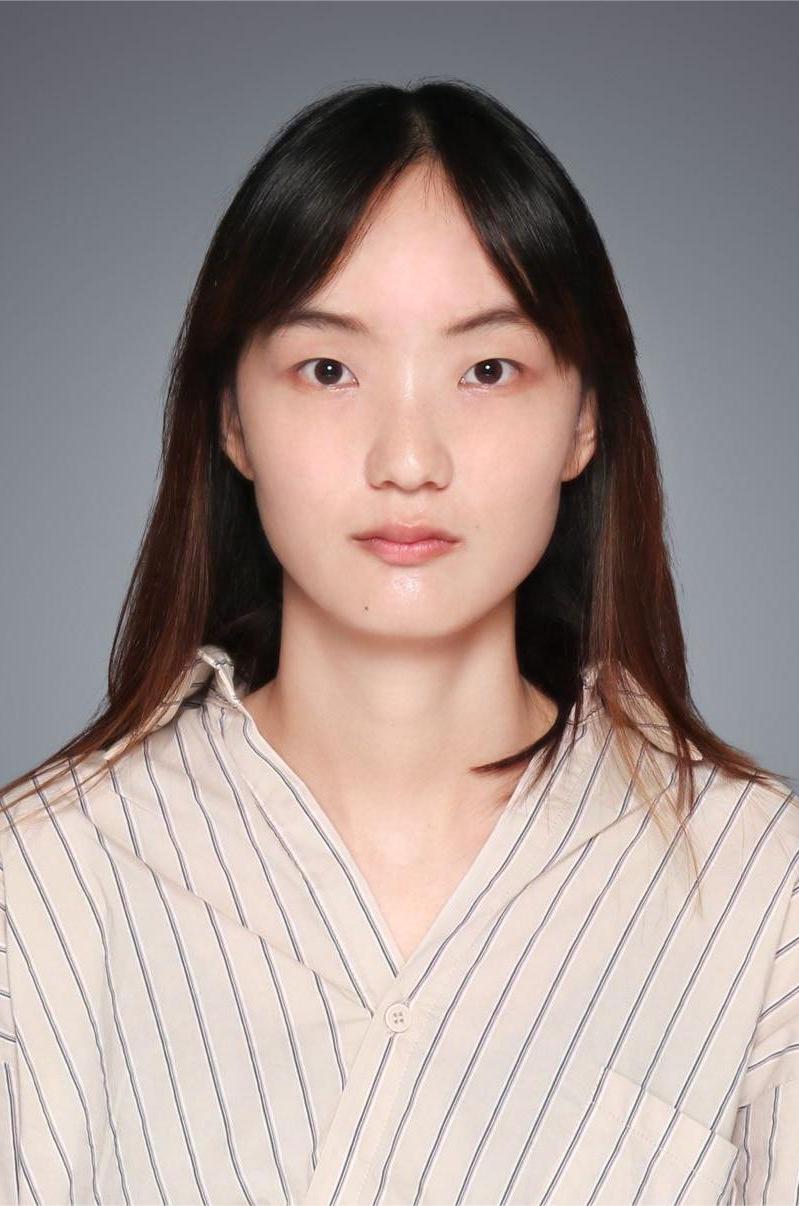 367 (陆娟娟)合作论文数School of Information Science and Technology, ShanghaiTech University2
 Baile Chen (陈佰乐)合作论文数School of Information Science and Technology, ShanghaiTech University2Bao-Zhen Wang合作论文数2Zhaopeng Yan合作论文数2




