Despite the fast advance in neural temporal point processes (NTPP) which enjoys high model capacity, there are still some standing gaps to fill including model expressiveness, predictability, and interpretability, especially with the wide application of event sequence modeling. For expressiveness, we first show the incapacity of existing NTPP models for fitting time-varying especially non-terminating TPP, and propose a simple neural model for expressive intensity function modeling. To improve predictability which is not directly optimized by the TPP likelihood objective, we devise our new sampling techniques that enable error metric driven adaptive fine-tuning of the sampling hyperparameter for predictive TPP, based on the event history in training sequences. Moreover, we show how interval-based event prediction can be achieved by our prediction techniques. To achieve interpretable NTPP, we propose an influence definition from one event to the future by comparing the difference between the existence of the event and not, which enables the dependency learning among events and types. Experimental results on synthetic datasets and public benchmarks show the efficacy of our approach.
Time-series is ubiquitous across applications, such as transportation, finance and healthcare. Time-series is often influenced by external factors, especially in the form of asynchronous events, making forecasting difficult. However, existing models are mainly designated for either synchronous time-series or asynchronous event sequence, and can hardly provide a synthetic way to capture the relation between them. We propose Variational Synergetic Multi-Horizon Network (VSMHN), a novel deep conditional generative model. To learn complex correlations across heterogeneous sequences, a tailored encoder is devised to combine the advances in deep point processes models and variational recurrent neural networks. In addition, an aligned time coding and an auxiliary transition scheme are carefully devised for batched training on unaligned sequences. Our model can be trained effectively using stochastic variational inference and generates probabilistic predictions with Monte-Carlo simulation. Furthermore, our model produces accurate, sharp and more realistic probabilistic forecasts. We also show that modeling asynchronous event sequences is crucial for multi-horizon time-series forecasting.
The LSTM network was proposed to overcome the difficulty in learning long-term dependence, and has made significant advancements in applications. With its success and drawbacks in mind, this paper raises the question - do RNN and LSTM have long memory? We answer it partially by proving that RNN and LSTM do not have long memory from a statistical perspective. A new definition for long memory networks is further introduced, and it requires the model weights to decay at a polynomial rate. To verify our theory, we convert RNN and LSTM into long memory networks by making a minimal modification, and their superiority is illustrated in modeling long-term dependence of various datasets.
Recently, generative adversarial networks (GANs) have become a research focus of artificial intelligence. Inspired by two-player zero-sum game, GANs comprise a generator and a discriminator, both trained under the adversarial learning idea. The goal of GANs is to estimate the potential distribution of real data samples and generate new samples from that distribution. Since their initiation, GANs have been widely studied due to their enormous prospect for applications, including image and vision computing, speech and language processing, etc. In this review paper, we summarize the state of the art of GANs and look into the future. Firstly, we survey GANs' proposal background, theoretic and implementation models, and application fields. Then, we discuss GANs' advantages and disadvantages, and their development trends. In particular, we investigate the relation between GANs and parallel intelligence, with the conclusion that GANs have a great potential in parallel systems research in terms of virtual-real interaction and integration. Clearly, GANs can provide substantial algorithmic support for parallel intelligence.
Recently, there has been an increased interest in the use of social media data as important traffic information sources.In this paper, we review social media based transportation research with social network analysis methods. We summarize main research topics in this field, and report collaboration patterns at levels of researchers, institutions, and countries, respectively.Finally, some future research directions are identified.
Generative adversarial networks (GANs) have become a hot research topic in artificial intelligence. Inspired by the two-player zero-sum game, GAN is composed of a generator and a discriminator, both trained with the adversarial learning mechanism. The aim of GAN is to estimate the potential distribution of existing data and generate new data samples from the same distribution. Since its initiation, GAN has been widely studied due to its enormous prospect for applications, including image and vision computing, speech and language processing, information security, and chess game. In this paper we summarize the state of the art of GAN and look into its future. First of all, we survey the GAN's background, theoretic and implementation models, application fields, advantages and disadvantages, and development trends. Then, we investigate the relation between GAN and parallel intelligence with the conclusion that GAN has a great potential in parallel systems especially in computational experiments, in terms of virtual-real interaction and integration. Finally, we clarify that GAN can provide specific and substantial algorithmic support for the ACP theory.
Fast-growing economy is driving the rapid urbanization of China. An e-bicycle, also known as an electric bicycle, is one of the major trip modes in the third- and fourth-tier cities of China which are quite different from big cities such as Beijing and Shanghai. In this paper, a discharge model of e-bicycle mixed traffic flows is proposed. With the discharge model of mixed traffic flow, an average delay formula of mixed traffic flow is developed. The relationship between the average delay and the cycle length is analyzed for the cases of pure motor vehicles delay and e-bicycle mixed traffic delay, respectively. A practical traffic signal setting method is proposed for controlling the e-bicycle mixed traffic flow. It demonstrates that the optimal cycle length obtained from the proposed method is normally larger than that got from the Webster method, which complies with the field application and fits the real traffic circumstances.
深度学习在特征提取与模型拟合方面显示了其潜力和优势.对于存在高维数据的控制系统,引入深度学习具有一定的意义.近年来,已有一些研究关注深度学习在控制领域的应用.本文介绍了深度学习在控制领域的研究方向和现状,包括控制目标识别、状态特征提取、系统参数辨识和控制策略计算.并对相关的深度控制以及自适应动态规划与平行控制的方法和思想进行了描述.总结了深度学习在控制领域研究中的主要作用和存在的问题,展望了未来值得研究的方向.
Traffic flow prediction is very important in the deployment of intelligent transportation system. Based on our previous research on deep learning approach for traffic data prediction, we further evaluates the performance of the SAE model for traffic flow prediction at daytime and nighttime. Through 250 experimental tasks training a SAE model and evaluating its performance at daytime and nighttime with 3 different criteria, we obtain the best combination of hyper parameters for each criterion at different times on weekday and non-weekday, respectively. Experimental results show that the MAE and RMSE at daytime are larger than that at nighttime, while the MRE at daytime are smaller than that at nighttime. For different criteria, the hyper parameters of the SAE model should vary accordingly. The results in this paper indicate that in real applications, traffic flow prediction using the deep learning approach can be a combination of multiple SAE models with different parameters suitable for different periods, which is of significance in future research.
Travel time is one of the key concerns among travelers before starting a trip and also an important indicator of traffic conditions. However, travel time acquisition is time delayed and the pattern of travel time is usually irregular. In this paper, we explore a deep learning model, the LSTM neural network model, for travel time prediction. By employing the travel time data provided by Highways England, we construct 66 series prediction LSTM neural networks for the 66 links in the data set. Through model training and validation, we obtain the optimal structure within the setting range for each link. Then we predict multi-step ahead travel times for each link on the test set. Evaluation results show that the 1-step ahead travel time prediction error is relatively small, the median of mean relative error for the 66 links in the experiments is 7.0% on the test set. Deep learning models considering sequence relation are promising in traffic series data prediction.
Traffic data provide the basis for both research and applications in transportation control, management, and evaluation, but real-world traffic data collected from loop detectors or other sensors often contain corrupted or missing data points which need to be imputed for traffic analysis. For this end, here we propose a deep learning model named denoising stacked autoencoders for traffic data imputation. We tested and evaluated the model performance with consideration of both temporal and spatial factors. Through these experiments and evaluation results, we developed an algorithm for efficient realization of deep learning for traffic data imputation by training the model hierarchically using the full set of data from all vehicle detector stations. Using data provided by Caltrans PeMS, we have shown that the mean absolute error of the proposed realization is under 10 veh/5-min, a better performance compared with other popular models: the history model, ARIMA model and BP neural network model. We further investigated why the deep leaning model works well for traffic data imputation by visualizing the features extracted by the first hidden layer. Clearly, this work has demonstrated the effectiveness as well as efficiency of deep learning in the field of traffic data imputation and analysis. (C) 2016 Elsevier Ltd. All rights reserved.
Natural or man-made disasters can cause huge losses of human life and property. One of the effective and widely used response and mitigation strategies for these disasters is traffic evacuation. Evacuation destination choice is critical in evacuation traffic planning and management. In this paper, we propose a partially random destination allocation strategy for evacuation management. We present a metamodel-based simulation optimization method to design the strategy. The proposed method uses a quadratic polynomial as a metamodel, within which a degree-free trust region algorithm is developed to solve the proposed model. The performance of the proposed method is evaluated based on a subnetwork of Beijing with two different traffic demands. Computational experiments demonstrate that the proposed method can yield a well-performed strategy, leading to reduced network clearance times.
Accurate and timely traffic flow information is important for the successful deployment of intelligent transportation systems. Over the last few years, traffic data have been exploding, and we have truly entered the era of big data for transportation. Existing traffic flow prediction methods mainly use shallow traffic prediction models and are still unsatisfying for many real-world applications. This situation inspires us to rethink the traffic flow prediction problem based on deep architecture models with big traffic data. In this paper, a novel deep-learning-based traffic flow prediction method is proposed, which considers the spatial and temporal correlations inherently. A stacked autoencoder model is used to learn generic traffic flow features, and it is trained in a greedy layerwise fashion. To the best of our knowledge, this is the first time that a deep architecture model is applied using autoencoders as building blocks to represent traffic flow features for prediction. Moreover, experiments demonstrate that the proposed method for traffic flow prediction has superior performance.
Traffic data is a fundamental component for applications and researches in transportation systems. However, real traffic data collected from loop detectors or other channels often include missing data which affects the relative applications and researches. This paper proposes an approach based on deep learning to impute the missing traffic data. The proposed approach treats the traffic data including observed data and missing data as a whole data item and restores the complete data with the deep structural network. The deep learning approach can discover the correlations contained in the data structure by a layer-wise pre-training and improve the imputation accuracy by conducting a fine-tuning afterwards. We analyze the imputation patterns that can be realized with the proposed approach and conduct a series of experiments. The results show that the proposed approach can keep a stable error under different traffic data missing rate. Deep learning is promising in the field of traffic data imputation.
Arterial coordination is a common method in urban traffic control. Traditional arterial coordination methods are usually off-line control methods based on mixed-integer linear program. These methods cannot adapt to changes of traffic flow, for instance, although there are very few cars in a branch road, timing plan will not adjust. Thus, we proposed a semi-actuated arterial coordination method which is a combination of practical actuated traffic control and traditional arterial coordination control. Five adjacent intersections of Huanghe Second Road in Binzhou City, Shandong Province, China are selected to test our method. We use microscopic traffic simulation software Q-PARAMICS to simulate and simulation results show that semi-actuated arterial coordination can effectively improve the performance index.
The increased ownership of motor vehicles has brought many urban problems, such as traffic congestion, environmental pollution. Traffic signal control is recognized as one of effective ways to alleviate these problems. However, it is still hard to automatically choose appropriate traffic signal timing plans for different traffic conditions due to the dynamics and uncertainty of transportation systems. In this paper, we propose a latent factor model based traffic signal timing plan recommendation method to address this problem. In the proposed method, we model the abstract traffic states as the “users” in recommendation systems, and timing plans as the “items”. And there are many explicit or implicit factors in the interactions between “users” and “items”. The latent factor model is successfully used to deal with uncertain factors which cannot be modeled accurately in math. The novel method adopted the model-free adaptive idea to solve the problem of modeling from the perspective of data mining and machine learning framework. And, the proposed method is tested by using simulation data generated by a microscopic traffic simulator called Paramics. The results are compared to the baseline Webster method. The results indicate that the proposed latent factor model based recommendation method outperforms the Webster method on reducing the delay.
Information feedback is very important in traffic systems. Real-time information feedback can improve traffic flow with existing facilities. This paper proposes a real-time information feedback strategy named improved mean number feedback strategy. Based on a two-route scenario, simulation results show that the strategy is much more effective in different length of roads or in different percentage of dynamic vehicles than the old strategies, i.e., congestion coefficient feedback strategy and mean velocity feedback strategy.
 Yisheng Lv (吕宜生)合作论文数Institute of Automation, Chinese Academy of Science;University of Chinese Academy of Sciences12
 Feiyue Wang (王飞跃)合作论文数The State Key Laboratory for Management and Control of Complex Systems, Institute of Automation, Chinese Academy of Sciences;University of Chinese Academy of Sciences6
 KANG Wen-wen (康文雯)合作论文数4
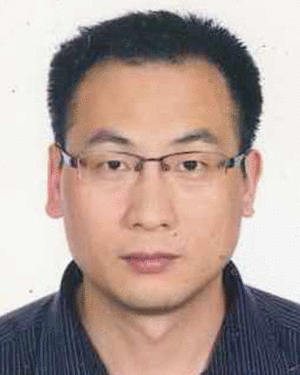 Guangjian Tian合作论文数Huawei Noah’s Ark Laboratory3
 Xiqiao Zhang (章锡俏)合作论文数School of Transportation Science and Engineering, Harbin Institute of Technology3
 Yilun Lin合作论文数State Key Laboratory of Management and Control for Complex Systems Institute, Automation Chinese Academy of Sciences2
 Chao Gou (苟超)合作论文数School of Intelligent Systems Engineering, Sun Yat-sen University2
 Kunfeng Wang (王坤峰)合作论文数College of Information Science and Technology, Beijing University of Chemical Technology2
 Junchi Yan (严骏驰)合作论文数Department of Computer Science and Engineering, Shanghai Jiao Tong University;ReThinkLab, Shanghai Jiao Tong University2
 Yunhao Zhang (张昀浩)合作论文数Department of Computer Science and Engineering, Shanghai Jiao Tong University1Fangyu Ding合作论文数1
 Liangliang Shi合作论文数Shanghai Institute for Mathematics and Interdisciplinary Sciences1
 Zhen Qin合作论文数Sch Mech Engn, Shandong Univ Technol1
 Xinhu Zheng合作论文数Univ Minnesota, Dept Elect & Comp Engn, Minneapolis, MN 55455 USA1Xue-Liang ZHAO (赵学亮)合作论文数1
 Longyuan Li (李龙元)合作论文数Bosch Center for Artificial Intelligence1Zhao, Y.-F.合作论文数1Gao, H.合作论文数1Yuantao Li合作论文数1Guodong Li合作论文数Tsinghua-Berkeley Shenzhen Institute, Tsinghua University1
 Jingyu Zhao合作论文数HuaAn Securities1Jia Lv合作论文数1Feiqing Huang合作论文数The University of Hong Kong1
 Zhengxi Li (李正熙)合作论文数Inverier Technology Engineering Research Center of Beijing, North China University of Technology1
 Gang Xiong (熊刚)合作论文数The State Key Laboratory of Management and Control for Complex Systems, Institute of Automation, Chinese Academy of Sciences;School of Artificial Intelligence, University of Chinese Academy of Sciences1
 Yaohui Jin (金耀辉)合作论文数BOC Institute of Technology and Finance, Shanghai Jiao Tong University;School of Electronic Information and Electrical Engineering, Shanghai Jiao Tong University;Koguan School of Law, Shanghai Jiao Tong University1
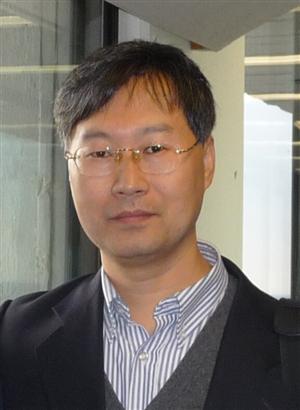 Yuliang Liu (刘育梁)合作论文数Institute of Semiconductors, Chinese Academy of Sciences1
 Jihai Zhang (张纪海)合作论文数School of Management and Economics,Beijing Institute of Technology,Beijing1
 Yuanyuan Chen合作论文数1
 Fenghua Zhu (朱凤华)合作论文数Institute of Automation, Chinese Academy of Sciences;School of Artificial Intelligence, University of Chinese Academy of Sciences1




