Distributed deep learning (DL) training faces instability from GPU/node failures of multi-GPU clusters, necessitating robust fault recovery from model checkpoints. However, we find that existing works only consider node failures but fail to handle partial GPU unavailability, and they suffer from inefficient model checkpoint saving and loading, particularly when the GPU availability changes. This work presents Elastor, a fault-tolerant distributed DL training system featuring elastic and efficient model checkpointing. Firstly, to accommodate partial GPU unavailability, we manage to support heterogeneous model parallel partitioning to elastically resume training with any number of GPUs. Secondly, we devise a partition-agnostic and efficient model checkpointing method via fine-grained tensor splits to achieve seamless transitions across arbitrary partitioning. In addition, Elastor is equipped with a strategy searching algorithm that automatically discovers optimal model partitioning upon recovery as well as a meticulous overlapping design that minimizes the overhead caused by periodic model checkpointing and data preprocessing. Experimental results show that Elastor facilitates quick model checkpointing and failure recovery, while maintaining consistent training efficiency across varying GPU availability. Source code is available at https://github.com/PKU-DAIR/Hetu.
Expert parallelism is vital for effectively training Mixture-of-Experts (MoE) models, enabling different devices to host distinct experts, with each device processing different input data. However, during expert parallel training, dynamic routing results in significant load imbalance among experts: a handful of overloaded experts hinder overall iteration, emerging as a training bottleneck. In this paper, we introduce LAER-MoE, an efficient MoE training framework. The core of LAER-MoE is a novel parallel paradigm, Fully Sharded Expert Parallel (FSEP), which fully partitions each expert parameter by the number of devices and restores partial experts at expert granularity through All-to-All communication during training. This allows for flexible re-layout of expert parameters during training to enhance load balancing. In particular, we perform fine-grained scheduling of communication operations to minimize communication overhead. Additionally, we develop a load balancing planner to formulate re-layout strategies of experts and routing schemes for tokens during training. We perform experiments on an A100 cluster, and the results indicate that our system achieves up to 1.69x acceleration compared to the current state-of-the-art training systems. Source code available at https://github.com/PKU-DAIR/Hetu-Galvatron/tree/laer-moe.
To schedule LLM inference, the shortest job first (SJF) principle is favorable by prioritizing requests with short output lengths to avoid head-of-line (HOL) blocking. Existing methods usually predict a single output length for each request to facilitate scheduling. We argue that such a point estimate does not match the stochastic decoding process of LLM inference, where output length is uncertain by nature and determined by when the end-of-sequence (EOS) token is sampled. Hence, the output length of each request should be fitted with a distribution rather than a single value. With an in-depth analysis of empirical data and the stochastic decoding process, we observe that output length follows a heavy-tailed distribution and can be fitted with the log-t distribution. On this basis, we propose a simple metric called Tail Inflated Expectation (TIE) to replace the output length in SJF scheduling, which adjusts the expectation of a log-t distribution with its tail probabilities to account for the risk that a request generates long outputs. To evaluate our TIE scheduler, we compare it with three strong baselines, and the results show that TIE reduces the per-token latency by 2.31× for online inference and improves throughput by 1.42× for offline data generation.
Serving Large Language Models (LLMs) can benefit immensely from parallelizing both the model and input requests across multiple devices, but incoming workloads exhibit substantial spatial and temporal heterogeneity. Spatially, workloads comprise heterogeneous requests with varying compute and memory demands. Temporally, workload composition varies over time. Nevertheless, existing systems typically assume spatially uniform and temporally stable workloads, employing a homogeneous, static model deployment. This mismatch between the assumption and real-world spatial-temporal heterogeneity results in suboptimal performance. We present OServe, an LLM serving system with heterogeneous and flexible model deployment that addresses both spatial and temporal heterogeneity. First, OServe introduces a novel workload-aware scheduling algorithm that optimizes heterogeneous model deployments according to real-time workload characteristics. Second, OServe proposes an efficient workload-adaptive switching method that migrates model deployments in response to predicted workload changes. Experiments on real-world traces show that OServe improves performance by up to 2$\times$ (average: 1.5$\times$) compared to state-of-the-art serving systems.
Autoregressive diffusion transformers (AR-DiTs) recast video generation from an offline paradigm to a real-time streaming one: the model generates video one chunk at a time, making each chunk available for playout once produced. The service-level objective (SLO) for this paradigm is no longer fixed latency or throughput but the preservation of playout continuity: generation must stay ahead of the playout timeline. Once generation falls behind, the remaining playable buffer (playout slack) is exhausted, and users experience visible stalls. This objective reveals two serving design insights. First, real-time video generation has a dynamic SLO that evolves with playout progress, so resources should move toward streams with lower playout slack. Second, an acceptable chunk delivered on time is preferable to a late high-fidelity chunk, so per-chunk fidelity configurations should adapt to available playout slack. Guided by these insights, we present SlackServe, a playout-slack-driven serving system that preserves playout continuity in real-time streaming video generation. SlackServe uses playout slack as a unified signal, reallocating resources across streams through three-tier priority queues, re-homing, and elastic sequence parallelism, while selecting per-chunk fidelity configurations within each stream through Bi-Modal Pareto Routing under a quality floor. On a 16-H100 GPU cluster, SlackServe improves Quality of Experience (QoE), measured by Continuous Play Ratio (CPR), by 1.64x-3.29x and reduces Time to First Chunk (TTFC) by 1.61x-9.65x over baselines, while preserving comparable generation quality.
Streaming video generation is emerging as a new serving workload in which users interact with long-lived sessions that generate video progressively, chunk by chunk. Unlike offline video generation or typical LLM serving, streaming video generation must preserve session state across active and idle periods, repeatedly schedule ongoing sessions, and deliver each chunk under a tight latency target. This creates two key serving challenges in multi-user, multi-GPU environments: session duration heterogeneity, where long-running sessions make placement decisions suboptimal over time, and temporal user-demand heterogeneity, where the number of active sessions fluctuates sharply across bursts and idle periods. We present TurboServe, the first serving system designed specifically for streaming video generation workloads. TurboServe formulates serving as an online scheduling problem that jointly coordinates session placement and GPU provisioning. Its closed-loop scheduling algorithm combines a migration-aware placement controller, which rebalances sessions across GPUs to reduce the maximum per-chunk latency, with a load-driven autoscaling controller, which adapts the GPU budget to workload variation for improved cost efficiency. To support these decisions at runtime, TurboServe implements coalesced chunk processing for batching concurrent active sessions on the same GPU, GPU-CPU offloading for session suspension and resumption, and NCCL-based GPU-GPU migration for online rebalancing. We evaluate TurboServe on real-world production traces from Shengshu Technology across multiple model sizes and GPU clusters with up to 64 NVIDIA B300 GPUs. Compared with baseline serving configurations, TurboServe reduces worst-case per-chunk latency by 37.5
Joint audio-visual reasoning is essential for omnimodal understanding, yet current multimodal large language models (MLLMs) still struggle when reasoning requires fine-grained evidence from both modalities. A central limitation is that explicit text-based chain-of-thought (CoT) compresses continuous audio-visual signals into discrete tokens, weakening temporal grounding and shifting intermediate reasoning toward language priors. We argue that a unified latent space is a better medium for such reasoning because it preserves dense sensory information while remaining compatible with autoregressive generation. Based on this insight, we propose LatentOmni, a cross-modal reasoning framework that interleaves textual reasoning with audio-visual latent states. LatentOmni introduces feature-level supervision to align latent reasoning states with task-relevant sensory features and uses Omni-Sync Position Embedding (OSPE) to maintain temporal consistency between latent audio and visual states. We further construct LatentOmni-Instruct-35K, a dataset of audio-visual interleaved reasoning trajectories for supervising latent-space reasoning. Comprehensive evaluation across multiple audio-visual reasoning benchmarks demonstrates that LatentOmni achieves the best performance among the evaluated open-source models and consistently outperforms the Explicit Text CoT baseline, supporting latent-space joint reasoning as a promising path toward stronger omnimodal understanding.
Graph streams are rapidly evolving sequences of edges that convey continuously changing relationships among entities, playing a crucial role in domains such as networking, finance, and cybersecurity. Their massive scale and high dynamism make obtaining accurate statistics challenging with limited memory constraints. Traditional methods summarize graph streams through hand-crafted sketches, while recent studies have begun to replace these sketches with neural counterparts to improve adaptability and accuracy. However, this shift faces a major challenge: under limited memory, dominant frequent items tend to overshadow rare ones, hindering the neural network's ability to recover accurate statistics. To address this, we propose Crane, a hierarchical neural sketch architecture for graph stream summarization. Crane uses a hierarchical carry mechanism that automatically elevates frequent items to higher memory layers, reducing interference between frequent and infrequent items within the same layer. To better accommodate real-world deployment, Crane further adopts an adaptive memory expansion strategy that dynamically adds new layers once the occupancy of the top layer exceeds a threshold, enabling scalability across diverse data magnitudes. Extensive experiments on various datasets ranging from 20K to 60M edges demonstrate that Crane reduces estimation error by roughly 10x compared to state-of-the-art methods.
Mixture-of-Experts (MoE) and reinforcement learning (RL) post-training now dominate large language model (LLM) development, yet expert load imbalance remains a critical challenge. Existing load-balancing systems target pre-training by relying on historical step-level statistics. However, these methods fail under the unique workload dynamics of RL post-training: the step-level load is stable, but the tiny batch sizes processed during micro-steps cause severe, high-frequency load fluctuations. We introduce ForeMoE, a micro-step-level load balancing system for MoE RL post-training. Instead of relying on historical statistics, ForeMoE exploits the multi-stage RL pipeline (rollout, recompute, policy update) by using foreseeable routing information from the rollout stage to proactively guide load balancing in the remaining stages. To support frequent per-micro-step reconfiguration, ForeMoE employs a hierarchical planner that decomposes the NP-hard load balancing problem into tractable sub-components, alongside a transfer engine that leverages complementary hardware paths (CPU-assisted and GPU-direct) for overlapped expert transfer. Evaluations on 64 GPUs demonstrate that ForeMoE achieves up to a 1.45× speedup over state-of-the-art RL post-training systems.
Data-centric training has emerged as a promising direction for improving large language models (LLMs) by optimizing not only model parameters but also the selection, composition, and weighting of training data during optimization. However, existing approaches to data selection, data mixture optimization, and data reweighting are often developed in isolated codebases with inconsistent interfaces, hindering reproducibility, fair comparison, and practical integration. In this paper, we present DataFlex, a unified data-centric dynamic training framework built upon LLaMA-Factory. DataFlex supports three major paradigms of dynamic data optimization: sample selection, domain mixture adjustment, and sample reweighting, while remaining fully compatible with the original training workflow. It provides extensible trainer abstractions and modular components, enabling a drop-in replacement for standard LLM training, and unifies key model-dependent operations such as embedding extraction, inference, and gradient computation, with support for large-scale settings including DeepSpeed ZeRO-3. We conduct comprehensive experiments across multiple data-centric methods. Dynamic data selection consistently outperforms static full-data training on MMLU across both Mistral-7B and Llama-3.2-3B. For data mixture, DoReMi and ODM improve both MMLU accuracy and corpus-level perplexity over default proportions when pretraining Qwen2.5-1.5B on SlimPajama at 6B and 30B token scales. DataFlex also achieves consistent runtime improvements over original implementations. These results demonstrate that DataFlex provides an effective, efficient, and reproducible infrastructure for data-centric dynamic training of LLMs.
Vertical federated learning (VFL) considers model training when the features of data samples are partitioned over a set of clients. As the standard practice of VFL, SplitNN decomposes a model into a bottom part on the clients and a top part on a server, and requires the clients and server to exchange activations/gradients in every mini-batch. We observe that SplitNN is inefficient due to frequent client-server communication and propose random projection (i.e., RAP) to improve efficiency. RAP is radically simple, i.e., the clients transform their local features and transfer the transformed data to the server, and the server trains on the transformed data without communicating with the clients. As only one round of client-server communication is required, RAP is much more efficient than SplitNN. RAP uses Gaussian projection matrix as the data transformation. Data privacy is preserved because the projection matrix of each client is private and resembles the bottom model of SplitNN. Model accuracy is not affected because the Gaussian projection matrix is invertible and preserves the geometry of the original space. To evaluate RAP, we experimented with both regression and classification tasks on six datasets. The results show that RAP matches SplitNN in model accuracy and accelerates training by over 630 × .
Heterogeneous prefill-decode (PD) inference is now in production: prefill on cost-efficient or supply-available accelerators, decode on bandwidth-strong ones, and KV state crossing mixed interconnects in mixed numerical formats. Each deployment makes these decisions on its own. What is missing is the picture across configurations-which decisions must be made jointly at the PD boundary, and which can be made independently. We propose a design space organized along four design axes-accelerator, precision, interconnect, and KV residency and the workload regime (stage pressure) they respond to. We show that only a subset of interactions among these factors become binding constraints once PD inference becomes heterogeneous. These interactions surface through three recurring boundary decisions: compute placement, KV representation, and KV ownership. The resulting analysis yields concrete guidance. Precision policy belongs to runtime roles rather than to a single system-wide setting, because the same low-bit format relieves different bottlenecks on each side of the boundary. KV transfer engines move bytes rather than tensor semantics, making representation compatibility an explicit boundary concern whenever producer and consumer differ. The KV handoff also carries a lifecycle-reservation, release, and failure recovery-that spans prefill and decode and requires explicit ownership. Two further interactions remain open. Cross-vendor and interconnect-related claims are stated as design guidance grounded in industrial deployment observations and source-code inspection of the runtimes involved.
The rapid growth of large language model (LLM) deployments has made cost-efficient serving systems essential. Recent efforts to enhance system cost-efficiency adopt two main perspectives: (i) An algorithmic perspective that exploits heterogeneous model capabilities to route simpler queries to lower-cost models and complex queries to higher-cost models (i.e., heterogeneous query routing); and (ii) a systems perspective that utilizes heterogeneous GPU resources as cost-effective alternatives to homogeneous high-end GPUs (i.e., heterogeneous model deployment). However, algorithm-system co-design for cost-efficient LLM serving necessitates sophisticated management: (i) Determining optimal query routing strategies under latency and quality requirements, (ii) configuring model deployment across heterogeneous GPUs with appropriate resource allocation and parallelism strategies, and (iii) co-optimizing routing and deployment decisions to maximize overall system performance. To address these challenges, we present BOute, a quality-aware scheduling system that jointly exploits heterogeneous model and GPU capabilities for cost-efficient LLM serving. BOute employs a multi-objective Bayesian optimization (MOBO) framework to co-optimize the routing strategy and model deployment, thereby maximizing the cost-efficiency of the serving system while guaranteeing response quality. Evaluation results demonstrate that BOute outperforms state-of-the-art LLM serving systems by up to 157
Advancements in model algorithms, the growth of foundational models, and access to high-quality datasets have propelled the evolution of Artificial Intelligence Generated Content (AIGC). Despite its notable successes, AIGC still faces hurdles such as updating knowledge, handling long-tail data, mitigating data leakage, and managing high training and inference costs. Retrieval-Augmented Generation (RAG) has recently emerged as a paradigm to address such challenges. In particular, RAG introduces the information retrieval process, which enhances the generation process by retrieving relevant objects from available data stores, leading to higher accuracy and better robustness. In this paper, we comprehensively review existing efforts that integrate RAG technique into AIGC scenarios. We first classify RAG foundations according to how the retriever augments the generator, distilling the fundamental abstractions of the augmentation methodologies for various retrievers and generators. This unified perspective encompasses all RAG scenarios, illuminating advancements and pivotal technologies that help with potential future progress. We also summarize additional enhancements methods for RAG, facilitating effective engineering and implementation of RAG systems. Then from another view, we survey on practical applications of RAG across different modalities and tasks, offering valuable references for researchers and practitioners. Furthermore, we introduce the benchmarks for RAG, discuss the limitations of current RAG systems, and suggest potential directions for future research. Github: https://github.com/PKU-DAIR/RAG-Survey.
Many advanced Large Language Model (LLM) applications require long-context processing, but the self-attention module becomes a bottleneck during the prefilling stage of inference due to its quadratic time complexity with respect to sequence length. Existing sparse attention methods accelerate attention computation by skipping less significant regions of the attention map. However, these approaches typically perform coarse-grained inspection of the attention map, resulting in their suboptimal performance. In this paper, we propose SALE, a fine-grained sparse attention method that accelerates the long-context prefilling stage of LLM with negligible loss in model accuracy. SALE achieves fast and accurate fine-grained attention map estimation using low-bit quantized query-key products to approximate attention weights, followed by the application of a novel Relative Attention Score metric to assess the importance of query-key pairs. This design enables us to accurately identify important regions in the attention map, thereby constructing a highly sparse attention mask. We implement a custom CUDA kernel in SALE optimized for hardware efficiency, reducing overhead to approximately 11% of the full attention latency. Notably, SALE requires no parameter training and can be seamlessly integrated into existing systems with trivial code modifications. Experiments on long-context benchmarks demonstrate that our method outperforms existing approaches in accuracy-efficiency trade-offs, achieving at least 3.36× speedups on Llama-3.1-8B for sequences longer than 64K while maintaining model quality.
LLM-based workflows compose specialized agents to execute complex tasks, and these agents usually share substantial context, allowing KV-Cache reuse to save computation. Existing approaches either manage KV-Cache at agent level and fail to exploit the reuse opportunities within workflows, or manage cache at the workflow level but assume that each workflow calls a static sequence of agents. However, practical workflows are typically dynamic, where the sequence of invoked agents and thus induced cache reuse opportunities depend on the context of each task. To serve such dynamic workflows efficiently, we build a system dubbed PBKV (\textbf{P}rediction-\textbf{B}ased \textbf{KV}-Cache Management). For each workflow, PBKV predicts the agent invocations in several future steps by fusing the guidance from historical workflows and context of the target workflow. Based on the predictions, PBKV estimates the reuse potential of cache entries and keeps the high-potential entries in GPU memory. To be robust to prediction errors, PBKV utilizes the predictions conservatively during both cache eviction and prefetching. Experiments on three workflow benchmarks show that PBKV achieves up to $1.85\times$ speedup over LRU on dynamic workflows, and up to $1.26\times$ speedup over the SOTA baseline KVFlow on the static workflow.
Reinforcement Learning (RL) has become pivotal for improving model capabilities yet suffers from rollout efficiency bottlenecks due to the long-tail response length distribution. While existing works mitigate the impact of long tails via prompt-level tail scheduling, we focus on the root source of inefficiency: the distribution itself. Specifically, we characterize the long-tail distribution at a finer granularity, identifying intra-prompt long tails, and revealing that they frequently consist of ineffective verbosity. To address this, we propose a novel paradigm of active distribution shaping to shape the rollout distribution towards conciseness and certainty, thereby fundamentally resolving tail-induced overheads. We achieve this through a distribution-aware trajectory sampling mechanism, which selects trajectories from a redundant exploration space for each prompt, and an adaptive redundancy allocation scheme to maximize both shaping effectiveness and system efficiency. Experiments demonstrate significant acceleration over state-of-the-art systems by up to 1.77x without compromising model performance.
With the rapid evolution of Large Language Models (LLMs), multi-round workflows, such as autonomous agents and iterative retrieval, have become increasingly prevalent. However, this raises hurdles for serving LLMs under prefill-decode (PD) disaggregation, a widely adopted paradigm that separates the compute-bound prefill phase and memory-bound decode phase onto individual resources. Specifically, existing systems overlook the interleaved prefill-decode workload pattern in multi-round inference, leading to sub-optimal handling of the incremental prefill workloads and model deployment for the two phases. In this work, we present AMPD, a brand new disaggregated serving framework for multi-round LLM inference. The core of AMPD is to coordinate the prefill workloads based on real-time workloads by adaptively determining to carry out these workloads and they are scheduled, in order to maximize service level objective (SLO) attainment. In addition, we tailor a planning algorithm for our scenario, facilitating the deduction of optimal resource allocation and parallel strategies for the two phases. Empirical results demonstrate that AMPD substantially improves SLO attainment compared to state-of-the-art baselines.
Modern Large Language Model (LLM) serving operates in highly volatile environments characterized by severe runtime dynamics, such as workload fluctuations and elastic cluster autoscaling. Traditional serving systems rely on static, human-engineered serving policies (e.g., scheduling algorithms and rescheduling strategies) to manage these dynamics. However, these policies must navigate deeply intertwined runtime trade-offs (e.g., scheduling overhead vs. execution efficiency, rescheduling frequency vs. reconfiguration overhead), whose optimal balance is workload-specific and shifts continuously as runtime conditions evolve, rendering any fixed policy fundamentally unable to adapt. We propose Autopoiesis, a novel online self-evolving system that shifts LLM serving from static policy deployment to continuous online policy evolution. First, Autopoiesis introduces an LLM-driven program synthesis workflow to evolve serving policies with respect to real-time observed dynamics, where the evolved policies reflect the optimal decision in navigating the complex, multi-dimensional trade-off space. Second, Autopoiesis enables this synthesis process to operate continuously during serving, observing real-world system behavior, and rewriting the policy code as runtime trade-offs shift, thereby transforming policy design from a one-time offline endeavor into an ongoing system component, enabling autonomous adaptation to evolving runtime conditions. Together, we establish a new paradigm: Serving policies are no longer static artifacts designed by humans before deployment, but living code that LLMs continuously evolve throughout deployment to navigate runtime trade-offs beyond human design. We evaluate Autopoiesis across diverse runtime dynamics and show up to 53
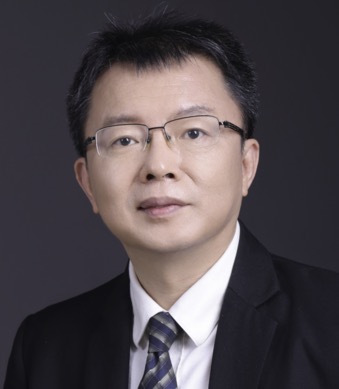 Bin Cui (崔斌)合作论文数School of Computer Science, Faculty of Informatics, Peking University55
 Jiawei Jiang (江佳伟)合作论文数School of Computer Science, Wuhan University22
 Xupeng Miao (苗旭鹏)合作论文数School of Computer Science, Peking University19
 Youhe Jiang合作论文数Department of Computer Science and Technology, University of Cambridge14
 Xiaonan Nie (聂小楠)合作论文数ByteDance12
 Wentao Zhang (张文涛)合作论文数Center of Machine Learning Research, Peking University12
 Xiao Yan (晏潇)合作论文数Institute for Math & AI, Wuhan University10
 Yangyu Tao合作论文数9
 Yujie Wang合作论文数Shanghai Jiao Tong University8
 Hao Ge合作论文数Peking University7Yuxuan Wang (汪宇轩)合作论文数Alibaba Inc.7Shenhan Zhu合作论文数6Hailin Zhang (张海林)合作论文数School of Computer Science, Peking University6
 Binhang Yuan合作论文数6
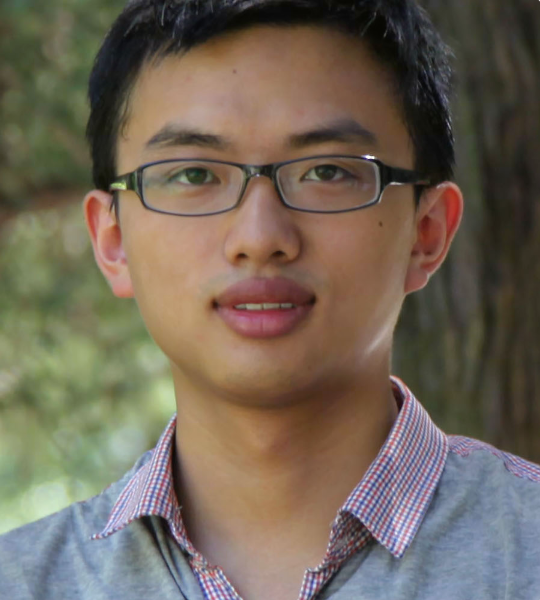 Yanghao Li合作论文数OpenAI6Xuefeng Xiao合作论文数5
 Eiko Yoneki合作论文数Systems Research Group, Computer Laboratory, University of Cambridge5Quanqing Xu合作论文数Data Center Technologies (DCT), Data Storage Institute (DSI)5
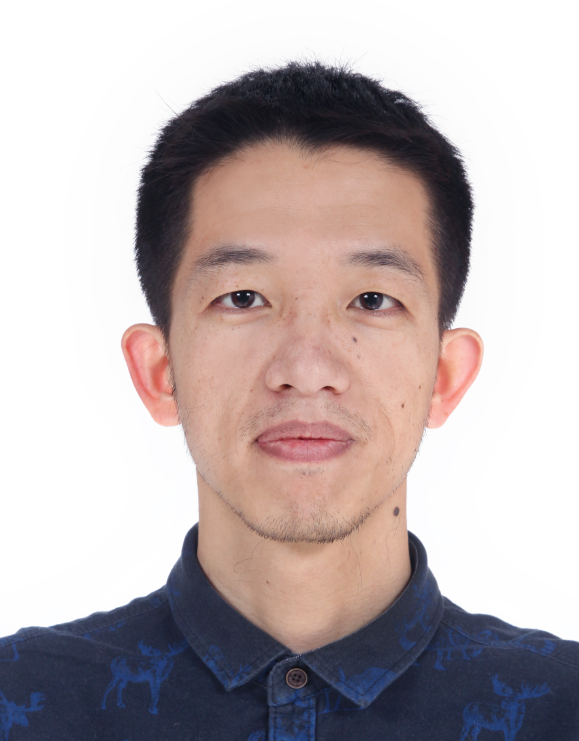 Yingxia Shao (邵蓥侠)合作论文数School of Computer Science, Beijing University of Posts and Telecommunications5Huanran Xue合作论文数4
 Chuang Hu (胡创)合作论文数School of Computer Science, Wuhan University4
 Yifei Xia合作论文数State Key Lab of Multimedia Info. Processing, School of Computer Science, Peking University3
 Jintao Zhang (张金涛)合作论文数Department of Computer Science and Technology, Tsinghua University3
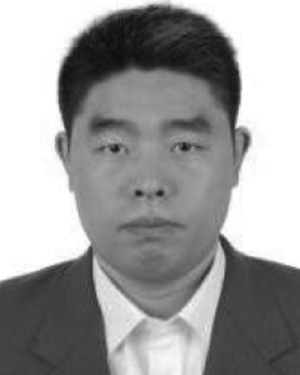 Yaofeng Tu合作论文数ZTE3Yukai Ding合作论文数Hohai Univ, Coll Comp & Informat, Nanjing, Peoples R China3
 Xiaosen Li (李晓森)合作论文数Tencent3
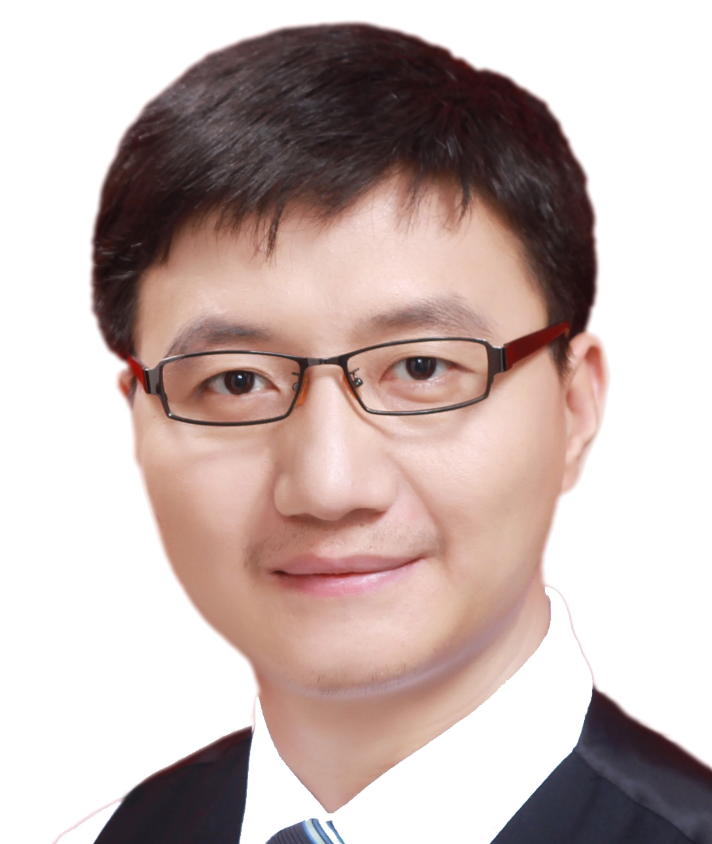 Tong Yang (杨仝)合作论文数School of Computer Science, Peking University3
 Ce Zhang合作论文数Together AI;Department of Computer Science, University of Chicago3Yong Cheng合作论文数3
 Peichao Lai合作论文数School of Computer Science, Peking University2Jinbao Xue合作论文数2Dian Jiao合作论文数2Jiashi Li合作论文数2
 Jie Jiang合作论文数Institute of Automation, Chinese Academy of Sciences2
 Xiaozhe Yao合作论文数Shenzhen Univ2
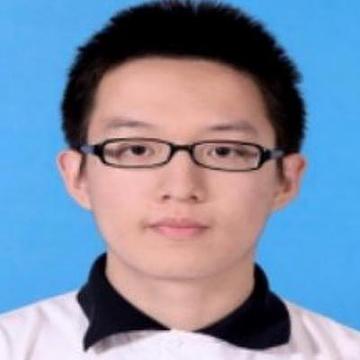 Bohan Zeng合作论文数Peking University;Xiaohongshu2Wen Ouyang合作论文数2PengHao Zhao (赵鹏昊)合作论文数2
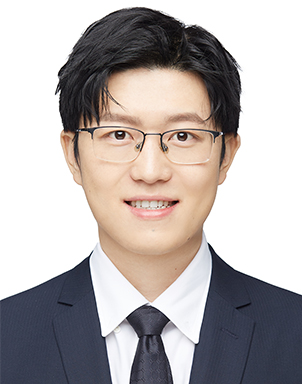 Jianfei Chen (陈键飞)合作论文数Department of Computer Science and Technology, School of Information Science and Technology, Tsinghua University2
 Ana Klimovic合作论文数Efficient Architectures and Systems Lab, ETH Zurich;Department of Computer Science, ETH Zurich2
 Yuanyuan Zhu (祝园园)合作论文数School of Computer Science, Wuhan University2
 Haoyang Li合作论文数Department of Computer Science and Engineering, The Hong Kong University of Science and Technology2
 Haibin Lin (林海滨)合作论文数ByteDance2
 Xu Han (韩旭)合作论文数2
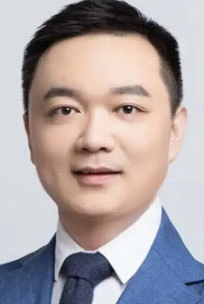 Hao Huang (黄浩)合作论文数School of Computer Science, Wuhan University2
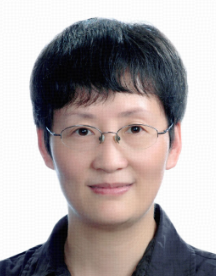 Tieyun Qian (钱铁云)合作论文数School of Computer Science, Wuhan University2
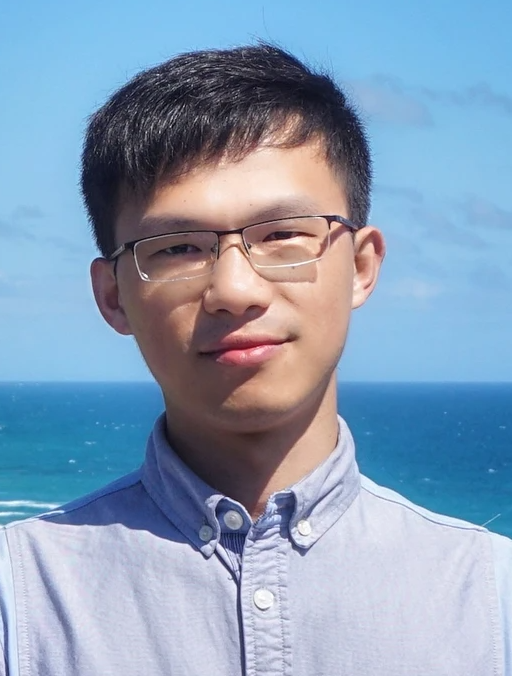 Conghui He (何聪辉)合作论文数Shanghai AI Laboratory2
 Xiaodong Ji (季晓东)合作论文数School of Software & Microelectronics, Peking University1Haoyu Zheng合作论文数School of Computer Science, Wuhan University1




