Retrieval-augmented generation (RAG) enables agents to access external knowledge at inference time, but it primarily retrieves fragmented declarative evidence, leaving agents to repeatedly infer task procedures from passages, manuals, examples, logs, or trajectories. This raises a fundamental question: can skills extracted from external knowledge bases be installed into an agent, enabling it to rapidly approximate domain expertise? In this paper, we propose Anything2Skill, a taxonomy-guided framework that compiles heterogeneous external knowledge into reusable, retrievable, and executable skills for agents. Given a corpus of knowledge records, Anything2Skill first decomposes each record into evidence windows and performs plan-and-expand skill extraction under a skill-tree prior. The extracted candidates are then converted into structured skill contracts that specify invocation conditions, contraindications, action moves, workflow steps, constraints, output specifications, supporting evidence, and confidence scores. To construct a deployable procedural memory, Anything2Skill manages the extracted skills in a persistent SkillBank through taxonomy-aware compilation, registry-level reconciliation, lifecycle tracking, versioned updates, and visible skill-tree projection. At inference time, agents retrieve both task-specific passages from the original knowledge base and relevant procedural skills from the SkillBank, allowing RAG to provide declarative evidence while compiled skills provide reusable procedural guidance. Experiments on qsv and GitHub-CLI show that Anything2Skill combined with RAG achieves 98.85% and 94.10% success rates, respectively, substantially outperforming RAG-only agents. These results suggest that compiling latent procedural knowledge into explicit skills is an effective way to extend retrieval-augmented agents from knowledge access toward capability reuse.
Alignment plays a crucial role in Large Language Models (LLMs) in aligning with human preferences on a specific task/domain. Traditional alignment methods suffer from catastrophic forgetting, where models lose previously learned values when adapting to new preferences or domains. We introduce LifeAlign, a novel framework for lifelong alignment that enables LLMs to maintain consistent human preference alignment across sequential learning tasks without forgetting previously learned values. Our approach consists of two key innovations. First, we propose a focalized preference optimization strategy that aligns LLMs with new preferences while preventing the erosion of alignment acquired from previous tasks. Second, we develop a short-to-long memory consolidation mechanism that merges denoised short-term preference representations into stable long-term memory using intrinsic dimensionality reduction, enabling efficient storage and retrieval of alignment patterns across diverse domains. We evaluate LifeAlign across multiple sequential alignment tasks spanning different domains and preference types. Experimental results demonstrate that our method achieves superior performance in maintaining both preference alignment quality and knowledge retention compared to existing lifelong learning approaches.
Lifelong learning is essential for Large Language Model (LLM) agents operating in dynamic, interactive environments. However, existing lifelong learning agents for long-horizon tasks typically depend on discrete skill or past experiences retrieval with static parameters during inference, which prevents them from continuously internalizing test-time feedback like human learners. To bridge this gap, we propose Skill-enhanced Test-Time Co-Evolution (), a two-stage reinforcement learning framework for Online Lifelong Learning Agents. Specifically, we design Verifier-Guided Skill Learning that addresses the lack of direct supervision for skill extraction by rewarding candidate skills according to the average verifier success of multiple skill-conditioned policy rollouts, encouraging the model to generate skills that are useful for solving tasks rather than merely plausible in text. Furthermore, we introduce Online Skill Internalization, which continuously improves the policy model during test-time interaction by transforming skill-conditioned trajectories into reward signals. This enables the agent to directly internalize reasoning capabilities into its parameters, avoiding the context bloat of experience retrieval. Experiments on LifelongAgentBench show that LifeSkill improves average performance by 7 absolute points by comparing with existing lifelong agent baselines.
Recent progress in large language models (LLMs) is largely driven by scaling training compute through either pre-training with next-token prediction (NTP) or post-training with reinforcement learning (RL). The former contributes to learning broad knowledge and skills from general data, while struggling with data inefficiency and catastrophic forgetting in continual learning settings. The latter incentivizes reasoning capabilities with strong generalization, but is constrained by limited data availability due to its reliance on human annotation. To alleviate these issues, we propose Reinforcement Learning on Pre-Training data (RLPT), which combines the advantages of learning from general data and RL. In particular, RLPT derives reward signals directly from general text data through a next-segment reasoning objective, rewarding the policy for correctly predicting next text segments conditioned on the prefix text. Experiments across multiple benchmarks and models demonstrate the effectiveness of . For example, RLPT yields substantial improvements in continual pre-training ( +4.6% ) and provides a strong foundation for post-training ( +3.4% ) on Qwen3-8B-Base.
In practice, physical spatiotemporal forecasting can suffer from data scarcity, because collecting large-scale data is non-trivial, especially for extreme events. Hence, we propose , a novel probabilistic framework to realize iterative self-training with new self-ensemble strategies, achieving better physical consistency and generalization on extreme events. Following any base forecasting model, we can encode its deterministic outputs into a latent space and retrieve multiple codebook entries to generate probabilistic outputs. Then BeamVQ extends the beam search from discrete spaces to the continuous state spaces in this field. We can further employ domain-specific metrics (e.g., Critical Success Index for extreme events) to filter out the top-k candidates and develop the new self-ensemble strategy by combining the high-quality candidates. The self-ensemble can not only improve the inference quality and robustness but also iteratively augment the training datasets during continuous self-training. Consequently, BeamVQ realizes the exploration of rare but critical phenomena beyond the original dataset. Comprehensive experiments on different benchmarks and backbones show that BeamVQ consistently reduces forecasting MSE (up to 39 proving its effectiveness in handling data scarcity.
BERT-like models have been widely adopted in text mining and web search due to their high accuracy. However, large BERT-like models suffer from inefficient online inference on GPUs for two main reasons. First, their high accuracy relies on large model depth, which linearly increases sequential computation on GPUs. Second, stochastic and dynamic online workloads lead to extra costs due to batching and padding. To address the problem, we present Student Parallelism for efficient GPU inference of BERT-like models under real-world online workloads. At its core, Student Parallelism adopts stacking distillation and boosting ensemble, distilling the original deep model into a group of shallow but virtually stacked student models running in parallel. This enables Student Parallelism to achieve a low model depth (e.g., two layers), and thus low inference latency while maintaining accuracy. In addition, we design adaptive student pruning to adjust the number of students according to the dynamic online workloads. For example, during workload bursts, it can temporarily decrease the number of students with minimal accuracy loss to improve system throughput. Extensive experiments on real-world datasets and workloads show that Student Parallelism achieves up to 4.1× lower latency while maintaining accuracy and up to 22.27× higher throughput during workload bursts.
Creating immersive and playable 3D worlds from texts or images remains a fundamental challenge in computer vision and graphics. Existing world generation approaches typically fall into two categories: video-based methods that offer rich diversity but lack 3D consistency and rendering efficiency, and 3D-based methods that provide geometric consistency but struggle with limited training data and memory-inefficient representations. To address these limitations, we present HunyuanWorld 1.0, a novel framework that combines the best of both worlds for generating immersive, explorable, and interactive 3D scenes from text and image conditions. Our approach features three key advantages: 1) 360° immersive experiences via panoramic world proxies; 2) mesh export capabilities for seamless compatibility with existing computer graphics pipelines; 3) disentangled object representations for augmented interactivity. The core of our framework is a semantically layered 3D mesh representation that leverages panoramic images as 360° world proxies for semantic-aware world decomposition and reconstruction, enabling the generation of diverse 3D worlds. Extensive experiments demonstrate that our method achieves state-of-the-art performance in generating coherent, explorable, and interactive 3D worlds while enabling versatile applications in virtual reality, physical simulation, game development, and interactive content creation.
Recently, the growing memory demands of embedding tables in Deep Learning Recommendation Models (DLRMs) pose great challenges for model training and deployment. Existing embedding compression solutions cannot simultaneously meet three key design requirements: memory efficiency, low latency, and adaptability to dynamic data distribution. This paper presents CAFE, a Compact, Adaptive, and Fast Embedding compression framework that addresses the above requirements. The design philosophy of CAFE is to dynamically allocate more memory resources to important features (called hot features), and allocate less memory to unimportant ones. In CAFE, we propose a fast and lightweight sketch data structure, named HotSketch, to capture feature importance and report hot features in real time. For each reported hot feature, we assign it a unique embedding. For the non-hot features, we allow multiple features to share one embedding by using hash embedding technique. Guided by our design philosophy, we further propose a multi-level hash embedding framework to optimize the embedding tables of non-hot features. We theoretically analyze the accuracy of HotSketch, and analyze the model convergence against deviation. Extensive experiments show that CAFE significantly outperforms existing embedding compression methods, yielding 3.92% and 3.68% superior testing AUC on Criteo Kaggle dataset and CriteoTB dataset at a compression ratio of 10000x. The source codes of CAFE are available at GitHub.
Nowadays, Large Language Models (LLMs) have been trained using extended context lengths to foster more creative applications. However, long context training poses great challenges considering the constraint of GPU memory. It not only leads to substantial activation memory consumption during training, but also incurs considerable memory fragmentation. To facilitate long context training, existing frameworks have adopted strategies such as recomputation and various forms of parallelisms. Nevertheless, these techniques rely on redundant computation or extensive communication, resulting in low Model FLOPS Utilization (MFU). In this paper, we propose MEMO, a novel LLM training framework designed for fine-grained activation memory management. Given the quadratic scaling of computation and linear scaling of memory with sequence lengths when using FlashAttention, we offload memory-consuming activations to CPU memory after each layer's forward pass and fetch them during the backward pass. To maximize the swapping of activations without hindering computation, and to avoid exhausting limited CPU memory, we implement a token-wise activation recomputation and swapping mechanism. Furthermore, we tackle the memory fragmentation issue by employing a bi-level Mixed Integer Programming (MIP) approach, optimizing memory reuse across transformer layers. Empirical results demonstrate that MEMO achieves an average of 1.97x and 1.80x MFU compared to Megatron-LM and DeepSpeed, respectively. This improvement is attributed to MEMO's ability to minimize memory fragmentation, reduce recomputation and intensive communication, and circumvent the delays associated with the memory reorganization process due to fragmentation. By leveraging fine-grained activation memory management, MEMO facilitates efficient training of 7B LLM with 1 million sequence length on just 8 A800 GPUs, achieving an MFU of 52.30
We present Hunyuan3D 2.0, an advanced large-scale 3D synthesis system for generating high-resolution textured 3D assets. This system includes two foundation components: a large-scale shape generation model – Hunyuan3D-DiT, and a large-scale texture synthesis model – Hunyuan3D-Paint. The shape generative model, built on a scalable flow-based diffusion transformer, aims to create geometry that properly aligns with a given condition image, laying a solid foundation for downstream applications. The texture synthesis model, benefiting from strong geometric and diffusion priors, produces high-resolution and vibrant texture maps for either generated or hand-crafted meshes. Furthermore, we build Hunyuan3D-Studio – a versatile, user-friendly production platform that simplifies the re-creation process of 3D assets. It allows both professional and amateur users to manipulate or even animate their meshes efficiently. We systematically evaluate our models, showing that Hunyuan3D 2.0 outperforms previous state-of-the-art models, including the open-source models and closed-source models in geometry details, condition alignment, texture quality, and etc. Hunyuan3D 2.0 is publicly released in order to fill the gaps in the open-source 3D community for large-scale foundation generative models. The code and pre-trained weights of our models are available at: https://github.com/Tencent/Hunyuan3D-2
Accurate and long-term spatiotemporal prediction for complex physical systems remains a fundamental challenge in scientific computing. While deep learning models, as powerful parametric approximators, have shown remarkable success, they suffer from a critical limitation: the accumulation of errors during long-term autoregressive rollouts often leads to physically implausible artifacts. This deficiency arises from their purely parametric nature, which struggles to capture the full constraints of a system's intrinsic dynamics. To address this, we introduce a novel Retrieval-Augmented Prediction (RAP) framework, a hybrid paradigm that synergizes the predictive power of deep networks with the grounded truth of historical data. The core philosophy of RAP is to leverage historical evolutionary exemplars as a non-parametric estimate of the system's local dynamics. For any given state, RAP efficiently retrieves the most similar historical analog from a large-scale database. The true future evolution of this analog then serves as a reference target. Critically, this target is not a hard constraint in the loss function but rather a powerful conditional input to a specialized dual-stream architecture. It provides strong dynamic guidance, steering the model's predictions towards physically viable trajectories. In extensive benchmarks across meteorology, turbulence, and fire simulation, RAP not only surpasses state-of-the-art methods but also significantly outperforms a strong analog-only forecasting baseline. More importantly, RAP generates predictions that are more physically realistic by effectively suppressing error divergence in long-term rollouts.
Embedding models have been an effective learning paradigm for high-dimensional data. However, one open issue of embedding models is that their representations (latent factors) often result in large parameter space. We observe that existing distributed training frameworks face a scalability issue of embedding models since updating and retrieving the shared embedding parameters from servers usually dominates the training cycle. In this paper, we propose HET, a new system framework that significantly improves the scalability of huge embedding model training. We embrace skewed popularity distributions of embeddings as a performance opportunity and leverage it to address the communication bottleneck with an embedding cache. To ensure consistency across the caches, we incorporate a new consistency model into HET design, which provides fine-grained consistency guarantees on a per-embedding basis. Compared to previous work that only allows staleness for read operations, HET also utilizes staleness for write operations. Evaluations on six representative tasks show that HET achieves up to 88 20.68× performance speedup over the state-of-the-art baselines.
To optimize large Transformer model training, both efficient parallel computing and advanced data management are indispensable. However, current methods often assume a stable and uniform training workload, neglecting data-induced imbalances-arising from both sampling and packing processes-which can impede training performance. Specifically, data sampling imbalance arises from uneven sequence length distribution of the training data, while data packing imbalance stems from the discrepancy between the linear memory complexity and quadratic time complexity of the attention mechanism. To address these imbalance issues, we develop Hydraulis, which jointly optimizes the parallel strategies and data assignment. For one thing, we introduce large model training with dynamic heterogeneous parallel strategies in response to the sequence length variations within and across training iterations. For another, we devise a two-stage data assignment approach, which strikes a good balance in terms of the training workloads both within and across model replicas. Empirical results demonstrate that Hydraulis outperforms existing systems by 1.32-2.66×. Our source code is available: https://github.com/PKU-DAIR/Hetu.
In current deep learning tasks, Adam style optimizers such as Adam, Adagrad, RMSProp, Adafactor, and Lion have been widely used as alternatives to SGD style optimizers. These optimizers typically update model parameters using the sign of gradients, resulting in more stable convergence curves. The learning rate and the batch size are the most critical hyperparameters for optimizers, which require careful tuning to enable effective convergence. Previous research has shown that the optimal learning rate increases linearly or follows similar rules with batch size for SGD style optimizers. However, this conclusion is not applicable to Adam style optimizers. In this paper, we elucidate the connection between optimal learning rates and batch sizes for Adam style optimizers through both theoretical analysis and extensive experiments. First, we raise the scaling law between batch sizes and optimal learning rates in the sign of gradient case, in which we prove that the optimal learning rate first rises and then falls as the batch size increases. Moreover, the peak value of the surge will gradually move toward the larger batch size as training progresses. Second, we conducted experiments on various CV and NLP tasks and verified the correctness of the scaling law.
We present Hunyuan-DiT, a text-to-image diffusion transformer with fine-grained understanding of both English and Chinese. To construct Hunyuan-DiT, we carefully design the transformer structure, text encoder, and positional encoding. We also build from scratch a whole data pipeline to update and evaluate data for iterative model optimization. For fine-grained language understanding, we train a Multimodal Large Language Model to refine the captions of the images. Finally, Hunyuan-DiT can perform multi-turn multimodal dialogue with users, generating and refining images according to the context. Through our holistic human evaluation protocol with more than 50 professional human evaluators, Hunyuan-DiT sets a new state-of-the-art in Chinese-to-image generation compared with other open-source models. Code and pretrained models are publicly available at github.com/Tencent/HunyuanDiT
Sampling-based Graph Neural Networks (GNNs) have become the de facto standard for handling various graph learning tasks on large-scale graphs. As the graph size grows larger and even exceeds the standard host memory size of a single machine, out-of-core sampling-based GNN training has gained attention from the community. For out-of-core sampling-based GNN training, the performance bottleneck is the data preparation process that includes sampling neighbor lists and gathering node features from external storage. Based on this observation, existing out-of-core GNN training frameworks try to accomplish larger percentages of data requests without inquiring the external storage by designing better in-memory caches. However, the enormous overall requested data volume is unchanged under this approach. In this paper, we present a new perspective on reducing the overall requested data volume. Through a quantitative analysis, we find that Neighborhood Redundancy and Temporal Redundancy exist in out-of-core sampling-based GNN training. To reduce these two kinds of data redundancies, we propose OUTRE, an OUT-of-core de-REdundancy GNN training framework. OUTRE incorporates two new designs, partition-based batch construction and historical embedding cache, to reduce the corresponding data redundancies. Moreover, we propose automatic cache space management to automatically organize available memory for different caches. Evaluation results on four public large-scale graph datasets show that OUTRE achieves 1.52× to 3.51× speedup against the SOTA framework.
Data-driven deep learning has emerged as the new paradigm to model complex physical space-time systems. These data-driven methods learn patterns by optimizing statistical metrics and tend to overlook the adherence to physical laws, unlike traditional model-driven numerical methods. Thus, they often generate predictions that are not physically realistic. On the other hand, by sampling a large amount of high quality predictions from a data-driven model, some predictions will be more physically plausible than the others and closer to what will happen in the future. Based on this observation, we propose \emph{Beam search by Vector Quantization} (BeamVQ) to enhance the physical alignment of data-driven space-time forecasting models. The key of BeamVQ is to train model on self-generated samples filtered with physics-aware metrics. To be flexibly support different backbone architectures, BeamVQ leverages a code bank to transform any encoder-decoder model to the continuous state space into discrete codes. Afterwards, it iteratively employs beam search to sample high-quality sequences, retains those with the highest physics-aware scores, and trains model on the new dataset. Comprehensive experiments show that BeamVQ not only gave an average statistical skill score boost for more than 32% for ten backbones on five datasets, but also significantly enhances physics-aware metrics.
Recent advancements in video generation have significantly impacted daily life for both individuals and industries. However, the leading video generation models remain closed-source, resulting in a notable performance gap between industry capabilities and those available to the public. In this report, we introduce HunyuanVideo, an innovative open-source video foundation model that demonstrates performance in video generation comparable to, or even surpassing, that of leading closed-source models. HunyuanVideo encompasses a comprehensive framework that integrates several key elements, including data curation, advanced architectural design, progressive model scaling and training, and an efficient infrastructure tailored for large-scale model training and inference. As a result, we successfully trained a video generative model with over 13 billion parameters, making it the largest among all open-source models. We conducted extensive experiments and implemented a series of targeted designs to ensure high visual quality, motion dynamics, text-video alignment, and advanced filming techniques. According to evaluations by professionals, HunyuanVideo outperforms previous state-of-the-art models, including Runway Gen-3, Luma 1.6, and three top-performing Chinese video generative models. By releasing the code for the foundation model and its applications, we aim to bridge the gap between closed-source and open-source communities. This initiative will empower individuals within the community to experiment with their ideas, fostering a more dynamic and vibrant video generation ecosystem. The code is publicly available at https://github.com/Tencent/HunyuanVideo.
Fluid dynamics modeling has received extensive attention in the machine learning community. Although numerous graph neural network (GNN) approaches have been proposed for this problem, the problem of out-of-distribution (OOD) generalization remains underexplored. In this work, we propose a new large-scale dataset Prometheus which simulates tunnel and pool fires across various environmental conditions and builds an extensive benchmark of 12 baselines, which demonstrates that the OOD generalization performance is far from satisfactory. To tackle this, this paper introduces a new approach named Disentangled Graph ODE (DGODE), which learns disentangled representations for continuous interacting dynamics modeling. In particular, we utilize a temporal GNN and a frequency network to extract semantics from historical trajectories into node representations and environment representations respectively. To mitigate the potential distribution shift, we minimize the mutual information between invariant node representations and the discretized environment features using adversarial learning. Then, they are fed into a coupled graph ODE framework, which models the evolution using neighboring nodes and dynamical environmental context. In addition, we enhance the stability of the framework by perturbing the environment features to enhance robustness. Extensive experiments validate the effectiveness of DGODE compared with state-of-the-art approaches.
Graph clustering aims to discover cluster structures in graphs. This task becomes more challenging when each node in the graph is associated with an attribute vector (i.e., the attributed graph). Recently, methods built on Graph Auto-Encoder (GAE) have achieved state-of-the-art performance on the attributed graph clustering task. The performance gain mainly comes from GAE’s ability to capture knowledge from graph structures and node attributes simultaneously. However, there is limited understanding of the critical issues that hinder the clustering performance of current GAE-based methods. To bridge this gap, we present a detailed empirical analysis and find that existing GAE-based methods suffer from graph information degradation issues of intra-cluster estrangement, attribute similarity neglection, and blurred cluster boundaries. Based on the observations, we design corresponding graph-enforcement tasks to address these degradation issues and include them in a unified multi-task learning framework called Graph-Enforced Neural Network (GENN). Extensive experimental results on four popular graph benchmark datasets illustrate that GENN consistently outperforms state-of-the-art attributed graph clustering methods.
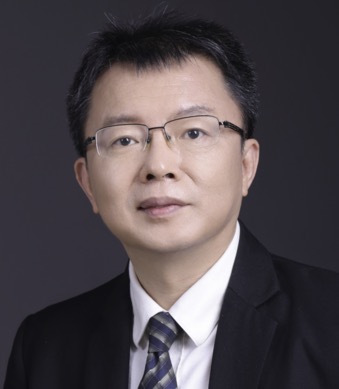 Bin Cui (崔斌)合作论文数School of Computer Science, Faculty of Informatics, Peking University19
 Fangcheng Fu (符芳诚)合作论文数School of Artificial Intelligence, Shanghai Jiao Tong University9
 Wentao Zhang (张文涛)合作论文数Center of Machine Learning Research, Peking University9
 Jinbao Xue合作论文数8
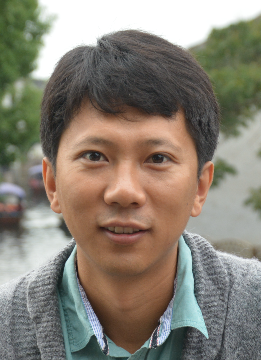 Zhi Yang (杨智)合作论文数School of Computer Science, Peking University8Wen Ouyang合作论文数7
 Xiaosen Li (李晓森)合作论文数Tencent6
 Zeang Sheng (盛则昂)合作论文数School of Computer Science, Peking University5Hailin Zhang (张海林)合作论文数School of Computer Science, Peking University5
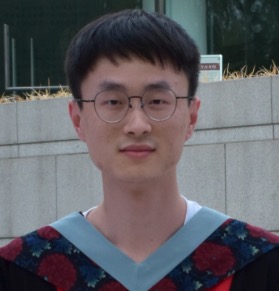 Yang Li (黎洋)合作论文数Department of Data Platform, Tencent TEG5Weiyan Wang合作论文数4
 Xiaonan Nie (聂小楠)合作论文数ByteDance4Di Wang (王 迪)合作论文数腾讯AI平台部4
 Xupeng Miao (苗旭鹏)合作论文数School of Computer Science, Peking University4Dian Jiao合作论文数3Jianchen Zhu合作论文数3
 Xin Li (李鑫)合作论文数Shanghai Artificial Intelligence Laboratory3PengHao Zhao (赵鹏昊)合作论文数3
 Liang He (贺樑)合作论文数School of Computer Science and Technology, East China Normal University;Institute of AI Education, Shanghai, East China Normal University3
 Jie Zhou (周杰)合作论文数School of Computer Science and Technology, East China Normal University3Yong Cheng合作论文数3Shuaipeng Li合作论文数2Hao Wu合作论文数2Xinchi Deng合作论文数Sun Yat-sen University2
 Tianyu Huang (黄天毓)合作论文数Harbin Institute of Technology2
 Yining Shi合作论文数Nvidia2
 Qinglin Lu合作论文数2
 Jiangfeng Xiong合作论文数2
 Yanxin Long (龙衍鑫)合作论文数School of Intelligent Systems Engineering, Sun Yat-sen University2Xianghui Yang合作论文数2
 Hongyu Liu (刘虹雨)合作论文数Department of Computer Science and Engineering, Hong Kong University of Science and Technology;Ant Research2
 Kun Wang合作论文数2
 Jie Jiang合作论文数Institute of Automation, Chinese Academy of Sciences2
 Yu Shen (沈彧)合作论文数腾讯2Zheyu Lin合作论文数Peking Univ, Sch ECE, Beijing, Peoples R China2
 Ziqi Yin合作论文数Nanyang Technological University Singapore2Huanran Xue合作论文数2
 Xingjian Shi (施行健)合作论文数Boson AI2
 Xiaomeng Huang (黄小猛)合作论文数Department of Earth System Science, Tsinghua University2
 Qin Chen (陈琴)合作论文数School of Computer Science and Technology, East China Normal University2
 Jie Xu (徐杰)合作论文数School of Computing, University of Leeds2
 Yingxia Shao (邵蓥侠)合作论文数School of Computer Science, Beijing University of Posts and Telecommunications2
 Changlin Li合作论文数Department of Urology, Stanford University1Yuanbo Peng合作论文数1Fang Yang合作论文数1Victor Junqiu Wei合作论文数1Zihan Jiang合作论文数1Boxuan Chen合作论文数1




