3D打印(又称"增材制造")技术,是20世纪80年代末期产生并发展起来的一种区别于传统减材制造技术的先进数字化制造技术,被视为"第四次工业革命"的支撑技术之一.常用于模具制造、工业设计模型等,后来逐步扩展到航空航天、建筑、汽车制造和医疗器械等领域.本文就3D打印在医疗器械领域的应用及其前景进行分析.
总结了3D打印钴铬合金技术特点和现状,对比了3D打印钴铬合金与铸造钴铬合金的性能差异,分析了3D打印钴铬合金生物相容性研究现状,最后探讨了3D打印钴铬合金在口腔修复领域面临的问题和发展方向.
目的 探讨应用三维(three dimensional,3D)打印技术构建心脏瓣膜病术前主动脉根部模型的可行性.方法 前瞻性入选术前接受CT检查且拟行主动脉瓣置换术的患者8例,其中6例的主动脉疾病手术指征为主动脉瓣重度狭窄(2例合并主动脉瓣二叶式畸形),1例为人工生物瓣置入术后瓣膜失功能,1例为主动脉根部瘤合并主动脉瓣反流.CT扫描均使用前瞻性心电门控采集,将患者收缩期CT图像导入Mimics?、3-matic、Magics?、Freeform?等医学三维图像建模及编辑软件,逐一进行疾病三维模型的构建,并打印出实物模型.结果8例患者的主动脉疾病模型均成功构建,模型质量满意,有3例模型得到了手术验证.患者中位年龄为74岁(52~82岁),三维建模的中位耗时为4.5 h(3.0~5.5 h),3D打印的中位耗时为5 h(5~9 h),中位材料成本为3050元(2600~9700元).结论 应用3D打印技术构建心脏瓣膜病术前主动脉根部模型是可行的.
通过熔炼、锻造、轧制、拉拔等工艺制备不同W含量的NiTiW合金丝材,采用扫描电镜(SEM)、差示扫描量热仪(DSC)和拉伸试验机对合金丝材进行研究,分别研究了不同W含量的镍钛合金的组织,并对不同W含量的镍钛合金丝材的机械性能进行了测试.研究结果表明,不同W含量的合金丝材中,其组织和机械性能都表现出了一定的变化;低W(含W量为0.3%~0.5%)合金中富钨固溶体(W-s)呈现弥散分布,而高W(含W量为3%~6%)合金中则固溶体则为纤维状分布;随着W含量(含W量从0.3%上升到6%)提高,相变温度先提高,之后随之减小,相变峰形逐渐平缓;此外,W元素的添加对镍钛合金产生了明显的固溶强化作用,合金丝材的屈服强度和拉伸强度均显著提高,但延展性明显下降;此外,随着W含量从0.3%增加到6.0%,镍钛合金的超弹性逐渐降低,上屈服平台从NiTiW0.3合金的(6.0%~0.7%)逐渐变短到NiTiW6合金的(6.0%~3.3%).研究结果得出了不同W含量的镍钛合金机械性能的变化趋势,为今后医用材料选择适合的机械性能方面提供了良好的理论基础和选择依据.
The research progress on the Ni-Ti-Pd and Ni-Ti-Pt high temperature shape memory alloys in China and abroad in recent years were reviewed, and the influence of chemical composition, thermal mechanical treatment and the training process on martensitic transformation, high temperature performance of one-way and two-way shape memory effect, and functional stability during repeated thermomechanical cycling of high temperature shape memory alloy were analyzed. The results show that the transformation temperature, the width of transformation hysteresis, high temperature martensitic transformation, creep behavior, and high temperature thermal cycling properties of Ni-Ti-Pd and Ni-Ti-Pt high temperature nickel-titanium shape memory alloys, are significantly affected by the microstructures. The refinement of grain structure is achieved by the addition of Sc, Cu, or B elements, and cold rolling followed by annealing treatments, and the fine dispersed precipitates of Ti2Ni and Ti-2(Ni, Pd) distributed in the matrix are produced by solid solution and aging. These microstructures are beneficial to the improvement of the high temperature shape memory properties, by the effect of solid solution hardening and precipitation hardening. The preferentially oriented martensite variants, nucleated on the dislocation arrays with the specific stress field obtained during the training under a constant stress are found to improve the one-way and two-way shape memory properties, and the stability of the functional properties and the size of the high temperature shape memory alloys.
通过改变支架环的几何参数,提出膨出式TiNi合金血管支架的设计理念,用于隔绝因主动脉夹层远端破口血液返流造成的假腔持续灌注,加快假腔血栓化进程.利用Solidworks软件设计膨出式支架环模型,利用ABAQUS有限元软件,结合正交实验分组探究不同几何参数对膨出式支架支撑性能的影响,并结合支架径向支撑力实验对比分析,验证有限元分析的合理性.结果表明:膨出段支架合理的参数选择是提高支架膨出段支撑性能的重要途径,增加支架丝径与膨出段支架环个数,可以提高膨出段支架的支撑性能,而增加膨出段长度则会使支撑性能降低;丝径、 膨出段长度、 膨出度、 支架环个数对支撑性能的影响程度依次减弱;通过优化几何参数提高支架径向支撑性能时,应控制其设计径向支撑力不能超过夹层内膜可承受的生理极限;样品径向支撑力的实验结果与模拟结果吻合度较好,验证了有限元分析的合理性.
通过拉伸试验和差示扫描量热法(DSC)等手段,研究了高温时效和高温、低温循环对镍钛形状记忆合金超弹性和相变行为的影响.结果表明,TNC1605镍钛合金在500℃时效后具有较高的上/下平台强度,并且具有较低的残余应变,马氏体逆相变终了温度Af约为22℃,具有较好的超弹性能.经过10次200℃高温保温4h和液氮中保温4h的高低温循环处理后,下平台强度、6%拉伸加载和卸载后残余应变、Af和超弹性性能参数保持稳定.
The influences of W addition on microstructures and phase transformation behavior of as-cast TiNi shape memory alloy were investigated by differential scanning calorimeter (DSC),X-ray diffraction (XRD),and scanning electron microscope (SEM).The results showed that the phase composition of TiNiW0.3 and TiNiW0.5(atom fraction) alloy were B2 parent phase and Ti2 (Ni,W)precipitate phase at room temperature;TiNiW3 and TiNiW6 alloy were composed of B2 parent phase,Ti2 (Ni,W) and W-rich solid solution phase(W-s),and the shapes of Ti2 (Ni,W) precipitated phases were irregular granular,strip,and fence,while W-s phases were in non-uniform granular shapes,grew up in clusters and dispersed in matrix uniformly.With the addition of W,the grain size of as-cast ingot was refined,and effects of refined crystalline strengthening and solution strengthening occurred.The strength and hardness of the alloy increased with the increase of W content.After solid solution treatment at 850 ℃ for 15 min,the phase transformation in cooling/heating process was A→M/M→A,and the phase transition temperature range became wide,the temperature reduced,and the reducing rate gradually decreased with the increase of W content.
通过差示扫描量热仪(DSC)、X射线衍射仪(XRD)、扫描电镜(SEM)和透射电镜(TEM)研究了固溶时效对Ti-50.8Ni和Ti-50.8Ni-0.3Cr合金显微组织及相变特性影响.结果表明,固溶后两种合金组织都由原始拉拔纤维组织转变为等轴晶粒,晶粒随固溶温度升高而长大,固溶后母相主要是B2(B19')相,同时发现存在TiNi3粒子.两种合金的马氏体相变峰值温度Mp随着固溶温度升高及时间延长先降低再升高.500℃时效0.5 h时Ti-50.8Ni合金加热/冷却相变类型是A→R→M1→M 2/M→Rr→A,Ti-50.8Ni-0.3% Cr合金相变类型是A→R→M1→M2/M→Rr1→Rr2→A;时效1 h时,两种合金加热/冷却相变类型是A→R→M/M→Rr→A,时效2 h后两种合金加热/冷却相变类型是A→R→M/M→A.
Vascular stents′ support performance and resilience are important indicators that should be taken into account in the design process.In this research,M type stents were selected.The influence of the height change of M type stent section and the ratio of height proportion design (h/H) on support performance and resilience was explored through finite element simulation.The results showed that with the same ratio of h/H structural design,the smaller value of the height H of stents was,the greater the supporting force would be.Keeping the values of height H unchanged,with the ratio of h/H ratio increasing,the supporting force reduced and the degree turned to be more prominent under the same displacement load.When h/H=1,the type of M stent transformmed into Z type and the value of supporting force was minimum at this time.The type of M structure designed with different ratios of h/H,the stents′ resilient rate was highly different under different displacement loadings;based on h/H=1/2,the resilient rate of the structure with h/H<1/2 was significantly higher than that of the structure with h/H>1/2.Z type stents had weaker supporting performance and more stable resilience than M type stents under different displacement loadings.
Based on the superelasticity and shape memory effect,NiTi alloy is widely used as medical instruments and bioma-terials.The superelasticity is manifested as elastic strain under large deformation.This feature is apply to vascular and cavity inter-ventional instruments,orthodontic wires,root canal instruments,etc.Another feature of NiTi alloy is shape memory effect.So it is easy to deform at low temperature and can recover to initial shape at body temperature.Some medical instruments,such as thermally activated orthodontic wires,department of orthopedics,orthopedic surgery,sutures,etc.have taken advantage of this feature.On the other hand,it can improve the biocompatibility,corrosion resistance,friction and wear properties of NiTi alloy by various surface modification technologies.Benefit from the optimization of product performance,the application of NiTi alloy is expanded in the field of medical instruments.
Transformation temperature and shape memory property of Ni49Ti51-xZrx cold-rolled plate under different annealing temperature were systematically analyzed.The phase transformation temperature Af of Ni49 Ti51 x Zrx alloys ingot increases with increasing Zr content,reaching 228 ℃ at 15 % Zr content(atom fraction).The Mf transformation temperature first increases and then decreases with the increasing of Zr content.The hardness of Ni49 Ti51-x Zrx alloys plate shifts to higher value with lager cold-rolled deformation and decreases gradually with increasing annealing temperature.For 25 % cold-rolled reduction plate of Ni49 Ti51-x Zrx alloys,with the increasing of annealing temperature,Af first increases and then decreases for the alloys of Zr content lower than 5% (atom fraction),while that continuously increases for the Ni49Ti41Zr10 and Ni49Ti36Zr15 alloys,and the recovery strain of Ni49Ti51-x Zrx alloys first increases and then decreases reaching the highest value at 500 ℃.The recovery strain increases and twoway memory recovery strain decreases with the increasing of Zr content.
生物医用材料,通常是指用于诊断与修复组织或器官等治疗疾病领域,对人体组织、器官及血液不产生影响与副作用的一类功能材料。材料科学的发展,使得人体中除了大脑以及大多数内分泌器官外的其他组织器官都可找到替代品。生物医用材料直接用于人体或与人体健康密切相关领域,因此对其应用范围与标准有严格的要求。不可降解生物材料在植入人体后,如果长期存在于机体内会引起一系列的机体反应,需要持续外部服药进行免疫抵抗,有时还需要二次手术将其取出,无疑增加了病人的痛苦和医疗费用,同时还需控制因手术而产生的二次感染。正因如此,可降解生物材料作为医疗领域新材料发展起来。
近年来随着镍钛形状记忆合金的广泛应用,在镍钛合金标准的发展方面取得了长足的进步.先后有多项国家或行业镍钛合金产品标准和方法标准颁布,并且有多项镍钛合金标准正在审定和报批.介绍了镍钛合金标准发展的现状和最新进展,分析总结了镍钛合金标准分类、主要内容和标准水平,最后提出了镍钛合金标准发展的不足和发展建议.
形状记忆合金具有独特而优异的功能特性,比如超弹性、记忆性和阻尼性能,同时还具有优异的生物相容性、耐腐蚀性、耐磨性和综合力学性能。因此,形状记忆合金制品在航空、航天、舰船和医疗等领域具有广阔的商业化应用前景。形状记忆合金所具有的3大功能特性来源于其内部特殊的相变机制,即低温马氏体相和高温母相(奥氏体相)之间的转变过程,而这种由热激发或应力激发的具有逆转变特性的相转变过程赋予了形状记忆合金“智能材料”的称号。同时,由形状记忆合金材料开发和加工成的功能元件和结构,被称为智能产品或智能机构,并被广泛用于航空航天飞行器和舰船航行器的智能驱动和智能解锁、智能建筑、智能家居和医疗等领域。
当今社会,人口老龄化已成为趋势,创伤和疾病剧增,加之国民经济不断发展和人民生活水平持续提高,人们对生物医学材料和制品的需求急速增加,生物医用材料产业已发展成为我国经济的重要支柱产业之一。根据独立行业顾问Frost & Sullivan报告,我国医疗器械市场总规模预计将按19.8%复合年增长率增长,2017年的市场规模将由2012年的2420亿元增至5970亿元。
<正>钛镍(TiNi)形状记忆合金具有十分优异的形状记忆效应和超弹性、耐腐蚀性、耐磨性和生物相容性,是形状记忆合金家族中最重要的一员,在航天航空、机械、化工、电子、医学等领域得到了广泛应用[1]。近年来,大塑性变形作为细化晶粒的方法,已经得到学术界的广泛认可。形状记忆合金因其室温下具有较好的非晶化性能而引起材料学者的广泛关注[2-4]。随着大塑性变形技术的不断发展,近年来国内外学者利用不同变形手段对形状记忆合金的非晶化进行了一些初步的探索,例如,等通道角挤压[5-7]、高压扭转[8,9]、离子注入[10]、喷丸[11]、剪切变形[12-15]
The transformation heat of martensitie transformations in TiNi and TiNiCu wire/nickel composites is studied by differential scanning calorimetry(DSC). Results show that the transformation heat of the first reverse martensitic transformation of prestrain TiNi specimen in a free condition is found to increase quickly with the increasing prestrain level In comparison with this, the transformation heat of the first reverse martensitic transformation of prestrain TiNi specimen with nickel matrix is found to decrease quickly with the increasing prestrain level. However, the transformation heat change trends of TiNiCu and TiNiCu wire/nickel composites are obviously different from that of TiNi and TiNi wire/nickel composites. The reason for these phenomena above is fully explained.
 Zhishan Yuan (袁志山)合作论文数China Grinm Group Corporation Limited10
 Yue Cui (崔跃)合作论文数8
 Zhaowei Feng (冯昭伟)合作论文数China Grinm Group Corporation Limited;GRIKIN Advanced Materials Co., Ltd7
 Weidong Miao (缪卫东)合作论文数China Grinm Group Corporation Limited6ZaiYan Shang (尚再艳)合作论文数5Liancai MA (马连彩)合作论文数3JiaLi Ma (马嘉丽)合作论文数3Baoxiang Zhang (张宝祥)合作论文数Grimed Medical(Beijing) Co.,Ltd.3Xingquan Wang (王兴权)合作论文数Grinm Advanced Materials Co., Ltd.3Cui Yue合作论文数2Dezhi Lin (吝德智)合作论文数2Shiwei Shi (石世威)合作论文数2Chen Zhouyu (陈周煜)合作论文数2ZhenGuo Wang (王振国)合作论文数2
 Ming Zhu (朱明)合作论文数Seemine International Medical Corporation Ltd2Hengjin Zhang合作论文数1Xu Xueli (徐学礼)合作论文数1Jiangbo Wang合作论文数1Yonghui WANG (王永辉)合作论文数1HaiJiao Cai (蔡海娇)合作论文数1AiFang Zhang (张艾芳)合作论文数1MingHui Zhang (张茗卉)合作论文数1Gui Chen (陈桂)合作论文数1ZhenHua Yu (于振华)合作论文数1YanHua Wu (吴艳华)合作论文数1Jin Zhou (周瑾)合作论文数1Kun Liu (刘坤)合作论文数1
 Xin He (贺昕)合作论文数China Grinm Group Corporation Limited;GRIKIN Advanced Materials Co., Ltd1
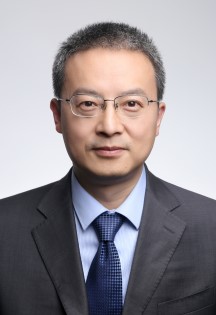 Xiaodong Xiong (熊晓东)合作论文数China Grinm Group Corporation Limited1
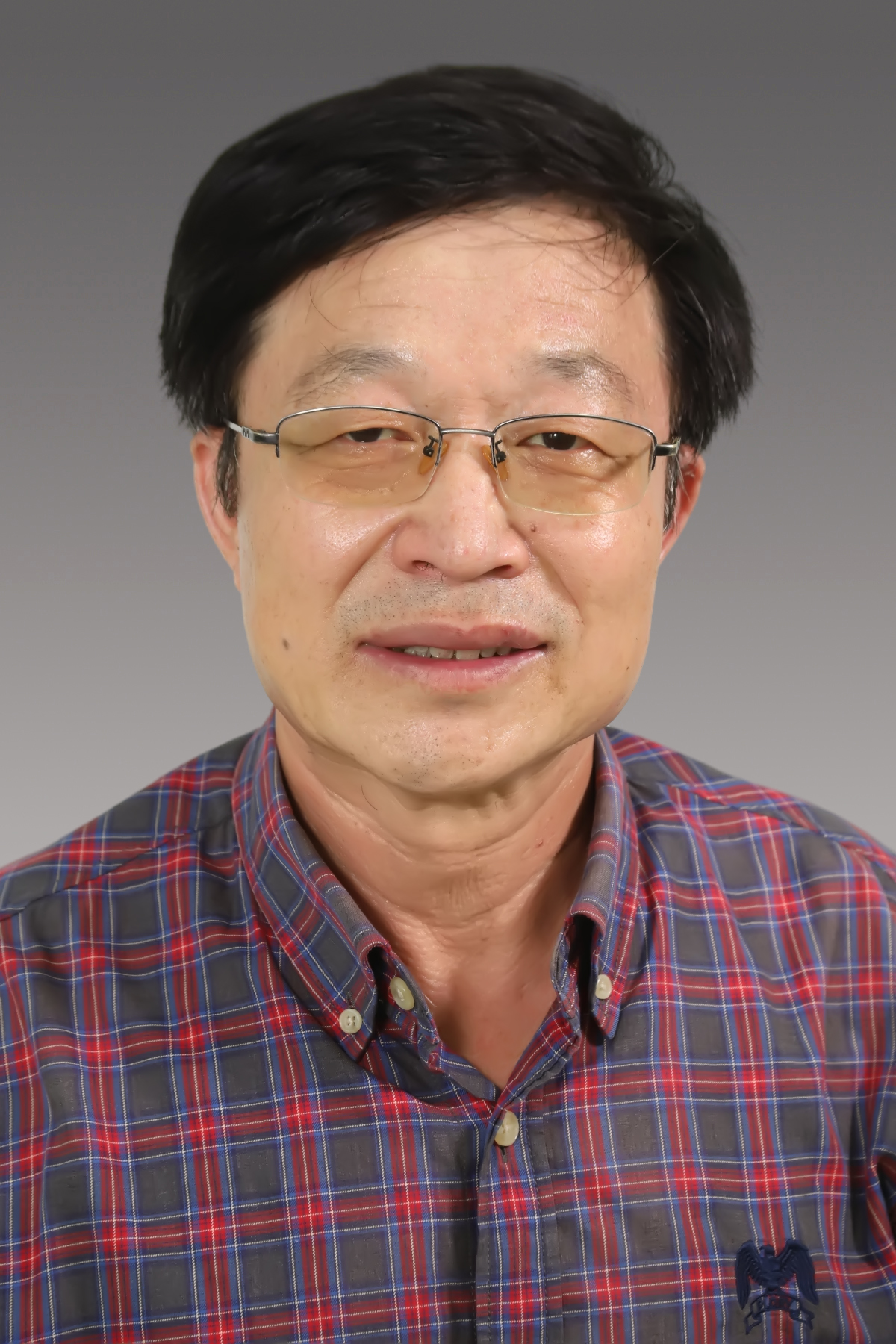 Lishan Cui (崔立山)合作论文数College of New Energy and Materials, China University of Petroleum, Beijing1
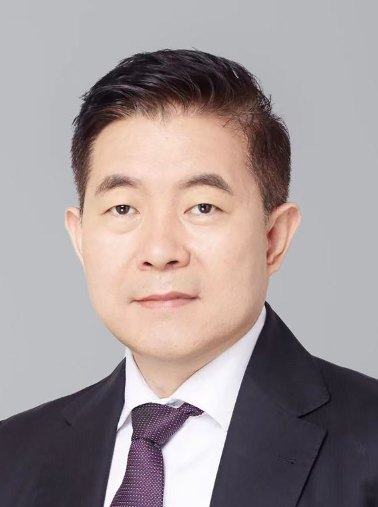 Bin Lv (吕滨)合作论文数Fuwai Hospital, Chinese Academy of Medical Sciences;Peking Union Medical College, Chinese Academy of Medical Sciences1
 Yanjun Zheng (郑雁军)合作论文数College of Science, China University of Petroleum1Zan Liao (廖赞)合作论文数1
 Yuling Hu (胡玉玲)合作论文数School of Chemistry, Sun Yat-sen University1




