Efficient prediction for stress intensity factors (SIFs) of multiple interacting cracks on complex geometries is critical for structural safety. Here, a prediction framework for mixed-mode SIFs of two interacting cracks on an open cylindrical shell was developed based on machine learning approaches, such as gradient boosting regression tree and artificial neural network (ANN). Results show that ANN-based framework with outstanding extrapolation capability is more suitable for predicting non-monotonic relationships between SIFs and crack-pair geometries. Meanwhile, predictions by the ANN-based model effectively suppress artificial fluctuations induced by coarse-mesh finite element method (FEM) simulations, while reducing computation time by nearly four orders of magnitude comparable to direct fine-mesh FEM calculations. Phase diagrams of attractive or repulsive modes in two interacting cracks under different parameters are efficiently obtained by plotting the initial deflection angle. Our results show that the ANN-based machine learning framework can be extended to predict SIFs of complex crack networks in engineering structures.
Three-dimensional fibrous skeletons present a promising design for dendrite-free lithium metal anodes, enabling safe high-energy-density batteries. However, under high current densities, they typically suffer from top-surface lithium plating, leading to rapid failure. This study employs electrochemical phase-field modeling to investigate gradient architectures in lithiophilicity, reactivity, and fiber density for guiding lithium deposition within fibrous skeleton anodes. We first elucidate how each individual gradient distinctly modifies Li-ion flux and nucleation preferences. Crucially, the total lithium deposition capacity in multiple-gradient skeletons exhibits non-linear superposition behavior. This work reveals the underlying mechanism by which the coupling of intrinsic reactivity and fiber-density gradients produces a pronounced performance enhancement. By matching lithium transport kinetics with deposition preferences, the optimized triple-gradient skeleton redistributes deposition away from the top surface and into the bulk. Consequently, this anode achieves a 49% increase in lithium deposition capacity compared to uniform skeletons prone to top-surface plating. These findings provide guidance and insights for the design of durable dendrite-free lithium metal batteries.
Understanding C-rate-dependent fracture in electrode particles is a key challenge for high-performance lithium-ion batteries (LIBs). Contrary to the conventional understanding that higher C-rates exacerbate particle fracture, experimental observations reveal a non-monotonic relationship between particle fracture and discharge C-rates, with the most severe fracture occurring at intermediate C-rates. Herein, through theoretical analysis, we uncover that the underlying mechanism behind the aforementioned anomalous non-monotonic relationship arises from an intricate change in the crack driving force. The change is influenced by the non-uniform distribution of lithium ions at low C-rates and the state of charge (SOC) at high C-rates. Considering microstructural heterogeneous features of polycrystalline secondary particles, such as anisotropic expansion and diffusion of primary particles, elevated diffusivity and weak fracture resistance at grain boundaries, the ubiquity of this non-monotonic relationship is confirmed. Moreover, a novel electrode particle fracture phase diagram is proposed in terms of particle size and operating conditions, which highlights a crescent-shaped unsafe domain that should be avoided to preserve mechanical integrity. Our findings not only provide unique insights into C-rate-dependent electrode particle fracture but also offer design guidelines for LIBs with superior reversible, high-rate capability.
By transforming continuous materials into structured lattices, architected plates can exhibit remarkable mechanical properties, offering significant potential for functional applications. This study investigates the unusual bending response of perforated plates with a chiral arrangement of square pores. Through finite element simulations, we reveal a pronounced chiral effect manifesting as strong bending-twisting coupling and anomalous variations in effective bending stiffness—phenomena not observed in continuous plates. The dependence of these unconventional bending behaviors on key geometric parameters, including porosity, plate thickness, and chiral angle, is systematically explored. To interpret the underlying mechanics, we develop a micropolar model that successfully homogenizes the perforated plate and captures the reported chiral bending. Experimental tests based on 3D printing specimens validate both the numerical and theoretical predictions. This work elucidates how tailored pore patterning can achieve and regulate bending-twisting coupling, thereby establishing a clear guideline for rational design of bending-active metaplates.
Contrary to traditional theories, recent experiments reveal that immediate skin formation acts as a transport barrier, rendering drying kinetics during the entire drying process insensitive to relative humidity. Herein, we present a framework integrating elasto-visco-plastic constitutive modeling and Flory-Rehner theory within nonequilibrium thermodynamics to elucidate the unresolved evaporation phenomena. Our model reveals that the viscoelastic skin transforms the mass transport from humidity-controlled interfacial evaporation to internal viscoelastic-diffusive transport. The relaxation time of the skin orchestrates the coupling among stress evolution, volumetric deformation, and water diffusion, establishing a universal scaling relationship, where maximum evaporation occurs at Deborah number De similar to O(1). While previous theories accounted for thickness-induced resistance, we identify plasticization-enhanced transport as the critical, previously overlooked mechanism. It is the competition between these two mechanisms that drive the observed decoupling from ambient conditions. Notably, the peak compressive stress at De similar to O(1) can also induce transient skin layer buckling. These findings reconcile experimental observations of humidity-insensitive evaporation with theoretical predictions, providing essential insights into drying processes under variable environmental conditions.
Compression strain-induced dislocation and ripplocation structures are crucial for the unique properties of van der Waals layered materials. While previous studies have primarily focused on the dislocation-ripplocation transformation under thermodynamic equilibrium, the metastability of this transformation remains underexplored. This work theoretically reports the existence of a metastable region for the dislocation-ripplocation structural transformation in bilayer graphene under uniaxial compression. Using nudged elastic band calculations, we identify a nonzero energy barrier between the two structures, indicating metastability within a specific strain range εi ≤ ε0 ≤ εe. Outside this range, only one local minimum exists: dislocation at ε0 < εi and ripplocation at ε0 > εe. Furthermore, we investigate the size dependence of the two critical strains that bound the metastable region, finding that the difference between them, εe - εi, increases with the sample length. This structural transformation profoundly affects the material's physical properties, such as tribological behavior. These findings reveal the metastable nature of dislocation-ripplocation transformation and offer valuable insights into strain-engineered morphologies of layered materials, with implications for the mechanical behavior and design of nanodevices.
Intragranular cracks and voids are recognized as key defects limiting the structural stability of anisotropic single-crystal cathode particles. The observed distinct crack pattern, featuring parallel non-coplanar cracks and disconnected coplanar cracks, is closely related to the anisotropic material properties and the interaction between different types of defects, which remains insufficiently understood. Hence, this study develops an anisotropic diffusion-stress-fracture phase-field model to systematically investigate void-crack interaction mechanisms in single-crystal particles containing multiple voids. We find that when the propagation of the primary crack is confined to a specific crystallographic plane, secondary cracks may nucleate at the void edge on other crystallographic planes due to void-crack stress interactions. We reveal three distinct void-crack interaction modes, i.e., fully activated mode (the secondary crack is activated by the primary crack and propagates dominantly), partially activated mode (the secondary crack is activated by the primary crack but propagates minimally before arresting), and inactivated mode (the secondary crack is not activated). The fundamental difference among these modes lies in the competition between the driving forces of the primary and secondary cracks. Based on this understanding, we have successfully reproduced the formation process of the parallel-crack and disconnected-crack patterns observed in the experiments, confirming the critical role of void-crack interactions in particle degradation. Further, we demonstrate that fracture anisotropy acts as the key factor in distinctive phenomenon of parallel crack propagation. This finding provides new insight beyond the conventional "void-induced crack deflection" scenario predicted by isotropic models, thereby advancing the understanding of void-crack interaction mechanisms.
Any nanomaterials with periodic, discrete structure exhibit scale effects, thus a common belief is that direct application of classical continuum theories is skeptical. Many studies reveal that there is significant difference between the classical continuum model and discrete model and thus a variety of modified continuum models have been proposed. Is it really impossible to harmonize the classical continuum and discrete theories? Here we show that there exist two distinct aspects for the concept of material thickness: intrinsic thickness and structural thickness, which correspond to the occupied space by physical particles and non-particle physical effect such as longrange force. For a suspended stacked-layer graphene, the most representative nanomaterial, the structural thickness produced by long-range force becomes a quantity that has a similar order with intrinsic thickness in terms of physical effects. While for monolayer graphene, the structural thickness does not exist because any long-range force vanishes. This discontinuity from mono- to multi-layer graphene leads to a highly controversial issue of applicability for the classical continuum theories. We thus reexamine the feasibility with respect to monolayer graphene and carbon nanotube, and devote to harmonize a missing bridge between the classical continuum mechanics and discrete mechanics models.
Architected lattice metamaterials are attractive for their lightweight load-bearing and energy-absorption capacity, but these are often limited by catastrophic inclined shear bands, analogous to the shear band behavior in conventional continuum solids. Although the macroscopic shear band in continuum solids is typically understood as an instability originating from constitutive softening, the mechanism of shear banding in discrete lattice structures remains elusive. Here, combining experiments, simulations and theoretical analysis, we find that shear-band formation in finite lattices can emerge from an architecture-induced cascading deformation bifurcation, including a boundary-initiated switch from a horizontal collapse mode to an inclined deformation mode, followed by inward cell-to-cell propagation. In typical lattices with positive Poisson's ratio, boundary confinement converts uniaxial compression into local compression-shear states, triggering corner-initiated inclined collapse modes that propagate inward to form a shear band. This phenomenon can be suppressed in representative two- and three-dimensional lattices by engineering the Poisson's ratio, boundary friction, and boundary topology. These findings identify a boundary-triggered, architecture-mediated route to shear-band formation in discrete lattices and provide a mechanism-guided strategy for mitigating catastrophic collapse in mechanical metamaterials.
The advent of moiré engineering and twistronics has unlocked new possibilities for tailoring the structure and properties of diamane. Using molecular dynamics (MD) simulations, we investigate the pressure-driven phase transition from hydrogenated twisted bilayer graphene (tBLG) to moiré diamane at ambient temperature. We reveal that atomic reconstruction in small-angle tBLG (θ < 10°) under out-of-plane pressure produces distinct microstructures, comprising covalently bonded AA-diamane domains separated by metastable, weakly interacting graphene boundaries. Decreasing twist angles significantly enhances interlayer covalent bonding, reaching a bonding ratio of 82.5% at 2.005° compared to only 11.7% at 9.430°. Paradoxically, fracture strength weakens despite increased reinforcement by the AA-diamane phase (88.0 GPa), dropping to 28.2 GPa at θ = 2.005°. This counterintuitive trend arises from interior stress concentrations at unbonded graphene boundaries, which promote crack initiation and propagation. Stress distribution analysis, based on the first principal stress, reveals distinct patterns at various angles. These findings reveal a surprising phenomenon where interlayer-bonded reinforcing domains reduce mechanical strength, offering new mechanistic insights for tailoring the properties and applications of emerging twisted 2D materials.
Understanding the intragranular cracking mechanisms of single-crystal Ni-rich layered cathodes (SC-NCM) during electrochemical cycling is essential for next-generation high-energy-density and long-life Li-ion batteries. However, the complex interplay among the factors driving crack initiation and propagation remains unclear. Herein, we present a fully coupled three-dimensional phase-field model that integrates anisotropic lithium diffusion, the H2-H3 structural phase transition, stress evolution, and fracture mechanics to elucidate intragranular fracture in SC-NCM during deep delithiation. Simulations on representative particle geometries reveal that anisotropic diffusion and fracture energy alone can not initiate layer-parallel cracks, instead, layered delithiation pathways govern shape-dependent phase transition dynamics, while lattice mismatch from spatially heterogeneous phase transitions nucleates cracks preferentially at particle surfaces and drives their propagation along layered planes, in good agreement with experimental observations. Cubic particles with uniform layers form cracks prematurely, whereas spherical and octahedral particles—with shorter surface layers—delay crack initiation by 5.3% state of charge (SoC) due to retarded phase transition in central layers, thereby expanding the safe-charging window. Elevated charging rates accelerate central-layer phase transition, amplifying misfit and triggering earlier cracking, while reduced phase-transition eigenstrain or flatter aspect ratios mitigate stress concentrations and suppress damage. These results establish a predictive link between phase transition dynamics and intragranular fracture, providing design strategies for mechanically robust high-energy-density cathodes.
While significant efforts have improved the fast-charging performance of silicon-graphite (Si-Gr) composite anodes, the impact of fast charging on surface side reactions and calendar aging under lithium crosstalk remains poorly understood. This study combines experimental observations with simulations using an electrochemical-mechanical-side reaction model. We find that fast charging creates a large electric potential gap between Si and Gr, intensifying lithium crosstalk. This crosstalk drives continuous solid electrolyte interphase (SEI) growth on Si during calendar aging, causing persistent loss of cyclable lithium. The potential gap can be mitigated by regulating lithium partitioning between Si and Gr, suppressing crosstalk-induced SEI growth. By rationally tailoring the intrinsic lithium diffusivity and particle size of Si, an optimal lithium partitioning between Si and Gr can be achieved under high C-rate conditions, which not only mitigates crosstalk-induced SEI growth but also concurrently relieves mechanical stress within the composite electrode. Our findings redefine the role of fast-charging induced lithium crosstalk in governing long-term degradation and provide actionable guidelines for the rational design of Si-Gr composite electrodes with enhanced calendar life.
Pattern transformation in periodic cellular structures induces significant property changes under specific external stimuli, resulting in unusual mechanical behavior. This paper proposes an efficient homogenization method for predicting multiple buckling responses of cellular cylindrical shells composed of such pattern-transformation metamaterial. FEM simulations reveal four distinct buckling modes and three kinds of post-buckling processes, achieved through controlled adjustments in the ratio of cylindrical shell thickness to the radius and structural porosity. An efficient homogenization method with the local buckling in the cellular cylindrical shell modeled as an equivalent plasticity in the homogenized shell enables us to predict the critical buckling stress and the post-buckling morphology in good agreement with FEM simulations, analytical analysis, and experiments. The derived solution for the critical buckling load of the cellular cylindrical shells provides practical insights for designing and applying such cylindrical cellular structures.
Lightweight lattice metamaterials attract considerable attention due to their exceptional and tunable mechanical properties. However, their practical application is ultimately limited by their tolerance to inevitable manufacturing defects. Traditional fracture mechanics of lattice metamaterials are confined to localized tensile failure of a crack-tip strut, overlooking the toughening effect of buckling instability in discrete struts around the crack front. Here, via a combination of additive manufacturing, numerical simulation, and theoretical analysis, this work identifies an anomalous power scaling law of specific fracture energy with relative density, where the scaling exponent shifts to negative values below a critical relative density. This anomalous toughening law stems from crack-tip blunting triggered by delocalized strut-buckling transformation at ultralow densities, which is universal across various lattice metamaterials with varying length scales, crack orientations, node connectivity, and component properties. By strategically harnessing strut buckling mechanisms, exceptionally high specific fracture toughness can be achieved at extremely low relative density, thereby addressing gaps in the material property design space. These findings not only provide physical insights into discrete lattice fracture but also offer design motifs for ultralight, ultra-tough lattice metamaterials.
While great effort has been made to understand the effect of interfacial structure on dislocation-slip interface interactions, less is known about the impact of cross-slip capability of dislocations themselves. Here, based on phase field microelasticity simulations, we address this problem by examining the transmission of extended screw dislocations across coherent slip interfaces in face-centered cubic crystals. The cross-slip capability can be changed by altering the intrinsic stacking fault energy or applying Escaig stress. Our results indicate that an enhanced tendency for cross-slip to the interface deepens the energy well for transmission, resulting in a higher critical transmission stress and increased yield stress in multi-slip system. Moreover, we find that Escaig stress can induce partial dislocation transmission, leading to the formation of long stacking fault ribbons. These findings may provide new insights into the strengthening nanoscale crystalline materials.
It was found recently that the bending shape of a 2D lattice may be substantially influenced by the height-to- width ratio of the constituent beams. To capture such an unusual effect, we focus on 2D lattices with equilateral triangular cell structure and formulate a continuum model by homogenizing them to transversely isotropic micropolar plates. The governing equations are derived along a new routine without introducing any ad hoc kinematic assumptions, and the effective elastic parameters are achieved from a scheme based on the generalized Hill-Mandel condition. Our model contains the displacement and microrotation components of the mid-plane as six independent unknowns. To highlight the crucial role of the beam cross-section geometry, two illustrative examples are solved analytically, and the predictions are validated by discrete finite element simulations.
Transformation between saddle- and dome-like bending shapes of regular and reentrant hexagonal honeycomb panels are explored. An analytical model is proposed to uncover the underlying mechanisms and identify the controlling parameter when the cell walls are slender beams. Then, 3D finite element simulations are performed to examine the architecture dependence of bending shape and construct the phase diagrams of anticlastic and synclastic curvatures when the cell walls have a general geometry. The results are believed helpful to the design and application of related honeycomb structures.
Dynamic breaking and reforming of sacrificial bonds in sliding interfaces of biological and bioinspired heterostructures could greatly enhance fracture resistance by providing a self-healing energy dissipation process. Nevertheless, how interfacial self-healing behaviors and nonuniform stress transfer act in concert over multiple length scales and boost fracture toughness remains elusive. Here, a multiscale fracture mechanics model for bioinspired staggered heterostructures was developed by integrating interfacial self-healing behaviors, RVE's deformation responses, and macroscopic crack bridging. We found two critical brick sizes between which the fracture toughness enhanced by interfacial self-healing processes surpasses that by ideal elastic-plastic interface. The simultaneous increased crack-bridging stress and opening displacement induced by interfacial nonuniform deformation modes, including elastic, strengthening and sliding stages between the two critical sizes, are identified to enhance the fracture resistance. Moreover, our model provides parametric guidelines for optimizing bioinspired fracture-resistant structural materials with self-healing interfaces.
The regulation of buckle delamination morphologies in compressed thin films is crucial for ensuring material stability, particularly in systems with curved substrates. While substrate curvature is known to influence surface instabilities, its specific role in governing buckle delamination remains insufficiently understood. This paper investigates the secondary instability and evolution of straight-sided blisters in cylindrical film-substrate systems with both positive and negative curvature through theoretical analysis and finite element simulations. Linear stability analysis elucidates the dependence of critical buckling stress and wavelength on the amplitude and sign of curvature and Poisson’s ratio, revealing distinct instability regimes. The calculated phase diagrams for secondary instability mode selection indicate that symmetric modes dominate at small curvature and low Poisson’s ratios, while antisymmetric modes prevail at larger values. Finite element simulations not only validate the linear stability predictions, but also capture nonlinear evolution of straight-sided blisters into dendritically branched morphologies with dimple-like structures beyond secondary instability. These findings provide new insights into the interplay between curvature, material properties, and instability modes in compressed film-substrate systems.
A geometrically nonlinear model is developed to explore photo-induced wrinkling of a patterned liquid crystal network (LCN) coating consisting of striped domains with orthogonal director alignments. The inhomogeneous coating is replaced by an equivalent homogeneous plate with distributed eigenstrains, and the large deflections activated by linearly polarized UV light are solved numerically via a kinetic approach. It is found that substantially different wrinkling modes can be formed when the intensity and polarization direction of the light as well as the width of the domains are changed. The results demonstrate a contactless way to create reconfigurable surface topographies.
 Yong Ni (倪勇)合作论文数Materials Evolution and Fracture Controlling Laboratory, Department of Modern Mechanics, University of Science and Technology of China94
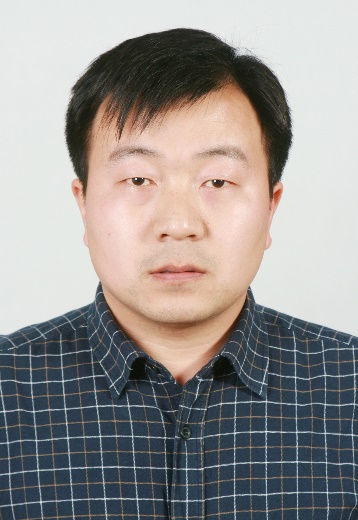 Yu Wang (王宇)合作论文数Department of Modern Mechanics, School of Engineering Science, University of Science and Technology of China25
 Qingsong Wang (王青松)合作论文数Department of Safety Science and Engineering, University of Science and Technology of China22
 Jinhua Sun (孙金华)合作论文数University of Science and Technology of China22
 Kim Meow Liew (劉錦茂)合作论文数Department of Architecture and Civil Engineering, City University of Hong Kong18
 Yuyang lu合作论文数Univ Sci & Technol China, Dept Modern Mech, CAS Key Lab Mech Behav & Design Mat, Hefei 230026, Anhui, Peoples R China14
 Cj Dai合作论文数12
 Kaijin Wu (吴开金)合作论文数Department of Modern Mechanics, School of Engineering Science, University of Science and Technology of China12
 Pierluigi Belli合作论文数Dipartimento di Fisica, Università degli Studi di Roma Tor Vergata12
 Francesco Montecchia合作论文数12Haodong Chen (陈昊东)合作论文数11
 Rita Bernabei合作论文数Dipartimento di Fisica, Universita degli studi di Tor Vergata11
 Xinglong Gong (龚兴龙)合作论文数Department of Modern Mechanics, University of Science and Technology of China;Intelligent Materials and Vibration Gontrol Laboratary, University of Science and Technology of China11
 C W Lim (林志華)合作论文数Department of Architecture and Civil Engineering, College of Engineering, City University of Hong Kong11F. Cappella合作论文数10
 R. Cerulli合作论文数INFN LNGS10
 Zhaoqiang Song合作论文数Mechanical and Aerospace Engineering Department, University of California, San Diego9Jie Yan合作论文数9
 A. D'Angelo合作论文数INFN9
 Xiangdong Sheng (盛祥东)合作论文数中国科学院大学高能物理研究所9
 Sen-Jiang Yu合作论文数9D. Prosperi合作论文数8
 Renhuai Liu (刘人怀)合作论文数School of Management, Shanghai University8
 Zipiao Ye (叶子飘)合作论文数Jinggangshan University8
 Hongwei Kuang合作论文数7Long Ma合作论文数7
 Xinhua Ma (马欣华)合作论文数中国科学院高能物理研究所7Ruiguang Wang合作论文数7
 Songlin Zheng (郑松林)合作论文数School of Mechanical Engineering, University of Shanghai for Science and Technology7Zhen-Qiang Cheng合作论文数Department of Mechanical Engineering, Texas A&M University7Yanfei Su合作论文数6Guangzheng Shao合作论文数6
 Alessandro Di Marco合作论文数6
 Hong Miao (缪泓)合作论文数Department of Modern Mechanics, University of Science and Technology of China6
 Liangming Peng (彭良明)合作论文数Department of Modern Mechanics, University of Scienee and Technology of China5
 Zhongwei Zhang (张中伟)合作论文数Institute of Advanced Structure Technology, Beijing Institute of Technology5
 Xuepeng Liu (刘雪鹏)合作论文数合肥工业大学机械工程学院5
 Zhihai Feng (冯志海)合作论文数China Academy of Launch Vehicle Technology5
 Hongyuan Jiang (姜洪源)合作论文数Department of Modern Mechanics, University of Science and Technology of China5Han Zhao合作论文数University of Science and Technology of China, Univ. of Sci. and Technol. of China5
 Ling Qiao (乔玲)合作论文数School of Civil Engineering, Southeast University5A. Incicchitti合作论文数4
 F. Nozzoli合作论文数4
 Lige Chang合作论文数4
 Mengqi Liu合作论文数4Xiao Zhang合作论文数4Xiaofeng Li合作论文数4Yi Sun合作论文数4Lijun Qin合作论文数4




