Orthodontic archwires are crucial for effective straightening teeth and improved oral health, leveraging their memory rebound properties to deliver consistent corrective forces. Manual archwire bending by orthodontists is time-consuming and prone to inaccuracies due to skill variability and the inherent complexity of three-dimensional wire manipulation. While automated archwire bending systems hold promise, current solutions struggle to simultaneously achieve the necessary accuracy, flexibility, cost-effective, and versatility for patient-specific customization. Acknowledging that the fundamental bending mechanism employs established principles, this paper presents a novel and cost-effective desktop robot specifically designed to overcome these limitations and automatically tailor the specific demands of orthodontic archwire formation. The system features bending node planning, a die-changing mechanism for versatile wire manipulation, precise wire feeding and rotation, and accurate bending and cutting capabilities. The key innovations include intelligent bending node planning for creating complex archwire geometries, overcoming the difficulty of visualizing and executing multi-planar bends, and the formulation of a quantitative bending angle model coupled with alloy-specific springback compensation, enabling precise control over archwire formation. This, along with optimized bending node planning, enables efficient generation of complex archwire shapes. A functional prototype of the desktop archwire bending robot has been developed and rigorously tested, demonstrating its ability to form both labial and hyperbolic lip archwires. While the robot exhibits strong performance, deviations were observed in the test samples, with discrepancies between designed and formed labial archwires of 1.92 % in width and 4.29 % in height. Hyperbolic lip archwire parameters showed errors ranging from 1.51 % to 6.94 %. These results highlight the robot's potential and provide a basis for future refinements to further enhance accuracy and robustness.
The acquired point clouds are generally incomplete because of the existing problems of low resolution and view occlusion in 3D scans. Focusing on these issues, this paper proposes a multi-scale point cloud shape completion network, which predicts the missing cloud points and recovers the complete geometric shapes. The network achieves multiple scales of point clouds by subsampling incomplete point clouds and predicts point clouds at multiple scales through a feature pyramid decoder. Then it calculates the loss of predicted point clouds at each level to ensure the generation of more realistic point clouds. Our major contributions lie in two aspects: on the one hand, we design a feature extraction module called composite multi-layer perceptron to improve the fusion of local and global information comprehensively. On the other hand, we introduce a patch discriminator into the network, which better controls the details of the generated point cloud by dividing the generated into multiple local regions and discriminating independently. Experimental results on the ShapeNet subset show that compared with the mainstream PF-Net structure, the accuracy of the network generated point cloud is improved by 2.9
A feature extraction and classification method of imagined speech electroencephalogram(EEG) signals was proposed by combining discrete wavelet transform(DWT) and empirical mode decomposition(EMD) in order to improve the accuracy of imagined speech brain-computer interface(BCI) control task. DWT and EMD were applied to the original imagined speech EEG signals respectively, and the features of the signal of each channel were extracted and fused. Then the RBF support vector machine(SVM) was used to classify the imagined speech EEG signals. The experimental results show that the classification accuracy can achieve an average by 82.46% with the proposed method, which is 20.77% higher than that with the DWT method, and 21.12% higher than that with the EMD method. The proposed method can effectively improve the classification accuracy of imagined speech EEG signals, and is of great value to the practical application of imagined speech BCI.
The design of orthodontic arch wires is a prerequisite for orthodontic treatment that determines the subsequent orthodontic effects. Current methods for designing orthodontic arch wires are often based on traditional manual techniques, which suffer from problems such as low accuracy and efficiency. To address these issues, a digital orthodontic arch wire design system has been developed using Unity 3D and C#. This system allows for the interactive adjustment and intelligent optimization of the shape of digital orthodontic arch wires. The developed system includes modules for curve design, contour construction, and collision detection of orthodontic arch wires, which can be customized interactively to meet the personalized needs of patients. In addition, an energy-constrained method is employed to optimize the shape of certain regions of the arch wire, which helps overcome distortion and interference issues caused by unreasonable interaction. The effectiveness of the developed system has been evaluated through experiments on digital design and optimization of orthodontic arch wires. Results demonstrate that the system can achieve accurate and efficient digital design of orthodontic arch wires, effectively reduce distortion, and is expected to improve the orthodontic effect.
为了提高脑控虚拟现实(VR)飞行模拟驾驶的准确率,提出一种基于桌面式虚拟现实技术的立体视觉刺激脑机接口(BCI)系统.该系统运用自主研发的桌面式虚拟现实视觉刺激子系统提供平面视觉刺激和立体视觉刺激2种刺激模式.结合Emotive EPOC+脑电设备采集用户的稳态视觉诱发电位(SSVEP)信号并传输至OpenVIBE脑电处理模块,利用OpenVIBE脑电处理模块对脑电信号进行滤波处理、特征提取和BCI分类器训练,然后运用训练好的BCI分类器在线对脑电信号进行采集和分类并实时转换为飞行控制指令,实现对虚拟现实(VR)飞行模拟器的在线操控.研究结果表明:在刺激频率为8.57,10,12和15 Hz及采集时间窗口为1.5 s的条件下,与平面视觉刺激相比,立体视觉刺激模式下的脑机接口分类器的平均准确率提升了6.5%,由此可见,立体视觉刺激能够诱发用户产生更具激励性的脑电响应,有利于提高脑控飞行模拟驾驶的性能.
Advancement of brain-computer interface (BCI) has shown its applications in various scenarios, including flight control. Flight simulator is a crucial part for aircraft design or experiment. Desktop virtual reality (VR)-based flight is a perfect choice for overcoming existing problems in head-mounted VR flight simulations, such as dizziness and isolation, which make interaction and sharing very difficult. In this paper, a BCI based on the steady-state visual evoked potential paradigm and a VR flight simulator were developed and integrated. The performance of the developed system was evaluated quantitatively for comparative studies. Experimental results show that the developed system is very convenient and suitable for VR flight simulations. The average operating accuracies with plane and VR visual stimuli are 81.6% and 86.8%, respectively. The VR visual stimuli can improve the average operating accuracy by 5.2% compared with the plane visual stimuli.
碳纤维增强复合材料(CFRP)广泛应用在航空航天等领域中,其内部缺陷易引发灾难性的事故,X射线成像是CFRP缺陷检测的常用手段.为了有效减少图像背景对环状CFRP X射线图像缺陷检测性能的影响,提出了一种结合LeNet-5卷积神经网络和图像变换的环状CFRP图像缺陷检测新方法.首先对环状CFRP的X射线图像进行极坐标变换,然后提取变换图像中的感兴趣区域并对其进行分块构成LeNet-5网络训练和测试的数据集,最后根据图像块的二分类结果得到缺陷的局部区域,实现缺陷检测.实验结果表明,所提方法能显著提高缺陷检测性能,与利用原始图像对LeNet-5进行训练相比,该方法使得缺陷检测的召回率、查准率和F1值分别提高了11.02%、38.60%和25.02%.
为了缩短航天维修人员的培训时间,提高维修人员的操作熟练度,设计开发了一款基于桌面虚拟现实设备的航天器维修仿真系统,摆脱了头盔式虚拟现实设备笨重、与现实世界隔绝、易头晕目眩、难以分享等问题;提出了基于XMind思维导图及SqlServer数据库的装配管理方案,实现装配规则编辑的可视化,使得装配与拆解灵活便捷.
Spectral CT can separate basis materials, and thus it can provide information on material characterization and quantification. Such information can benefit various clinical applications. However, the presence of non-ideal effects in X-ray imaging systems limits the accuracy of basis images. To achieve high accuracy of material decomposition and high quality of basis images, a novel direct iterative basis material image reconstruction based on maximum a posteriori expectation–maximization algorithm (MAP-EM-DD) is proposed. Furthermore, by incorporating polar coordinate transformation into MAP-EM-DD, MAP-EM-PT-DD is proposed. The iterative formulas of MAP-EM-DD and MAP-EM-PT-DD are derived. To evaluate the proposed methods, a simulated cylinder phantom with inserts that contain polyethylene, hydroxyapatite, salt water, air, and aluminum is established. The methods are quantitatively evaluated for comparative studies. Results show that the proposed methods can remarkably reduce the noise of basis images and error of material decomposition and improve the contrast-to-noise ratios (CNRs) of each material-specific region. Compared with the image domain material decomposition based on FBP algorithm (FBP-IDD), MAP-EM-DD can reduce the noise levels of basis images ranging from 57.4 to 63.6% and the error levels of each material-specific region from 31.7 to 62.1%. Simultaneously, the CNRs of each material-specific region are improved ranging from 63.8 to 237.3%. Compared with MAP-EM-DD, MAP-EM-PT-DD can reduce the noise levels of basis images ranging from 21.4 to 23.6%, the error levels of each material-specific region ranging from 1.9 to 36.3%, and the reconstruction time of basis images by 14.1%.
目的:研究三维实时肿瘤追踪门控放疗技术在腹部肿瘤放疗中的应用价值,并分析不同的呼吸模式对腹部肿瘤实时追踪门控放疗执行效率的影响.方法:利用4D-CT扫描技术获取30例腹部肿瘤患者的CT图像,勾画靶区和正常组织,制订普通放疗计划和三维实时肿瘤追踪门控放疗计划,从靶区剂量分布方面分析三维实时肿瘤追踪门控放疗技术的优劣.根据30例腹部肿瘤的运动特征,对三维实时肿瘤追踪门控放疗执行效率的影响因素进行分析.结果:相比普通放疗,三维实时肿瘤追踪门控放疗技术可以显著提高腹部肿瘤靶区的最小剂量和平均剂量,减小正常组织接受低剂量照射的体积.影响三维实时肿瘤追踪门控放疗执行效率的主要因素是肿瘤的运动幅值和门控窗口宽度阈值,肿瘤运动频率对执行效率的影响是与多叶准直器移动及射束开启/关闭的总时间共同作用的.结论:三维实时肿瘤追踪门控放疗技术治疗腹部肿瘤时可以减少呼吸运动对肿瘤靶区的影响,降低脱靶的发生概率.减少多叶准直器移动及射束开启/关闭的总时间是突破三维实时肿瘤追踪门控放疗执行效率瓶颈的一个重要因素.
为了解决经狭窄腔对内部目标进行多自由度大范围检测的难题,设计了一种新型线驱动连续型机器人.首先运用几何分析对该机器人进行建模,研究了单组关节的驱动空间、关节空间和操作空间之间的运动学映射定量关系,并对其工作空间进行了分析.针对2组关节协同运动时存在的耦合问题,提出了一种新的运动学解耦算法,并对线驱动连续型机器人单组关节和2组关节运动学特性进行了仿真研究.结果表明:所设计的连续型机器人能够经狭窄腔实施大范围空间的多自由度检测作业,具有良好的弯曲性能,其单组关节最大作业半径为99.33 mm;所提出的解耦算法简明有效,为经狭窄腔对内部目标进行多自由度大范围检测的线驱动连续型机器人系统的研制奠定了理论和技术基础.
为了提高双能CT基材料分解的精度,降低基材料图像的噪声,提出了基于MAP-EM算法的直接迭代基材料分解方法.结合MAP-EM算法,推导出基材料分解直接迭代求解公式,基于双能投影数据集直接重建基材料分解图像,并对该方法的性能进行了评价和分析.仿真结果表明,所提方法可显著降低分解误差和基材料图像噪声,提高对比噪声比.与基于FBP算法的图像域基材料分解方法相比,该方法可使基材料图像中各材料区域的噪声水平下降57.42% ~ 63.64%,分解误差水平降低31.72% ~62.14%,对比噪声比提高1.37% ~223.17%.
Dual energy computed tomography (DECT) plays a significant role in medical application and public security. The accuracy of the decomposition relies much on the quality of the reconstructed images. Images reconstructed by traditional methods generally suffer from significant noise, leading to the low accuracy of the material decomposition and identification. In order to solve the above problem, the maximum a posteriori expectation maximization (MAP-EM) is employed to reconstruct the CT images for the material decomposition, and the performance of the material decomposition is evaluated. A dual source DECT system with 140/80 kVp are simulated by Geant4. The MAP-EM algorithm is used to reconstruct the images from the collected projection at two different tube voltages. And then the basis material decomposition coefficient images are obtained with the basis material decomposition coefficient equations. Comparing with the commonly used filtered back projection (FBP) algorithm, the MAP-EM algorithm reduced noise in polyethylene region on the reconstructed images at two tube voltages with 80 kVp and 140 kVp up to 33.23%, 26.43% respectively. The contrast-to-noise ratios (CNRs) of the aluminum images were improved by 54.13% and 41.02%, that of the HA images by 52.75% and 40.47%, and that of the salt water images by 52.84% and 40.22% at the above two tube voltages. Compared with DE-FBP, the decomposition error of DE-MAP was reduced by 95.94% to 99.09%. In conclusion, the result shows superior performance on material decomposition and identification with high CNRs and low decomposition errors with the DECT images reconstructed by MAP-EM algorithm.
为了提高肺癌放疗计划危及器官勾画的精度和效率,提出了一种基于带孔U-net神经网络的肺癌放疗计划危及器官肺及心脏的并行分割方法.首先,构建了肺窗、心脏窗以及纵膈窗下的三通道伪彩色图像数据集,将图像数据集分成训练集、验证集以及测试集;然后,搭建了带孔U-net神经网络,利用训练集和验证集对其进行训练和参数调优;最后,利用测试集对训练后的带孔U-net神经网络进行图像分割性能评价,并与U-net神经网络及3种传统图像分割算法进行比较.实验结果表明,带孔U-net神经网络分割性能最优,可有效地完成肺及心脏的自动并行分割,提高勾画效率,分割结果与人工勾画结果相当.
Contrast-enhanced subtracted breast computer tomography (CESBCT) images acquired using energy-resolved photon counting detector can be helpful to enhance the visibility of breast tumors. In such technology, one challenge is the limited number of photons in each energy bin, thereby possibly leading to high noise in separate images from each energy bin, the projection-based weighted image, and the subtracted image. In conventional low-dose CT imaging, iterative image reconstruction provides a superior signal-to-noise compared with the filtered back projection (FBP) algorithm. In this paper, maximum a posteriori expectation maximization (MAP-EM) based on projection-based weighting imaging for reconstruction of CESBCT images acquired using an energy-resolving photon counting detector is proposed, and its performance was investigated in terms of contrast-to-noise ratio (CNR). The simulation study shows that MAP-EM based on projection-based weighting imaging can improve the CNR in CESBCT images by 117.7%–121.2% compared with FBP based on projection-based weighting imaging method. When compared with the energy-integrating imaging that uses the MAP-EM algorithm, projection-based weighting imaging that uses the MAP-EM algorithm can improve the CNR of CESBCT images by 10.5%–13.3%. In conclusion, MAP-EM based on projection-based weighting imaging shows significant improvement the CNR of the CESBCT image compared with FBP based on projection-based weighting imaging, and MAP-EM based on projection-based weighting imaging outperforms MAP-EM based on energy-integrating imaging for CESBCT imaging.
Objective To determine whether the quality insurance verification of Cyberknife Synchrony meet the clinical requirements of 3D tumor motion. Methods CT images were collected with modified Sunchrony phantom, and then a Synchrony E2E treatment plan was developed.A ball-cube with EBT film was loaded on the bed,and then placed in different movement directions to implement phantom verification plan.E2E film analysis software was used for film analysis to obtain the tracking error. Results The treatment accuracy of Synchrony in one-dimensional, two-dimensional and three-dimensional directions were 0.91, 1.03 and 0.90 mm respectively. Conclusion The present quality assurance validation method of Synchrony meets the demand of clinical three-dimensional tumor motion.
Development of spectral X-ray computer tomography (CT) equipped with photon counting detector has been recently attracting great research interest. This work aims to improve the quality of spectral X-ray CT image. Maximum a posteriori (MAP) expectation-maximization (EM) algorithm is applied for reconstructing image-based weighting spectral X-ray CT images. A spectral X-ray CT system based on the cadmium zinc telluride photon counting detector and a fat cylinder phantom were simulated. Comparing with the commonly used filtered back projection (FBP) method, the proposed method reduced noise in the final weighting images at 2, 4, 6 and 9 energy bins up to 85.2%, 87.5%, 86.7% and 85%, respectively. CNR improvement ranged from 6.53 to 7.77. Compared with the prior image constrained compressed sensing (PICCS) method, the proposed method could reduce noise in the final weighting images by 36.5%, 44.6%, 27.3% and 18% at 2, 4, 6 and 9 energy bins, respectively, and improve the contrast-to-noise ratio (CNR) by 1.17 to 1.81. The simulation study also showed that comparing with the FBP and PICCS algorithms, image-based weighting imaging using MAP-EM statistical algorithm yielded significant improvement of the CNR and reduced the noise of the final weighting image.
Electronic endoscope shares many advantages in imaging compared with fiber optic endoscope. With electronic endoscope, doctor can find disease that fiber optic endoscope can not find, thus improve detection rate of certain diseases especially early tumors, and it is extensively used in clinical application. In recent years, electronic endoscopy realizes high-definition imaging, and developed into high-definition electronic endoscope, which was combined with ultrasound technology and confocal microscopy technology respectively to develop ultrasound endoscope and confocal endoscope. This article mainly introduced current research status of these three kinds of electronic endoscope, including high-definition electronic endoscope, ultrasonic endoscope and confocal endoscope, and the future direction of electronic endoscope had been prospected.
To improve the full spectral reconstruction image quality for the image-based weighting multienergy photon counting X-ray computed tomography (CT),an improved image reconstruction method was proposed.First,the maximum a posteriori probability (MAP) statistical reconstruction algorithm was used to reconstruct the image in each energy bin.Then,the images from each energy bin were summarized with optimal weights to obtain the full spectral image.The simulation experimental results demonstrate that the MAP statistical reconstruction algorithm can significantly improve the contrast-to-noise ratio (CNR) of the full spectral reconstruction image.Compared with the filtered back projection (FBP) algorithm,for the cases with the energy spectrum split into 2,4,6 and 9 bins,the MAP statistical reconstruction algorithm can offer the CNR improvement up to 659.7%,643.4%,621.2% and 586.1% for calcium,663.8%,648.6%,635.1% and600.9% for iodine,596.2%,638.5%,592.6% and 596.3% for soft tissue,respectively.Compared with the energy-integrating method,for the energy-resolved cases with 2,4,6 and 9 energy bins,the MAP statistical reconstruction algorithm can offer the CNR improvement up to 43.3%,49.1%,49.3% and 44.5% for calcium,43.2%,45.7%,45.7% and 40.2% for iodine,21.5%,28.9%,25.5% and 26.2% for soft tissue,respectively.
To improve the contrast-to-noise ratio (CNR)of the full spectral reconstructed image of multi-energy photon counting X-ray computed tomography (CT ),an improved projection-based weighting method for image reconstruction is proposed.First,the projection simulation for three kinds of phantom including different contrast materials was carried out and the projection sinograms with Poisson noise and Gaussian noise were obtained.Then,the noise information was extracted from these sinograms,and the CNR optimization function with regard to the weights was formula-ted.Finally,the optimal weights were figured out and used for the projection-based weighting image reconstruction,and the reconstructed images are evaluated.The experimental results show that, compared with the current projection-based weighting image reconstruction method considering Pois-son noise only,the proposed method can obviously improve the CNR of the reconstructed image for the phantom containing contrast material calcium.However,there is no statistically significant difference in CNR for the phantoms containing either iodine or contrast material soft tissue.
 Limin Luo (罗立民)合作论文数School of Computer Science and Engineering, Southeast University17
 Shisong Wei (魏士松)合作论文数9ZiLi Yu (余子丽)合作论文数9
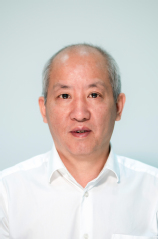 Huazhong Shu (舒华忠)合作论文数School of Artificial Intelligence, Southeast University9Shaolin Guan (管绍林)合作论文数8YuanHua Chen (陈元华)合作论文数8Xuling Zhang (章栩苓)合作论文数7Runchao Xin (辛润超)合作论文数6Jia Junshan (贾峻山)合作论文数6WenWen Zhang (张雯雯)合作论文数6毛玲合作论文数College of Automation Engineering, Nanjing University of Aeronautics and Astronautics6
 Yaodong Dai (戴耀东)合作论文数College of Materials Science and Technology, Nanjing University of Aeronautics and Astronautics5
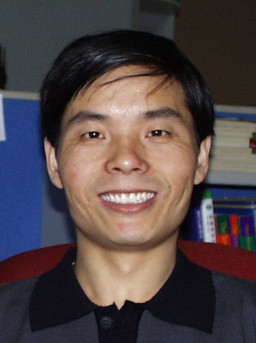 Wenxue Yu (於文雪)合作论文数School of Computer Science and Engineering, Southeast University5ZHANG Ling-wei (张灵维)合作论文数4
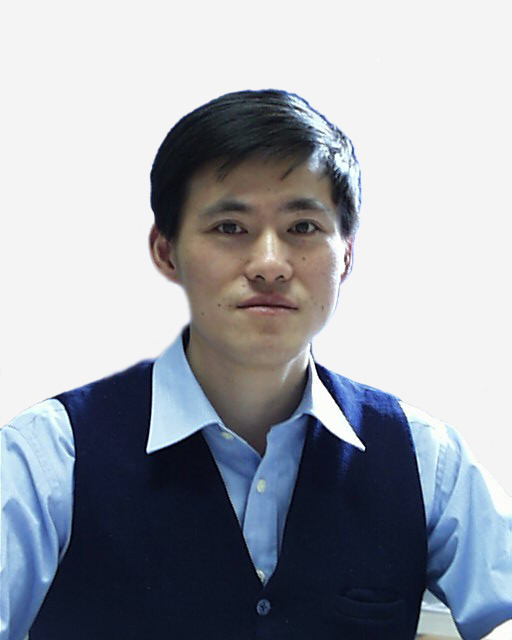 Xudong Bao (鲍旭东)合作论文数School of Computer Science and Engineering, Southeast University4
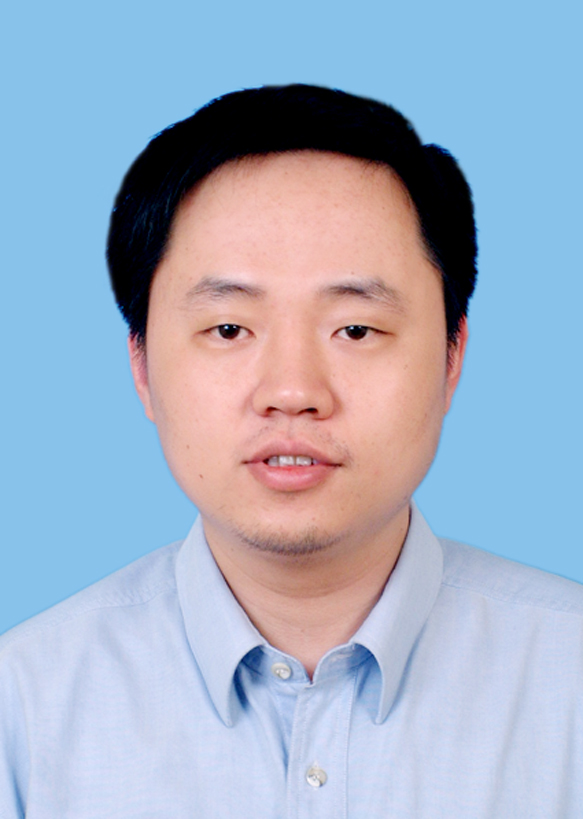 Pinzheng Zhang (章品正)合作论文数School of Computer Science and Engineering, Southeast University4
 Pascal Haigron合作论文数4Xixu Zhu (朱锡旭)合作论文数Medical School of Nanjing University4Jiali Tu (涂佳丽)合作论文数3Dong-Dong WANG (王东东)合作论文数3JunShu Shen (沈君姝)合作论文数3Zhang Zhao-Chang (张召长)合作论文数3
 Antoine Lucas合作论文数Equipe de Sismologie;Institut de Physique du Globe de Paris;UniversiteDenis Diderot;Institut de Physique du Globe de Paris, UniversiteDenis Diderot3Fengmei Zou合作论文数3
 Xiaoyun Liang合作论文数 Neusoft Medical Systems, Co. Ltd.3Kwabena Agyepong合作论文数3Liu Chuanle (刘传乐)合作论文数2Jianbo Li合作论文数2Jun HUANG (黄俊)合作论文数2Jianbo Li (李剑波)合作论文数2ShengHua Jing (景生华)合作论文数2Han Zhou (周含)合作论文数2Zhen Wang (王振)合作论文数2Bing Li (李兵)合作论文数2Manens Jean-Pierre合作论文数2
 Ligong Wang (王立功)合作论文数School of Radiation Medicine and Protection, Soochow University2
 Hui Tang (唐慧)合作论文数School of Computer Science and Engineering, Southeast University2Zhongyuan Ge (葛中远)合作论文数2
 Zheng Wang (王征)合作论文数School of Cyber Science and Engineering, Southeast University2
 Yufeng Zheng (郑玉锋)合作论文数Department of Data Science, The University of Mississippi Medical Center2Yajun Wu (伍亚军)合作论文数2Changchen Jiang (蒋长晨)合作论文数1Cécile Moisan合作论文数1Chengcheng Rong合作论文数1mingeorge sandison合作论文数1Yuanhua Chen合作论文数1Aomei Li合作论文数1Ling Mao合作论文数1Yifan Zhou合作论文数1




