This letter proposes a Value of Information (VoI)-driven multi-Unmanned Aerial Vehicle (UAV) collaboration framework for Internet of Things device (IoTD) data collection in unknown environments. Each UAV plans its path using partially outdated local observations shared among neighbors via the proposed knowledge-sharing mechanism under limited communication. To address partial observability and inter-agent dependency, we propose a Multi-Agent Transformer-based Proximal Policy Optimization (MATPPO) algorithm, in which the critic network is replaced with a Transformer encoder to capture the interactions between UAVs and IoTDs. Experimental results indicate that MATPPO achieves superior performance in terms of the collected VoI compared to traditional baselines.
The advent of the 5G RedCap, the upcoming 6G and the proliferation of the Internet of Things (IoT) have catalyzed the rapid advancement of unmanned aerial vehicle (UAV) technology while also promoting UAVs' widespread application. In IoT-enabled environments where the global positioning system (GPS) signals are compromised, visual simultaneous localization and mapping (V-SLAM) technology has emerged as an effective positioning solution, valued for its reliability. However, the presence of dynamic elements in complex environments, such as pedestrians and vehicles, poses challenges to the positioning accuracy of UAVs employing V-SLAM for navigation. This paper proposes a dynamic feature filtering-based SLAM (DFF-SLAM) approach to eliminate the impact of dynamic factors in dynamic environments, thereby enhancing the positioning accuracy of UAVs in IoT-enabled complex environments. Firstly, a semantic detection thread is designed to identify semantic information in the scene and acquire prior dynamic targets, facilitating the filtering of prior dynamic feature points. Secondly, optical flow tracking conducted at each level of the image pyramid facilitates feature point matching across consecutive images. Finally, the epipolar geometry constraint is utilized to determine the motion status of remaining feature points, further filtering out dynamic feature points. Simulation results demonstrate that compared to traditional visual SLAM systems, the UAV equipped with the DFF-SLAM system achieves more accurate positioning and meets real-time positioning requirements when navigating through IoT enabled complex environments
As multi-robot mapping systems expand into data-intensive environments, efficient data transmission methods are essential for maintaining global consistency and safety under scarce and time-varying bandwidth. In this work, we propose a Feedback-Guided Hierarchical Transmission framework for centralized multi-robot mapping. In this framework, the submap representation is structured with three layers: L1 extracts the pose-and-factor skeleton to ensure topological consistency with minimal overhead; L2 streams geometric details, prioritized by semantic-weighted entropy reduction to refine the occupancy map; L3 delivers semantic labels to support high-level understanding. To optimize transmission, the backend performs centralized occupancy fusion and employs Truncated Least Squares Graduated Non-Convexity (TLS-GNC) pose-graph optimization and a Lambda-Field risk model to produce guidance signals. These signals dynamically reshape the utility curves of the layers to prioritize loop-closure consistency and safety-critical regions. Experiments are conducted on S3DIS and ScanNet indoor RGB-D datasets to validate the effectiveness of the proposed framework. The performance evaluation under bandwidth sweeps and packet loss tests indicates that our method reaches joint geometry-and-semantics accuracy with fewer bytes, recovers loop closures faster, and lowers estimated collision risk in rendezvous regions compared with non-hierarchical baselines.
The multi-Uncrewed Aerial Vehicle (UAV) networks have been widely studied due to their advantages in regional video surveillance. Specifically, an architecture of multi-UAV network is widely employed for seamless video capturing and backhaul transmission. The multi-UAV surveillance network can dynamically control its video capturing process and resolution selection, allowing for a trade-off between video quality and seamlessness, quantified by the Length of Inter-frame (LoI-F). Each UAV's video capturing, resolution selection, and backhaul scheduling are jointly optimized to maximize the network's average video quality while adhering to a maximum average LoI-F constraint per UAV, ensuring seamless video capturing. An online control algorithm leveraging the Lyapunov drift-plus-penalty method is proposed to address this joint online optimization problem. The network operations based on real-time UAV states are adapted online by the algorithm to enable efficient resource allocation. An optimality analysis of the algorithm is provided, demonstrating the effectiveness of it in achieving the desired goals. Furthermore, the proposed algorithm is extended to a two-timescale variant, specifically targeting the reduction of inter-frame jitter, a critical metric for video smoothness. The optimality loss of this two-timescale algorithm is proved to be upper bounded while preserving the asymptotic optimality of the online control algorithm. Extensive simulations validate the performance of our proposed online control algorithm, showcasing its ability to enhance average video quality compared to other schemes while enabling seamless video capturing for multi-UAV surveillance networks.
Multi-source remote sensing data, such as hyperspectral imagery, SAR, and LiDAR, provide complementary spectral, structural, and geometric information for land-cover classification and semantic segmentation. However, effective fusion remains challenging because of the large modality gap across remote sensors and the need to jointly model local details and global contextual structures. Existing deep learning methods still face difficulties in balancing cross-modal interaction, representation capability, and computational efficiency. Although Kolmogorov-Arnold Networks (KANs) offer strong nonlinear modeling ability, their heavy parameterization and unstable computation limit practical use in remote sensing. In response, we introduce Spectral-KAN Fusion Network (SKANet), a unified single-stream framework that synergizes frequency-domain global perception with learnable high-order non-linearity for multi-source remote sensing interpretation. The core of SKANet is the SpectralKAN module, which features a dual-branch topology, i.e., a frequency gating branch utilizing Fast Fourier Transform (FFT) to capture global structural information, and a KAN branch employing learnable B-spline transformations to model complex semantics. To mitigate task-specific dimensional disparities, we incorporate adaptive configurations, such as a Channel-Spectral approach for categorization to manage dimensionally reduced inputs, and a Spatial-Spectral approach for delineation to retain detailed spatial integrity. Additionally, an adaptive multi-modal integration component is engineered to flexibly adjust sensor-derived attributes during initial processing phases. Extensive experiments on three benchmark datasets (Berlin, MUUFL, and Houston2018) demonstrate that SKANet establishes state-of-the-art performance, achieving overall accuracies of 73.70%, 89.24%, and 67.84%, respectively, demonstrating the effectiveness of SKANet for multi-source remote sensing classification and segmentation.
Multi-UAV-assisted information collection is an effective solution for large-scale Internet of Things (IoT) networks, but it is challenged by limited onboard energy, charging requirements, and the need for coordinated path planning among multiple UAVs. This paper investigates a multi-UAV information collection problem in which UAVs cooperatively collect data from distributed IoT devices under energy constraints, charging operations, and collision avoidance constraints, with the objective of minimizing the total mission completion time. The considered problem is formulated as a multi-agent Markov decision process. To address the coupled and high-dimensional decision-making nature of the system, a multi-agent deep deterministic policy gradient (MADDPG) framework with centralized training and decentralized execution is developed for cooperative UAV path planning. An energy-aware reward function is designed to jointly account for information collection efficiency, energy consumption, and charging behavior. Simulation results demonstrate that the proposed approach achieves shorter mission completion time and better scalability compared with DDPG-based and MAPPO-based methods.
High-power pulse systems demand dielectric ceramics with high recoverable energy storage density (Wrec), efficiency, and stability. Relaxor ferroelectrics are promising due to high polarization and low loss. In this work, a binary solid solution of 0.7Na0.5Bi0.5TiO3-0.3Sr0.7Bi0.2TiO3 was used as the base composition. A series of high-entropy relaxor ferroelectric ceramics, (1-x)(0.7NBT-0.3SBT)-x(Ca0.5Ba0.5)(In0.5Ta0.5)O3 (x = 0.05 0.30), featuring highly disordered crystal structures, were synthesized via a solid-state reaction method through simultaneous multi-cation doping at both the A- and B-sites. Characterization techniques including structural analysis, morphology observation, and basic electrical property measurements demonstrated that this A/B-site co-doping strategy effectively enhanced the relaxor characteristics. Systematic evaluation of energy storage performance identified the optimal composition (x = 0.1), which achieves a Wrec of 1.1 J·cm−3 at 110 kV·cm−1, representing a relatively high value for bulk ceramics under moderate electric fields. These findings provide experimental support and a technical reference for developing high-performance energy storage ceramics.
Lead zirconate titanate (PZT)-based piezoelectric ceramics are crucial components in high-power magnetoelectric (ME) antenna devices, contributing to the miniaturization of very low frequency (VLF) communication systems. The piezoelectric coefficient (d33) and mechanical quality factor (Qm) determine the quality of the radiation performance of the antenna device and, therefore, play a pivotal role in antenna preparation and selection. However, achieving high values for both d33 and Qm simultaneously proves challenging, as these properties often tend to compete with each other. Herein, we address this challenge by introducing MnCO3-modified lead magnesium niobate (PMN)-PZT piezoelectric ceramics, leveraging elements doping to achieve a well-balanced performance, where the d33 was optimized to 530 pC/N, while concurrently attaining a Qm of 624, being attributed to the synergistic contributions from the defect dipole and lead vacancies. Notably, the PMN-PZT-based antenna device exhibits a significantly enhanced converse ME coefficient alpha CME = 0.138 Oecm/V, which improves the antenna emission performance by about 25% compared to commercial PZT-4 samples. These findings offer a promising theoretical foundation and a feasible technical pathway for the development and design of ME antennas in the future.
To address the resource allocation problem in dynamic environments where multiple unmanned aerial vehicle base stations (UAV-BSs) provide efficient downlink services to ground users, this paper proposes a novel hierarchical decision-making mechanism based on the Proximal Policy Optimization (PPO) algorithm. The proposed method optimizes time-frequency resource allocation in the downlink, aiming to maximize the total user throughput over multiple time slots. By constructing channel and interference models, the complex multi-channel resource allocation problem is decomposed into a series of single-channel decision subproblems, significantly reducing the action space complexity. Specifically, the original exponential complexity O(NM) (where N is the number of users and M is the number of channels) is reduced to a linear complexity O(N), effectively alleviating the curse of dimensionality. Simulation results demonstrate that the proposed hierarchical architecture, integrated with the PPO algorithm, achieves superior performance in terms of total throughput, convergence speed, and stability compared to existing methods. This study provides new insights and technical support for efficient resource management in UAV-BS systems operating in complex and dynamic environments.
Relative navigation provides relative position information for unmanned aerial vehicle (UAV) swarm. Accurate and reliable relative position information is vital to ensure the successful execution of cooperative tasks. Integrity monitoring (IM) is essential for assessing reliability of relative position information. However, existing IM methods are unable to evaluate the availability of relative navigation systems in global navigation satellite system (GNSS)-denied environments. To address this challenge, a relative navigation integrity monitoring (RNIM) algorithm is proposed. The proposed algorithm employs Kalman filter innovation residuals to detect faults in relative time of arrival (TOA) measurements based on a relative state-space model. A novel relative protection level is introduced to evaluate the availability of relative navigation systems in GNSS-denied environments. Simulation results show that the proposed algorithm effectively detects and isolates faults in relative TOA measurements while accurately assessing relative navigation system availability. Copyright (c) 2025 The Authors. This is an open access article under the CC BY-NC-ND license (https://creativecommons.org/licenses/by-nc-nd/4.0/)
Dielectric ceramics encounter significant challenges in achieving a simultaneous balance of high energy density and efficiency for miniaturized energy storage applications. This study introduces a B-site local structure regulation strategy in Na0.5Bi0.5TiO3-Sr0.7Bi0.2TiO3 (NBT-SBT) ceramics through (Sc1/2Nb1/2)4+ co-doping to disrupt lattice symmetry and induce strong chemical disorder. Sc/Nb doping effectively suppresses oxygen vacancy mobility, as confirmed by XPS analysis, and reduces residual polarization Pr to 1.46 mu C center dot cm- 2. The optimized composition (0.2 mol% Sc/Nb) achieves a high EBD achieving 100 kV center dot cm- 1 and delays polarization saturation under high electric fields. Consequently, a recoverable energy density Wrec of 2.16 J center dot cm- 3 with efficiency eta > 88 % is obtained at 100 kV center dot cm- 1. Thermal stability is demonstrated with over 90 % efficiency retention across the temperature range of 50-200 degrees C. Furthermore, ultrafast discharge within 3 mu s delivered 93.06 % of the theoretical energy density at a power density of 14.13 MW center dot cm- 3.
With the ongoing development of artificial intelligence (AI) and wireless network technologies, the future network shifts from connecting everything to connected intelligence in the interaction between the human, physical, and digital worlds. The sixth generation (6G) networks are envisioned to deeply integrate new multidimensional capabilities such as communication, computing, sensing, AI and security to ensure users’ personalized service quality experience for innovative applications, calling for innovative architectures and new solutions. A key issue is rethinking how future networks will be designed, deployed, and managed. In this paper, we provide a prospective vision of trends, use cases, principles for the 6G network and the key enabling technologies for realizing future networks. In this regard, we first present the system-level perspective on 6G scenarios and characterize the diversified requirements. Then, the key principles for the 6G network architecture are addressed. Particularly, based on advanced flexibility and agility, a cloud-native-enabled intelligent 6G network architecture for user-specific applications is initially proposed to support the critical challenges of increasingly heterogeneous networking paradigms, highly dynamic network environments, and providing diversified intelligent services with stringent quality of service (QoS) requirements. It is important that atomic 6G network functions in our framework are designed to be cloud-native friendly and efficiently managed by decoupling and refactoring multi-dimensional service capabilities. Finally, several potential 6G directions are highlighted that could drive the development of the cloud-native communication concept.
The development of the internet of things (IoT) and 6G has given rise to numerous computation-intensive and latency-sensitive applications, which can be represented as directed acyclic graphs (DAGs). However, achieving these applications poses a huge challenge for user equipment (UE) that are constrained in computational power and battery capacity. In this paper, considering different requirements in various task scenarios, we aim to optimize the execution latency and energy consumption of the entire mobile edge computing (MEC) system. The system consists of single UE and multiple heterogeneous MEC servers to improve the execution efficiency of a DAG application. In addition, the execution reliability of a DAG application is viewed as a constraint. Based on the strong search capability and Pareto optimality theory of the cuckoo search (CS) algorithm and our previously proposed improved multiobjective cuckoo search (IMOCS) algorithm, we improve the initialization process and the update strategy of the external archive, and propose a reliability-constrained multiobjective cuckoo search (RCMOCS) algorithm. According to the simulation results, our proposed RCMOCS algorithm is able to obtain better Pareto frontiers and achieve satisfactory performance while ensuring execution reliability.
With the rapid development of Unmanned Aerial Vehicle (UAV) technology, UAV swarms are used for emergency tasks in various scenarios such as area detection, fire rescue, logistics, and transportation. However, for complex scenarios, UAV swarms are prone to environmental interference that damages their equipment or disrupts their communication links, affecting the normal execution of tasks. In this paper, an information–communication interdependent network model is designed for the vulnerability analysis of UAV swarm networks with emergency tasks. Firstly, from the perspective of network functions of a UAV swarm, we introduce the theory of interdependent networks to abstract the relationship between the UAV swarm’s communication network and its information network, where the communication network represents its communication topology and the information network is related to the function of each UAV individual in the UAV swarm. Then, the vulnerability of the UAV swarm is analyzed according to the relationship between network construction costs and network connectivity under environmental interference. Finally, the effectiveness of the vulnerability analysis method is verified through simulation.
The memristor, characterized by its resistive switching (RS) behavior, has garnered significant interest within the scientific community, particularly because of its vast potential applications in the fields of artificial intelligence (AI) and information storage. This is attributed to its unique properties, which align well with the requirements of advanced computational and memory systems. Ferroelectric memristors are currently a thriving area of research, and this study uses Sm-doped Pb(Mg1/3Nb2/3)O3–PbTiO3 (Sm-PMN-PT) and polyvinylidene difluoride (PVDF) as the functional layer. A multi-factor responsive memristor based on a Ag/Sm-PMN-PT:PVDF/ITO sandwich structure is fabricated, for which the RS behavior of the memristor can be adjusted by multi-factors such as voltage scanning rate, bias voltage amplitude, temperature and environmental humidity. Specifically, this device is sensitive to changes in environmental humidity and exhibits the properties of an artificial neural synapse. These advantageous characteristics endow this device with great potential for use in environmental sensors and artificial neural network (ANN) systems.
With the increasing complexity of environments and the diversity of task chains, individual unmanned aerial vehicles (UAVs) often struggle to satisfy the demands of task chains, including load capacity improvement, information perception, and information procession. In complex task chains involving various UAVs, such as area reconnaissance and fire rescue, any attack on critical UAVs can greatly disrupt the execution of the entire task chain by causing equipment damage or connectivity disruption. To ensure network resilience post attack, identifying vulnerable nodes in the UAV network becomes crucial. In this paper, a Vulnerability-based Topology Reconstruction Mechanism (VUTRM) is proposed to rank the importance of nodes in task chains and formulate a topology reconstruction. It consists of two parts: the first part is a Multi-metric Node Vulnerability Assessment Algorithm (MENVAL) used to rank the importance of nodes in task chains, and the second part is a Node Importance-based Topology Reconstruction Algorithm (NITRA) used to reconstruct the UAV network with the obtained node ranking. Finally, simulations carried out with simulation software demonstrate that our proposed method accurately identifies network vulnerabilities and promptly implements effective reconstruction measures to minimize network damage.
With the rapid improvement of UAV imaging equipment in terms of image resolution and video frame rate, relying solely on software to enhance images with extremely high data volume is no longer sufficient to meet real-time requirements. Therefore, a new method of processing image signals utilizing field programmable gate array (FPGA) hardware is proposed. This method involves analyzing traditional image enhancement algorithms to solve problems such as incorrect frame mapping, low contrast image enhancement, and incomplete comparison image enhancement mechanism resulting in noise during the engineering process. A limited contrast enhancement mechanism is also proposed to suppress the appearance of enhancement noise. Using the FPGA system, a hardware optimization design method is employed, including parallel processing, pipeline operation, and equivalent conversion, to achieve hardware image enhancement with extremely low resource consumption. This allows for the realization of video image enhancement with a resolution of 1920*1080 and a frame rate of 100Hz. The system has improved the overall brightness of images, target contrast, and image information restoration, and has achieved good results. This algorithm can be widely used in engineering design.
This article rigorously explores the self-directed allocation of resources in communication networks powered by multiple Unmanned Aerial Vehicles (UAVs), aimed at optimizing long-term gains. To model the complexities of dynamic and unpredictable environments, we formulate the challenge of long-term resource allocation as a stochastic game. Our primary objective is to maximize expected rewards, with each UAV functioning as a learning agent and each resource allocation solution corresponding to an action executed by the UAVs within a Multi-Agent Reinforcement Learning (MARL) framework. Moreover, we introduce an agent-agnostic approach, where all agents independently implement a decision algorithm, yet maintain a shared structure based on SARSA (State-Action- Reward-State-Action). Our simulations demonstrate that the proposed algorithm exhibits a rarity that is commendable, particularly when compared to scenarios that demand exhaustive information exchange among the UAVs.
Cooperative formation control is the research basis for various tasks in the multi-UAV network. However, in a complex environment with different interference sources and obstacles, it is difficult for multiple UAVs to maintain their connectivity while avoiding obstacles. In this paper, a Connectivity-Maintenance UAV Formation Control (CMUFC) algorithm is proposed to help multi-UAV networks maintain their communication connectivity by changing the formation topology adaptively under interference and reconstructing the broken communication topology of a multi-UAV network. Furthermore, through the speed-based artificial potential field (SAPF), this algorithm helps the multi-UAV formation to avoid various obstacles. Simulation results verify that the CMUFC algorithm is capable of forming, maintaining, and reconstructing multi-UAV formation in complex environments.
On the modern information battlefield, UAV have been widely used due to the advantages of no casualties and good maneuverability. However, during the UAV swarm combat, the UAV network will be interfered by the enemy, which will damage some key UAV nodes or communication links and affect the connectivity of the entire network, thus leading to the fact that the entire network becomes more vulnerable. Therefore, it is necessary to study the network vulnerability of UAV networks in interference scenarios. In this paper, a coupled map lattice (CML) model which is a dynamic system with discrete time, discrete space, and continuous state variables is proposed to assess the vulnerability of UAV networks. The CML model integrates multiple topological indicators such as node degree, node betweenness, and node clustering coefficient, and reflects the node state change of the UAV network in the interference scenario from the topological point of view. When changing the strategy of interfering UAV nodes in different interfering scenarios, the relative network efficiency and failure proportion are used as indicators to study the change of network vulnerability. The studies show that precisely interfering important UAV nodes in a network can cause more damage to the UAV network. We also discover that as the intensity of external interference increases, the entire network will become increasingly vulnerable and the vulnerability of the network will also have different manifestations under different interfering strategies.
 Qinghai Yang (杨清海)合作论文数Xidian University31
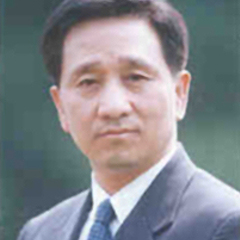 Kyung Sup合作论文数Graduate School of Information Technology and Telecommunication, Inha University17
 Meng Qin合作论文数Department of Strategic & Advanced Interdisciplinary Research, Pengcheng Laboratory9
 Nan Cheng (承楠)合作论文数State Key Lab. of ISN, School of Telecommunications Engineering, Xidian University5Zijia Huang合作论文数4
 Ying Shang合作论文数3FengLin Fu (傅丰林)合作论文数3
 Fei Li (李飞)合作论文数Department of Electronic Science and Technology, The School of Electronic Science and Engineering, Faculty of Electronic and Information Engineering, Xi'an Jiaotong University3Qingfeng Yue合作论文数2Yue Lu合作论文数2Chunchun Li合作论文数2Cheng Ma合作论文数2
 Ramesh Rao合作论文数Department of Electrical and Computer Engineering, Jacobs School of Engineering, University of California2
 Yang Li合作论文数2
 Bo Bai (白勃)合作论文数School of Telecommunications Engineering, Xidian University2
 Xuemin (Sherman) Shen (沈学民)合作论文数Department of Electrical and Computer Engineering, University of Waterloo2
 Li Feng合作论文数2Kaikai Gao合作论文数1Wen Gao合作论文数1
 Bo Yang合作论文数1Yi Lyu合作论文数1Shuai Yang合作论文数1
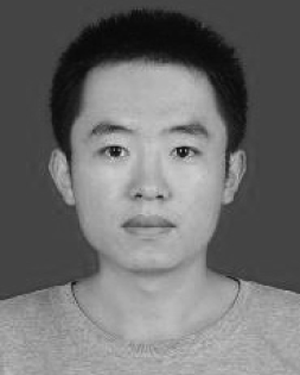 Peng Wei合作论文数1Nawaf Qasem Hamood Othman合作论文数1Zhuoqun Li合作论文数1
 Guanchong Niu (牛冠冲)合作论文数Guangzhou Institute of Technology, Xidian University1Yu Cui合作论文数1
 Bai Sun (孙柏)合作论文数1Zelin Cao合作论文数1Bo Su合作论文数1
 Wenchao Xu合作论文数Hong Kong Polytech Univ, Dept Comp, Hong Kong, Peoples R China1
 Zewei Jing (景泽伟)合作论文数Guangzhou Institute of Technology, Xidian University1
 Xiaozheng Gao (高晓铮)合作论文数School of Information and Electronics, Beijing Institute of Technology1Kun Zhu (朱琨)合作论文数1
 Shuai Zhang (张帅)合作论文数School of Electronic Engineering, Xidian University1
 Longlong Shu (舒龙龙)合作论文数School of Physics and Materials Science, Nanchang University1Fenggang Ren合作论文数First Affiliated Hospital, Xi'an Jiaotong University1
 Yaojin Wang (汪尧进)合作论文数School of Materials Science and Engineering, Nanjing University of Science & Technology1
 Weihua Wu合作论文数1
 Xizheng Ke (柯熙政)合作论文数Xi'an University of Technology1
 Yulong Huang (黄玉龙)合作论文数College of Intelligent Systems Science and Engineering, Harbin Engineering University1
 Lu Wang (王鲁)合作论文数School of Materials Science & Engineering, Beijing Institute of Technology1
 Peng Gong (龚鹏)合作论文数School of Mechatronics Engineering, Beijing Institute of Technology1
 Kai Yang (杨凯)合作论文数School of Information and Electronics, Beijing Institute of Technology1
 Yongjian Yang (杨永健)合作论文数College of Computer Science and Technology, Jilin University1
 Yuan Wu (吳遠)合作论文数State Key Lab of Internet of Things for Smart City, Department of Computer and Information Science, Faculty of Science and Technology, University of Macau1




