BACKGROUND:Acel ular dermal matrix has good biocompatibility and absorbability and exhibits superiority in the guided bone regeneration. OBJECTIVE:To compare the histological changes and osteogenic effects in bone defects after guided bone regeneration with acel ular dermal matrix and Bio-Gide membrane. METHODS:Mandibular second, third and fourth premolars and the first molars bilateral y were extracted from 12 beagle dogs. Three months later, four three-wal bone defect models in the mandible of each dog were made, and randomized into acel ular dermal matrix plus bone graft group (acel ular dermal matrix group), Bio-Gide plus bone graft group (Bio-Gide group), bone graft group, and blank control group (no treatment). In the former two groups, acel ular dermal matrix and Bio-Gide were used to cover the bone grafts, respectively. RESULTS AND CONCLUSION:After surgery, al the beagle dogs recovered wel . Al the groups except the control group showed dramatical improvement in histological changes and percentage of new bone area, and this improvement was more significant in the Bio-Gide and acel ular dermal matrix groups. Moreover, there was no significant difference between the Bio-Gide and acel ular dermal matrix groups. Therefore, the acel ular dermal matrix can be a candidate for bone repair instead of Bio-Gide membrane in the clinical practice.
目的 探讨义齿种植修复中莫氏锥度与内六角设计的基台一种植体连接结构的稳定性及临床效果.方法 186例单颗牙缺失患者植入Ankylos种植体87颗,3i种植体99颗,3~6个月后采用莫氏锥度连接的Banlance基台(Ankylos)和内六边连接的GingiHue基台(3i)行上部结构修复,随访6~36个月.结果 186颗种植体骨结合良好,未见中央螺丝折断现象,种植成功率100%;观察期内出现5例中央螺丝松动,剩余181例患者中除1例牙龈诱导时伴发唇侧牙龈脓肿外基台一种植体稳定性均较好,种植体颈部骨结合良好,患者对种植牙的功能及美观效果满意.结论 Ankylos种植系统的莫氏锥度连接与3i种植系统的内六角连接均具有良好的稳定性,并能取得满意的临床修复效果.
目的:对口腔修复中不同材料摩擦性能进行对比分析.方法:选择到我院进行口腔修复的82例患者,102颗牙齿作为研究对象,分别选用口腔金属材料、口腔陶瓷材料、口腔树脂材料对牙齿进行修复,对三种不同材料修复牙齿的抗摩擦性能进行跟踪比较分析.结果:对患者进行治疗后的6个月及1年的随访结果我们可以看出,使用此三种不同的口腔修复材料进行口腔修复,均能有效的防止原有牙组织磨损,临床效果良好,且三种不同材料的临床疗效相比较,差异无显著性意义(P>0.05).结论:三种不同的口腔修复材料在使用过程中具有各自的特点,应该根据患者的口腔情况选择合适的修复材料.
To investigate the osseointegration condition of ITI and Osstem-SS implants by measuring the implant stability quotient (ISQ) so as to provide guidance for proper restoration time.Method:Ninety-three patients were selected as subjects.179 implants were implanted.According to bone quantity of edentulous area,all the subjects were divided into two groups.62 patients with sufficient bone quantity were in group A,while 31patients with insufficient bone quantity who needed bone-added surgery were in group B.125 implants were implanted in group A,including 64 ITI implants and 61Osstem-SS implants.54 implants were implanted in group B,including 28 ITI implants and 26 Osstem-SS implants.Implant stability quotient (ISQ) was measured immediately after surgery as well as at the 4,6,8,12,16,24 weeks after surgery.Clinical and imaging examination was taken at the same time.Results:In group A,final restoration of ITI implants was completed 8 weeks after surgery when the ISQ was 74.17± 1.85,while 12 weeks with ISQ was 72.00± 2.59 for Osstem-SS implants.In group B,16 weeks with ISQ was 65.09± 3.42 for ITI implants and 24 weeks with ISQ was 62.09± 6.16for Osstem-SS implants.In the following period of 3 to 24 months after restoration,no failure case was observed.Conclusion:Implant stability quotient (ISQ) can represent the osseointegration condition of implants,which will help to choose the proper restoration time.
PURPOSE:To evaluate and compare the dynamic changes in functional loading or non-functional loading with platform-switching (PLS) implants and butt-joint implants,and to refine the factors leading to marginal bone loss around PLS.METHODS:Six adult dogs were selected and numbered randomly.The second,third and fourth premolars in bilateral mandible of each dog were extracted. After 3 months, the implantation operation was carried out. There were 3 kinds of implants, 36 implants in total, which were divided in to 3 groups: Group A,Group G and Group U. In particular order, A, G and U were placed on each side of every dog. Three months later, the 2nd surgery was begun. At the 4th month from the 1st surgery, for each dog, on the right side only, the abutments were installed and impression was taken. Then, after 2 weeks, the dental prostheses were put on. All dogs were executed at the end of the 12th month. X-ray film was taken at the 3rd, 6th, 9th and 12th month and the moment of the 1st surgery (baseline). Measurements were made between the implant shoulder (IS),the most coronal level of bone in contact with implant (CLB), and the level of alveolar bone crest (BC). According to the different groups of implants (A, G, U), all records were analyzed with paired and Wilcoxon's signed rank test using SPSS11.5 software package.RESULTS:The mean IS-CLB and IS-BC values of group A, G were significantly different with those of group U at the 6th, 9th and 12th month, while there was no significant difference between group A and G. No matter they were loading or not, the self-comparison of each kind of implant presented no significant difference. There was no significant difference between every kind of implant on their self-comparison during the first three months; while, the differences were significant during the next 9 months.CONCLUSIONS:The most significant changes in the absorption of marginal bone around two stage submerged implant can be observed after 3 months of implanting. The bone absorption was not related to functional loading or not.
<正>目前,口腔科门诊的医院感染控制越来越引起医疗机构的广泛重视,成为医院感染管理监控的重点科室之一。如何加强口腔科门诊医院感染管理,是保障患者安全和维护医务人员健康的一项重要工作。本文就目前口腔科门诊医院感染的现状和应对措施进行了探讨与分析。
BACKGROUND: Peri-implant crestal bone resorption is considered as a normal reaction according to traditional butt-joint prosthesis around two-piece implants. OBJECTIVE: To evaluate bone loss around two-piece implants restored according to the platform switching concept in the posterior area of the mandible. METHODS: Eighty-eight implants were consecutively placed in 50 patients following submerged surgical protocol. In the test group, 40 Ankylos implants were placed using platform switching technique, while 48 3i implants using traditional butt-joint in the control group. All the implants were positioned at the crestal level. Definitive prosthesis was delivered after 3 months. RESULTS AND CONCLUSION: All implants were judged to be successfully osseointegrated. The success rate was 100%. Twelve months after restoration, radiographic analysis showed an average bone reduction level of (0.31±0.39) mm in the test group that was statistically significantly different (P < 0.01) from the average reduction in the control group [(0.94±0.43) mm]. In the follow-up time, no implants were loose or lost and healthy gingival was seen. These findings show that the platform switching technique can reduce peri-implant crestal bone resorption and preserve alveolar bone level around dental implants 12 months after restoration.Oral Implantology Center, Affiliated Hospital of Medical College, Qingdao University, Qingdao 266003, Shandong Province, China
Objective To explore the role of bi-teacher system in teaching clinical nursing skills. Methods Of this study,206 student nurses of 2008—2009 school year served as bi-teacher system(BTS) group;176 students of 2007—2008 school year as control group,one-on-one apprentice system was carried out. Results The record of clinical skills of bi-teacher-system students was higher than that of those in the control(t′=5.820,P0.001).In bi-teacher system group,the record of skills of undergraduates group was higher than that of college students(t′=2.773,P0.01);In the control,the difference of the record between the undergraduates and college students was not significant(t=1.687,P0.05),and the students were more satisfied with bi-teacher system(χ2=25.97,P0.01). Conclusion The bi-teacher-system teaching is conducive to improvement and standard of students' nursing know-how.
背景:海奥口腔修复膜作为可降解的脱细胞真皮基质,是用于修复口腔黏膜及软组织缺损的材料,由于具有可降解、易于制备、保存时间长、运输和贮存方便、成骨效果好等优点,现在也己开始作为引导骨再生材料用于种植.目的:验证海奥口腔修复膜在种植中作为屏障膜引导骨再生的临床效果.方法:选择种植术区存在骨缺损的患者72例,均为单颗牙缺失,按随机原则分为对照组和试验组,分别采用博特医用胶原膜和海奥口腔修复膜行"引导性骨再生"技术修复骨缺损.骨移植物均为天博骨粉,术后1,3个月进行X射线检查及临床检查.二期手术时,对新生骨组织量进行评估.结果与结论:二期手术时,72例患者的种植体均已与骨组织形成骨结合,试验组平均骨生长效果为92%,对照组平均骨生长效果为91%,所有种植体均顺利完成种植义齿修复.修复后随访3~24个月,种植体均能成功地恢复咬合功能.结果提示海奥口腔修复膜在牙种植中引导骨再生的效果与博特医用胶原膜相当,在临床上可以作为骨再生引导膜使用.
OBJECTIVE To study the risk factors of the nosocomial infection(NI) by the methods of qualitative survey.METHODS The panel discussion and in-depth interview were used.RESULTS The basic health status of the patients,the hard environment,the methods of disinfection and sterilization,nursing skills,knowledge of infection,excess profits desirability,and administration-disability were the main risk factors of the NI.CONCLUSIONS The results of qualitative survey can reinforce the results of quantitative survey.
唇裂患者常常伴有不同程度的鼻畸形,术后效果往往不理想,出现一侧或双侧的鼻翼塌陷,鼻尖低平,鼻中隔歪曲等.我科从2005年开始对唇裂术后鼻畸形患者采取耳软骨切取移植修复手术,术后精心护理,取得满意效果.现报告如下.
呼吸困难是口腔颌面外科术后危急并发症之一,正确处理呼吸困难,保持呼吸道通畅,是保证术后安全的关键.我科1999年1月-2005年5月,对于术后发生呼吸道梗阻可能性大的患者,做了预防性气管切开,仍有36例患者术后出现呼吸困难,因处理及时,方法得当,故效果满意,现报道如下.
腭裂是口腔颌面部常见的一种先天性畸形,不仅影响上颌骨的正常发育,还可引起咀嚼、发音等功能障碍,只有通过手术才能达到恢复功能的目的.腭裂术后由于各种原因易引起呼吸道梗阻、出血、感染、穿孔、复裂等多种并发症.并发症的发生不仅增加了患者的痛苦,而且还影响手术效果,重者可导致手术失败,甚至危及生命.本文对我院1990~2004年收治的660例腭裂手术治疗后发生并发症的52例患儿进行临床分析,探讨并发症发生的原因及相关的护理对策。
正颌外科是应用外科手段和牙正畸手段矫正骨性牙齿和颌面畸形,使患者发生巨大的容貌改变及满足正常人美容整形需要的外科整形技术,是对面部骨骼整体或局部进行重新组合、塑形、修整并同时将牙齿咬合关系排列整齐的手术.患者做好术前、术后及心理护理解除患者的思想顾虑,对配合治疗、护理工作起着极其重要的作用.
随着人们物质生活的日益提高和医疗卫生事业的飞速发展,人的寿命不断延长,老年人的健康也就越来越受到人们的关注.我国人口日趋老龄化,老年人由于各种生理功能逐渐衰退,器官结构产生变化,体弱多病,常因慢性病痛折磨,生活情绪低落,心理功能逐渐衰竭,怕孤独,怕寂寞,老年人希望健康长寿.精神护理十分重要,它能起到药物所起不到的作用,促进老年人的心身健康.通过对186例老年人患病后心理上的变化和精神上的护理探讨,谈谈作者几点体会.
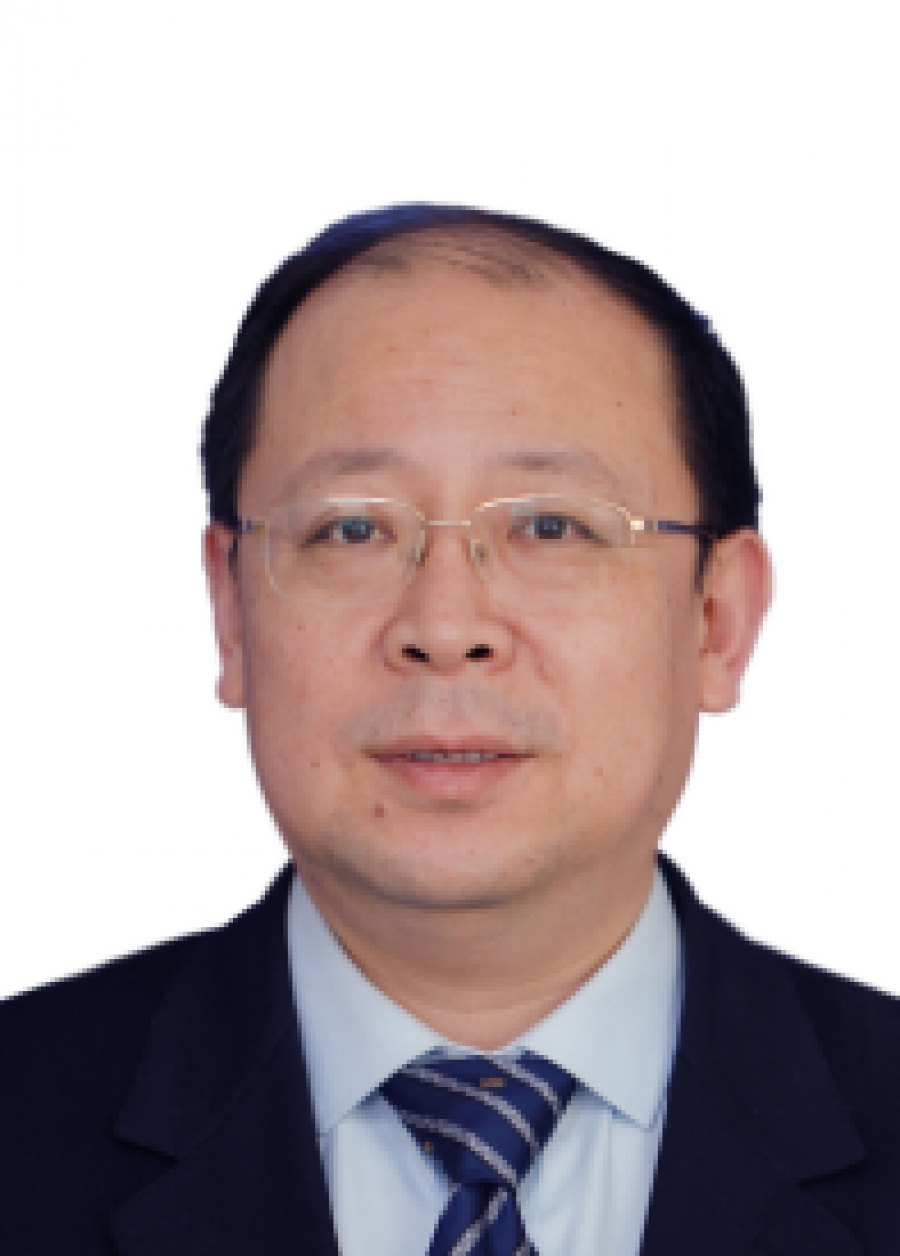 Baodong Zhao (赵保东)合作论文数Implant Center of The Affiliated Hospital of Medical College Qingdao University6
 Fei Xiao (肖菲)合作论文数4ShuJiao Liu (刘淑娇)合作论文数3GuiXiang Zhang (张桂祥)合作论文数3LiJuan Ren (任丽娟)合作论文数3HaiLing Ding (丁海玲)合作论文数3LiHui Sun (孙黎惠)合作论文数2Ren-jie Jia (贾仁杰)合作论文数1LI Ya-li (李亚莉)合作论文数1Ping LI (李萍)合作论文数1Weiwei ZHANG (张伟伟)合作论文数1Su-wei GUO (郭苏伟)合作论文数1xiaoyu fan (樊筱瑜)合作论文数1Zhong-ping Yi (弋中萍)合作论文数1Jie ZHOU (周杰)合作论文数1LiLing Dai (戴莉玲)合作论文数1XueJian Zhang (张雪健)合作论文数1YuZhen Qiu (邱玉贞)合作论文数1Yan Shi (时艳)合作论文数1LiQiang Guo (郭力强)合作论文数1Ce Xin (辛策)合作论文数1Yi Liu (刘沂)合作论文数1ShanShan Yao (姚珊珊)合作论文数1YaLi Li (李亚莉)合作论文数1YuanYuan Sun (孙园园)合作论文数1LanZhen Yu (于兰贞)合作论文数1Yun Zhang (张云)合作论文数1
 Yunfang Li (李云芳)合作论文数青岛理工大学护理学院1Yongzhe Zhang (张永喆)合作论文数1Xiaoqi Zhang (张晓奇)合作论文数1Miaomiao Xie (谢苗苗)合作论文数1Long Yu (于龙)合作论文数1Aiju Feng (冯爱菊)合作论文数1




