鱼山遗址是宁绍平原河姆渡文化时期以来的重要遗存,其考古发现为探讨东部沿海地带长时间尺度的水稻驯化进程和人地关系提供了良好素材.高精度的植硅体分析表明,河姆渡时期以来水稻扇型个体呈现了变小稳定的趋势,并逐渐向中间型和长柄型演化,暗示先民是以种植粳型化的水稻为主;水稻扇型植硅体鱼鳞状纹饰的变化揭示了在河姆渡文化晚期,水稻的驯化基本完成.受海平面变化的频繁影响,该地的水稻驯化具有一定的滞后性,驯化的周期也有所延长.结合植硅体分析和多种研究成果,推断在河姆渡文化时期,鱼山遗址的稻作生产获得了较大发展;在河姆渡文化晚期,水稻逐渐成为先民植食性资源的主体;在滨海多变的环境背景下,鱼山遗址形成了以水稻种植为主,采集和渔猎并行的多元化生业模式.良渚晚期,伴随着水稻驯化的完成和生产工具的进步,推测出现了系统的水田耕作系统.商周时期,依托暖干的环境,稻作生产向集约化发展,为古越国的兴起奠定了基础.
南阳盆地,作为地理过渡地带和文化交汇区,其考古学文化面貌呈现出南北交融的典型特征.文坎沟东地点是南阳盆地淅川县龙山时代晚期和西周时期的重要遗存,本文综合运用大植物和植硅体分析的方法,结合已有的植物考古证据和最新的测年结果,全面探讨了文坎先民先秦时期的种植模式和特点.研究结果显示,龙山时代晚期,文坎先民是以粟、黍为主的旱作农业为生,兼种少量水稻和小麦,小麦和水稻在先民生活中的作用比较微弱;西周时期,延续了旱作农业为主的生产模式,种植规模略有扩大,未见炭化水稻的踪迹,但植硅体分析显示仍有水稻种植的现象;受中原宗周势力的影响和版图扩张的需求,小麦逐渐开始在先民生活中占据一席之地.文坎沟东地点植物遗存的发现与研究,为揭示豫西南先秦时期的文化面貌和与中原地区的文化交流提供了新的材料.
In combination with published archaeobotanical data, a detailed paleodietary reconstruction is performed here on human teeth (n = 19) using starch grain and phytolith analysis of dental calculus as well as stable isotope ratio analysis of bulk dentinal collagen. The site studied is Xueshan which is a Late Bronze Age (2700–1700 BP) settlement in Yunnan Province, China. Isotopic results show that this population consumed a predominately C3 diet except for one individual that consumed a mixed C3/C4 diet. Starch grains and phytoliths embedded in the dental calculus indicate that a diverse array of plant resources, including C3 cereals (wheat, rice, barley, buckwheat, beans), C4 cereals (millets), and roots and tubers were directly consumed. Comparison of the results presented here with a review of published works on microfossil analysis of human dental calculus from China not only confirms the dietary diversity of Late Bronze Age Yunnan, but also sheds light on the complexity of human-plant food relationships in this region.
稻作的起源与传播一直是学术界关注的热点,然而水稻何时传入黄河中游并扩散至关中地区,则是需要进一步探讨的问题.华县东阳遗址是关中地区仰韶早中期的过渡性遗存(ca.5900-5600 cal.BP).本文借助植硅体分析,并结合炭化植物遗存,探讨了东阳遗址水稻的栽培和利用情况,并尝试分析水稻在关中地区出现的动因及传播过程.研究显示,东阳先民在以种植粟黍为主的同时,已经开始少量的栽培水稻,稻粟兼作的种植模式在此时出现.本研究发现的东阳遗址水稻遗存是目前关中地区最早的水稻遗存,指示了水稻至少在距今5800年时传入关中地区.仰韶晚期至龙山早期关中稻作获得较大发展,至龙山晚期则鲜少发现.该研究刷新了中国北方半干旱-半湿润区最早的水稻遗存记录,为进一步了解稻作起源与传播提供了基础数据.
稻作的起源与传播一直是学术界关注的热点,然而关于水稻向南传播的路径和时间节点尚有诸多疑问和缺环.广东茶岭遗址是岭南地区新石器时代末期到商周时期的重要遗存(约4500~3700 cal.a B.P.).文章综合植硅体、大植物遗存等多方面的证据,来探讨茶岭遗址水稻遗存性质和先民生计方式,并尝试归纳水稻在岭南地区的传播进程.研究显示,至少在距今4400年前,茶岭先民已经开始种植以粳稻为主的栽培稻;新石器时代末期,该聚落的生业经济结构呈现多样化的趋势,先民同时从事水稻种植、采集业和狩猎活动来维持生计.商周时期,水稻的种植规模有所扩大,采集业仍是先民食物来源的重要组成.通过对岭南地区的史前水稻遗存梳理发现:新石器时代末期,栽培稻开始出现在岭南地区并获得较大发展,分别在距今5000年、4500年前后传入广东和广西地区;此后在4500 a B.P.左右遍布粤北石峡文化各遗存中,并沿珠江进一步向岭南内陆和珠江三角洲地区扩散.茶岭遗址发现了目前珠江三角洲地区直接测年最早的水稻大植物遗存.该研究打破了珠三角地区史前渔猎采集经济结构模式的固有观念,为进一步了解水稻在岭南地区的传播提供了新的线索.
Reconstructing the diet of extinct species is a fundamental goal in vertebrate paleobiology. Dental calculus is the calcium phosphate deposits on teeth, which captures a large number of food particles and contains the food information of ancient animal. It is possible to explore ancient animal dietary and investigate the environmental information from dental calculus. A large number of starch granules were found in dental calculus of Dicros gansuensis excavated from the earliest Late Miocene Guonigou fauna of the Linxia Basin, Gansu Province. It is the first time that starch granules from Late Miocene were found. We classified the ancient starch granules by its morphological characteristics and also analyzed the starch granules of leaves of modern plants around the living environment of D. gansuensis to find modern starch granules and compare them with ancient ones. The results indicate that D. gansuensis may eat not only shrubs leaves, such as the plant from Caprifoliaceae, but also some tree leaves from Juglandaceae (walnut), and maybe some herbs from Ranunculaceae and Polygonaceae. It is consistent with the results of previous morphological studies, and it also provides more information. Our study extends the range of time and object for dental calculus research, and offers more possibilities for research on feeding habits of ancient mammals.
祭祀是先民生活的重要组成部分之一.尽管贵族祭祀活动的研究较多,但平民祭祀遗迹却由于发现较少而难以深入分析.广州榄园岭遗址春秋时期墓葬群中发现了越文化中常见的碎物祭祀坑.本研究对若干墓葬和相关祭祀坑中的填土开展了炭屑和植硅体分析.结果表明,先民在祭祀坑中有意燃烧过植物类祭品;用作祭品的植物种类较杂,包含扇型、棒型、方型或刺球型等植硅体.结合其他遗址中出现的类似现象,榄园岭先民的祭祀活动,应是在因地制宜、就地取材的基础上,吸收了苗蛮文化的因素,同时影响了其他地区.这一发现为探索先秦古人的祭祀行为提供了丰富信息;此外,炭屑和植硅体分析为确定祭祀遗迹提供了新的研究范式.
Papermaking is one of the four great inventions in China, but the study of paper raw materials is not very matured.Therefore, the method of phytolith analysis, collecting mulberry, Tanpi, Stellera chamaejasme and other papermaking raw materials and pattern, used in the identification of raw materials by extracting, analyzing,identifing and discussing of the phytoliths.It is believed that this idea is feasible to the identification of paper raw material through the analysis of phytoliths.The analysis of phytolith is still on the initial stage, without enough database supporting,resulting the increased difficulty of identification.
Investigation of mortuary ritual is an important method to reconstruct many aspects of past societies. Due to the lack of relevant analytical work, little evidence related to organic materials in a burial can be found in China. Here we report materials collected from a burial during the excavation of the Shengedaliang site. The recovered materials were analyzed using Raman spectroscopy and plant analysis: flotation, pollen and phytolith analysis. The red pigments found scattered over the human remains were identified as cinnabar. Extracted phytoliths associated with the burial are mainly leaves from the Boraginaceae family. This is the first time that a covering of leaves have been identified with a burial in Neolithic China. The presence of “special” leaves fossil may indicate a type of “plant worship” and the identification of an important plant used in traditional Chinese medicine. The finding of the two materials allows us to better identify indicators of funerary ritual and its relationship to social inequality.
榆林地处农牧交错带,是研究环境演变和人地关系的理想地区.本文基于植硅体分析,探讨了该地区王阳畔遗址仰韶晚期至龙山早期过渡阶段的农业生产情况及农业对环境的适应等.遗址剖面及灰坑样品的植硅体分析表明:仰韶晚期,粟和黍是先民的主要粮食作物,而黍较粟始终保持着种植优势;龙山早期,粟作农业逐渐衰落.植硅体组合图谱显示,先民在此遗址活动期间,气候是略偏凉偏干的,整体上较为稳定,呈现出干凉化的趋势.综合来看,农业活动的强弱在一定程度上响应了环境的变化.需要指出的是,该遗址榆科植硅体的大量发现,不仅补充了史前植物利用史,同时也对丰富植硅体数据库具有重要意义.
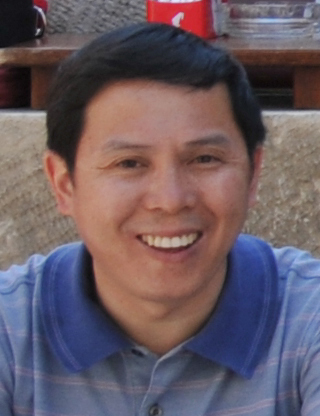 Yan Wu (吴彦)合作论文数Chengdu Institute of Biology, Chinese Academy of Sciences3
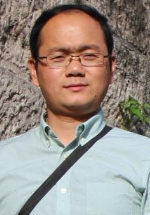 Dawei Tao (陶大卫)合作论文数School of Archaeology and Cultural Heritage, Zhengzhou University2
 Xianglong Chen合作论文数2
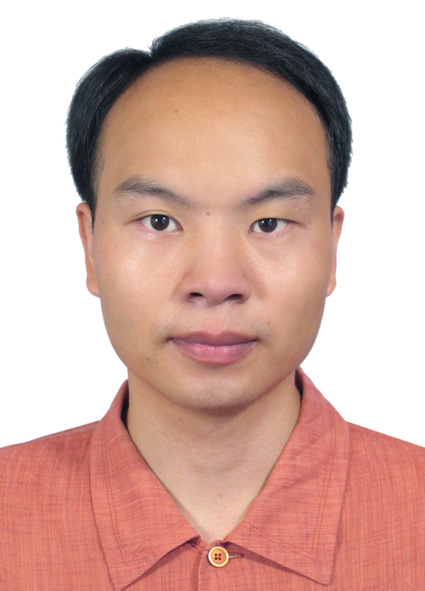 Yimin Yang (杨益民)合作论文数University of Chinese Academy of Sciences2Tingting Wang合作论文数1He CHEN (陈鹤)合作论文数1Wen Chen (陈文)合作论文数1Lei Shao (雷少)合作论文数1Xiaoning Guo合作论文数1Zhilong Jiang合作论文数1Weilin Wang合作论文数1Qing-li SUN (孙青丽)合作论文数1JieHua Wang (王结华)合作论文数1LiangBo Lv (吕良波)合作论文数1WenHua Zhou (周文华)合作论文数1WeiHong Xu (许卫红)合作论文数1
 Yating Qu (屈亚婷)合作论文数陕西师范大学西北历史环境与经济社会发展研究院1
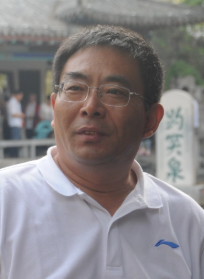 Songan Jin (靳松安)合作论文数School of History, Zhengzhou University1
 Zhijun Zhao (赵志军)合作论文数School of Geography, Nanjing Normal University1Shanqin Chen合作论文数1Xiaoqu Zheng (郑晓蕖)合作论文数College of Liberal Arts, Shanghai University1
 Dong Wei (魏东)合作论文数School of Archaeology, Jilin University1
 Shiqi Wang (王世骐)合作论文数Institute of Vertebrate Paleontolgy and Paleoanthropology, Chinese Academy of Sciences;University of Chinese Academy of Sciences1Liping Yang (杨利平)合作论文数1
 Zhouyong Sun (孙周勇)合作论文数陕西省考古研究院1Ningwu Kang (康宁武)合作论文数1Benjamin T. Fuller合作论文数Centre for Archaeological Sciences, Katholieke Universiteit Leuven1
 Jilong Shi (施继龙)合作论文数School of Printing and Packaging Engineer, Beijing Institute of Graphic Communication1
 Changsui Wang (王昌燧)合作论文数Chinese Academy of Sciences1




