Background Nuclear receptor subfamily 1 group D member 1 (NR1D1), a nuclear receptor associated with a variety of physiological processes, has a low level in ovarian cancer tissues compared with adjacent normal tissues. However, its role in ovarian cancer remains unclear. Methods The level of NR1D1 in ovarian cancer cells was determined by quantitative real-time PCR. Its role in ovarian cancer was explored through gain-of-function and lose-of-function. Cell growth was evaluated by CCK8 assay, immunofluorescence and flow cytometry. Western blot was conducted to assess the activation of JAK/STAT3 signaling pathway. A xenograft model of ovarian cancer was established to explore the role of NR1D1 in vivo. Results Up-regulation of NR1D1 repressed the ovarian cancer cell proliferation and induced cell cycle arrest and apoptosis, while silencing NR1D1 promoted their proliferation and G1/S transition. In addition, the JAK/STAT3 signaling pathway, an intracellular signal transduction closely associated with cancer progression, was inhibited by NR1D1. Consistently, xenografts with NR1D1 over-expression grew more slowly in vivo than the controls. Furthermore, NR1D1 up-regulated the expression of suppressor of cytokine signaling 3 (SOCS3), an inhibitor of the JAK/STAT3 signaling pathway. Whereas, SOCS3 silencing abolished the function of NR1D1 over-expression on ovarian cancer growth and JAK/STAT3 signaling pathway. Conclusions NR1D1 up-regulated the expression of SOCS3, resulting in suppression of the JAK/STAT3 signaling pathway, thus retarding the growth of ovarian cancer cells. This study highlights a profound role of NR1D1 in the treatment of ovarian cancer.
The current study investigated whether hyperoxia may reverse hypoxia-induced radioresistance (RR) in cervical cancer. Human HeLa cells exposed to hypoxic, normoxic or hyperoxic conditions were irradiated using X-rays. Cell proliferation and apoptosis were analyzed using MTT assays and flow cytometry. The expression levels of hypoxia-inducible factor-1α (HIF-1α), VEGF165, VEGFRs, Akt and ERK were measured via western blotting and/or ELISA. The results demonstrated that hypoxia stimulated HIF-1α and VEGF expression, and induced RR in HeLa cells. The administration of recombinant VEGF or the forced expression of VEGF promoted RR, whereas inactivating HIF-1α or blocking the VEGF-VEGFR interaction abrogated hypoxia-induced RR. Notably, hyperoxia decreased the level of hypoxia-stimulated HIF-1α and VEGF, and enhanced radiosensitivity in hypoxic HeLa cells. The results demonstrated that hyperoxia suppressed the hypoxia-activated Akt and ERK signaling pathways in HeLa cells. Therefore, a high O2 concentration may be considered as a radiotherapeutic sensitizer for hypoxic HeLa cells.
经皮肾盂穿刺造瘘术(Percutaneous Nephrolithotomy,PCN)是一种微创技术,通过穿刺将导管置入肾盂中,解除肾盂积水,缓解肾脏功能,为明确诊断及手术治疗建立通道。随着肾脏超声介入技术的发展和完善,超声引导下经皮肾盂穿刺造瘘术的临床应用日益广泛[1]。本研究对我院2016年1月至2018年1月收治的170例单侧肾结石合并积水患者进行分析,探究术前超声引导下经皮肾盂穿刺
目的 探讨肾移植术后早期尿路感染(UTI)的临床诊治策略.方法 回顾性分析吉林大学第一医院2012年4月—2017年8月收治的98例肾移植术后早期UTI患者的临床资料,分析肾移植术后早期UTI的病原学结果及病因.结果 98例患者中,UTI频次累计130次,其中76例出现1次,16例出现2次,7例出现3次以上.患者多以发热、尿路刺激征为主要症状,住院时间为(10.3±4.4)天.130份尿培养病原学结果中,革兰阴性(G-)菌占51.5%,以大肠埃希菌、克雷伯杆菌为主;革兰阳性(G+)菌占8.5%,以肠球菌、葡萄球菌为主,病毒4.6%,为BK病毒、JC病毒、人巨细胞病毒(HCMV)病毒,混合感染15.4%,20.0%病原学结果阴性.留取血培养标本119份,15.1%为G-菌,1.5%为G+菌,余病原学阴性.入院前血肌酐为(132.7±63.0)μmol/l,出院时血肌酐为(110.9±62.3)μmol/l.患者均临床治愈,其中6例患者治疗期间出现移植肾排斥反应,抗排斥治疗后5例肾功能恢复至正常水平,1例出现移植肾功能衰竭.男性UTI发病率为14.4%,女性UTI发病率为24.6%.亲属肾移植UTI发病率为7.4%,其他类型肾移植UTI发病率为14.8%.结论 UTI病因与性别、年龄、移植类型、术中操作、免疫抑制剂、糖尿病、尿路异物(移植肾输尿管支架管、导尿管、造瘘管)等因素有关.男性UTI发病率较女性UTI发病率低.亲属肾移植UTI发病率较其他类型肾移植UTI发病率低.UTI以临床症状、尿液检验为诊断依据,治疗上除对因治疗外,依据血尿培养结果抗感染治疗,根据血药浓度调整免疫抑制剂剂量,并给予定期更换造瘘管、碱化尿液、增加入液量、增强免疫力、保持会阴清洁等对症支持治疗.早期预防UTI,有利于提高患者生活质量及移植肾存活时间.
2012年1月至2017年6月,我院共完成亲属间活体肾移植235例,占同期肾移植(876例)的26.8%,本文回顾性分析供肾切取前后肾功能变化,评估供者手术安全性,现报告如下。1资料与方法1.1一般资料女性143例,男性92例,年龄21-65岁,平均年龄52.3岁。供者各年龄段分布:18-30岁者4名,30-40岁者8名,40-50岁者75名,50-60岁者109名,60-65岁者39名。亲属供受者关系情况:父母
Objective To summary the incidence of postoperative complications in 235 living donor kidney transplantation recipients, and improve diagnosis and treatment of complications after renal transplantation. Methods A retrospective analysis of the clinical data of 235 living donor kidney transplantation recipients admitted from January 2012 to June 2017 in the First Hospital of JiLin University, to analyze its postoperative recovery and complications. Results The mean serum creatinine was 100.1 μmol/L when 235 recipients leaving hospital, with 1 case died of respiratory failure and 4 cases of renal allograft failure, the recent reexamination of serum creatinine was 111.8 μmol/L in the remaining 230 patients. Following up for 6 ~ 59 months, complications included acute rejection, pulmonary infection, urinary tract infection, wound infection, renal artery infection, herpes zoster, urinary fistula and ureter obstruction after renal transplantation, delayed graft function, renal artery stenosis, renal allograft failure, immunosuppressant drug poisoning, diarrhea, myelosuppression, hepatic insufficiency, transplantation diabetes. The 1 year survival rates of the recipients and the transplanted kidneys were 99.8% and 98.7%, respectively. Preoperative use of antithymocyte (ATG) or bariximab could significantly reduce the incidence of postoperative rejection (P < 0.05) . Conclusion The survival rates of the transplanted kidney could be improved effectively in some methods, such as preoperative comprehensive assessment, intraoperative detailed operation, regular follow-up and timely intervention of complications after operation.
目的探讨肾移植术后间质性肺炎的临床诊治策略。方法回顾性分析我院2008年1月至2017年6月收治的166例肾移植术后早期间质性肺炎患者的临床资料,比较间质性肺炎发病率及其与移植类型、诱导治疗的关系,分析其发病原因及诊疗过程。结果我院肾移植术后间质性肺炎呈逐年下降趋势,且易发生于术后2-12个月。166例患者大多以发热、胸闷、呼吸困难为主要症状入院,影像学表现为肺部间质性改变。病原学诊断较为困难,细菌感染6.0%,病毒感染16.3%,肺炎支原体感染4.2%,真菌感染7.8%,但仍有65.7%的患者未查出病因。住院时间7-38天,平均16.5天。3.0%出现呼吸功能衰竭,死亡3例,占1.8%,余均临床治愈。1.8%患者治疗期间出现移植肾排斥反应,经抗排斥治疗后肾功能恢复正常水平。亲属肾移植350例,间质肺发病率为7.7%,其他类型肾移植1245例,间质肺发病率11.2%,亲属肾移植间质肺发病率较其他类型肾移植术后间质性肺炎发病率低。诱导治疗733例,间质肺发病率10.2%,未诱导治疗862例,间质肺发病率10.6%,抗体诱导治疗与肾移植术后间质性肺炎的发生率无明显相关。结论肾移植术后间质性肺炎诊断以症状及影像学改变为主,病原学诊断较困难。治疗上应给予停用或减量免疫抑制剂,抗细菌、抗病毒、抗真菌、应用激素及预防卡氏肺孢子菌的综合治疗方案,另外对症支持治疗必不可少。亲属肾移植发病率较其他类型肾移植术后间质性肺炎发病率低,抗体诱导治疗与肾移植术后间质性肺炎的发生无明显相关。
目的 探讨低温持续机械灌注器(LifePort)在扩大标准供者(expanded criteria donors,ECD)肾脏的维护与评估中的作用及对移植预后的判断价值.方法 回顾性分析吉林大学第一医院器官移植中心52例ECD肾脏应用LifePort进行低温持续机械灌注维护的参数指标及实施肾移植的临床资料,对供肾LifePort灌注情况及术后移植肾功能延迟恢复(delayed graft function,DGF)的发生率、排斥反应、血肌酐水平、1年人/肾存活率等情况进行总结和分析.结果 52例ECD供者成功捐献供肾104例,全部应用LifePort进行灌注维护,评估后弃用供肾8例,共完成96例肾移植,未出现移植肾原发性无功能(primary non-function,PNF);急性排斥反应(acute rejection,AR)的发生率为9.38%(9/96),经抗排斥反应治疗后均逆转;术后DGF的发生率为17.71%(17/96),患者均在1个月内恢复;与无DGF组受者相比,发生DGF受者的供肾灌注终末阻力平均值明显增高,差异有统计学意义(P<0.05);与无DGF组受者相比,发生DGF受者的供肾终末流速平均值显著降低,差异有统计学意义(P<0.05);随访6~42个月(中位时间为15个月),术后6个月平均血肌酐值为(113.7±38.4)μmol/L,1年的人/肾存活率均为100%.结论 LifePort在ECD肾脏维护及评估中具有重要作用,可以帮助决策是否使用供肾,结合灌注维护时参数可预估术后恢复情况.
 Hong-Lan Zhou合作论文数5YuanTao Wang (王远涛)合作论文数4XiuYu Di (翟秀宇)合作论文数4Gang Wang (王钢)合作论文数4Haidong Zhu (朱海冬)合作论文数2Yu Hu (胡钰)合作论文数2
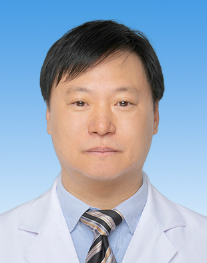 Bin Liu (刘斌)合作论文数The Second Norman Bethune Hospital, Jilin University2
 Yan Fu (付艳)合作论文数School of Foreign Language Education, Jilin University2Haiyan Jia合作论文数1Shiquan Xu (徐世全)合作论文数1Dan Dong合作论文数1Jihong Wen合作论文数1Yuxuan Yang (杨玉轩)合作论文数1ping song (宋萍)合作论文数1jiao lu (陆姣)合作论文数1BaoShan Gao (高宝山)合作论文数1Xin Lian (连鑫)合作论文数1
 Jia Li (李佳)合作论文数The Second Norman Bethune Hospital of Jilin University1Zhiyong Ma (马智勇)合作论文数1Yang Li (李杨)合作论文数1




