目的:探讨环肺静脉隔离(PVI)基础上联合Marshall静脉化学消融治疗持续性心房颤动的安全性、有效性以及远期疗效。方法:回顾性分析2018年12月至2020年12月于中日友好医院心脏科因持续性心房颤动首次行射频消融的120例患者,根据治疗策略分为单纯PVI组(PVI组, n=90),PVI+Marshall静脉化学消融组(Marshall组, n=30)。观察两组的手术时间、X线曝光量及术后6、12个月有无心房颤动/房性心动过速(房速)发作、手术并发症等。 结果:共纳入首次行射频消融的持续性心房颤动患者120例。PVI组年龄(55.4±7.4)岁,其中男72例(80.0%,72/90);Marshall组年龄(58.4±6.6)岁,其中男23例(76.7%,23/30)。①与PVI组相比,Marshall组二尖瓣峡部持久性损伤的成功率提高,也增加了手术时间[(150.3±30.7) min对(120.3±20.6) min, P<0.001]及X线曝光量[(180.3±45.7) mGy/cm 2对(50.3±25.5) mGy/cm 2, P<0.001],差异均有统计学意义。②随访结果:Marshall组较PVI组术后未发作心房颤动/房速、维持窦性心律成功率高,差异均具有统计学意义[6个月:80.0%(24/30)对70.0%(63/90), P=0.013;12个月:76.7%(23/30)对64.4%(58/90), P=0.012]。③Marshall组与PVI组相比,两组并发症方面差异无统计学意义( P=0.057)。 结论:PVI联合Marshall静脉化学消融安全、有效,且可增加持续性心房颤动的远期成功率。
患者男性,78岁,主因"间断呼吸困难1年,加重伴下肢水肿2个月"于2023年3月29日入院.患者1年前出现劳力性呼吸困难,伴胸闷,近2个月症状逐渐加重,出现中度可凹性双下肢水肿,夜间无法平卧入睡.既往高血压病史20余年,口服沙库巴曲缬沙坦(200mg,Qd)控制血压;糖尿病20余年.入院生命体征及心肌标志物结果(见表1),心电图(见图1).超声心动图:左心室射血分数(left ven-tricular ejection fraction,LVEF)27%,左室壁运动普遍减低,左室舒张功能减低,右室壁运动减低(见表1).胸部CT示:间质性肺水肿,左心增大,双侧胸腔积液.冠状动脉造影:左主干未见狭窄,前降支未见狭窄,回旋支近段狭窄25%,右冠近段狭窄25%,TIMI血流均为3级.
目的 观察高龄(>80岁)患者起搏器术后急性并发症发生率及危险因素.方法 入选2014年1月至2018年1月共127例植入心脏起搏器的高龄患者,观察60天随访期内急性并发症的发生率,对相关因素进行多因素Logistic回归分析.结果 共127例患者中,随访期间出现并急性发症者21例(16.5%),其中电极脱位1例(0.8%),气胸2例(1.6%),局部血肿9例(71%),术侧神经损伤2例(1.6%),皮下气肿1例(0.8%),静脉血栓1例(0.8%),心包积液1例(0.8%),术后室性心律失常4例(3.1%).多因素Logistic逐步回归分析显示,女性、身体质量指数(BMI)低、合并心房颤动对出现急性并发症具有统计学意义(p<0.05).结论 高龄患者永久起搏器植入术后发生急性并发症比例为16.5%,相关危险因素为女性、BMI低、心房颤动,需加强此类高龄患者起搏器术后的治疗及监测.
目的:探讨双腔心脏起搏器植入术后患者的心力衰竭发生率及相关危险因素.方法:入选2014年1月~2017年1月共247例植入双腔心脏起搏器的患者,其中215例完成随访,统计随访期间心力衰竭的发生率,对相关因素进行多因素Logistic回归分析.结果:215例患者中随访期间出现心力衰竭者42例,发生率19.5%.多因素Logistic逐步回归分析显示,植入时射血分数低、心室起搏比例高是起搏器术后发生心力衰竭的危险因素(OR=4.89、3.21,均P<0.05).结论:植入双腔永久起搏器患者术后发生心力衰竭比例为19.5%,危险因素包括植入时射血分数低和心室起搏比例高,需加强此类患者起搏器术后的治疗及监测.
Objective:To observe the effect of closed-loop stimulation (CLS) on rapid atrial arrhythmia.Methods:From August 2016 to March 2018, 30 patients with CLS dual chamber pacemaker implanted in China-Japan Friendship Hospital were selected in this study. The average age was (64.3±14.7) years, including 18 males. The patients were divided into A group (DDD-CLS mode before DDDR mode, both mode for 3 months) and B group (DDDR mode before DDD-CLS mode, both mode for 3 months) by simple randomization with single blind and crossover design.We observed and compared the percentage of atrial and ventricular pacing rate and the frequency and duration of auto mode switch (AMS) and atrial tachycardia burden percentage of the same patient under DDD-CLS mode and DDDR mode by pacemaker programmer.Results:Comparing to DDDR mode, DDD-CLS mode showed higher atrial pacing rate (66.5%±11.8% vs. 55.8%±14.0%, OR=1.30, 95% CI 1.06-1.73, P=0.007) , lower AMS counts[ (369±409) times vs. (596±761) times, OR=0.62, 95% CI 0.32-0.88, P=0.025]and lower atrial tachycardia burden percentage (17.9%±3.6% vs.29.3%±7.3%, OR=0.61, 95% CI 0.18-0.71, P=0.034) . Conclusion:CLS function may reduce the rapid atrial arrhythmia burden in patients treated with permanent dual chamber pacemaker.
目的 探讨双腔心脏起搏器患者术后发生房性快速型心律失常的相关因素,为合理防治提供依据.方法 回顾性调查我院392例植入双腔心脏起搏器的患者,对217例随访期间合并房性快速型心律失常(观察组)与175例未合并房性快速型心律失常(对照组)进行Logistic回归分析.结果 392例患者中,合并房性快速型心律失常217例,发生率55.4%.单因素及多因素Logistic逐步回归分析显示,合并高血压、植入指征:窦性心动过缓、冠状动脉粥样硬化性心脏病(冠心病)、心功能不全、高龄、心室起搏比例高,对并发房性快速型心律失常的影响差异有统计学意义(p<0.05).结论 加强起搏器术后患者并发房性快速心律失常的监控.需针对危险因素早期预防和治疗.
目的 探讨起搏器术后快速房性心律失常(rapid atrial arrhythmia,RAA)的检出率.方法 记录2017年3月至2018年2月在本中心植入起搏器并参与随访的271例患者资料,分析RAA的检出率相关因素.结果 随访患者中,男性137例,女性134例,平均年龄74±10(40~92)岁,随访时间11±6月.术前有RAA病史73例,其中男性38例,女性35例.术后检测出RAA 114例,其中男性59例,女性55例.70~79岁的患者术前诊断RAA 33例,术后检出RAA57例.植入适应症为病态窦房结综合征者130例,术前诊断RAA者43例,术后检出70例;房室传导阻滞者117例,术前诊断RAA者18例,术前检出29例;窦房结房室结双重病变者24例,术前诊断RAA 12例,术后检出15例.结论 起搏器术后RAA检出率高,其中因病态窦房结综合征而植入双腔起搏器的患者,术后检出RAA的比例高达54%,房室传导组织者术后检出RAA比例为25%.年龄不同,起搏器术后检出RAA比例不同,以70~79岁患者术后检出RAA的比例最高.
Objective To investigate the efficacy and safety of optimized axillary vein puncture for cardiovascular implantable electronic device (CIED) lead implantation.Methods Two hundred and twenty patients with indications of CIED implantation were randomized into optimized axillary vein puncture group (experimental group) or subclavian vein puncture group (control group).The efficacy and safety of the two techniques were compared.Results The success rate (96.6% vs.96.0%),one-time success rate (68.8% vs.69.3%) and X-ray exposure time[(152.1±32.7) s vs.(145.6±46.1) s]of axillary vein puncture and subclavian vein puncture were similar between the two groups.There were one case of pneumothorax and three cases of lead operating diff culties in subclavian vein puncture group.No complication occurred in axillary vein puncture group.In the follow-up,Electrode crash syndrome occurred in two patients in the control group.The incidence of complications showed a decreased tendency in the optimized axillary vein puncture group(1.82% vs.7.27%,P=0.11).Conclusion Optimized axillary venous approach may be superior to traditional subclavian vein approach for pacemaker lead placement.
 Yifeng Zhou (周益锋)合作论文数China-Japan Friendship Hospital8
 ruilong Gao (高瑞龙)合作论文数7Zhengqin ZHAI (翟正芹)合作论文数2
 Yansha Gao (高焱莎)合作论文数China-Japan Friendship Hospital2Gui-Ru Zhao合作论文数1zhenhua guan (关振华)合作论文数1Xuecheng Zhao合作论文数1ShiDong Guo (郭诗东)合作论文数1YunTing Zhang (张筠婷)合作论文数1Xia Zhao (赵霞)合作论文数1
 Peng Yang (杨鹏)合作论文数China-Japan Friendship Hospital1
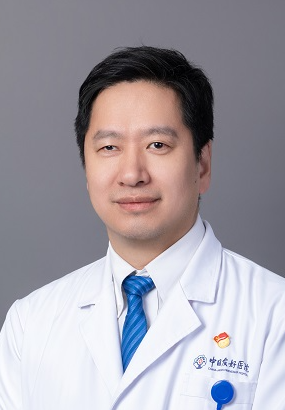 Jingang Zheng (郑金刚)合作论文数China-Japan Friendship Hospital1
 Yanxiang Gao (高艳香)合作论文数1
 Jingyi Ren (任景怡)合作论文数China-Japan Friendship Hospital1
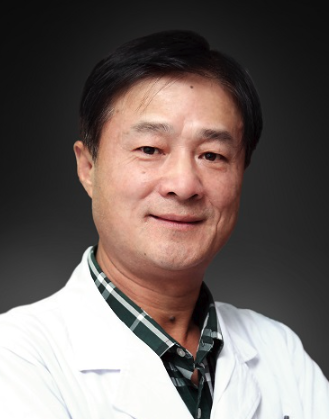 Yong Wang (王勇)合作论文数China-Japan Friendship Hospital1
 Wenhua Peng (彭文华)合作论文数Dongzhimen Hospital, Beijing University of Chinese Medicine1
 Xianlun Li (李宪伦)合作论文数China-Japan Friendship Hospital1




