It is proposed in this paper to use the focal characteristics of small seismic events, in particular, the scaled energy and the rupture propagation velocity, as indicators of possible dynamic movements along a fault. The two sites selected for analysis underwent microseismic events induced by mining operations. The first site, the Korobkovskoe iron ore deposit of the Kursk Magnetic Anomaly, is located in the aseismic region. The second site, the apatite–nepheline deposit of the Khibiny massif, is characterized by relatively intensive natural and human-triggered seismicity. Based on the results of the analysis, the values of the scaled seismic energy and the rupture propagation velocity are drastically different at the deposits under consideration. At the apatite–nepheline ore deposit, the parameter values are close to the range of values characteristic for “normal” earthquakes. At the KMA deposit, the obtained anomalously low values of the scaled energy and the rupture propagation velocity correspond to “slow” earthquakes. The results obtained are indicative of the prospects for using the selected parameters as indicators of possible large dynamic events at the studied site of the fault zone.
: Forecasting of the geomechanical situation when planning mining operations at rockburst hazardous deposits is an essential component in ensuring safety and developing measures to reduce geodynamic risks. The paper presents the results of assessing and forecasting the transformation of the stress-and-strain state of the rock mass for one of the promising mining sites of the Khibiny Apatite Arc. All calculations were made using elastic approach to a three-dimensional finite-element model which incorporates basic geological, mining engineering and geomechanical data. Potentially hazardous zones in terms of dynamic rockburst manifestations were identified as well as areas with different deformation and collapse patterns in the undermined rock strata. The identified features of the stress-and-strain state of the rock mass make it possible to increase the justification level of technical solutions for the development of mining operations and designing preventive measures to ensure the stability of the mining system's elements.
The article highlights the urgency of studying processes of deformation, displacement and collapse of undermined strata at rockburst-hazardous deposits of the Khibiny Massif with regard to geomechanical and geodynamic risks. The authors analyze failure specifics in undermined strata under the action of tectonic stresses, which consists in impeding of fracturing due to subhorizontal compression. It is found that as the thickness of ore bodies decreases and their dip angle grows at great depths, the pitch of failure increases. The problems to be solved to continue extraction of apatite–nepheline ore at minimized induced risks and at the preserved economic efficiency are listed.
The seismic activity in undermined rock mass in a mine at the Khibiny Massif is analyzed over the period from 2008 to 2020. The influences on deformation, tensile fracturing and caving in undermined rock mass are revealed. Three zones of deformation of different nature and velocity are identified in undermined rock mass in Kirovsk Mine: the zone at the juncture of underground and opencast mining; the zone of overhanging rocks; the zone of two- and three-side buttress at the edges of operating deposits. It is found that mining with head-on fronts, with formation of a support pillar and with overhanging of an uncaved rock mass beam is adverse. The pillar collapses later on and deformation of the pillar-supported rock mass during breaking of the butt section on sublevels occurs in the dynamic mode with high seismic activity both in terms of the number of seismic events and their energy emission. It is found that the width of the seismic activity band and the caving pitch of the overhang depend on the height of undermined rock mass.
Large-scale mining operations over 90 years at the Khibiny apatite-nepheline deposits that are characterized with the conspicuous gravity-tectonic type of the stress-strain state have transformed the initial stress field of the rock massif, which has led to the recurrent occurrence of rockbursts. This problem retains its relevance due to constant increasing intensity of mining operations at the apatite mines during the last two decades and complicated mining, geological and geomechanical conditions. Accordingly, the dynamic rock pressure is increasing. We have retrospectively analyzed data on the manifestations of geodynamic events in the Khibiny rockburst-hazardous deposits and determined a set of factors that influence the changes in seismic behavior and localization of hazardous zones in complicated mining and engineering systems. We have systematized the data of long-term observations on dynamic rock pressure manifestations at the Khibiny apatite mines, taking into account the seismicity parameters, the scale of mine damage, the mining-induced stress fields, and geological and geomechanical features of the rock massif at specific time points. A structural scheme has been developed and ranking of factors has been carried out, considering the time of impact on the rock massif.
The article describes basic approaches and trends in advancement of rock mass stress–strain behavior prediction in rockburst-hazardous mining. The prediction systems based on the dedicated program package Sigma GT are introduced in some Russian mines which operate in very hard rock masses prone to brittle fracture and subjected to gravitational–tectonic stresses. The manmade impact is accompanied in this case by the induced dynamic pressure phenomena. The use of geomechanics prediction systems in mines for more than 10 years proves their high efficiency, first of all, owing to the stress–strain analysis and assessment in real time. The ‘do-it-yourself’ analysis of different mining scenarios with a view to reducing stress concentration, selecting proper mine support systems as well as distressing minimizes risks associated with mining in high-stress rock masses. While being used, the geomechanical prediction program Sigma GT undergoes continuous development, updating and adaptation to specific mining conditions. The urgent tasks of the present day are: complexing of the stress–strain modeling results and monitoring data, which means the seismic monitoring in the first place; construction of correlated different-scale 3D models; fullest inclusion of structural discontinuities of rock masses; elaboration of guidance package on safe mining with regard to the geomechanical prediction results; development of instruments for determining current and prognostic parameters of rockburst-hazardous zones based on a set of factors in geological information systems of operating mines.
The paper presents the main approaches and their advancing for the systems of rock mass stress-strain state forecasting during mining of adjacent rockburst hazardous deposits. Such systems based on the original Sigma GT software are used at several Russian mining companies which develop solid rock deposits, prone to brittle fracturing and undergoing the gravitational-tectonic stress-strain state. At that, the mining-induced impact on the rock mass is accompanied by occurrence of dynamic rock pressure. The geomechanical situation forecast systems have been applied directly at mining companies for more than 10 years and have shown their high efficiency. The efficiency is associated primarily with the operative calculation of stress-strain state in case of exacerbations of the geodynamic situation and the potential consideration of various mining options in order to reduce stress concentration and give recommendations for supporting and unloading measures in mine workings. In addition, the Sigma GT software is used in annual and long-term mining planning. Initially, such systems were developed for individual rockburst hazardous mining blocks, and their efficient operation time was limited to a 3-5 year period, that is, the block mining time. Further on, taking into account the needs of companies, the systems began to include a whole deposit or even several deposits. Being applied, the system is constantly developed and advanced and adapted to specific conditions and tasks. The most actual tasks are combination of the results of stress-strain state modeling with seismic monitoring data; creation of a hierarchical system of interconnected multiscale volume models; more complete consideration of structural heterogeneities of the rock mass and development of a recommendation block for safe mining operations, taking into account the geomechanical situation forecast data. The solution of these problems is considered on the example of a section of the Khibiny apatite arc, within which underground and open mining is carried out in the zone of mutual influence.
The paper proposes a variant of the algorithm for 3D numerical simulation of the rock mass stress-strain state in the vicinity of structural heterogeneities by the finite element method. Modeling of the stress-strain state is used, among other things, when analyzing the fractures in the rock mass, which can occur as a breakage or a shear along the weakening planes. The rock massif has a block structure, where the boundaries of various-scale blocks are structural disturbances of different orders. The surface planes of structural heterogeneities usually have complex geometry and spatial orientation, so the most adequate results can be obtained by 3D modeling of the disturbed rock mass. Besides, it is important to take into account the type of the stress-strain state, which can be not only gravitational, but also gravitational-tectonic, including horizontal loading of the rock mass. Accounting these features allows obtaining the most adequate geomechanical model of the studied object. For this purpose, the authors have studied and analyzed the existing approaches to modeling heterogeneities in the rock mass, including using the Goodman contact element, and developed its 3D modification. A mining engineer needs to have a handy tool that allows creating and editing a geomechanical model, taking into account mining plans and related sections. The model navigation, edition of its individual blocks to specify geology and creation of local sub-models make it necessary to use structured meshes of finite elements. Modification of the model with the introduction of contact elements entails the creation of an unstructured mesh, which complicates further manipulations with it. To solve this problem, a special zero element was developed, which allows saving a structured mesh format when implementing a contact element. This zero element, like the contact element, has zero thickness, and its nodes have averaged strength characteristics of adjacent blocks of the undisturbed rock mass. The result of these studies is a tool that allows creating 3D models of the rock mass stress-strain state, taking into account its structural heterogeneities and preserving the regular structure of the finite element mesh.
The paper presents the results of prediction model studies of the stress–strain behavior in Gakman field of Yukspor deposit during hybrid open pit/underground mining under conditions of high tectonic stresses. The mountainous relief, rock mass faulting with a series of weak structures, geometry of the ore body, the actual and design parameters of stopes, and mining operation under the uncaved overlying stratum with three-sided support are taken into account. Based on the multivariate threedimensional stress–strain modeling using the finite element method, geomechanical substantiation of simultaneous open-pit and underground mining was carried out. It has been established that the geomechanical determinants in Gakman field are: – gravitational and tectonic stresses with a significant excess of the tectonic component over the gravitational component; – mountainous relief of ground surface with a significant elevation difference in the study area; – location of underground mining under the uncaved overlying stratum with three-sided support; – faulting of rock mass with a series of weak structures (Gakman fault); – formation of the open pit and crown pillar above underground mine; – significant lag of the mining front on the underlying levels of level + 320 m. The dimensions of the cross-effect zone and crown pillar when the underground operations approach the open pit mine are determined.
The location of significant volumes of the lower level reserves close to an open pit which produces the adjacent Niorkpakhk deposit considerably complicates underground mining of the Oleniy Ruchey rockburst-hazardous deposit. The progress of underground excavations into the under-pit space is permitted if the undermined rock thickness and open pit walls remain stable. 3D numerical studies of stress-strain state have indicated particularities in deformation such as increase in undermined thickness stability under high tectonic stresses. The parameters of safe mining of temporary inactive reserves were scientifically substantiated. The boundaries of maximal development of underground mining were determined. The stability of overlying rocks and open pit walls is maintained by forming an advance of overlying sublevels relative underlying ones under 45° angle and providing the monitoring for the undermined rock mass. The mining method in a protective pillar the authors propose allows increasing reserves of the first mining stage by 76.9% and avoiding decrease in production volumes when mining operations terminate.
Summary The paper presents a methodology and results of seismic tomographic studies for instrumental monitoring of the rock mass state between the approaching mining fronts at the Oleniy Ruchey underground mine. Velocity and difference models of the studied area are shown, which allow tracking the formation and migration of low-and high-velocity zones as mining operations progress. The stress-strain state for each measurement stage is analysed by comparing the average values of longitudinal wave velocities for the rocks composing the rock massif with the obtained values. The dynamics of the pillar’s stress-strain state is characterized by difference models. Being combined with other in-situ and numerical methods, the results of seismic tomographic studies allow planning the necessary preventive measures and contribute to improving the safety of mining operations.
A rock mass is composed of blocks, and the interfaces of various scale blocks represent different kind discontinuities. Such structure is also associated with nonuniformity of stresses. The stress–strain behavior of rock mass in the Khibiny apatite–nepheline massif in the course of mining is governed by natural geological and induced faulting. This study considers modification of the finite element method in the stress–strain analysis of rocks with regard to deformation at interfaces of different-modulus media. After 2D tests of interface elements, an optimal type of the interface element was selected for the 3D modification implementation. The latter can improve reliability of geomechanical forecasts in mineral mining in complicated geological and geodynamic conditions. From the test data on modification of interface elements, the optimal interface element is assumed to be the six-node interface element proposed by V. Kalyakin and Jianchao Li. The six-node interface element is introduced in the model of a tunnel with simulation of an unloading line at the boundary. The adequate results on adjacent rock deformation are obtained. The 3D interface element modification reveals its peculiarities and limitations as regards introduction in finite element models of mineral deposits and enclosing rock mass. The ways of solving these problems are proposed.
В монографии отражены результаты аналитических и экспериментальных исследований закономерностей геомеханических процессов в геологической среде горнотехнических систем. Предложены объяснительные модели эволюции энергии в геологической среде в процессе ведения горных работ, показаны механизмы деформирования и разрушения пород в массиве с различными параметрами трещиноватости.Численным моделированием показана трансформация напряженного состояния массива пород,а также взаимодействие открытых и подземных технологий на примере Хибинских апатит-нефелиновых месторождений. Достаточно подробно изложена методика геомеханического мониторинга геологической среды в горнотехнических системах, включающая в себя геодинамическое районирование, инструментальные определения параметров напряженного состояния пород в массиве, контроль деформаций методами традиционной и спутниковой геодезии, регистрацию сейсмической эмиссии в широком частотном диапозоне. Разработана методология управления геодинамическими рисками при ведении горных работ в высоконапряженных массивах скальных пород, основанная на прогнозе и профилактике кризисной области, опасной по геодинамическим проявлениям горного давления, приведены примеры управления стратегическими, тактическими и оперативными рисками. Монография может быть полезной специалистам по геомеханике и геофизике, сотрудникам научно-исследовательских и проектных организаций, инженерно-техническим работникам горнорудных предприятий,а также студентам старших курсов и аспирантам горных,инженерно-геологических и строительных специальностей.
This article presents a scientific approach to the solution of geomechanical problems arising in mining of closely spaced ore deposits under high tectonic stresses.The approach has been developed at the Mining Institute of the Kola Science Center, RAS.The article gives a case-study of the Khibiny massif subjected to simultaneous mining of seven apatite-nepheline deposits under conditions of rockburst hazard.The author proposes geomechanical justification for the joint opencast and underground mining operations based on the 3D modeling of the stress-strain behavior of rock mass, including generation of a package of different-scale finite element models, starting from the scale of an ore field and down to certain geotechnical elements.The justification procedure includes:-geomechanical transformation assessment in rock mass under large-scale parallel excavation of reserves from closely spaced deposits and determination of mutual influence zone of the opencast and underground mining fronts; -development of a procedure and algorithms for the formation of a package of geomechanical numerical models to assess geological and geotechnical effects on the stress-strain behavior of rock mass on different scales; -studies of deformation and failure of undermined rocks under prevailing horizontal compression; -development of the geomechanical supervision principles for mining operations in closely spaced ore deposits under conditions of rockburst hazard.The study was carried within an R&D project, including Topic No. 0226-2019-0058, and was supported by Apatit's Kirovsk Division and by the North-Western Phosphorus Company.The results were included in the updated guidance documents and regulations for mining operations in ore bodies, on horizons and at interfaces in the Khibiny apatite arc.
 A. A. Kozyrev合作论文数Saratov State Technical University18
 и м аветисян合作论文数10
 Olga Zhuravleva合作论文数Mining Institute, Russian Academy of Sciences10
 в и панин合作论文数8I. M. Avetisyan合作论文数7
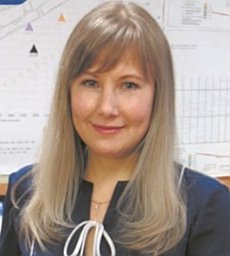 S. A. Zhukova合作论文数Mining Institute, Russian Academy of Sciences5
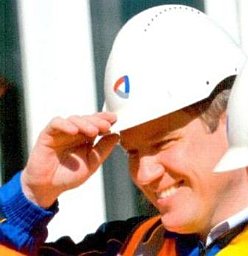 Vladimir Rybin合作论文数FSUE CRISM “Prometey”), Prometey Central Research Institute of Structural Materials5O. V. Belogorodtsev合作论文数4
 Sergey V. Dmitriev合作论文数Institute for Metals Superplasticity Problems of the Russian Academy of Sciences3S. V. Lukichev合作论文数Apatity, Russian Academy of Sciences3V.S. Onuprienko合作论文数1Ю. В. Федотова合作论文数1Yu. V. Fedotova合作论文数1Sn Savchenko合作论文数1
 Oleg Nagovitsyn合作论文数1
 Alina N. Besedina合作论文数1Vitalii V Adushkin合作论文数1Gevorg Kocharyan合作论文数1




