This cluster randomized controlled trial aimed to investigate the effects of an intervention to teach resourcefulness on depression and coping style of patients with coronary heart disease (CHD). A convenience sample of 72 patients in community settings took part. Participants in the intervention group (n = 36) received an 8-week intervention based on the concept of resourcefulness, plus routine health education. Participants in the control group (n = 36) received routine health education only. After the intervention, participants in the intervention group had significantly higher scores on resourcefulness and coping styles, and lower scores on depression than those in the control group (both ps < .001). The findings suggest that a well-developed intervention to teach resourcefulness could help patients with CHD to be more resourceful, improve their level of depression, and choose more effective strategies to cope with stress.
BACKGROUND Coronary heart disease (CHD) is one of the leading causes of mortality worldwide. Previous research has demonstrated that resourcefulness interventions can help individuals identify effective coping strategies to manage their conditions, reduce the incidence of depression, and improve their quality of life. However, little is known about such interventions for people with CHD in China. OBJECTIVE This study aimed to investigate the effects of a resourcefulness training intervention on depression and coping style of patients with CHD in China. METHODS A cluster randomized controlled trial design was used. A convenience sample of 72 patients in community settings took part in the study. Participants in the intervention group (n = 36) received an 8-week intervention based on the concept of resourcefulness, plus routine health education. Participants in the control group (n = 36) received routine health education only. Three outcomes (resourcefulness, depression, and coping styles) were measured using the Resourcefulness Scale, Center for Epidemiological Studies Depression Scale, and Medical Coping Mode Questionnaire. Data were collected at baseline and post intervention, and analyzed using frequencies, percentages, means, standard deviations, independent sample t tests, and χ tests. RESULTS After the intervention, participants in the intervention group had significantly higher scores on resourcefulness and coping styles, and lower scores on depression than those in the control group (both Ps < .001). CONCLUSIONS It is suggested that a well-developed resourcefulness intervention could help patients with CHD in China and beyond to be more resourceful, improve their level of depression, and choose more effective strategies to cope with stress.
[目的]了解脑卒中偏瘫病人功能锻炼健康行为形成过程中的促进因素,为针对病人的需求制定有效的护理干预方法提供直接依据.[方法]采用目的抽样,对11例符合条件的脑卒中病人进行半结构式访谈,运用现象学资料分析方法对访谈内容进行分析.[结果]通过对访谈资料的归类与剖析,提炼出以下5个主题:充足的疾病相关知识;正确的风险意识;合适的社会支持;积极的结果预期;适当的自我调整,积极地应对困难.[结论]护理人员可根据研究所得出的促进因素,针对病人的现状提供相应的干预措施,促进其功能锻炼健康行为的形成与维持,从而促进肢体功能的康复,最终达到提高生活质量的目的.
目的 探讨在《老年护理学》教学中联合应用专题研讨课(Seminar)和案例教学法(Case-based teaching,CBT)的效果.方法 在《老年护理学》课程中实施Seminar-CBT教学法,采用自设问卷调查的形式,在课程结束后收集学生对《老年护理学》结合Seminar-CBT教学法的态度和学习效果的自我评价.结果 90.8%的学生认为Seminar-CBT教学法有助于提高自身对老年护理知识与技术的掌握程度;87.6%的学生认为该课程增进了师生间的互动和交流;提高了合作性学习能力(93%),对学习资源的利用能力(94.1%)和解决临床实践问题的能力(98.4%);相较于传统老年护理学理论授课模式,92.4%的同学表示更喜欢Seminar-CBT教学模式.结论 Seminar-CBT教学法应用于《老年护理学》教学,操作性和可行性强,有利于增进师生间的交流,提高学生灵活应用老年护理学知识的综合能力,从而能达到良好的教学效果.
Objective To investigate the current status of the resourcefulness level of patients with coronary heart disease (CHD) in an urban community, to analyze its influencing factors and to offer a basis for making resourcefulness training plans for patients. Methods Totally 311 CHD patients from 4 community service centers in Shaoguan, Guangdong Province between March and September 2017, were selected by convenient sampling, and investigated with the General Information Questionnaire and Resourcefulness Scale. And statistical analysis was conducted with Epidata 3.1 and SPSS 24.0. Results The resourcefulness score of the 311 CHD patients was (71.23±15.02) , including (41.06±10.40) for personal resourcefulness and (30.14±5.60) for social resourcefulness. According to the multivariate regression analysis, age, educational level, personal monthly income, length of illness and the number of complicated chronic diseases were the major influencing factors of resourcefulness level of CHD patients (P<0.01) . Conclusions The resourcefulness of community CHD patients is at a medium level. Community medical and nursing staff shall focus on the patients with old age, low educational level, low income, longer illness and more complicated chronic diseases. Key words: Cross-sectional studies; Community; Coronary heart disease; Resourcefulness; Influencing factors
Lipoprotein lipase (LPL) is a rate-limiting enzyme that catalyzes hydrolysis of the triglyceride (TG) core of circulating TG-rich lipoproteins including chylomicrons (CM), low-density lipoproteins (LDL) and very low-density lipoproteins (VLDL). A variety of parenchymal cells can synthesize and secrete LPL. Recent studies have demonstrated that complicated processes are involved in LPL biosynthesis, secretion and transport. The enzyme activity of LPL is regulated by many factors, such as apolipoproteins, angiopoietins, hormones and miRNAs. In this article, we also reviewed the roles of LPL in atherosclerosis, coronary heart disease, cerebrovascular accident, Alzheimer disease and chronic lymphocytic leukemia. LPL in different tissues exerts differential physiological functions. The role of LPL in atherosclerosis is still controversial as reported in the literature. Here, we focused on the properties of LPL derived from macrophages, endothelial cells and smooth muscle cells in the vascular wall. We also explore the existence of crosstalk between LPL and those cells when the molecule mainly plays a proatherogenic role. This review will provide insightful knowledge of LPL and open new therapeutic perspectives.
通过回顾1例艾滋病合并肝内胆汁淤积症产妇的整体护理过程,总结其护理要点,便于以后护理工作更加顺利的开展,加强对艾滋病合并肝内胆汁淤积症产妇的个体化及动态化护理,降低术后并发症的发生率.
Objective:To deeply understand the real experiences of coronary heart disease patients after PCI dur-ing hospitalization about empowerment nursing,in order to provide direct evidences for formulating effective nursing measures and meet the nursing needs of patients.Methods:Ten coronary heart disease patients after PCI were chosen by purposive sampling and they received the semi structured interviews,then to collect data and analyze the real feelings of the interviewee.Results:Phenomenological methodology was used in the study, five themes were determined,such as that they expected to receive the concern and support from family and so-ciety;the demand for disease related knowledge was high;the self management ability was poor;the postopera-tive worries was more and there was psychological burden;and the awareness of disease was poor.Conclusion:Nursing personnel can provide the targeted empowerment nursing for patient to promote their physical and psy-chological recovery and improve the quality of life after surgery.
[目的]了解过渡期冠心病病人智谋水平及智谋训练需求,为制定有效的冠心病病人智谋训练方案提供直接依据.[方法]采用目的抽样,选取符合条件的14例过渡期冠心病病人进行丰结构式访谈,收集资料并分析访谈对象的智谋训练需求.[结果]通过现象学分析法,归纳5个主题:个人智谋高于社会智谋;疾病不确定感;个人智谋不足以应对疾病压力,智谋训练需求强;重新自我定位;渴望社会支持.[结论]护理人员可根据访谈结果,针对性地制定过渡期冠心病病人智谋训练方案,促进其恢复身心健康.
目的:构建适合我国冠心病PCI术后患者使用的赋权护理评价工具。方法以赋权理论为框架,在大量阅读国内外相关文献和对研究对象的深入访谈后,初步设计冠心病PCI术后患者赋权护理评价量表条目,采用德尔菲法,通过2轮对21名专家的函询,初步筛选并确定量表内容。结果2轮问卷有效回收率分别为100.0%(21/21)、95.2%(20/21);专家权威系数为0.92,2轮专家咨询的肯德尔协调系数分别为0.25、0.41(P<0.01);2轮专家咨询后得出的各级指标的变异系数分别为0.04~0.27、0.06~0.17。结论应用德尔菲法对冠心病PCI术后患者赋权护理评价工具的各项指标进行筛选,具有较高的可靠性与科学性,适合客观评价护理人员的赋权护理行为。
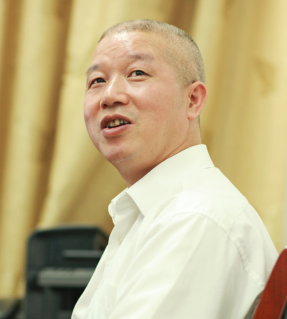 Pingping He (何平平)合作论文数College Of Finance And Statistics, Hunan University10
 qianqian shen (申倩倩)合作论文数7JieQiong Zou (邹洁琼)合作论文数7
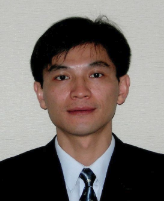 Xinping Ouyang (欧阳新平)合作论文数School of Chemistry and Chemical Engineering, South China University of Technology5zhaoxia li (李兆霞)合作论文数3Min WEN (文敏)合作论文数2Yan Wang (王艳)合作论文数2HongFang Chen (陈红芳)合作论文数2Chunlan Wang (王春兰)合作论文数2
 Juping Yu合作论文数2yan wang (王艳)合作论文数1Congjia ZHAO (赵聪嘉)合作论文数1Sicheng Yang (杨斯程)合作论文数1Li OUYANG (欧阳丽)合作论文数1LiZhi Hu (胡莉芝)合作论文数1JiaoXing Yang (杨娇星)合作论文数1Zauszniewski Jaclene A合作论文数1Wang Yan合作论文数1
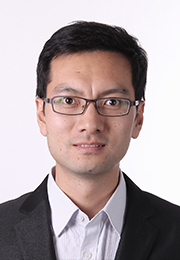 Li Liao (廖立)合作论文数State Key laboratory of Oral Disease, West China Hospital of Stomatology, Sichuan University1
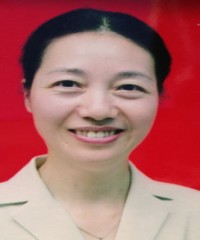 YanPing Wu (吴艳平)合作论文数School Of Nursing, University Of South China1Xiaoxia Wei (魏晓霞)合作论文数1Ting Jiang (江婷)合作论文数1
 Xi-Long Zheng合作论文数Department of Biochemistry and Molecular Biology, Cumming School of Medicine, University of Calgary1




