Background Human follicular fluid (HFF), which is composed by essential proteins required for the follicle development, provides an important microenvironment for oocyte maturation. Recently, overweight status has been considered as a detrimental impact factor on oocyte maturation, but whether HFF proteome could provide protein markers for assessing overweight-based oocyte maturation deficiency is still unknown. Methods To reveal the HFF-based molecular characteristics associated with abnormal oocyte maturation, an iTRAQ-based comparative proteomic analysis was performed to investigate different HFF protein expression profiles from normal weight women and overweight status women. Results Two hundred HFF proteins were quantified in our data, of which 43% have not been overlapped by two previous publications. Compared with the HFF proteins of normal weight women, 22 up-regulated HFF proteins and 21 down-regulated HFF proteins were found in the overweight status women. PANTHER database showed these altered HFF proteins participated in development, metabolism, immunity, and coagulation, and STRING database demonstrated their complicated interaction networks. The confidence of proteomic outcome was verified by Western blot analysis of WAP four-disulfide core domain protein 2 (WFDC2), lactotransferrin (LTF), prostate-specific antigen (KLK3), fibronectin (FN1), and glyceraldehyde 3-phosphate dehydrogenase (GAPDH). Further, ELISA assay indicated WFDC2 might be a potentially useful candidate HFF marker for the diagnosis of oocyte maturation arrest caused by overweight status. Conclusions Our work provided a new complementary high-confidence HFF dataset involved in oocyte maturation, and these altered HFF proteins might have clinical relevance and diagnostic and prognostic value for abnormal oocyte maturation in overweight status women.
Background Seminal plasma is a promising diagnostic fluid for male infertility. In assisted reproduction, the seminal plasma-based characteristics of normozoospermic men achieving successful clinical pregnancy through rescue intracytoplasmic sperm injection after in vitro fertilization failure remain unclear. Objective To identify potential seminal plasma proteins to contribute to a new understanding of unexplained male factor infertility. Materials and Methods An approach with isobaric tags for relative and absolute quantification labeling coupled with liquid chromatography matrix-assisted laser desorption ionization mass spectrometry was applied to investigate differentially expressed proteins in the seminal plasma of a rescue intracytoplasmic sperm injection pregnancy group versus an in vitro fertilization pregnancy group of normozoospermic men. Result(s) The present work revealed seventy-three differentially expressed seminal plasma proteins between the in vitro fertilization and rescue intracytoplasmic sperm injection groups. Forty-five proteins were upregulated, and 28 proteins were downregulated in the rescue intracytoplasmic sperm injection group compared with the in vitro fertilization group. Bioinformatics analyses showed that these altered proteins were involved in various functions, including the kallikrein-related proteolytic cascade, immune response, and heparin binding. Furthermore, the validity of the proteomic results was verified by Western blot analysis of the proteins (lactoferrin [LTF], fibronectin [FN1], creatine kinase B type [CKB], kallikrein-2 [KLK2], aminopeptidase N [ANPEP], extracellular matrix protein 1 [ECM1], glycodelin [PAEP], alpha-1-antitrypsin [SERPINA1], and semenogelin-1 [SEMG1]) and immunofluorescence. Moreover, 16% of the seminal plasma proteins identified in the present work have not been reported in previous studies. Discussion This panel of altered seminal plasma proteins associated with unexplained male factor infertility might have clinical relevance and may be useful in the diagnosis and prognosis of idiopathic infertility in in vitro fertilization. Conclusions Our work not only provides a new complementary high-confidence dataset of seminal plasma proteins but also shines new light onto the molecular characteristics of seminal plasma from normozoospermic men with different assisted reproductive outcomes.
BACKGROUND:In the assisted reproduction, the infertile molecules of spermatozoa from normozoospermic men who underwent the unexplained failure of in vitro fertilization (IVF) due to the lack of sperm binding to the normal zona pellucida, and then achieved pregnancy with the rescue intracytoplasmic sperm injection (R-ICSI) remain unclear. More works are still necessary to explore this male infertile mechanism.METHODS:Normozoospermicmen with the IVF pregnancy and normozoospermic men with the R-ICSI pregnancy after the conventional IVF failure were collected. iTRAQ-based proteomic approach were performed to reveal the new infertile causes between the IVF pregnancy men and the R-ICSI pregnancy men. To validate the confidence of proteome data, the individual samples were analyzed by western blot and immunofluorescence. Further, the spontaneous acrosome reactions were measured to evaluate the sperm quality.RESULTS:Compared with IVF pregnancy group, 56 sperm proteins were differentially expressed in the R-ICSI pregnancy group. Bioinformatic analyses (PANTHER, DAVID, PubMed and STRING) indicated these altered sperm proteins were involved in various molecular functions: reproduction, chromosome organization, and sperm-oocyte interaction. Moreover, the confidence of proteome data was confirmed by western blot and immunofluorescence using the individual samples, which were consistent with our proteomic data. Additionally, an increased rate of the spontaneous acrosome reaction rate was found in the R-ICSI pregnancy group.CONCLUSIONS:The sealtered sperm proteins and the increased spontaneous acrosome reaction rate might account for this unexplained male infertility in the R-ICSI pregnancy patients. The present proteomic results will throw light on the better understanding of the unexplained infertile mechanisms underlying these normozoospermic man who achieved R-ICSI pregnancy after IVF failure.
Background: Human follicular fluid (HFF) provides a key environment for follicle development and oocyte maturation, and contributes to oocyte quality and in vitro fertilization (IVF) outcome.Methods: To better understand folliculogenesis in the ovary, a proteomic strategy based on dual reverse phase high performance liquid chromatography (RP-HPLC) coupled to matrix-assisted laser desorption/ionization time-offlight tandem mass spectrometry (LC-MALDI TOF/TOF MS) was used to investigate the protein profile of HFF from women undergoing successful IVF.Results: A total of 219 unique high-confidence (False Discovery Rate (FDR) < 0.01) HFF proteins were identified by searching the reviewed Swiss-Prot human database (20,183 sequences), and MS data were further verified by western blot. PANTHER showed HFF proteins were involved in complement and coagulation cascade, growth factor and hormone, immunity, and transportation, KEGG indicated their pathway, and STRING demonstrated their interaction networks. In comparison, 32% and 50% of proteins have not been reported in previous human follicular fluid and plasma.Conclusions: Our HFF proteome research provided a new complementary high-confidence dataset of folliculogenesis and oocyte maturation environment. Those proteins associated with innate immunity, complement cascade, blood coagulation, and angiogenesis might serve as the biomarkers of female infertility and IVF outcome, and their pathways facilitated a complete exhibition of reproductive process.
This study aimed to evaluate the effect of body mass index (BMI) on the in vitro fertilization-embryo transfer (IVF-ET) outcomes in Chinese overweight/obese women without polycystic ovary syndrome (PCOS). A retrospective cohort study was performed in 411 non-PCOS patients aged less than 38 years old undergoing their first IVF-ET treatment between January 2011 and January 2013. According to the criteria of Chinese BMI classification, patients were divided into 3 groups: 47 obese (BMI >= 28 kg/m(2)), 130 overweight (24 <= BMI=27.9 kg/m(2)) and 234 normal weight (18.5 <= BMI=23.9 kg/m(2)). The correlation between clinical treatment characteristics and IVF-ET outcomes in their fresh IVF cycles was analyzed. Obese women suffered a longer infertility duration than normal weight women (P<0.01). Higher doses of gonadotrophin were used in overweight/obese patients than in normal weight patients (P<0.001), but their Estradiol (E2) level on human chorionic gonadotropin (hCG) day was lower in obese patients (P<0.01). There were no significant differences in the number of retrieved oocytes, rate of Good Quality Embryo (GQE), transferred embryos or endometrial thickness, but overweight/obese patients had statistically less mature oocytes, fertilization rate, blast formation rate and embryo implantation rate (P<0.05). Clinical pregnancy rate and live birth rate also showed a decreased trend in overweight/obese patients. Conclusions: Female obesity indeed affected fertility in Chinese women. During IVF-ET treatment, obesity had an adverse impact on gonadotropin (Gn) response, oocyte maturation, blast formation and embryo implantation.
Teratospermia is a heterogeneous and complex disorder, which is closely associated with male fertility. Genes and gene products associated with teratospermia may serve as targeted biomarkers that help understand the underlying mechanisms of male infertility; however, systematic information on the subject remains to be elucidated. The present study performed a comparative bioinformatics analysis to identify biomarkers associated with sperm quality, particular focusing on testis-specific biomarkers. A stepwise screening approach identified 1,085 testis/epididymis-specific genes and 3,406 teratospermia-associated genes, resulting in 348 testis-specific genes associated with aberrant sperm quality. These genes were functionally associated with the reproduction process. Gene products corresponding to heat shock protein family A (Hsp70) member 4 like (HSPA4L) and phosphoglycerate kinase 2 were characterized at the cellular level in human testes and ejaculated spermatozoa. HSPA4L expression in sperm was revealed to be associated with sperm quality. The present study provided a novel insight into the understanding of sperm quality, and a potential method for the diagnosis and assessment of sperm quality in the event of male infertility.
Is there an association between the expression of phosphoglycerate kinase (PGK) 2 in spermatozoa and sperm quality in both elderly men and young asthenozoospermia patients?Spermatozoa from elderly men and young asthenozoospermia patients show decreased expression of PGK2, which has a close positive relationship with sperm quality.PGK1 and PGK2 are involved in spermatogenesis and thought to be related to sperm motility. However, limited information is known about their temporal-spatial expression in human spermatogenesis and their relationship with sperm quality.This was a case-control study including 30 healthy young males (aged 28-31 years), 30 elderly men (aged 68-70 years), and 30 asthenozoospermic patients (aged 25-40 years, progressive motility < 32%) who donated semen samples. Furthermore, young testes samples were obtained from five fathers (27-33 years old) who had died in car accidents, while aged testes samples were obtained from five elderly fathers (78-82 years old) who were prostate cancer patients.Semen samples from young adults, elderly men and asthenozoospermic patients were prepared, and their parameters were assessed by Computer-Aided Sperm Analysis (CASA). Sperm proteins were extracted for western blot analysis. Immunohistochemistry was used to characterize the cellular localization of PGK1 and PGK2 in testes samples. Sperm immunofluorescence quantification experiments identified the differential expression of PGK1 and PGK2 in sperm from young adults, elderly men and asthenozoospermic patients. Antibodies against PGK1 and PGK2 were used to test their influence on sperm motility and penetration into viscous media. A modified Kremer test using methyl cellulose was adopted to assess sperm function via penetration into viscous media.Cellular localization analysis showed that PGK1 was mainly expressed in spermatogonia whereas PGK2 was mainly expressed in round spermatids. Expression levels of both PGKs were significantly decreased in the testis with ageing (P < 0.05). Western blot and immunofluorescence quantification showed markedly lower expression of PGK2 (P < 0.05) in sperm from elderly men or asthenozoospermic patients compared sperm from with healthy young men. Sperm functional analysis validated the close relationship between expression of PGK2 and sperm motility (staining percentage, r = 0.60, P < 0.05; intensity, r = 0.59, P < 0.05). Use of an anti-PGK2 antibody on sperm significantly decreased their ability to penetrate into a cervical mucus substitute (P < 0.05).Before any clinical applications using PGK2 to assess sperm quality can be developed, more cases should be used to evaluate this approach.The study provides new insights into the role of PGKs in male reproduction. The results also indicate that PGK2 is a promising molecular candidate for the assessment of sperm quality and the screening of male contraceptive targets.This work was supported by grants from the National Natural Science Foundation of China (no. 81300533, 81370013 and 81000277) and Shandong Provincial Natural Science Foundation, China (ZR2013HQ002). The authors declare no competing financial interests.
BACKGROUND:The mouse epididymis performs an essential role in sperm maturation, but global protein expression data in mouse epididymis are still lacking. Here, we reported the first in-depth gel-based profiling of mouse epididymis proteome and established a 2-DE map.RESULTS:A total of 832 protein spots were detected in the reproducible gels, and 625 spots corresponding to 355 unique protein entries have been successfully identified by MALDI-TOF-MS. The confidence of proteome data was validated by Western blot. Functional annotations showed that these proteins were mainly related to general metabolism, antioxidant and structural molecule activity. Immunohistochemistry disclosed two structural proteins (myosin regulatory light polypeptide 9 and alpha-2 type I collagen) continuously expressed in the myoid cell since postpartum.CONCLUSION:This study provides a first-draft reference map of the mouse epididymis proteome, which will greatly expand the knowledge of the epididymal structural basis and contribute to the better understanding of those proteins in the process of mouse epididymal sperm maturation.
Objective To study the post-thaw survival rate and differentiation ability of human bone marrow mesenchymal stem cells(BMSCs). Methods Human BMSCs were isolated and purified in vitro,its purity was detected by flow cytometer.The cells were offered cryopreservation by using vitrification frozen.The survival rate was measured after thawing.BMSCs were then cultured in DMEM/F12 supplemented with 10 μg/L bFGF and 10% fetal bovine serum pre-induce for two days,and then induced by RA(0.1 μmol/L) and 10 μg/L Glial cell line derived neurotrophic factor(GDNF) for formal induction for three days.the expressions of Nestin,MAP2,MBP,GFAP were detected by immunofluorescence staining. Results Strong expressions of CD44 and CD90 were noted in BMSCs,but no CD34 and CD45;post-thaw cell survival was 95%.After induction,the expressions of BMSCSMBP and GFAP were strongly positive,and that of Nestin and MAP2 weakly positive. Conclusion The survival rate of post-thaw BMSCs is high and can be successfully induced to become neuroglial cells.
目的 研究授精前剥除部分卵丘细胞的卵母细胞的受精、胚胎发育和临床结局. 方法 授精前用机械法剥除卵母细胞外包裹的部分卵丘细胞,每个卵母细胞采用微滴法单独受精(A组).对照组(B组)采用常规体外受精-胚胎移植(IVF-ET)受精方式进行.比较两组受精率(2PN、1PN和3PN)、卵裂率(2PN、1PN和3PN)、优胚率、临床妊娠率、种植率和流产率. 结果 A组和B组的受精率分别是76.51%和73.74%(2PN受精率分别是60.64%,61.62%;1PN受精率分别是1.61%,0.86%;3PN受精率分别是10.44%,9.69%)、卵裂率分别是98.95%和99.17%(2PN卵裂率分别是97.02,98.01%;1PN卵裂率分别是100%,85.71%;3PN卵裂率分别是100%,100%)、优质胚胎率分别是60.75%,62.68%、临床妊娠率分别是63.89%,61.76%、种植率分别是48.00%,38.78%、流产率分别是9.09%,11.90%.所有指标均无统计学意义. 结论 卵母细胞授精前剥除部分卵丘细胞不会影响IVF-ET的临床结局,为利用卵丘细胞进行非侵入性种植前遗传学诊断提供临床依据.
目的 探讨废弃胚胎作为体外受精(IVF)实验室质控的可行性. 方法 通过囊胚序贯培养将无原核(0PN)、单原核(1PN)、3原核(3PN)和发育迟缓或停滞的2原核(2PN)的废弃胚胎进行囊胚培养,比较不同来源胚胎的囊胚形成情况. 结果 共收集396个废弃胚胎,经序贯培养形成98个囊胚(24.75%),0PN、2PN、1PN、3PN的囊胚形成率分别为50.50%(51/101)、24.59%(30/122)、17.07%(7/41)、7.58%(10/132),其中0PN、停滞的2PN的胚胎有孵出,孵出率分别为47.06 %(24/51)和33.33%(10/30);有囊胚形成与无囊胚形成患者的临床妊娠率分别为30.28%(43/142)、19.72%%(28/142),两者相比有统计学差异(P<0.05);特别是0PN+2PN患者的临床妊娠率为23.24%(33/142),显著高于无囊胚形成者的9.15%(13/142)(P<0.01). 结论 废弃胚胎有不同程度的发育潜能,可部分发育成囊胚,特别是0PN+2PN囊胚形成率超过35%,可以作为IVF实验室质控的一种辅助方法,并可作为临床妊娠结局预测的参考指标.
BACKGROUND:Polycystic ovary syndrome (PCOS) is a common endocrine and metabolic disorder in women. The developmental competence of oocytes and embryos in PCOS patients is reduced to a certain extent (comparing to non-PCOS patients, the high quality embryo rate was decreased by 16% from the data of our centre) during the in vitro fertilization (IVF) process. Cross-talk between the oocyte and cumulus cells is critical for oocyte maturation and embryo competence. In this study, we have evaluated the transcription of specific genes in cumulus cells harvested from pre-ovulatory follicles of PCOS patients before IVF, according to individual oocyte nuclear maturity and developmental competence. Seven genes (RUNX2, PSAT1, ADAMTS9, CXCL1, CXCL2, CXCL3, and ITGB5) were targeted from our previous cDNA microarray data which isolated genes related to oocyte nuclear maturation in PCOS patients. Two additional genes which had been found to be associated with oocyte maturation or embryo quality in non-PCOS patients (GPX3 and PTX3) were also studied.METHODS:The mRNA expression levels of cumulus cells were detected by qRT- PCR.RESULTS:Consistent with our previous cDNA microarray data, with the exception of GPX3 and PTX3, the selected 7 genes were related to oocyte nuclear maturation in PCOS patients. Noticeably, the expression level of RUNX2 was lower in cumulus cells derived from oocytes that could develop into blastocysts than the level of expression from oocytes that could not. The PTX3 expression level was significantly lower in cumulus cells from oocytes with two normal pronuclei than that from oocytes that formed >2 pronuclei (MPN) after fertilization. GPX3 mRNA levels were decreased in cumulus cells isolated from oocytes that developed into blastocysts with high potential development competence.CONCLUSIONS:Several cumulus cell genes were associated with oocyte maturation, fertilization and embryo quality in PCOS patients. RUNX2 and GPX3 are candidate genetic markers in the monitoring of embryo quality for PCOS patients, whereas PTX3 mainly played a role in fertilization process. Together with morphological evaluation, cumulus cells genes may serve as biomarkers of oocyte and embryo selection during the IVF process for PCOS patients and may advance our understanding of PCOS.
Male reproductive proteomes provide basis for studying gene products and its involvement or regulation in sperm physiology. Here, a comparative study between these proteomes was performed to find potential proteins and functions associated with human sperm maturation. Seven reproductive proteomes associated with human sperm physiology were integrated. Gene ontology analysis were performed using DAVID and Panther tools to determine enriched functions. Total of 270 proteins overlapped between epididymal, prostatic milieu and sperm proteome were thought to be candidate proteins involved in sperm maturation, and they showed enriched functions of proteasomal protein catabolic process and protein folding. 34 epididymal milieu proteins and 274 prostatic milieu proteins were contributed to the composition of seminal fluids proteome. Literatures have confirmed the involvements in sperm maturation of many of these proteins The spatial expressions of 24 epididymal milieu proteins involved in chaperone and antioxidant activity were authenticated by real-time RT-PCR. These proteins may serve as candidate molecules for future studies of sperm maturation and male infertility.
The aim of this study was to better understand the altered functional modules in breast cancer at pathway and network levels. An integrated bioinformatics analysis of differentially expressed proteins in human breast cancer was performed. Breast cancer protein profiles were constructed by data mining proteins in literature and public databases, including 1031 proteins with 153 secretory and 69 cell surface proteins. An experimental investigation was performed by two-dimensional electrophoresis, and 4 proteins were further validated by western blotting. Enriched bioinformatics functions were clustered. This study may be used as a reference in further studies to help identify the underlying biological interactions associated with breast cancer and discover potential cancer targets.
[Objective]To observe the effects of transplantation of autologous bone marrow stromal cells(BMSCs)on repair of spinal cord injury(SCI)in adult rats.[Methods]Autologous bone marrow stromal cells were isolated and purified.46 Wistar rats with spinal cord injury were randomly divided into two groups(n = 23,each).The BMSCs group was received transplantation of autologous bone marrow stromal cells,and the control group was only given spinal cord injury.At one and four weeks after surgery,the functional recovery of the hind limbs was evaluated by the Basso-Beattie-Bresnahan(BBB)locomotor rating score.[Results]The spinal cord function BBB scores at 4 weeks after bone marrow stromal cell transplantation were significantly higher than those at one week after bone marrow stromal cell transplantation in the two groups.At one and four weeks after bone marrow stromal cell transplantation,the BBB scores in the BMSCs group were significantly higher than those in the control group(P﹤0.05).[Conclusion]Autologous bone marrow stem cell transplantation is effective for treatment of spinal cord injury of adult rats.
目的 通过对常规体外授精(IVF)失败(未观察到第二极体)后不同时间行补救性卵细胞浆单精子显微注射(ICSI)的临床资料比较,探讨补救性ICSI的最佳时间. 方法 回顾性分析常规体外授精(IVF)失败后6 h(早期组)与22 h(传统组)行补救性ICSI的临床资料,比较两组的受精率、卵裂率、优胚率、种植率和妊娠率. 结果 早期组受精率、种植率、临床妊娠率分别为74.6%(56/75)、37.5%(9/24)、53.8%(7/13);传统组受精率为63.0%(29/46)、种植率和临床妊娠率均为0.早期组7例妊娠中4例单胎,3例流产;早期组和传统组受精率比较,差异无统计学意义,妊娠率和种植率比较,差异有统计学意义(P<0.05); 结论 早期补救性ICSI在受精率、种植率和临床妊娠率上可能优于传统补救性ICSI.
目的 利用基因工程技术合成人附睾特异蛋白ESC42进行抗菌谱的筛选,并探讨其作用机制.方法 用微量稀释法细菌敏感试验,观察该蛋白对大肠埃希氏菌ATCC25922,金黄色葡萄球菌ATCC29213,铜绿假单胞菌ATCC17853以及临床分离耐药菌株大肠埃希氏菌、铜绿假单胞菌的抑菌效果;应用溶血实验检测ESC42蛋白对兔红细胞的毒性作用.结果 应用不同的蛋白浓度作用细菌,随着时间延长和蛋白浓度的增加其抑制率逐渐增加.对兔红细胞没有毒性作用.结论 rhESC42蛋白对细菌有一定的抑制作用,对真核细胞无害.
 Liu Fu-Jun合作论文数9Juan Liu合作论文数4Wang Jiahui合作论文数4
 Cuifang Hao (郝翠芳)合作论文数Qingdao Women and Children's Hospital4Wang Yanwei合作论文数4Yu-Hua Zhang (张玉花)合作论文数4Wenting Wang合作论文数3Peng Zhu合作论文数3Huang Xin合作论文数3Shao-Hua Jin合作论文数2Yuhua Zhang合作论文数2Li-li CHEN (陈丽丽)合作论文数2XiaoYan Liu (刘晓妍)合作论文数2YanWei Wang (王延伟)合作论文数2YingHua Dan (单英华)合作论文数2Liu Xue-Xia合作论文数2W Wang合作论文数1Ning Li合作论文数1N Li合作论文数1P. Zhu合作论文数1Xin Liu合作论文数1Xuebo Wang合作论文数1Chenglin Zhang合作论文数1Wendi Zhang合作论文数1PengZhen Zhou (周朋珍)合作论文数1
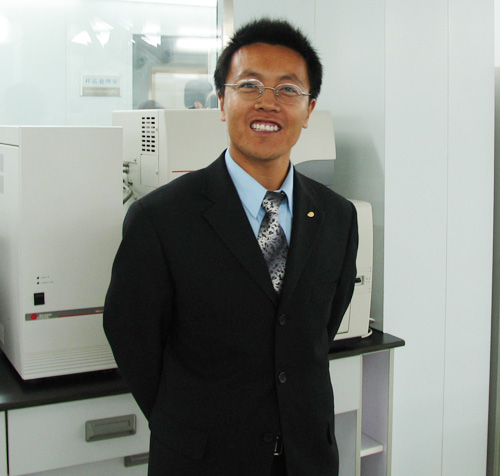 YueSi Wang (王跃嗣)合作论文数滨州医学院细胞工程教研室1YuHua Zhang (张玉花)合作论文数1HongTao Liu (刘洪涛)合作论文数1XiaoYang Liu (刘晓阳)合作论文数1Xiaoxiao Liu合作论文数1Wang Wen-Juan合作论文数1Hua Zhang合作论文数1
 Jian Liu合作论文数Institute of High Energy Physics1Feng Liu合作论文数Huazhong Normal University1Shouxin Zhang (张守信)合作论文数1Yanhua Wang (王燕华)合作论文数1
 Jianyuan Li (李建远)合作论文数College of Life Sciences, Yantai University1




