Electron cyclotron wave-assisted startup technology is widely used in tokamak devices, However, there are relatively few engineering parameter evaluation-based analyses. This study improves the current model by decomposing the plasma current into non-inductive drive current and inductive current, and introduces a circuit equation incorporating mutual inductance terms, providing a more realistic description of the dynamic coupling process between electron cyclotron wave-driven current and inductive current. Based on the Nanchang University Spherical Tokamak (NCST), a zero-dimensional simulation study of electron cyclotron wave-assisted startup under limited ohmic field conditions was conducted. The simulation results indicate the existence of a critical window of approximately 2.6 mT for the vertical magnetic field, beyond which startup fails. Increasing the electron cyclotron wave injection power enhances the drive current, but due to the mutual cancellation between the drive current and the inductive current, the growth of the plasma current remains limited. Additionally, while higher injection power improves electron temperature and density, there is an upper limit beyond which startup fails. The study validates the synergistic effect of electron cyclotron waves and the vertical magnetic field during the startup process, providing a theoretical basis for optimizing non-inductive startup in NCST and other similar devices.
The alpha particle should have good confinement when there are instabilities and toroidal field ripples in fusion devices. With the alpha particle slowing down distribution generated by TRANSP/NUBEAM, the Alfven eigenfunction calculated by NOVA/NOVA-K, and a quasilinear model in the ORBIT code, the study investigated the nonlinear evolution of Toroidal Alfven Eigenmodes (TAE) driven by alpha particles and the resulting transport, particularly focusing on the synergistic effects with ripple loss. The amplitude level of strong pulsations is about An=5.0x10⁻⁴R0, frequency chirping and particle transport in phase space are also observed. Enhancement of the saturation level does not occur because the two mode-particle resonant regions are well separated. No synergistic effect of TAE and toroidal field ripple perturbation on alpha particle loss was observed. This is because co-passing particles near the core dominated the mode particle resonance. Only trapped particle redistribution and flattening near the edge can have particle loss enhancement. The conclusions of saturation amplitude, particle transport, and synergy with ripple loss have no concerns for the present scenario of CFETR, but no synergy is not a general conclusion and should be investigated case by case. The methodology demonstrated in this work is general and can facilitate rapid iteration of engineering and physics for fusion reactor design.
According to the physics of tokamak start-up,this study constructs a zero-dimensional(0D)model applicable to electron cyclotron(EC)wave assisted start-up in NCST spherical torus(spherical tokamak)and CN-H1 stellarators.Using the constructed 0D model,the results obtained in this study under the same conditions are compared and validated against reference results for pure hydrogen plasma start-up in tokamak.The results are in good agreement,especially regarding electron temperature,ion temperature and plasma current.In the presence of finite Ohmic electric field in the spherical tokamak,a study on the EC wave assisted start-up of the NCST plasma at frequency of 28 GHz is conducted.The impact of the vertical magnetic field Bv on EC wave assisted start-up,the relationship between EC wave injection power Pinj,Ohmic electric field E,and initial hydrogen atom density nH0 are explored separately.It is found that under conditions of Ohmic electric field lower than ITER(~0.3 V m-1),EC wave can expand the operational space to achieve better plasma parameters.Simulating the process of 28 GHz EC wave start-up in the CN-H1 stellarator plasma,the plasma current in the zero-dimensional model is replaced with the current in the poloidal coil of the stellarator.Plasma start-up can be successfully achieved at injection powers in the hundreds of kilowatts range,resulting in electron densities on the order of 1017-1018 m-3.
This study employs a zero-dimensional model to initiate plasma using electron cyclotron waves in a pure hydrogen plasma environment. Simulations were conducted on the CFQS stellarator device under 54.5 GHz conditions with varying injection powers. The simulation results illustrate the time evolution of plasma electronic temperature, ion temperature, and electron density, with electronic temperature and electron density reaching levels of $300 \text{eVand} 10^{17} \mathrm{m}^{-3}$, respectively. By varying the injection power, different characteristic parameters were obtained. However, overall, the three simulated startup processes exhibited similar trends in electronic temperature, ion temperature, and electron density, effectively reflecting the three phases of plasma startup.
As a significant input for neutronics analysis of tokamak devices, the plasma neutron source is a bridge connecting fusion plasma physics and engineering design. A plasma neutron source model is established based on the EAST plasma configuration. The maximum neutron wall loading (NWL) is near the outboard midplane and is more than similar to 20% that of the inboard midplane. The investigations demonstrate that special care should be taken for radiation shielding and protection of the key components located on the outboard midplane and on the inboard midplane. The effect of the tritium accumulation on neutronics analysis should be carefully considered for EAST tokamak D-D plasma operations.The effect of density peaking (DP) on the neutronics analysis is also investigated. It is evident that the peak NWLs are all near the outboard midplane and that the poloidal distributions of the NWL are slightly different for these cases. With increasing DP, both the outboard and inboard peak NWLs decrease. However, the decrease in NWL is very small; NWL decreases only 11% when the neutron source peak increases about 1.5 times.
The stability of Alfven eigenmodes (AEs) driven by fast ions is investigated in the Experimental Advanced Superconducting Tokamak (EAST). It is demonstrated that all AEs found in toroidal AE gaps are stable and that the least stable mode is a reversed shear Alfven eigenmode (RSAE) with n = 9. The calculation results show that collisional damping is the main damping mechanism for toroidal mode number n < 11. The excitation threshold for the RSAE is about beta(crit,b) = 3.33%, bigger than the value of the central beam ion beta beta(b) = 1.01%. The results show that AEs driven by fast ions are stable in EAST, at least for the parameters shown in this work. The effect of beam ion pressure and energy on AE stability is also presented. The drive coming from fast ions increases with the pressure gradient, and the drive mainly comes from upsilon(A)/3 resonance.
为了研究 CFETR 上高能量粒子的行为,利用输运代码 ONETWO 模拟研究了聚变反应和高能量粒子的输运现象.在无中性束注入(NBI)条件下,高能量 α 粒子的密度是随时间逐渐减少的.在考虑 NBI 以后,α粒子密度有着较明显的下降.在束离子能量增加而NBI功率不变的情况下,α粒子密度除了在等离子体中心区域有一定的下降外,在其他区域几乎没有变化.在NBI功率增加而束离子能量不变的情况下,α粒子密度在等离子体中心区域有着明显的下降.
微课教学模式具有教学时间和空间自由、内容丰富、满足学生个性化学习需求等特点.以电工电子技术课程为切入点开展微课教学的探索和应用研究,对电工电子技术课程的教学方法、教学内容、教学评价体系等方面进行一系列革新,实现信息技术教学模式的创新,提高学生学习兴趣,培养具有创新实践能力的大学生.
电工电子实验课程内容较多,操作性强,初学者往往不能很好掌握.为了减轻教师的重复性劳动,提升学生学习的兴趣和成效,我们利用微信公众平台辅助教学,发布实验讲义,录制演示视频,进行课后答疑,拓展课堂知识等.介绍了移动学习的特点,微信公众平台开发的原则,主要功能呈现等.调查表明:这种新型的教学模式,得到了大学生们的广泛认可和积极参与,提高了实验教学质量.
The China Fusion Engineering Test Reactor (CFETR) is a new superconducting tokamak device being designed in China, aiming to bridge the gaps between ITER and future fusion power plants. In addition to the temperature dependence, the cross section also depends on the spin states of the reactant nuclei. In this paper, we calculate the neutron source and neutron wall loading (NWL) distributions and investigate the effect of spin polarization on them. For the two unpolarized scenarios at the CFETR, the neutron source distributions have obvious differences, but the poloidal distributions of the NWL have a similar tendency and are just a little different except near the outboard midplane. For the hybrid mode scenario, the maximum of the NWL is near the outboard midplane. However, for the full parallel or antiparallel polarization, the NWL distributions have a big difference in the poloidal direction, and the maximum of the NWL occurs in the upper region of the first wall. The calculation results show that it is possible to optimize blanket design by using polarized fuels at the CFETR, and then increase the working life of the first wall.
The enhanced transport of trapped energetic ions (TEIs) in the presence of resonant interactions between trapped fast ions and a rotating magnetic island is investigated within a drift-kinetic framework. Gyro-orbit banana center model equations of resonances between the island rotation, the bounce motion of trapped fast ions, and their precession frequency (poloidal precession and precession in the helical direction) are constructed. There are two solutions for resonances in phase space for different mode numbers, with only one solution having low-energy resonant lines (<100 keV); the other has not only low-energy resonant lines but also high-energy lines (≥100 keV). Island rotation plays an important role in the low-energy region, especially near the trapped-passing boundary. The precession frequency is more important when resonances occur in the high-energy area. Thus, the effect of islands on TEI transport in a low-energy region is the focus of this paper. Transport fluxes caused by collisions, resonances, and symmetry breaking induced by an island are obtained. We divide transport fluxes into two types: Γc arising from magnetic drift and Γb arising from the island rotation. There is a discontinuity in Γc with different island widths near the island separatrix. On the right-hand side of the (m = 2, n = 1) rational surface, Γc is more important than Γb, and at the plasma boundary, the flux due to drift can suppress Γb, which makes fast ions move toward inner plasma. On the left-hand side of the rational surface, Γb is dominant. When the island width is larger than a certain threshold, the fluxes oscillate, and Γb is far larger than Γc.
为了解决二维磁场位形的局限性,对三维磁场位形的研究势在必行.基于J-TEXT平衡参数,利用VMEC程序求解得到J-TEXT装置的三维磁场位形.此外,分析了等离子体电流、压强对磁场位形的影响,论证了VMEC程序应用在J-TEXT上的可行性.结果表明,VMEC程序能够初步满足J-TEXT装置的三维磁场位形研究要求,为后续装置三维磁场位形优化提供理论和工程借鉴意义.通过比较不同的等离子体电流,压强剖面对三维磁场的计算结果,表明了等离子体电流能够改变极向磁场强度,增大压强剖面使等离子体环状膨胀,磁轴外移.
开展雷电电磁环境的研究需要1台2 ms的方波冲击电流发生器.文章从基本的LC回路出发,利用Multisim电路仿真软件,重点研究了L型链路参数对方波冲击电流波形的影响,总结了电流峰值、峰值持续时间与充电电压、链路数量、电感及其内阻、电容器和负载电阻等电路参数的关系,并设计了满足国家标准要求的方波电流发生器装置.实验结果显示,测试波形与仿真分析较为吻合,该设计方法可以为方波发生器(包括电压发生器)的设计提供理论基础.
In this paper, NOVA/NOVA-K codes are used to investigate the stability of Alfvén eigenmodes (AEs) in the China Fusion Engineering Test Reactor (CFETR). Firstly, the stability of AEs excited by energetic alpha particles is investigated. For the fully non-inductive scenario, it is found that all AEs are stable, and the least stable toroidal mode number is n = 8 . However, for the hybrid mode scenario, it is found that many AEs are unstable, and the least stable toroidal mode numbers are n = 7 , 8 . Secondly, the effect of energetic alpha-particle parameters and beam ions on AE stability is also presented. The threshold of the least stable AE is about β crit , α = 1.12 % , less than the value of alpha-particle beta ( β α = 1.34 % ). The result demonstrates that the AEs excited by alpha particles are weakly unstable. The effect of the beam ions on AE stability is found to be very weak in CFETR.
γ能谱仪主要有探测器、脉冲多道幅度分析器、仪表显示三部分组成.脉冲幅度分析器系统的作用是把探测器输出的核脉冲信号进行放大滤波,幅值提取,能量计数最终形成能谱数据.为了研发一款数字化的γ能谱仪,本文采用可编辑逻辑器件(FPGA)以及Verilog HDL硬件描述语言完成了数字多道幅度分析器的设计.并搭建测试平台,实测了137Cs源的γ能谱验证了设计的可行性与实用性.
Chinese fusion engineering test reactor (CFETR) is under conceptual design to bridge gaps between ITER and DEMO. CFETR is envisioned to produce a 200 MW (200 MW in phase I and will be increased to 1-GW level) fusion power with tritium breeding ratio >1 and a duty cycle time of approximately 0.3-0.5. This paper is to present the status in the conceptual design of CFETR diagnostic system. Based on the experience obtained in the development of ITER diagnostics and combined with CFETR special requirements, progress of CFETR diagnostic system has been described. They mainly includes: 1) the conditions and constraints in CFETR environment and 2) one set of proposed measurements and candidate diagnostic techniques for CFETR phase I. The possible needed R&D activities for future work are under review. Two R&D examples under progress will be introduced.
The Chinese Fusion Engineering Test Reactor (CFETR) is under design. It aims to fill the gaps between ITER and DEMO. In the reactor, the deuterium-tritium fusion reaction and the auxiliary heating will generate a lot of energetic particles. It is possible that these energetic particles will drive toroidal Alfvén eigenmode (TAE) instabilities under the conditions of CFETR plasma parameters. These instabilities can result in energetic particles redistribution or loss, so it's vital to study TAE instabilities in CFETR. The aim of this paper is to study the possibility of reducing TAE instabilities by changing safety factor profiles in CFETR. NOVA and NOVA-K codes are used to study TAE stability. The equilibria are constructed using the CORSICA code. Safety factor profiles are selected as the three typical profiles of ITER scenarios. For the three different safety factor profiles, we use NOVA to scan and calculate their continuum spectrum and eigenmode structures, then use NOVA-K to calculate the different damping and driving mechanisms for different toroidal mode numbers. The numerical calculations show that if the safety factor profiles are chosen appropriately, then all the TAEs can be stable. Thus, it's possible to reduce the TAE instabilities by changing safety factor profiles in CFETR. We also scan the temperature and density profiles to see their effects on the TAE instabilities. It shows that the TAE instabilities keep unchanged for a wide range of profiles.
The China Fusion Engineering Test Reactor (CFETR) is under design, which aims to bridge the gaps between ITER and the future fusion power plant. The neutron wall loading (NWL) depends on the neutron source distribution, which depends on the density and temperature profiles. In this paper, we calculate the NWL of CFETR and study the effects of density and temperature profiles on the NWL distribution along the first wall. Our calculations show that for a 200MW fusion power, the maximum NWL is at the outer midplane and the vaule is about 0.4MWm(-2). The density and temperature profiles have little effect on the NWL distribution. The value of NWL is determined by the total fusion power.
The Chinese Fusion Engineering Test Reactor (CFETR), which aims to fill the gaps between the International Thermonuclear Experimental Reactor (ITER) and DEMO, is in the design stages. Plasma equilibrium is an important basis for tokamak plasma research. We present a method for constructing CFETR equilibria with a self consistent pedestal structure, using an EPED-like model and the Sauter bootstrap current model. With this method, the pedestal structures of the snowflake (SF) divertor configuration for CFETR are calculated as well. It is shown that the pedestal heights and widths of SF + and SF- are slightly larger than those in the standard divertor configuration.
 Guoqiang Li合作论文数9
 Xueyu Gong (龚学余)合作论文数Hengyang Municipal People's Government;School of Electrical Engineering, University of South China8
 Xiang Gao (高翔)合作论文数Hefei Institutes of Physical Science, Chinese Academy of Sciences;University of Science and Technology of China7Xiaoe Li合作论文数4Hang Li合作论文数3
 Zheng Pingwei (郑平卫)合作论文数2
 Jinjia Cao合作论文数2
 X. H. Yin合作论文数2YangHongZhi Ou (欧阳宏志)合作论文数2
 Songlin Liu (刘松林)合作论文数中国科学技术大学中科院合肥物质科学研究院等离子体所2
 Dong Xiang (向东)合作论文数School of Nuclear Science and Technology, Nanhua University2
 Youjun Hu合作论文数2Cfetr Physics Team合作论文数1
 Gongshun Li合作论文数1Junhui Yang合作论文数1Yongzhi Dai合作论文数1Ren Qilong合作论文数1
 Jiale Chen合作论文数1Yijun Zhong (钟翊君)合作论文数1
 Yumin Wang合作论文数1
 Wei Chen (陈伟)合作论文数Southwestern Institute of Physics1Yanqiang Hu合作论文数1Vincent Chan合作论文数1Hao Qu合作论文数1CHEN Xiao-chang (陈小昌)合作论文数1Yukai Liu合作论文数1Muquan Wu合作论文数1
 Baolong Hao合作论文数1ZhaoHui Dong (董招辉)合作论文数1Lan Yin (尹岚)合作论文数1Deng Zhou (周登)合作论文数中国科学技术大学中科院合肥物质科学研究院等离子体物理研究所1Wang Erhui合作论文数1Yao Yang合作论文数1Zhiyong Zou合作论文数1
 Xiaodong Lin (林晓东)合作论文数COLLEGE OF PHYSICS AND ENERGY,SHENZHEN UNIVERSITY1
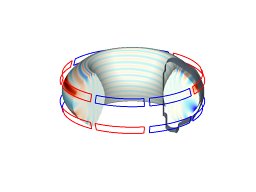 G. Z. Hao合作论文数Southwestern Institute of Physics, Southwestern Institute of Physics China1
 Huishan Cai (蔡辉山)合作论文数School of Nuclear Science and Technology, University of Science and Technology of China1
 Shaocheng Liu (刘少承)合作论文数1
 Haiqing Liu (刘海庆)合作论文数Division of Plasma Diagnostics, Chinese Academy of Sciences1Han Xiang (韩翔)合作论文数1Qingsheng Hu (胡庆生)合作论文数1
 Yuanxi Wan (万元熙)合作论文数Institute of Plasma Physics, Chinese Academy of Sciences;School of Nuclear Science and Technology, University of Science and Technology of China1Bin Wu (吴斌)合作论文数1
 Nikolai Gorelenkov合作论文数Princeton Plasma Physics Laboratory, U.S. Department of Energy, Princeton University1
 Kai Li (李凯)合作论文数Institute of Mechanics, Chinese Academy of Sciences1
 Jiangang Li (李建刚)合作论文数Hefei Institutes of Physical Science, Chinese Academy of Sciences1
 Jinfeng Xiao (肖金凤)合作论文数University of South China1Jiquan Li (李継全)合作论文数Unit of Computational Science, Graduate School of Energy Science, Kyoto University1




