The unbalanced burden on the nodes nearing the ground station pose challenges on the multi-hop data transmission in aerial sensor networks(ASNs).In order to achieve reliable and efficient multi-hop data transmission in ASNs,a reinforcement-learning based queue-efficient geographic routing(RLQE-GR) protocol is proposed.The RLQE-GR protocol maps routing problem into the general reinforcement learning(RL) framework,where each UAV is treated as one state and each successful packet forwarding is treated as one action.Based on the framework,the RLQE-GR protocol designs a reward function related to geographical location,link quality and available transmission queue length.Then,the Q-function is employed to converge all the sta-teaction values(Q-values),and each packet is forwarded based on potential state-action values.To converge all Q values and minimize performance deterioration during the convergence process,a beacon mechanism is employed in RLQE-GR protocol.In contrast to existing geographic routing protocols,the RLQE-GR protocol simultaneously takes the queue utilization,link quality and relative distance into consideration for forwarding packets.This makes the RLQE-GR protocol achieve load balancing,meanwhile not introducing strict performance deteriorations on routing hop and link quality.Moreover,due to the near-optimization character of RL theory,the RLQE-GR protocol can achieve routing performance optimization on packet delivery ratio and end-to-end delay.
Considering the high-density and high-dynamic feature of cooperative unmanned aerial vehicles (UAVs) swarm, also referred to as flocking of flying ad hoc networks (FANETs), reliable medium access control (MAC) protocol design for network connectivity maintaining and network information sharing is a challenging issue. In this article, we propose a self-adaptive carrier sense multiple access with collision avoidance (CSMA/CA)-based MAC protocol for flocking of FANET, namely, FMAC, to provide reliable broadcast information service under density-varying flocking scenarios. To represent the varying trend of UAV density during flocking, we define the collective neighboring potential (CNP) in the FMAC protocol. Specifically, at the beginning of each period, each UAV computes the current CNP based on available neighbors’ motion states. Then, the value of CNP at the start of the next period regarding the same neighbors is predicted using UAV’s kinetic equation. After that, each UAV can update the contention window (CW) size by comparing the current CNP and the predicted CNP, and CW will be decreased (increased) if the current CNP is larger (smaller) than the predicted one for enough period. The simulation results show that the proposed FMAC protocol can ensure high successful transmission probability under density-varying flocking scenarios and outperforms the typical MAC solutions.
空中自组网(Flying Ad-Hoc Network,FANET)是支撑无人机集群系统(Unmanned Aerial Vehicle Swarm,UAV swarm)的关键技术,它由数量庞大且具有无线通信能力的小型无人机构成.FANET中的信标帧业务在实现集群一致性控制应用的过程中扮演着重要角色.然而,实际应用中FANET无线链路的不可靠性将会导致信标帧出现丢包现象,进而影响一致性控制算法的收敛速度(或收敛时间),即集群所有状态值趋于一致的快慢程度.从理论上分析一致性控制算法收敛性能与信标帧丢包率之间的解析关系,对一致性控制算法在未来FANET中的应用具有举足轻重的意义.针对上述研究背景,文中提出了一种基于随机有向图模型和矩阵论的收敛性能分析模型.该模型将每个周期内FANET中的信息流抽象为随机有向图,并采用指示矩阵来表示该随机有向图的拉普拉斯矩阵,有效地用矩阵多项式对一致性收敛过程进行建模.随后,基于矩阵运算和矩阵谱半径的相关知识,该模型给出了最终期望收敛值的解析表达式.利用该最终期望收敛值,所提模型定义了新的收敛速度量化方法.与现有收敛速度分析工作不同,文中通过评估所有节点的初始状态值收敛到期望收敛值的快慢来对收敛速度进行量化,而不是根据收敛到每个周期网络的平均状态值来进行量化.基于矩阵运算和矩阵谱半径相关知识,所提模型给出了该收敛速度与信标帧丢包率之间的耦合关系,并根据该耦合关系推导出了收敛时间的表达式.仿真结果表明,所提收敛性能分析模型能够准确地描述实际FANET中收敛速度随时间的变化情况.此外,该模型能够准确描述实际FANET中每条链路的平均丢包率、状态值初始分布以及无人机节点个数的变化趋势对收敛时间的影响.同时,相比现有收敛性能分析模型,所提模型得到的收敛性能曲线更接近实际FANET中的收敛性能曲线.
In aerial sensor networks, the limited queue lengths of sensor UAVs will make existing geographic routing protocols witness congestions on a series of intermediate sensor UAVs. As a result, packets will be dropped once the queues of intermediate receivers are full. To solve this problem, in this paper a Cooperative Motion based Random Destination (CMRD) mechanism is proposed. First, this mechanism employs flocking algorithm to help number-limited relay UAVs and the ground station form a stable and connected relay network. Then each packet generated by corresponding sensor UAV, randomly selects a node from the relay network as its destination, and decides next-hop node based on the geographic information of both neighboring sensor UAVs and neighboring relay UAVs. Simulation results shown that, the CMRD mechanism will help geographic routing handle the congestion problem, so as to achieve reliable and efficient packet delivery.
In highly-mobile environments such as Vehicle Ad Hoc Networks (VANETs) or Flying Ad Hoc Networks (FANETs), the status messages that contain information on speed, position, and direction should be transmitted periodically by each vehicle in the network to its neighbors to support situation-based traffic applications. Many analytical models have been proposed to evaluate the MAC layer performance of status message transmission based on the Carrier Sense Multiple Access with Collision Avoidance (CSMA/CA) protocol. However, they either fail to consider lifetime of status messages or assume a random arrival of status messages. In addition, all these models are based on the assumption that distribution of MAC layer states is unchanged with the time, which is not applicable in the periodic broadcast schemes. In this paper, we propose an analytical model where constant arrival intervals and lifetime expiration of messages are simultaneously considered. Moreover, we discard the assumption of unchanged states distribution by introducing a pure death process. The proposed model is verified with simulation data obtained by NS2, and results showed that proposed model can accurately capture the reception probability, collision probability, and discard probability of periodic broadcast messages.
 AiJun Liu (刘爱军)合作论文数5
 Xiaohu Liang (梁小虎)合作论文数4Heng Wang (王桁)合作论文数2
 Kai Yu合作论文数Nanjing Univ, Sch Elect Sci & Engn, Nanjing 210023, Peoples R China1
 Xuemin (Sherman) Shen (沈学民)合作论文数Department of Electrical and Computer Engineering, University of Waterloo1
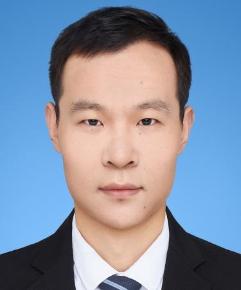 Wei Wang (王威)合作论文数School of Information and Communications Engineering, Faculty of Electronic and Information Engineering, Xi'an Jiaotong University1
 Haibo Zhou (周海波)合作论文数School of Electronic Science and Engineering, Nanjing University1




