Human intelligence naturally intertwines omni-modal perception – spanning vision, audio, and language – with complex reasoning and tool usage to interact with the world. However, current multi-modal LLMs are primarily confined to bi-modal interactions (e.g., vision-language), lacking the unified cognitive capabilities required for general AI assistants. To bridge this gap, we introduce OmniGAIA, a comprehensive benchmark designed to evaluate omni-modal agents on tasks necessitating deep reasoning and multi-turn tool execution across video, audio, and image modalities. Constructed via a novel omni-modal event graph approach, OmniGAIA synthesizes complex, multi-hop queries derived from real-world data that require cross-modal reasoning and external tool integration. Furthermore, we propose OmniAtlas, a native omni-modal foundation agent under tool-integrated reasoning paradigm with active omni-modal perception. Trained on trajectories synthesized via a hindsight-guided tree exploration strategy and OmniDPO for fine-grained error correction, OmniAtlas effectively enhances the tool-use capabilities of existing open-source models. This work marks a step towards next-generation native omni-modal AI assistants for real-world scenarios.
Large Language Models (LLMs) can extend their parameter knowledge limits by adopting the Tool-Integrated Reasoning (TIR) paradigm. However, existing LLM-based agent training framework often focuses on answers’ accuracy, overlooking specific alignment for behavior patterns. Consequently, agent often exhibits ineffective actions during TIR tasks, such as redundant and insufficient tool calls. How to calibrate erroneous behavioral patterns when executing TIR tasks, thereby exploring effective trajectories, remains an open-ended problem. In this paper, we propose ET-Agent, a training framework for calibrating agent’s tool-use behavior through two synergistic perspectives: Self-evolving Data Flywheel and Behavior Calibration Training. Specifically, we introduce a self-evolutionary data flywheel to generate enhanced data, used to fine-tune LLM to improve its exploration ability. Based on this, we implement an two-phases behavior-calibration training framework. It is designed to progressively calibrate erroneous behavioral patterns to optimal behaviors. Further in-depth experiments confirm the superiority of ET-Agent across multiple dimensions, including correctness, efficiency, reasoning conciseness, and tool execution accuracy. Our ET-Agent framework provides practical insights for research in the TIR field. Codes can be found in https://github.com/RUC-NLPIR/ET-Agent
Multimodal deep search requires an agent to solve open-world problems by chaining search, tool use, and visual reasoning over evolving textual and visual context. Two bottlenecks limit current systems. First, existing tool-use harnesses treat images returned by search, browsing, or transformation as transient outputs, so intermediate visual evidence cannot be re-consumed by later tools. Second, training data is usually built by fixed curation recipes that cannot track the target agent's evolving capability. To address these challenges, we first introduce a visual-native agent harness centered on an image bank reference protocol, which registers every tool-returned image as an addressable reference and makes intermediate visual evidence reusable by later tools. On top of this harness, On-policy Data Evolution (ODE) runs a closed-loop data generator that refines itself across rounds from rollouts of the policy being trained. This per-round refinement makes each round's data target what the current policy still needs to learn. The same framework supports both diverse supervised fine-tuning data and policy-aware reinforcement learning data curation, covering the full training lifecycle of the target agent. Across 8 multimodal deep search benchmarks, ODE improves the Qwen3-VL-8B agent from 24.9
Large reasoning models have demonstrated strong problem-solving abilities, yet real-world tasks often require external tools and long-horizon interactions. Existing agent frameworks typically follow predefined workflows, which limit autonomous and global task completion. In this paper, we introduce DeepAgent, an end-to-end deep reasoning agent that performs autonomous thinking, tool discovery, and action execution within a single, coherent reasoning process. To address the challenges of long-horizon interactions, particularly the context length explosion from multiple tool calls and the accumulation of interaction history, we introduce an autonomous memory folding mechanism that compresses past interactions into structured episodic, working, and tool memories, reducing error accumulation while preserving critical information. To teach general-purpose tool use efficiently and stably, we develop an end-to-end reinforcement learning strategy, namely ToolPO, that leverages LLM-simulated APIs and applies tool-call advantage attribution to assign fine-grained credit to the tool invocation tokens. Extensive experiments on eight benchmarks, including general tool-use tasks (ToolBench, API-Bank, TMDB, Spotify, ToolHop) and downstream applications (ALFWorld, WebShop, GAIA, HLE), demonstrate that DeepAgent consistently outperforms baselines across both labeled-tool and open-set tool retrieval scenarios. This work takes a step toward more general and capable agents for real-world applications. The code and demo are available at https://github.com/RUC-NLPIR/DeepAgent.
Large Language Models (LLMs) have advanced autonomous agents from deep search, which retrieves concise factual answers, to deep research, which synthesizes scattered evidence into long-form reports. However, verifiable multimodal deep research remains challenging due to open-ended synthesis without deterministic ground truth and the need to interleave textual arguments with visual evidence. We propose Ptah, a multi-agent harness for interleaved report generation. Ptah orchestrates the lifecycle from user query to rendered web report through planning, research, and writing stages, where specialized agents construct visual-aware plans, collect claim-grounded evidence, maintain source-aligned images in a Visual Working Memory, and compose reports through declarative multimodal tool use. A verifier agent serves as the harness's acceptance function, enforcing factual grounding, citation fidelity, and cross-modal consistency throughout the workflow. We further introduce PtahEval, an evaluation protocol that augments existing benchmarks with image-level and presentation-level assessments. Experiments on deep research benchmarks show that Ptah produces more reliable, visually informative, and usable human-facing multimodal reports than strong baselines. Our code is released at https://github.com/SnowNation101/Ptah
With the rapid advancement of LLM capabilities, expectations for AI agents are shifting from solving simple, single-turn tasks toward carrying out long-horizon tasks in the real world. We refer to such systems as long-horizon agents: agents that plan over extended horizons, interact with real-world environments, recover from their own mistakes, and adapt their strategies during execution. This capability is rapidly becoming the central bottleneck for practical agent intelligence. Despite this progress, the field still lacks a shared definition and taxonomy for long-horizon agents. Related concepts such as "self-evolving" or "autonomous" agents are often used interchangeably, none of which clearly captures what it means to build a long-horizon agent. This gap leaves the community without a principled way to attribute advances in long-horizon competence. This paper offers a unified landscape by framing long-horizon agency as the co-evolution of an externalized harness and an internalized optimization, and organizes the paper around six connected perspectives: Foundation, Evolution, Harness, Optimization, Application, and Frontier. We first formalize long-horizon agency as a harness-coupled decision process and distinguish it from neighboring concepts such as long-running execution, autonomy, and self-evolution. We then trace the field's evolution from prompt-level control to runtime agent systems, classifying existing work through the complementary lenses of externalized harnesses and internalized optimization. Building on this view, we organize five application forms of long-horizon agents by their interfaces, and review the corresponding benchmarks and resources. Finally, we discuss key challenges and frontier directions. Looking ahead, we hope this paper serves not only as a reference for existing work, but also as a foundation for building the next generation of capable, reliable long-horizon agents.
Scientific progress depends on a repeated loop of exploration, experimentation, and abstraction. Researchers test candidate directions, interpret the evidence, and carry the resulting lessons into later attempts. We study how an AI agent can run this loop autonomously over long horizons. We introduce Arbor, a general framework for autonomous research that combines a long-lived coordinator, short-lived executors, and Hypothesis Tree Refinement (HTR), a persistent tree that links hypotheses, artifacts, evidence, and distilled insights across time. The coordinator manages global research strategy over the tree, while executors implement and test individual hypotheses in isolated worktrees. As results return, Arbor updates the tree, propagates reusable lessons, refines the search frontier, and admits verified improvements. This design turns autonomous research from a sequence of local attempts into a cumulative process in which strategy, execution, and evidence are carried across time. We evaluate Arbor under Autonomous Optimization (AO), an operational setting where an agent improves an initial research artifact through iterative experimentation without step-level human supervision. Across six real research tasks in model training, harness engineering, and data synthesis, Arbor achieves the best held-out result on all six tasks, attaining more than 2.5x the average relative held-out gain of Codex and Claude Code under the same task interface and resource budget. On MLE-Bench Lite, Arbor reaches 86.36
Large language model (LLM)-based web search agents are transforming information seeking from simple factoid question answering into complex, deep-and-wide search and research-oriented tasks. A single ReAct-style agent is constrained by one long trajectory and limited context, making it difficult to handle depth and coverage simultaneously. Existing multi-agent systems improve search coverage through parallel execution and aggregation, but still exhibit clear limitations in recursive depth, collaboration adaptability, and evidence-grounded expansion. We propose WebSwarm, a progressive recursive delegation framework that jointly constructs task decomposition, recursive expansion, and agent collaboration during inference. WebSwarm dynamically instantiates agentic search nodes, each coupling a local objective with a search mode that specifies how the node should organize search and collaboration. Each node can either solve its objective itself or further delegate child nodes; after solving, it returns evidence and results upward, enabling parent nodes to further expand, revise, or aggregate the search process. To guide this process, WebSwarm first probes how task-relevant information is organized on the web to ground subsequent node expansion, and reuses process-level experience across homogeneous sibling nodes. Experiments on BrowseComp-Plus, WideSearch, DeepWideSearch, and GISA show that WebSwarm consistently outperforms single-agent and multi-agent baselines on deep, wide, and interleaved deep-and-wide tasks. Further analyses of ablation, task difficulty, web tool efficiency, and model generalization explain WebSwarm's effectiveness and provide insights for multi-agent search systems.
Recent advances in large language models (LLMs) have substantially expanded the scope of Table Question Answering (TableQA). However, existing benchmarks primarily treat TableQA as a passive, single-turn natural language understanding task, lacking the capacity to evaluate autonomous reasoning and tool-call trajectories in realistic, multi-turn scenarios. To bridge this gap, we introduce TableAgent-Bench, a large-scale bilingual benchmark that reformulates TableQA as proactive, agentic interactions over structurally complex, multi-table environments. With a topology-aware construction strategy, TableAgent-Bench captures dynamic intent evolution through 1,310 multi-turn dialogues grounded in 2,275 industrial tables. Furthermore, we propose the Table-centric Agent Evaluation Framework (TAEF) to assess agent interactions with complex table structures. Specifically, TAEF integrates a specialized agent toolset and 4 metric categories to systematically diagnose intermediate failure modes, assessing performance across table localization, tool-invocation rationality, and trajectory-level pass rate. Extensive experiments with 25 state-of-the-art LLM agents reveal a substantial capability gap, with even the strongest model Gemini-3-Pro-Preview achieving only 53.4% information coverage. We expect TableAgent-Bench to serve as a rigorous testbed for developing and evaluating agents capable of robust table-centric reasoning.
Tool-Integrated Reasoning (TIR) enables large language models (LLMs) to enhance their internal reasoning ability by integrating external tools. However, models with TIR often exhibit suboptimal behaviors, including insufficient tool calls, excessive tool calls, and overthinking after receiving tool call results. How to empower LLMs to perform TIR efficiently and accurately, while stabilizing the reasoning process, remains an open challenge. In this paper, we first analyze the impact of tool calls on model reasoning from the perspective of information entropy. We find that when tool call results are provided, the information entropy of subsequent reasoning content will show a clear trend of change, and the overall information entropy of the reasoning chain will vary depending on the number of tool calls. Based on these observations, we propose Tool-Light, a framework designed to encourage LLMs to perform TIR efficiently and accurately. Our framework consists of dataset construction and multi-stage fine-tuning. For dataset construction, we use the trained model for continuous self-evolved sampling, integrating two methods: vanilla sampling and entropy-guided sampling. At the same time, during the sampling process, we design strict criteria for selecting positive-negative pairs. For the training process, we introduce a two-stage method, which includes a Supervised Fine-Tuning (SFT), and Self-Evolved Direct Preference Optimization (DPO). Test results on 10 datasets reveal the effectiveness of Tool-Light, significantly improving the efficiency and accuracy of the model in completing TIR tasks.
We propose a novel data synthesis framework, DecIF, which automatically generates accurate and diverse instruction-following data from scratch for supervised fine-tuning (SFT) and reinforcement learning (RL), leveraging large language models (LLMs) and minimal external resources. By decomposing the data synthesis pipeline into fine-grained steps, DecIF achieves meticulous quality and diversity control over generated instruction-following data. Extensive experiments across both SFT and RL demonstrate DecIF’s strong capability to flexibly synthesize accurate instruction-following data for both paradigms compared to comprehensive baselines. Further analysis demonstrates the framework’s robustness, scalability, and computational efficiency in instruction-following data generation, while its modular design ensures straightforward implementation and reproducibility.
Large language models are increasingly expected to serve as general-purpose agents that interact with external, stateful tool environments. The Model Context Protocol (MCP) and broader agent skills offer a unified interface for connecting agents with scalable real-world services, but training robust agents remains limited by the lack of realistic environments and principled mechanisms for life-long learning. In this paper, we present \textbf{Agent-World}, a self-evolving training arena for advancing general agent intelligence through scalable environments. Agent-World has two main components: (1) Agentic Environment-Task Discovery, which autonomously explores topic-aligned databases and executable tool ecosystems from thousands of real-world environment themes and synthesizes verifiable tasks with controllable difficulty; and (2) Continuous Self-Evolving Agent Training, which combines multi-environment reinforcement learning with a self-evolving agent arena that automatically identifies capability gaps through dynamic task synthesis and drives targeted learning, enabling the co-evolution of agent policies and environments. Across 23 challenging agent benchmarks, Agent-World-8B and 14B consistently outperforms strong proprietary models and environment scaling baselines. Further analyses reveal scaling trends in relation to environment diversity and self-evolution rounds, offering insights for building general agent intelligence.
Multimodal large language models (MLLMs) have demonstrated impressive capabilities across various tasks but still struggle with complex mathematical reasoning. Prior work has mainly focused on dataset construction and method optimization, while often overlooking two critical aspects: comprehensive knowledge-driven design and model-centric data space modeling. We introduce WE-MATH 2.0, a unified system that integrates a structured mathematical knowledge hierarchy, model-centric data space modeling, and a reinforcement learning (RL)-based training paradigm to enhance the mathematical reasoning abilities of MLLMs. Our contributions are fourfold: (1) MathBook Knowledge System: a five-level hierarchy covering 491 knowledge points and 1,819 fundamental principles; (2) MathBook-Standard and MathBook-Pro: datasets that ensure broad conceptual coverage and robust training through dual expansion, a three-dimensional difficulty space, and seven progressive variants per problem; (3) MathBook-RL: a two-stage RL framework including Cold-Start Fine-Tuning to align models with knowledge-oriented chain-of-thought reasoning, and Progressive Alignment RL leveraging average-reward learning with dynamic data scheduling for progressive difficulty alignment; (4) MathBookEval: a benchmark covering all 491 knowledge points with diverse reasoning step distributions. Experimental results show that MathBook-RL achieves competitive performance on four widely used benchmarks and demonstrates strong results on MathBookEval, suggesting promising generalization in mathematical reasoning.
LLM-based agents have demonstrated strong capabilities in data-intensive analytical tasks, yet their outputs are rarely verifiable: a reliance on linear text trajectories makes their reasoning difficult to audit. In particular, deterministic computations over raw data and semantic deductions over natural-language claims are often entangled in an unstructured stream, leaving numerical conclusions hard to reproduce and qualitative judgments hard to inspect. To address this, we propose VeriGraph, a traceable neuro-symbolic reasoning framework that enables agents to construct an explicit heterogeneous evidence directed acyclic graph (DAG) during execution. VeriGraph introduces three evidence-expansion primitives, namely computational, grounding, and derivational expansion, to connect raw data, interpreter variables, computed results, and natural-language claims in a unified graph. Under this formulation, structural traceability is reduced to graph reachability from raw data sources to terminal claims, while semantic support is measured by claim-level evidence evaluation. To improve graph construction, we further design a graph-based policy optimization strategy with a composite reward that jointly supervises answer correctness, computational integrity, and derivational coherence. Experiments on four benchmarks show that VeriGraph-8B achieves the highest overall score among all baselines. More importantly, VeriGraph produces auditable evidence graphs with substantially stronger claim grounding, achieving a 87.61\% Grounding Rate under our claim-level evidence support evaluation. These results suggest that explicit evidence-graph construction is a promising path toward verifiable data-analytic agents. Our code is available at https://github.com/ignorejjj/VeriGraph.
Named Entity Recognition (NER) in search queries is indispensable for a wide range of web applications, as it empowers more precise identification of user intent and facilitates enhanced recommendation systems. However, understanding such short and informal texts remains challenging due to limited context and the sparsity of labeled data, which serve as a critical bottleneck for conventional NER approaches. To address these challenges, we propose a Session-Augmented Heterogeneous Graph (SAG)-based model for NER in Query. In realistic scenarios, sessions are easily accessible and contain valuable information for text understanding. Our method leverages session information and constructs a heterogeneous graph that explicitly models the hierarchical nature of session data. This design captures interaction relationships at different granularities and integrates multi-level information to enhance entity recognition. Experimental results show that our approach outperforms state-of-the-art methods on multiple challenging benchmarks, while simultaneously providing a practical solution for enabling precise entity extraction that enhances personalized recommendations and improves user experience.
Large language model (LLM)-based search agents have proven promising for addressing knowledge-intensive problems by incorporating information retrieval capabilities. Existing works largely focus on optimizing the reasoning paradigms of search agents, yet the quality of intermediate search queries during reasoning remains overlooked. As a result, the generated queries often remain inaccurate, leading to unexpected retrieval results and ultimately limiting search agents' overall effectiveness. To mitigate this issue, we introduce SmartSearch, a framework built upon two key mechanisms: (1) Process rewards, which provide fine-grained supervision for the quality of each intermediate search query through Dual-Level Credit Assessment. (2) Query refinement, which promotes the optimization of query generation by selectively refining low-quality search queries and regenerating subsequent search rounds based on these refinements. To enable the search agent to progressively internalize the ability to improve query quality under the guidance of process rewards, we design a three-stage curriculum learning framework. This framework guides the agent through a progression from imitation, to alignment, and ultimately to generalization. Experimental results show that SmartSearch consistently surpasses existing baselines, and additional quantitative analyses further confirm its significant gains in both search efficiency and query quality. The code is available at https://github.com/MYVAE/SmartSearch.
Large language models (LLMs) are expected to be trained to act as agents in various real-world environments, but this process relies on rich and varied tool-interaction sandboxes. However, access to real systems is often restricted; LLM-simulated environments are prone to hallucinations and inconsistencies; and manually built sandboxes are hard to scale. In this paper, we propose EnvScaler, an automated framework for scalable tool-interaction environments via programmatic synthesis. EnvScaler comprises two components. First, SkelBuilder constructs diverse environment skeletons through topic mining, logic modeling, and quality evaluation. Then, ScenGenerator generates multiple task scenarios and rule-based trajectory validation functions for each environment. With EnvScaler, we synthesize 191 environments and about 7K scenarios, and apply them to Supervised Fine-Tuning (SFT) and Reinforcement Learning (RL) for Qwen3 series models. Results on three benchmarks show that EnvScaler significantly improves LLMs' ability to solve tasks in complex environments involving multi-turn, multi-tool interactions. We release our code and data at https://github.com/RUC-NLPIR/EnvScaler.
 Zhicheng Dou (窦志成)合作论文数Gaoling School of Artificial Intelligence, Renmin University of China30
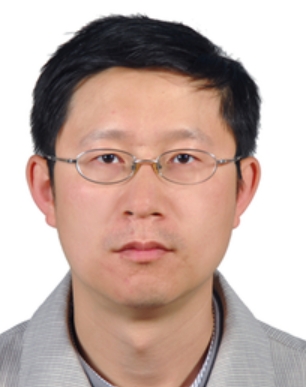 Weiran Xu (徐蔚然)合作论文数Pattern Recognition and Intelligent System Laboratory, School of Artificial Intelligence, Beijing University of Posts and Telecommunications;School of Information and Communication Engineering, Beijing University of Posts and Telecommunications24
 Yutao Zhu (朱余韬)合作论文数Gaoling School of Artificial Intelligence, Renmin University of China22
 Xiaoxi Li (李晓熙)合作论文数Gaoling School of Artificial Intelligence, Renmin University of China18
 Keqing He合作论文数Meituan LLM Group17
 Ji-Rong Wen (文继荣)合作论文数Gaoling School of Artificial Intelligence, Renmin University of China17
 Jiajie Jin合作论文数14
 Dayuan Fu (傅大源)合作论文数Dept. of Artificial Intelligence, Beijing University of Posts and Telecommunications9Xiaoshuai Song合作论文数9Daichi Guo合作论文数9Zechen Wang合作论文数8
 Liwen Wang合作论文数8
 Hongjin Qian (钱泓锦)合作论文数Beijing Academy of Artificial Intelligence;Peking University7
 Chang Zhou (周畅)合作论文数ByteDance7
 Zhiwei Xiong (熊志伟)合作论文数Department of Electronic Engineering and Information Science, School of Information Science and Technology, University of Science and Technology of China7
 Yejie Wang合作论文数Beijing University of Posts and Telecommunications6Shanglin Lei合作论文数6Zhuoma Gongque合作论文数6Jinxu Zhao合作论文数6Tingfeng Hui合作论文数6
 Keming Lu合作论文数Alibaba DAMO Academy6Sirui Wang (王思睿)合作论文数Meituan Inc6
 Guorui Zhou (周国睿)合作论文数Kuaishou6
 Yueyi Zhang (张越一)合作论文数Institute of Advanced Technology, University of Science and Technology of China;School of Information Science and Technology, University of Science and Technology of China6
 Xuefeng Li (李雪峰)合作论文数PRIS-NLP Group, Beijing University of Posts and Telecommunications6Yutao Mou合作论文数Pattern Recognition & Intelligent System Laboratory, Beijing University of Posts and Telecommunications6Chengpeng Li合作论文数5Yifei Chen合作论文数5Muxi Diao合作论文数5Chen Zeng合作论文数5Gang Zhao合作论文数5
 Hangyu Mao (毛航宇)合作论文数Kuaishou Technology5
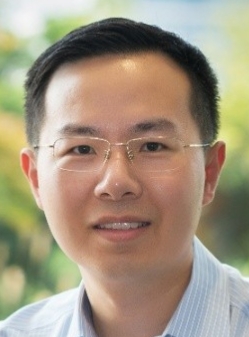 Jingren Zhou合作论文数Alibaba Group5
 Zheng Yuan合作论文数5
 Honggang Zhang (张洪刚)合作论文数School of Artificial Intelligence, Beijing University of Posts and Telecommunications5
 Yuyao Zhang合作论文数4Runqi Qiao合作论文数4Chenghao Zhang合作论文数4Zhengyang Wang合作论文数4Xinyue Cui合作论文数4Pei Wang合作论文数4Xunliang Cai合作论文数Meituan, Beijing, China4
 Zhongyuan Wang (王仲远)合作论文数Kuaishou Technology;Beijing Academy of Artificial Intelligence4Mingfeng Xu合作论文数4
 Jingang Wang合作论文数NLP4
 Fuzheng Zhang (张富峥)合作论文数NLP & Audio Intelligence Center, Kuaishou4
 Kun Gai (盖坤)合作论文数Kuaishou Technology4




