Aspects of the content and distribution of heteroatomic components in resins were studied for the case of heavy oils of the Tatarstan and Samara regions, and aspects of the group–structure composition of the fractions isolated from the resins are indicated. By fractionation of the resin it was possible to estimate the degree to which the content of the heterorganic component affects the flocculation of asphaltenes. Kinetic studies by UV spectroscopy showed that the fraction of high-molecular organonitrogen bases is most efficient in inhibiting the deposition of asphaltenes and surpasses the initial petroleum resins.
Peculiarities of heteroatomic components content and distribution in resins have been studied by the example of heavy oils of Tatarstan and Samara region fields. Peculiarities of structural and group composition of extracted fractions from resinsare shown. Resin fractionation allowed to determine the degree of influence of the heterorganic component content on the asphaltene flocculation. Kinetic studies using UV spectroscopy showed that the maximum efficiency of inhibition of asphaltene deposition for the high-molecular-weight organo-nitrogen bases was detected, which is superior to the original petroleum resins.
The composition of purified vanadyl porphyrins recovered from the resins of heavy oils possessing high and low vanadium contents was investigated. Vanadium content in the resins of the heavy oils under study differs by a factor of ca. 15. To recover and purify vanadyl porphyrins from the resins, extraction by N,N–dimethylformamide (DMF) with subsequent two-stage column chromatography on silica gel and sulfocationite were employed. The change of structural-group composition and content of vanadyl porphyrins in the products obtained at each stage was evaluated using Fourier IR and UV-Vis spectroscopy. Analysis of the purified vanadyl porphyrins using MALDI mass spectrometry determined distribution of their most abundant types (etio- and DPEP) and identified C27–C39 homologs for the resins possessing high vanadium content and C28–C39 homologs for the resins with low vanadium content.
An adsorption-extrographic method was developed for preconcentration of petroleum vanadyl porphyrins from the dimethylformamide (DMF) extract of high-vanadium-content heavy petroleum asphaltenes. The procedure consists in preliminary adsorption of components present in the benzene solution of the DMF extract onto coarsely porous silica gel under the conditions of increased selectivity of the adsorbent to vanadyl porphyrins, followed by their elution from silica gel with chloroform. The development of the procedure is based on the results of a spectroscopy study of the adsorption of asphaltenes and vanadyl porphyrins present in the DMF extract of asphaltenes onto coarsely porous silica gel. The kinetics of the adsorption of asphaltenes and vanadyl porphyrins is described most adequately by a pseudo-second-order equation; both adsorbates are characterized by comparable rates of the attainment of the adsorption equilibrium. The equilibrium adsorption isotherms of asphaltenes and vanadyl porphyrins formally correspond to the Brunauer–Emmett–Teller multilayer adsorption model. The ability of silica gel for more selective adsorption of vanadyl porphyrins increases with a decrease in the initial concentration of the initial DMF extract of asphaltenes. The suggested adsorption-extrographic method allows preparation of a concentrate with ~20% higher content of vanadyl porphyrins having higher spectral purity, compared to the preconcentration by traditional preparative chromatography.
Specific features of the distribution of vanadium and nickel during fractionation of heavy oil resins were examined using the example of heavy sulfurous oils from the Permian and Carboniferous deposits of the Volga-Urals oil and gas basin (Russian Federation). Fractionation of the resins was performed by silica gel column chromatography, followed by extraction with dimethylformamide (DMF). It was found that, during fractionation by adsorption chromatographic separation and extraction, vanadium and nickel compounds in the resins were predominantly distributed into the components with reduced content of carbonyl and carboxy groups, as well as of aliphatic structures.
The development of efficient methods for preconcentration and purification of petroleum metal porphyrins is the necessary condition for further progress of basic and especially applied research concerning the properties of these compounds and their role in oil genesis and maturation. This study deals with chromatographic preparation of high-purity vanadyl porphyrins using a sulfuric acid cation exchanger that can be readily prepared from silica gel and sulfuric acid and is simple in use. At the silica gel : sulfuric acid : water weight ratio of 60 : 15 : 25, the suggested sulfuric acid cation exchanger retains most efficiently nonporphyrin impurities of the asphaltene polar extract, whereas a significant fraction of vanadyl porphyrins (up to ~50%) passes through the chromatographic column virtually without retention with the stationary phase. In contrast to traditional adsorbents, the suggested sulfuric acid cation exchanger allows preparation of spectrally pure vanadyl porphyrins in one chromatographic purification step, thus ensuring the minimal consumption of the eluent and adsorbent. High purity of the vanadyl porphyrins obtained was confirmed by mass-spectrometric and spectroscopic methods of analysis.
The experiments carried out on a physical model of reservoir of ultra-viscous oil have revealed features of oil displacement in various variants of the composite solvent and steam injection. In order to avoid precipitation of asphaltenes, the employment of inhibitors has been rationalized and their minimum fraction in displacement fluid has been determined. The effect of the sequence of solvent and vapor injection on the dynamics of ultra-viscous oil recovery has been investigated. The effect of clay and water in the rock on the rate of oil displacement and the ultimate oil recovery factor has been evaluated.
Major advances and modern tendencies in electrosynthesis of organophosphorus compounds from available raw materials (mainly white phosphorus) are perused, systematized, and generalized. Potential synthetic possibilities and advantages of this intensely developing direction of elementoorganic chemistry are demonstrated.
Routes of white phosphorus activation in the coordination sphere of the nickel complexes with different ligands are shown. The first route is based on the coordination of a P4 molecule with the metal, resulting in the deformation of the P4 tetrahedron without destruction. This case is characteristic of the NiX2L complexes, which are reduced at higher cathodic potentials (|Ered| > 0.9 V) (X = BF4, Br, and Cl; L is bpy in DMF, MeCN, and acetone; 2,9-dimethyl-1,10-phenanthroline (phen) and PPh3 in DMF and acetone). To cleave the P—P bonds in the P4 molecule, this complex should be reduced on the electrode. The second route is the oxidation of white phosphorus in the coordination sphere of the NiII complex. It occurs when the complex has a sufficiently high oxidizing ability and is reduced rather easily (|Ered| < 0.9 V) (X = BF4, L is 1,1,1-tris(diphenylphosphinomethyl)ethane (triphos) in acetone; 1,1′,5,5′-bis[methylenedi(p-phenylene)]di(3,7-diphenyl-1,5-diaza-3,7-diphosphacyclooctane) (n2p2) in DMF; phen and PPh3 in MeCN). The P4 molecule opening is observed to form a new NiI complex containing the (P3) fragment, for example, [(triphos)Ni(P3)Ni(triphos)](BF4)2.
Reduction of white phosphorus in the coordination sphere of the electrochemically generated nickel(0) complexes with σ-donor ligands was shown to be possible and accompanied by the transformation of P4 into the nickel phosphides.
Nickel(0) complexes coordinatively unsaturated with 2,2"-bipyridine (bpy) are more reactive in the oxidative addition to organic halides than the saturated analogs. σ-Organonickel complexes formed as intermediates of catalytic cycles were prepared in high yields using nickel complexes coordinatively unsaturated with bpy and aromatic halides containing a methyl group in the ortho -position of the ring.
The material of the sacrificial anode has a substantial effect on the nature and yield of the target products of electrochemical phosphorylation of organic halides by white phosphorus in the presence of the nickel complexes with 2,2"-bipyridine. The use of the zinc anode results in the products with tricoordinated phosphorus, viz ., triorganylphosphines, the reaction on the aluminum anode affords triorganylphosphine oxides, and the presence of Mg 2+ ions in the reaction mixture provides the transformation of white phosphorus into cyclic phosphines (PhP) 5 .
Factors determining the effect of Zn II ions on the catalytic activity of the Ni II complexes with 2,2"-bipyridine (bpy) in the reduction of organohalides were elucidated by cyclic voltammetry and electrolysis. The mechanism proposed involves the reduction of the Ni II bpy complex to Ni 0 bpy, the oxidative addition of organohalides to the Ni 0 bpy complex, and nickel transmetallation with the cathode-generated Zn 0 to form an organozinc compound.
 Elvira G. Tazeeva合作论文数7D. V. Milordov合作论文数6
 Svetlana Yakubova合作论文数6
 Nikolay A. Mironov合作论文数6
 Guzaliya Abilova合作论文数5
 Makhmut R. Yakubov合作论文数Arbuzov Institute of Organic and Physical Chemistry;Kazan Scientific Center;Russian Academy of Sciences5
 Dmitry Yakhvarov合作论文数4
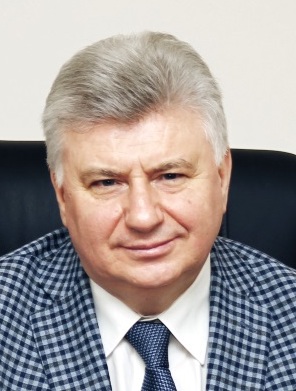 Oleg Sinyashin合作论文数Kazan Scientific Center, Russian Academy of Sciences;Department of Organic Chemistry, Kazan State Technological University4Yu. G. Budnikova合作论文数3
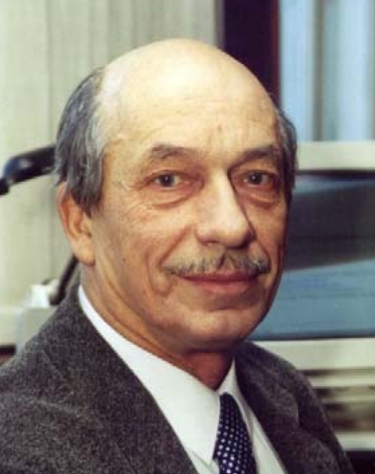 Boris A. Trofimov合作论文数A.E. Favorsky Institute of Chemistry, Siberian Branch of the Russian Academy of Sciences2
 P. I. Gryaznov合作论文数2
 Vitaly Morozov合作论文数2Yu. H. Budnikova合作论文数2Yu. Yu. Borisova合作论文数1M. I. Amerkhanov合作论文数1A. G. Kafiyatullina合作论文数1С. Г. Якубова合作论文数1м р якубов合作论文数1Yulia Yurevna Borisova合作论文数1R. S. Khisamov合作论文数1Nina K. Gusarova合作论文数1
 N. A. Beregovoy合作论文数Institute of Molecular Biology and Biophysics, Siberian Division of the Russian Academy of Medical Sciences1
 Dmitry Borisov合作论文数1
 Tatyana Vasilevna Gryaznova合作论文数1
 Yulia H Budnikova合作论文数Institute of Organic and Physical Chemistry of RAS, Arbuzov st., 8, Kazan, 420083, Russia1




