Fulfilling user needs through Large Language Model multi-turn, multi-step tool-use is rarely a straightforward process. Real user interactions are inherently $\textbf{wild}$, being intricate, messy, and flexible. We identify three key challenges from user behaviour: $\textit{compositional tasks}$ that demand efficient orchestration of tool-call topologies, $\textit{implicit intent}$ spread across dialogue turns that require contextual inference, and $\textit{instruction transition}$, which mixes task queries, clarifications, and casual conversation, forcing LLMs to adjust their policies on the fly. Existing benchmarks overlook these behaviors, making the apparent progress of LLMs on tool-use spurious. To address this, we introduce $\textbf{\textit{WildToolBench}}$, an LLM tool-use benchmark grounded in real-world user behavior patterns. Comprehensive evaluations of 57 LLMs reveal that no model achieves an accuracy of more than 15\%, indicating a substantial gap in the robustness of LLMs' agentic ability. Controlled experiments and in-depth analyses further indicate that the real challenge for LLM tool-use lies not in artificially complex tasks, but in the wild nature of user behavior, emphasizing the need to reconsider the interactions among $\textit{LLMs}$, $\textit{users}$, and $\textit{tools}$.
As AI tools accelerate literature search, experimentation, and drafting, AI conferences face a growing, structural submission explosion. This position paper argues that to survive this era of accelerated research, venues must formally adopt autonomous review pipelines as their core control plane. By deploying machine-first, human-governed systems to run the scalable first pass of review—handling routine evidence construction, integrity checks, and routing—conferences can stop treating abundance as a pathology. Making this automated control plane the spine of the review process preserves scarce human attention for high-stakes escalation, calibration, and edge cases. Furthermore, we show that establishing this infrastructure carries a profound downstream implication: it enables conferences to decouple baseline technical certification from seasonal curation, ultimately absorbing more submissions, shortening time-to-feedback, and tightening quality standards without breaking the human review commons or requiring perpetual committee inflation.
Hallucination detection is critical for ensuring the reliability of large language models (LLMs) in context-based generation. Prior work has explored intrinsic signals available during generation, among which attention offers a direct view of grounding behavior. However, existing approaches typically rely on coarse summaries that fail to capture fine-grained instabilities in attention. Inspired by signal processing, we introduce a frequency-aware perspective on attention by analyzing its variation during generation. We model attention distributions as discrete signals and extract high-frequency components that reflect rapid local changes in attention. Our analysis reveals that hallucinated tokens are associated with high-frequency attention energy, reflecting fragmented and unstable grounding behavior. Based on this insight, we develop a lightweight hallucination detector using high-frequency attention features. Experiments on the RAGTruth and HalluRAG benchmarks show that our approach achieves performance gains over verification-based, internal-representation-based, and attention-based methods across models and tasks.
Recent advancements in Large Language Models (LLMs) have greatly extended the capabilities of Multi-Agent Systems (MAS), demonstrating significant effectiveness across a wide range of complex and open-ended domains. However, despite this rapid progress, the field still relies heavily on empirical trial-and-error. It lacks a unified and principled scientific framework necessary for systematic optimization and improvement. This bottleneck stems from the ambiguity of attribution: first, the absence of a structured taxonomy of factors leaves researchers restricted to unguided adjustments; second, the lack of a unified metric fails to distinguish genuine collaboration gain from mere resource accumulation. In this paper, we advocate for a transition to design science through an integrated framework. We advocate to establish the collaboration gain metric (Γ) as the scientific standard to isolate intrinsic gains from increased budgets. Leveraging Γ, we propose a factor attribution paradigm to systematically identify collaboration-driving factors. To support this, we construct a systematic MAS factor library, structuring the design space into control-level presets and information-level dynamics. Ultimately, this framework facilitates the transition from blind experimentation to rigorous science, paving the way towards a true science of Collective AI.
Direct Preference Optimization (DPO) controls the trade-off between fitting preference labels and staying close to a reference model using a single global temperature beta, implicitly treating all preference pairs as equally informative. Real-world preference corpora are heterogeneous: they mix high-signal, objective failures (for example, safety, factuality, instruction violations) with low-signal or subjective distinctions (for example, style), and also include label noise. We introduce our method, SP2DPO (Semantic Per-Pair DPO), a generalization that replaces the global temperature with an instance-specific schedule beta_i pre-decided offline from structured semantic-gap annotations (category, magnitude, confidence) produced by teacher language models. We instantiate this procedure on the UltraFeedback preference corpus (59,960 pairs), enabling large-scale construction of an auditable beta_i artifact, and incur zero training-time overhead: the inner-loop optimizer remains standard DPO with beta set per pair. We focus our empirical study on AlpacaEval 2.0, reporting both raw win rate and length-controlled win rate. Across four open-weight, instruction-tuned student backbones (4B-8B), SP2DPO is competitive with a tuned global-beta DPO baseline and improves AlpacaEval 2.0 length-controlled win rate on two of four backbones, while avoiding per-model beta sweeps. All code, annotations, and artifacts will be released.
The agency expected of Agentic Large Language Models goes beyond answering correctly, requiring autonomy to set goals and decide what to explore. We term this , distinguishing it from , which merely completes assigned tasks. Data Science provides a natural testbed, as real-world analysis starts from raw data rather than explicit queries, yet few benchmarks focus on it. To address this, we introduce , an open-ended task where LLMs autonomously extract key insights from databases, and , a large-scale, checklist-based benchmark that enables verifiable evaluation. Results show that while frontier models display emerging agency, long-horizon exploration remains challenging. Our analysis highlights that effective investigatory intelligence depends not only on agent scaffolding or merely scaling, but also on intrinsic strategies of agentic models.
Reinforcement learning (RL) has become a dominant post-training paradigm, enabling large language models (LLMs) to learn from rewards. We observe that societal regulations are structurally similar to reward functions. They define measurable outcomes, thresholds, and exceptions, while often leaving institutional intent only partially specified. We hypothesise that the RL training process may exploit these gaps and therefore ask whether models' well-known tendency to hack reward functions during RL can scale into a more consequential failure mode named societal hacking: discovering loopholes in the rules society runs on. To study this phenomenon, we introduce SocioHack, a sandbox of 72 societal environments, and find that within these environments, reward hacking naturally emerges and leads to regulatory loophole discovery. Models learn to hack the social rules and generate strategies that remain technically compliant while defeating regulatory intent, and current LLM safeguards provide only limited mitigation. Therefore, collecting in-the-wild feedback for model training requires greater caution, and we need a next-generation post-training paradigm for safely iterating LLMs in real society.=
Large language models (LLMs) make it plausible to build systems that improve through self-evolving loops, but many existing proposals are better understood as self-play and often plateau quickly. A central failure mode is that the loop synthesises more data without increasing for the next iteration. Through experiments on a self-play coding task, we reveal that We identify triadic roles that self-evolving LLMs play: the , which generates tasks; the , which attempts solutions; and the , which provides training signals, and we identify three system designs that jointly target learnable information gain from this triadic roles perspective. Asymmetric co-evolution closes a weak-to-strong-to-weak loop across roles. Capacity growth expands parameter and inference-time budgets to match rising learnable information. Proactive information seeking introduces external context and new task sources that prevent saturation. Together, these modules provide a measurable, system-level path from brittle self-play dynamics to sustained self-evolution.
Recent breakthroughs in large language model-driven autonomous agents have revealed that multi-agent collaboration often surpasses each individual through collective reasoning. Inspired by the neural scaling law—increasing neurons enhances performance, this study explores whether the continuous addition of collaborative agents can yield similar benefits. Technically, we utilize directed acyclic graphs to organize agents into a multi-agent collaboration network (MacNet), upon which their interactive reasoning is topologically orchestrated for autonomous task solving. Extensive evaluations reveal that it effectively supports collaboration among over a thousand agents, with irregular topologies outperforming regular ones. We also identify a collaborative scaling law—the overall performance follows a logistic growth pattern as agents scale, with collaborative emergence occurring earlier than traditional neural emergence. We speculate this may be because scaling agents catalyzes their multidimensional considerations during interactive reflection and refinement, thereby producing more comprehensive artifacts. The code is available at https://github.com/OpenBMB/ChatDev/tree/macnet.
Large language models (LLMs) have demonstrated an impressive ability to role-play humans and replicate complex social dynamics. However, large-scale LLM-driven simulations still face significant challenges in high time and computational costs. We observe that there exists redundancy in current agent communication: when expressing the same intention, agents tend to use lengthy and repetitive language, whereas humans naturally prefer concise expressions. To this end, we propose EcoLANG: Efficient and Effective Agent Communication Language Induction for Social Simulation. Inspired by how human language evolves through interactions, we induce a more compact language by identifying and preserving core communicative concepts at the vocabulary level and evolving efficient expression patterns at the sentence level through natural selection. We apply the induced language in various social simulations. Experimental results demonstrate that EcoLANG reduces token consumption by over 20%, enhancing efficiency without sacrificing simulation accuracy.
Large Language Models (LLMs) have significantly impacted various domains, especially through organized LLM-driven autonomous agents. A representative scenario is in software development, where agents can collaborate in a team like humans, following predefined phases to complete sub-tasks sequentially. However, for an agent team, each phase yields only one possible outcome. This results in the completion of only one development chain, thereby losing the opportunity to explore multiple potential decision paths within the solution space. Consequently leading to suboptimal results or extensive trial and error. To address this, we introduce Cross-Team Orchestration (Croto), a scalable multi-team framework that enables orchestrated teams to jointly propose various task-oriented solutions and interact with their insights in a self-independence while cross-team collaboration environment for superior solutions generation. Experiments reveal a notable increase in software quality compared to state-of-the-art baselines. We further tested our framework on story generation tasks, which demonstrated a promising generalization ability of our framework in other domains. The code and data is available at https://github.com/OpenBMB/ChatDev/tree/macnet
Recent advances such as DeepSeek R1-Zero highlight the effectiveness of incentive training, a reinforcement learning paradigm that computes rewards solely based on the final answer part of a language model's output, thereby encouraging the generation of intermediate reasoning steps. However, these methods fundamentally rely on external verifiers, which limits their applicability to domains like mathematics and coding where such verifiers are readily available. Although reward models can serve as verifiers, they require high-quality annotated data and are costly to train. In this work, we propose NOVER, NO-VERifier Reinforcement Learning, a general reinforcement learning framework that requires only standard supervised fine-tuning data with no need for an external verifier. NOVER enables incentive training across a wide range of text-to-text tasks and outperforms the model of the same size distilled from large reasoning models such as DeepSeek R1 671B by 7.7 percent. Moreover, the flexibility of NOVER enables new possibilities for optimizing large language models, such as inverse incentive training.
Software development is a complex task that necessitates cooperation among multiple members with diverse skills. Numerous studies used deep learning to improve specific phases in a waterfall model, such as design, coding, and testing. However, the deep learning model in each phase requires unique designs, leading to technical inconsistencies across various phases, which results in a fragmented and ineffective development process. In this paper, we introduce ChatDev, a chat-powered software development framework in which specialized agents driven by large language models (LLMs) are guided in what to communicate (via chat chain) and how to communicate (via communicative dehallucination). These agents actively contribute to the design, coding, and testing phases through unified language-based communication, with solutions derived from their multi-turn dialogues. We found their utilization of natural language is advantageous for system design, and communicating in programming language proves helpful in debugging. This paradigm demonstrates how linguistic communication facilitates multi-agent collaboration, establishing language as a unifying bridge for autonomous task-solving among LLM agents. The code and data are available at https://github.com/OpenBMB/ChatDev.
Recent advancements in large language models (LLMs) have brought significant changes to various domains, especially through LLM-driven autonomous agents. A representative scenario is in software development, where LLM agents demonstrate efficient collaboration, task division, and assurance of software quality, markedly reducing the need for manual involvement. However, these agents frequently perform a variety of tasks independently, without benefiting from past experiences, which leads to repeated mistakes and inefficient attempts in multi-step task execution. To this end, we introduce Experiential Co-Learning, a novel LLM-agent learning framework in which instructor and assistant agents gather shortcut-oriented experiences from their historical trajectories and use these past experiences for future task execution. The extensive experiments demonstrate that the framework enables agents to tackle unseen software-developing tasks more effectively. We anticipate that our insights will guide LLM agents towards enhanced autonomy and contribute to their evolutionary growth in cooperative learning. The code and data are available at https://github.com/OpenBMB/ChatDev.
Large Language Model Multi-Agent Systems (LLM-MAS) have achieved great progress in solving complex tasks. It performs communication among agents within the system to collaboratively solve tasks, under the premise of shared information. However, when agents' communication is leveraged to enhance human cooperation, a new challenge arises due to information asymmetry, since each agent can only access the information of its human user. Previous MAS struggle to complete tasks under this condition. To address this, we propose a new MAS paradigm termed iAgents, which denotes Informative Multi-Agent Systems. In iAgents, the human social network is mirrored in the agent network, where agents proactively exchange human information necessary for task resolution, thereby overcoming information asymmetry. iAgents employs a novel agent reasoning mechanism, InfoNav, to navigate agents' communication towards effective information exchange. Together with InfoNav, iAgents organizes human information in a mixed memory to provide agents with accurate and comprehensive information for exchange. Additionally, we introduce InformativeBench, the first benchmark tailored for evaluating LLM agents' task-solving ability under information asymmetry. Experimental results show that iAgents can collaborate within a social network of 140 individuals and 588 relationships, autonomously communicate over 30 turns, and retrieve information from nearly 70,000 messages to complete tasks within 3 minutes.
Autonomous agents powered by large language models (LLMs) show significant potential for achieving high autonomy in various scenarios such as software development. Recent research has shown that LLM agents can leverage past experiences to reduce errors and enhance efficiency. However, the static experience paradigm, reliant on a fixed collection of past experiences acquired heuristically, lacks iterative refinement and thus hampers agents' adaptability. In this paper, we introduce the Iterative Experience Refinement framework, enabling LLM agents to refine experiences iteratively during task execution. We propose two fundamental patterns: the successive pattern, refining based on nearest experiences within a task batch, and the cumulative pattern, acquiring experiences across all previous task batches. Augmented with our heuristic experience elimination, the method prioritizes high-quality and frequently-used experiences, effectively managing the experience space and enhancing efficiency. Extensive experiments show that while the successive pattern may yield superior results, the cumulative pattern provides more stable performance. Moreover, experience elimination facilitates achieving better performance using just 11.54
Underwater Image Enhancement (UIE) is a crucial preprocessing step for underwater vision tasks. Addressing the challenge of training supervised deep learning models on large, diverse datasets while learning the intrinsic degradation factors of underwater images is essential for improving model generalization performance. In this paper, we propose a Weak-Strong Dual Supervised Generative Adversarial Network (WSDS-GAN) for UIE. During the first weakly supervised learning phase, unpaired images, consisting of degraded underwater images and clear in-air images, are used to train the model with the goal of recovering color, brightness, and content. In the second strongly supervised learning phase, a limited number of paired images are fed into the model to further train the image detail recovery generator. Comprehensive experiments on public datasets and self-photographed images demonstrate the effectiveness of our proposed method over existing state-of-the-art methods, both qualitatively and quantitatively. Additionally, we show that our method significantly enhances image details to support subsequent underwater vision tasks.& COPY; 2023 Published by Elsevier Ltd.
Semantic segmentation of high-resolution remote sensing images (RSIs) is developing rapidly. Multispectral images can provide rich spectral information for semantic segmentation, while 3D LiDAR point cloud data can provide depth information. Thus, semantic segmentation accuracy could be improved by fusing multispectral images and 3D LiDAR point cloud. In this paper, we propose a method titled Direct LiDAR-Aerial Fusion Network (DLAFNet) which directly uses RSIs and LiDAR point cloud for semantic segmentation tasks. In particular, owing to the fact that sparse features extracted from the KPConv branch are not as essential as features from RSIs, we design LiDAR Assisted Attention Module (L-AAM). Our experiments on the modified GRSS18 dataset prove that our method is proper and can obtain the best results by comparing with its components and other methods.
Polyp segmentation is important in the early diagnosis and treatment of colorectal cancer. Since polyps vary in shape, size, color, and texture, accurate polyp segmentation is very challenging. One promising solution is to model the contextual relation for each pixel. However, previous methods only focus on learning the dependencies between the position within an individual image and ignore the contextual relation across different images. In this paper, we propose a memory-based feature enhancement module to capture the cross-image contextual relations. Specifically, we first present a polyp-centric representation. Then a semantic memory is designed to extract the polyp prototypes across different images. The feature at one position can be further enhanced by the contextual embeddings stored in the semantic memory. The enhanced feature is propagated into the features of the previous levels as the multi-scale guidance. The experimental results show that our method achieves better performance than other state-of-the-art methods.
With the development of remote sensing, semantic segmentation of high-resolution remote sensing images (RSIs) is increasingly essential. At the same time, the characteristics of objects in RSIs, such as large size, variation in object scales, and complex details, make it necessary to capture both long-range context and local information. There are some methods such as Fully Convolutional Networks (FCN) and Pyramid Scene Parsing Network (PSPNet) lack the ability to capture long-range dependencies, due to the limited receptive field of Convolutional Neural Network (CNN). However, the self-attention mechanism to capture the correlation between pixels in Transformer models has remarkable capability in capturing long-range context. One of the most outstanding Transformer models is the Masked-attention Mask Transformer (Mask2Former) which adopts the mask classification method. We propose a model SeMask-Mask2Former with boundary loss. Semantically Masked (Se-Mask) is the model's backbone and Mask2Former is the decoder. Concretely, the mask classification that generates one or even more masks for specific categories to perform the elaborate segmentation is especially suitable for handling the characteristic of large within-class and small inter-class variance of RSIs. Above all, extensive experimental results show that SeMask-Mask2Former obtains better results in semantic segmentation of high-resolution RSIs on the ISPRS Potsdam dataset compared to CNN-based methods and other state-of-the-art transformer-based methods. Extensive ablation studies conducted on the Potsdam dataset verifies the contribution of each component or optimization strategy in SeMask-Mask2Former.
 Chen Qian (钱忱)合作论文数9
 Lei Li (李蕾)合作论文数School of Artificial Intelligence, Beijing University of Posts and Telecommunications7Yufan Dang合作论文数6
 Cheng Yang (杨成)合作论文数School of Computer Science, Beijing University of Posts and Telecommunications6
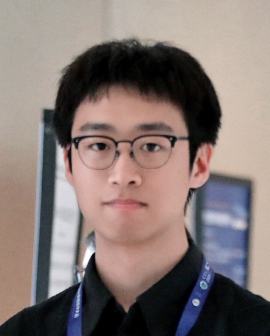 Weize Chen (陈纬泽)合作论文数Tsinghua University6
 Zhiyuan Liu (刘知远)合作论文数Department of Computer Science and Technology, Tsinghua University5
 Maosong Sun (孙茂松)合作论文数Department of Computer Science and Technology, Tsinghua University5
 Yulan He (何瑜岚)合作论文数Department of Informatics, Faculty of Natural, Mathematical & Engineering Sciences, King's College London5Zihao Xie合作论文数4Yinan Liu合作论文数4Jiahao Li合作论文数3Zhuoyun Du合作论文数3
 Tao Chen合作论文数3dan nie合作论文数3Di Wang (王 迪)合作论文数腾讯AI平台部3Zuying Huang合作论文数3Huanqin Wu合作论文数Tencent AI Platform Department3
 Yali Du合作论文数Department of Computer Science, University College London3
 Zhongyu Wei (魏忠钰)合作论文数School of Data Science, Fudan University;Research Institute of Intelligent Complex Systems, Fudan University;Natural Language Processing Group, Fudan University3
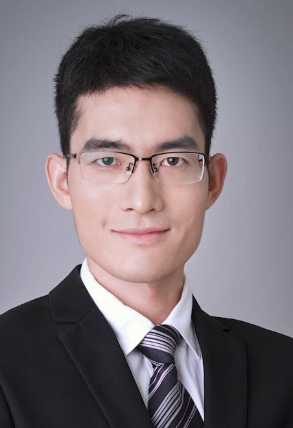 Xin Zhou (周鑫)合作论文数College of Computing and Data Science, Nanyang Technological University2
 Feng Zhang合作论文数2
 Xinyi Mou合作论文数School of Data Science, Fudan University;Data Intelligence and Social Computing Lab, Fudan University2Siya Qi合作论文数2
 Xie Yang合作论文数Meta2
 Xin Cong合作论文数Tsinghua University2
 Haopeng Zhang (张浩鹏)合作论文数Department of Aerospace Intelligent Science and Technology, School of Astronautics, Beihang University;REMEX Lab, Beihang University2
 Chun Yan Miao合作论文数College of Computing & Data Science, Nanyang Technological University;School of Computer Science and Engineering, Nanyang Technological University2
 Marina Litvak合作论文数Department of Information System Engineering, Ben-Gurion University of the Negev2Junli Yang合作论文数2
 Natalia Vanetik合作论文数Dept Software Engn, Shamoon Coll Engn2Peijie Yu合作论文数Tencent1Hanchen Xia合作论文数1Chun Yang合作论文数1Yalong Dang合作论文数1Renxi Qiu合作论文数1Zhenghui Xie合作论文数1Chenxi Wang合作论文数1Juyuan Xu合作论文数1
 Hongzhang Liu合作论文数1Ruijie Shi合作论文数1Jingru Fan合作论文数1
 Longxuan Ma (马龙轩)合作论文数Key Laboratory of Artificial Intelligence in Yunnan Province, Faculty of Information Engineering and Automation, Kunming University of Science and Technology1Xuantang Xiong合作论文数1
 Qinglin Zhu (祝清麟)合作论文数King's College London1
 Ye Tian合作论文数AI Lab, Tencent1Runpu Wei合作论文数1Zhen Li合作论文数1Xiaoyin Che合作论文数1




