心肾联合移植是治疗终末期心脏病合并终末期肾病的重要手段,但心肾联合移植数量较其他多器官联合移植(如心肺移植、心肝移植)明显要少。世界首例心肾联合移植于1978年实施[1];我国首例心肾联合移植于2000年6月开展[2],且数量更少。2014年中国心脏移植注册中心数据显示,2001年4月至2014年6月共上报8例心肾联合移植,且院内死亡4例[3]。但国外有研究显示,终末期心脏病伴有肾功能不全者心肾联合移植比单纯心脏移植取得了更好的临床效果[4]。由此可见,心肾联合移植临床经验亟待总结。武汉大学人民医院心血管外科2017年1月至2018年6月共完成2例心肾联合移植,取得良好的临床效果,至今仍院外随访,现将临床经验总结如下。
Objective To investigate the effect of asiatic acid on the improvement of lipopolysaccharide( LPS)-induced injury to myocardial H9C2 cells. Methods The myocardial H9C2 cells were divided into blank control group,asiatic acid group and LPS+asiatic acid group,and were given intervention with phosphate buffered saline(PBS)(20μmol/ml), asiatic acid(20μmol/ml),LPS(1μg/ml), and LPS(1 μg/ml) + asiatic acid(20μmol/ml) respectively. After 24 hours of intervention,the survival rate,mRNA expression levels of tumor necrosis factor-α(TNF-α),interleukin(IL)-1β and IL-6,expression levels of endonuclear nuclear factor-κB(NF-κB) protein, activities of superoxide dismutase(SOD) and glutathione peroxidase(GSH-Px),and intracellular level of malondialdehyde(MDA) were detected among the four groups. Results Asiatic acid could increase the survival rate of H9C2 cells,decrease the mRNA levels of TNF-α, IL-1β and IL-6,reduce the nuclear translocation of NF-κB significantly,increase the activities of SOD and GSH-Px,and decrease the MDA level. Conclusion Asiatic acid can inhibit the LPS-induced myocardial cell injury by suppressing the inflammation and oxidative stress.
Objective To investigate the effect of rosmarinic acid(RA)on oxidative stress injury of H9C2 cardiomyocytes. Methods The oxidative stress injury model was established by hydrogen peroxide (H2O2) treatment. H9C2 cardiomyocytes were cultured in vitro and randomly divided into control group, H2O2 group and H2O2+RA group. The H2O2 group was treated with 400μmol/L H2O2 for 4h to establish the oxidative stress injury model;H2O2+RA group was treated with low dose(5μg/ml),medium dose(10μg/ml) and high dose(20μg/ml)of RA for 24 h before adding H2O2. CCK-8 assay was used to detect the survival rate of H9C2 cardiomyocytes;DCFH-DA probe with a microplate reader was used to measure the intracellular reactive oxygen species(ROS)content;specific kits were used to measure the amount of lactate dehydrogenase (LDH) leakage,intracellular malondialdehyde (MDA) content,and activities of catalase (CAT)and glutathione peroxidase(GSH-Px). Western blotting and real-time fluorescence quantitative PCR were used to detect the levels of reduced coenzyme II oxidase 2(NOX2),superoxide dismutase 2(SOD2) and the expression of apoptosis-related genes Bax,Bcl-2,cleavage-caspase 3(c-cas 3)and caspase 3(cas 3);TUNEL kit was used to examine the cell apoptosis. Results (1)The cell viability of all H2O2-treated group was lower than that of the control group. Lower-dose RA did not,but higher-levels RA(≥30μg/ml) significantly inhibited the growth of H9C2 cardiomyocytes.(2)Compared with the control group,the cell survival rate in the H2O2 group decreased by 52.9%,and the LDH leakage increased by 73.8%. RA pretreatment increased the cell survival rate and decreased the LDH leakage,and such protective effect increased significantly along with the RA concentration.(3)Compared with the control group,H2O2 group had significantly elevated intracellular oxidation as reflected by a 146.7% increased in MDA level and a 192.2%increase in ROS level. RA pretreatment resulted in reduced ROS production and lower intracellular MDA content,which was more obvious with higher doses of RA. (4) Compared with the control group, apoptosis in the H2O2 group was obvious. RA pretreatment could improve H2O2-induced apoptosis,and the improvement was more prominent with higher doses of RA. Conclusion RA exhibits significant protective effect on H9C2 cardiomyocytes under oxidative stress.
目的 探讨骨髓增生异常综合征(MDS)的临床诊断与治疗方法.方法 回顾性分析2010年2月至2011年8月哈尔滨医科大学附属第一医院血液科收治的15例MDS患者的临床资料,并结合文献对MDS的发病特点及治疗进行讨论.结果 本组15例转化为急性白血病5例,其中急性淋巴细胞性白血病2例,急性髓细胞性白血病2例.总的急变率为33.3%.采用化疗及抗细菌真菌治疗,病情稳定后出院.结论 MDS中国发病年龄较西方提前10岁左右,诊断难点在于鉴别诊断.中、高危MDS患者建议使用地西他滨联合化疗方案.
 Yu-Pei Yuan合作论文数2Chun-Yan Kong合作论文数2Xin Zhang (张鑫)合作论文数2
 Qizhu Tang (唐其柱)合作论文数State Key Laboratory of Metabolism and Regulation in Complex Organisms, Wuhan University;Renmin Hospital, Wuhan University2
 Yongle Ruan合作论文数1Junxia Hu (胡俊霞)合作论文数1
 Luocheng Li合作论文数1Xin ZHANG (张鑫)合作论文数1
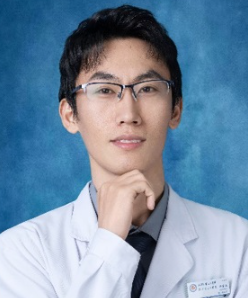 Zhenguo Ma (马振国)合作论文数Renmin Hospital of Wuhan University1
 Zongli Ren (任宗力)合作论文数1Hongbing Wu (吴红兵)合作论文数1
 Zhiwei Wang (王志维)合作论文数Renmin Hospital, Wuhan University1Yuangang Ding (丁元刚)合作论文数1




