脱水管类型是影响非胶结充填体脱水技术的关键因素之一.基于仿生学设计新型脱水管,以某铁矿尾砂为例,通过脱水试验对比分析新型脱水管的脱水效率和脱水效果,研究强化脱水规律.试验结果表明:脱水管根系状设计可以增加脱水管过水面积和减小渗流距离.新型脱水管相比普通脱水管,脱水时间减少了20%,累计脱水量增加了10.3%;引入尾砂流失量作为评价脱水管脱水效果的依据,新型脱水管相比普通脱水管尾砂流失量减少了45%;新型脱水管强化非胶结充填体脱水的过程可划分为2个区域,即急流区和平稳区.观察到非胶结充填体与试验装置内表面形成了大量分布均匀的孔隙导水带,这也是新型脱水管能提高脱水效率的原因之一.
The destruction of land subsidence caused by mining will have a serious impact on the ecological environment of a mine.Based on the analysis of the existing ecological environment and mining sequence in the mining area,the prediction block is determined according to the mining sequence,and the practical subsidence prediction model of a mine is established based on the probability integral method. The Matlab software is used to predict and draw the subsidence prediction map,and the multivariate statistical analysis method is used to evaluate the suitability of land reclamation. The results show that the suitable reclamation direction of the subsidence land and waste rock field slope is woodland,and the suitable reclamation direction of topsoil dump site,waste rock field platform,tailings pond beach,tailings pond dam body and dam platform are arable land.
以3个矿柱同时回采为例,运用FLAC3D建立了有限元模型并进行分析,采用控制变量法研究了在不同的矿柱一次回采高度、矿柱跨度、矿房宽度和充填体强度条件下充填体侧向位移的变化规律.结果表明,3个矿柱同时回采时,充填体双侧侧向位移值大于单侧侧向位移值,充填体侧向位移最大值出现在回采矿柱高度中间位置,由靠近中央位置向两端逐渐减小;充填体最大侧向位移值随着矿柱跨度和一次回采高度增加不断增大,与矿房宽度和充填体强度呈负相关,充填体侧向位移的影响敏感程度由大到小顺序为:矿房宽度、矿柱跨度、一次回采高度及充填体强度.
脱水效率是影响全尾砂非胶结充填体稳定性的关键因素之一.基于散体动力学理论,分析了全尾砂非胶结充填体的振动脱水机理,研究不同振动脱水方式下全尾砂非胶结充填体脱水效率的变化规律.试验结果表明:全尾砂散体骨架在振动应力波的影响下产生垂直应力和剪切应力,其中剪切应力是破坏散体原有结构的关键因素,相比非振动脱水,固结后振动累计脱水量提升了10%;全过程振动累计脱水量提升了27%,脱水时间减小了83%,但尾砂流失量大;间歇性振动累计脱水量提升了18%,脱水时间减少了50%,尾砂流失量较大,但间歇性振动相比全过程振动的尾砂流失量降低了50%,间歇性振动是振动脱水的最佳方式,不仅可以提高脱水效率,同时也可降低尾砂流失,保证脱水效果.
为了满足新时代应用型本科人才培养目标的要求,总结我国应用型本科人才培养现状,将课程思政融入到专业课程教学全过程中,文章提出建立思政教师与专业教师协同育人机制、设计多元课堂教学方式、重塑实践教学环节、融入特色校园文化和建立课程思政评价体系的应用型本科人才培养新路径,并针对新路径实施过程中的重点和难点进行分析,为深入开展课程思政融入应用型本科人才,培养新路径研究打下坚实的基础.
为保证新型根系状脱水管的脱水速率,根据已有试验条件拟定新型根系状脱水管中支管布设方案并确定构造参数取值范围;在此基础上设计脱水试验方案,采用控制变量法研究新型根系状脱水管脱水速率随构造参数的变化规律,构建新型根系状脱水管的脱水模型.研究结果表明:脱水速率随着支管长度的增加不断增大,随着同一层支管数量和上下层支管间距的增加先增大后下降.经对试验数据的回归分析得到新型根系状脱水管的脱水模型,对脱水模型的约束条件取极值,得出新型根系状脱水管的最佳构造参数.研究发现同一层支管采用全截面伞状布设方式可以提高新型根系状脱水管脱水速率.
为了预防分段胶结充填过程中非胶结充填体顶水高度过大导致充填挡墙破坏而发生跑浆事故,在满足一定假设条件和必要前提的基础上,建立非胶结充填体顶水高度力学模型,并进行理论求解.以某铁矿充填采场为工程分析实例,采用控制变量法(CVM)研究非胶结充填体顶水高度随充填沉降比和充填挡墙承受荷载的变化规律.结果表明:在充填挡墙承受荷载一定的前提下,非胶结充填体顶水高度随着充填沉降比的增大而不断增大,呈二次多项式关系;在充填沉降比一定的前提下,非胶结充填体顶水高度随着充填挡墙承受荷载的增大而不断增大,呈线性关系.最终得到某铁矿充填采场非胶结充填体安全顶水高度值为2 m,与工程实测结果相同,研究具有一定的工程实用意义.
为了解决伽师铜矿复杂破碎软岩巷道支护的难题,开展巷道围岩室内试验,试验表明,该矿的复杂破碎软岩具有极强的崩解性和软化性.结合矿岩岩石力学试验和巷道变形监测结果,分析了巷道支护现状及其变形原因.针对伽师铜矿复杂的工程环境和围岩变形特点,提出了以锚杆为核心的"锚杆+钢丝网+喷射混凝土"的新支护方案.对采用新支护方案支护的软岩巷道的围岩变形与应力情况进行了现场监测,监测结果表明,采用新支护方案能够有效地控制深部巷道围岩的大变形,保障了巷道的长期稳定与安全.构建的复杂破碎软岩巷道分区分级支护体系,适用于快速地确定支护方案,且具有较高的时效性以及准确性.
预留顶柱厚度是保证金属矿阶段嗣后充填安全的重要影响因素之一.基于弹性力学平面应变基本假设,建立金属矿阶段嗣后充填预留顶柱厚度的力学模型,并利用伽辽金法进行理论求解.以某铜矿为工程分析实例,研究预留顶柱水平应力随厚度和上部荷载的变化规律,以及厚度与矿房长度之间的变化规律.研究表明:当矿房尺寸一定,预留顶柱厚度不变,水平应力随着上部荷载增加呈线性增大;上部荷载不变,水平应力随着厚度的增加呈二项式下降.当矿房宽度、水平应力和上部荷载一定,预留顶柱厚度随着矿房长度增加呈二项式增大.结合工程实例确定预留顶柱厚度,可以满足矿山安全生产要求.研究成果对金属矿阶段嗣后充填预留顶柱厚度的选取具有一定理论指导意义.
云南某项目工程拟建场地周边环境复杂,拟建场地地基土的不均匀,造成地下水条件存在着较大差异性,地基土属强透水层,水量丰富.为此,结合工程地质特性对云南某项目工程进行基坑支护设计,设计方案如下:基坑止水采用三重管高压旋喷桩咬合钻孔混凝土灌注桩+三轴深搅桩相互咬合形成双排止水帷幕;剖面支护桩采用旋挖钻孔混凝土灌注桩,支护桩顶设置钢筋混凝土冠梁;设计基坑支护监测方案来保证基坑施工的安全性和稳定性.
以充填体无限小单元为研究对象,基于库仑摩擦原理建立摩擦充填体强度力学模型,采用理论分析与工程实例相结合的方法研究其变化规律,并应用模型预测值进行现场试验验证模型有效性.研究结果表明:摩擦充填体强度模型预测值随充填体高度的增加而逐渐增加,且充填体高度超过30 m后,由于静摩擦向动摩擦的转化,其增加幅度明显降低;强度预测值随充填体长度的增加变化不大,与宽度无关.摩擦充填体强度模型预测值随充填体尺寸的变化规律与高水自立强度模型的相似,但摩擦充填体强度模型更简易且应用范围更广泛.充填体揭露过程中仍保持稳定,未出现垮塌现象,证明该力学模型是可靠的,该模型满足了安全性和降低充填成本的双重目的.
为了揭示中深孔爆破对软岩巷道围岩产生的损伤规律,以拜什塔木铜矿项目为依托,采用井下监测开采巷道围岩位移和巷道收敛变形的方法,对软岩巷道围岩在中深孔爆破作用下累计损伤规律进行了研究.结果表明,随着爆破不断向深部扩展,岩石蠕变速率不断增大,且靠近空区部分测点表现为向围岩深部移动的特征,软岩巷道围岩最大位移量为4 cm,表明现有支护形式可以抑制软岩巷道围岩变形的继续发展.10中段2#测点的收敛速率介于0.02~0.5 mm/d之间,属于欠稳定巷道;1#测点巷道收敛速率均大于0.5 mm/d,属于不稳定巷道,虽有减缓趋势,但变形量不断增加,且水平方向变形大于垂直方向变形,不利于软岩巷道围岩的稳定,应采取措施加固软岩巷道.
非胶结充填体脱水固结是保证充填采场稳定的关键因素.以会宝岭铁矿非胶结充填体为研究对象,设计非胶结充填体脱水试验装置,对粗颗粒添加比例为0~50%的非胶结充填体开展自然脱水试验,研究非胶结充填体的脱水规律.研究结果表明,添加粗颗粒可以强化非胶结充填体脱水,非胶结充填体的脱水过程可分为加速脱水阶段、强化脱水阶段和稳定脱水阶段;脱水过程中尾砂颗粒在自重和动水力的作用下产生沉降,在充填体内部形成垂直的排水通道,发生等速率脱水,后期因粗颗粒和尾砂颗粒的干涉沉降与自重固结导致充填体出现分层现象,且粗颗粒添加比例越大分层现象越明显.引入尾砂流失量评价非胶结充填的脱水效果,最终确定最佳添加比例为30%.该结论为强化非胶结充填体脱水提供了可靠的技术支持.
There existed problems like bad setting dehydration effects and big paste conveying resistance due to the high mud content within the full tailings of Baishitamu Copper Mine (BCM). To solve the above problems, parameters of cemented paste backfilling most suitable for this mine were determined based on flocculating sedimentation experiments. Firstly, the full tailings of BCM and different types of flocculants were utilized to conduct flocculation experiments, and the flocculant befitting which was selected. Then, studies were carried out based on the preferred flocculant, additive contents of which were changed. Last, based on the definitive flocculant unit consumption, a self-made deep-cone thickener was employed to conduct the indoor dynamic settlement and compaction experiments. The results show that the flocculant can significantly improve the settlement effects of the full tailings. According to the settling velocity, the Magnafloc 5250 flocculant is the most suitable one, and when the addition amount is 25g·t-1, it will obtain the best technical and economic benefit. The optimal underflow concentration is 70%~71% from the two angles, i.e., dynamic compaction and underflow sampling.
基于流体动力学,借鉴泥石流冲击力的研究成果,建立膏体料浆动水压力力学模型,以某膏体充填矿房为工程实例,开展膏体料浆对充填挡墙作用力的现场监测试验,分析膏体料浆动水压力的变化规律.研究结果表明:假定膏体料浆可稳定流动,当膏体料浆的密度和浓度一定时,塑性黏度不变,膏体料浆的平均流速与阻力坡降和膏体料浆高度的幂呈正相关,膏体料浆动水压力与阻力坡降的幂和膏体料浆高度的4次幂呈正相关;固结作用对膏体料浆动水压力有较大的影响,现场试验三期充填过程中,二期充填时膏体料浆动水压力对充填挡墙作用十分显著,距充填挡墙底部2/3处最大动水压力超过最大静水压力.
In order to calculate the thickness of filling-retaining wall correctly, the height of once-filling and concrete tensile strength were chosen as factors. Based on theory of elastic plates, the mechanical model was built for thickness of filling-retaining wall reinforced, and the relationship between filling height, concrete tensile strength and thickness of retaining wall was deduced. Taking Jinchuan NO.2 mine as the example for engineering analysis, the rule of filling height, concrete tensile strength and thickness of retaining wall was studied by CVM. The result shows that the thickness of filling decreases with the increase of the concrete tensile strength, and shows 1/2 power relations with certain retaining wall size and physical and mechanical parameters of filling slurry. And the thickness of filling increases with the increase of the height of once-filling, and shows 1/2 power relations under constant concrete tensile strength. Comparing the results with the existing theory of filling-retaining wall thickness, the correctness and rationality of the mechanical model are verified.
Based on the "two-way slab" theory of concrete structure, the reinforcement of the filling blocking wall mechanical model was established, and the formula of amount of the filling blocking wall reinforcement with backfill strength and filling blocking wall thickness was elicited. Taking Jinchuan second mine as an example for engineering analysis, the rule of backfill strength and filling blocking wall thickness changing with the amount of filling blocking wall reinforcement by control variate method (CVM) was studied. The results show that, on the premise of certain size of filling blocking wall, the filling blocking wall thickness increases linearly with the increasing of strength of backfill; on the premise of certain size of filling blocking wall and the strength of backfill, there is a negative correlation between the amount of filling blocking wall reinforcement and the thickness of filling blocking wall; on the premise of certain size of filling blocking wall and the thickness of filling blocking wall, there is a positive correlation between the amount of filling blocking wall reinforcement and the strength of backfill. The final theoretical equation among the strength of backfill and the amount of filling blocking wall reinforcement was obtained.
To establish a new method for determining the compactness of low liquid limit clay subgrade, a project case of highway extension was chosen as the subject. The principle of simple penetration test was investigated and the physical-mechanical index of low liquid limit clay was determined through laboratory test, so as to determine the subgrade compaction technology and standard. Test road section was selected. By only taking the influence of moisture content on compactness into consideration, compactness, penetration times and moisture content were measured under the premise that other influence factors of compactness were constant. Then, the relationships among compactness, simple penetration times and moisture content were obtained, and the obtained equations were applied in engineering practice to verify its rationality and feasibility. The results show that simple penetration method can meet the accuracy requirements of subgrade compactness test, thus providing a reference for similar projects to evaluate the compactness of low liquid limit clay subgrade rapidly and accurately.
针对Ⅲ级自重湿陷性黄土遇水强度降低、变形较大的情况,采用数值模拟和现场试验的手段,分析强夯处治后位移场、应力场和塑性区的变化规律.以某高速公路段为例,设计强夯处治方案,并通过现场夯沉量试验和标准贯入试验,得出强夯处治Ⅲ级自重湿陷性黄土的最佳夯击次数及有效的处治深度.研究表明,强夯单点夯实作用后位移场和应力场重新分布,其有效的水平夯实范围为3 m,剪切塑性区体积增大;Ⅲ级自重湿陷性黄土最佳的夯击次数是5次,强夯竖向有效处治深度为4 m.数值模拟结果与现场试验数据对比分析结果一致,证明强夯处治方案合理,强夯处治对于Ⅲ级自重湿陷性黄土地基效果显著.
顶板失稳是威胁矿山矿柱安全回收的主要问题,某矿山为了确保安全、高效地回收矿柱,需要在矿山选定的四种矿柱回采、充填方案中优选出最优采充方案.结合矿山实际,采用FLAC3D对矿柱回采方案进行分析研究.模拟结果显示,当充填体强度为2.2MPa时,采场尺寸较小,采用上向分层充填法较为保守,且对于维护采场与充填体稳定性并无显著优势,最终选择回采强度更高的浅孔留矿嗣后充填法.矿山现场试验结果表明,浅孔留矿嗣后充填法既保证了采场顶板稳定,又有效提高了矿柱回收效率和作业安全.
 Jinyun Li (李金云)合作论文数武汉科技大学外国语学院16
 Yiming Wang (王贻明)合作论文数School of Resources and Safety Engineering, University of Science and Technology Beijing12
 Aixiang Wu (吴爱祥)合作论文数Key Laboratory of Ministry of Education for Efficient Mining and Safety of Metal Mines, University of Science and Technology Beijing11
 ShaoZhen Wang (王邵臻)合作论文数4Dagang Liu (刘大刚)合作论文数4Baomeng Chang合作论文数3ZhengYing Wang (王正英)合作论文数3
 Shenghua Yin (尹升华)合作论文数School of Resources and Safety Engineering, University of Science and Technology Beijing3Lu Wang (王璐)合作论文数2Quanlei Wu (吴全雷)合作论文数2Shao-feng Yu合作论文数2He Ren (任和)合作论文数2
 Shaoyong Wang (王少勇)合作论文数School of Resources and Safety Engineering, University of Science and Technology Beijing2
 Bin Han (韩斌)合作论文数‘School of Resources and Safety Engineering, University of Science and Technology Beijing2
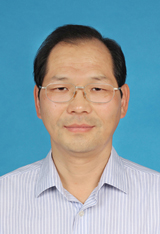 Hongjiang Wang (王洪江)合作论文数School of Resources and Safety Engineering, University of Science and Technology Beijing;Key Laboratory of Ministry of Education for Efficient Mining and Safety of Metal Mines, University of Science and Technology Beijing2Hu Wang (王虎)合作论文数2Shuanjun Wu (武拴军)合作论文数2Hui-xi SUN (孙会熙)合作论文数1
 Xiaoling Fu合作论文数1duwen li (李督文)合作论文数1Dingyi Wei合作论文数1Bo Yang (杨波)合作论文数1Fang-fang LI (李芳芳)合作论文数1FaLu Zhou (周发陆)合作论文数1Wei Dan (单炜)合作论文数1Yong Chen (谌勇)合作论文数1Heng Xu (徐恒)合作论文数1
 Cuifeng Du (杜翠凤)合作论文数School of Civil and Resources Engineering, University of Science and Technology Beijing1Jitang Zhang (张纪堂)合作论文数1




