在心血管领域中,超声心动图成像技术被心脏科医生称为"临床中的眼睛",在疾病诊断及指导治疗方面表现出卓越的价值,有着不可忽视的地位.临床适用的需求不断扩大,推动着超声心动图学在医学教育及再教育中的发展,这就对规培学员的教学培养提出了更高的要求.超声心动图教学培训要求学员一方面要加强对理论知识的深刻认识,另一方面要规范实践操作能力,提高临床适用能力.该文主要总结和阐述了作者所在单位在住院医师规范化培训中实行的阶梯式培训模式,使学员熟悉心脏超声技术适应症,读懂心脏超声报告,熟悉超声图像应用,经过短期培训后,规范上机操作,最终通过考核.
目的 探讨全生命周期视角下的健康管理课程在本科教学中的设计及应用效果.方法 在30名不同专业的本科生中开展以研讨课为形式,以生命各阶段的健康问题、健康管理方式及实践技术为内容的健康管理课程.对学生采取过程评价,了解教学效果;对其课后心得体验进行质性分析,了解学生对健康管理课程的体验与反思.结果 学生的过程性评价平均成绩为(93.73±2.63)分,教学效果良好.学生认为健康管理课程可以促使其在"对科学健康知识的学习""对家人健康管理的关注""对日常急救技术的初识""对自身健康管理的反思""对护理人文关怀的感悟""对课程教授方式的体会"等方面有进展.结论 基于全生命周期的健康管理课程能够帮助学生树立健康管理的意识,培育大学生的关怀和管理能力,帮助实现全民健康.
Objective:To construct and validate the physical fitness age model for community-dwelling elderly people, so as to provide new methods and reference for the health assessment and rehabilitation guidance of the elderly.Methods:From March to September 2021, 794 community-dwelling health people in six districts of Suzhou (Wuzhong District, Gusu District, Xiangcheng District, Wujiang District, Huqiu District and Industrial Park) were selected by multi-stage stratified sampling. Postgraduates who received unified training used unified monitoring tools to assess the physical function and physical fitness of the subjects in the designated community health service centers. Principal component analysis was used to construct a physical fitness age model. According to the scores of Short Physical Performance Battery, people with high physical function and people with low physical function were divided to verify the effectiveness of the model evaluation.Results:A total of four indicators, including 2-min step test, 30 s chair stand test, biceps flexion and lift test, and time up and go test (TUGT) , were finally included to build a physical fitness age model. The model formula was physical fitness age=-0.126×2-min step test-0.612×biceps flexion and lift test-0.625×30 s chair stand test+1.855×TUGT+0.51×age+55.29. The model validation showed that the physical fitness age of the community-dwelling elderly people of the high physical function group was lower than the age, and the difference was statistically significant ( P<0.01) . The physical fitness age of the community-dwelling elderly people of the low physical function group was higher than that of the age, and the difference was also statistically significant ( P<0.01) . The research results were consistent with the research assumptions, suggesting that the model was reasonable and effective. Conclusions:The construction of the physical fitness age model for community-dwelling elderly people can reflect the decline of the elderly's physical function, can be used for the elderly's health assessment and rehabilitation guidance, and can provide evaluation indicators for the elderly to provide community and home medical care services.
目的 通过测量重症监护室(ICU)患者肢体围度和肌肉力量,调查其肌肉健康水平,同时通过与配对的社区居民进行比较,以明确其差异程度.方法 选取2017年1~8月在苏州大学附属第一医院ICU接受治疗的患者35例,根据患者年龄、性别、BMI选取苏州市社区居民进行1:1配对.肢体围度包括左右侧上臂围和小腿围,采用软皮尺进行定位测量;肌肉力量包括握力、肘关节屈曲拉力、髋关节外展拉力和双上肢外展拉力,采用握力计和拉力计进行测量.结果 ICU住院患者上臂围和社区居民比较差异无统计学意义[(27.97±3.82)cm vs.(27.27±2.67)cm],但小腿围则显著低于社区居民[(31.22±3.24)cm vs.34.94±2.49)cm,P<0.01].此外,ICU患者各项肌肉力量指标均显著低于社区居民(P<0.01),其中握力水平分别为(18.78±9.60)kg和(30.04±8.84)kg,肘关节屈曲拉力分别为(11.94±4.78)kg和(19.16±6.05)kg,双上肢外展拉力分别为6.6(4.7,12.1)kg和13.3(8.8,15.9)kg,髋关节屈曲拉力分别为12.3(9.3,18.4)kg和19.0(14.6,23.3)kg.相关分析显示,握力、肘关节屈曲拉力、双上肢外展拉力与上臂围呈正向相关,髋关节屈曲拉力与小腿围呈正向相关(P<0.01).结论 ICU患者小腿围度和上下肢肌肉力量水平较低,且显著低于社区居民.因此,在临床工作中医护人员应该对ICU患者肌肉健康水平有足够的重视,尽早实施干预措施以避免肌肉体积和力量的进一步丧失,促进ICU患者康复.
从急诊留观病人焦虑情绪发生的原因、影响因素、对疾病诊疗的影响及干预措施等方面进行综述,旨在为广大急诊医务人员有效处理病人的焦虑情绪提供理论支持.
Objective To explore the relationship between drinking tea and frailty among the elderly in the community. Methods A self-designed questionnaire was used to investigate the basic data of the elderly and their status of drinking tea. Tilburg Frailty Index scale was used to evaluate the frailty of the elderly. The physical levels of the elderly were assessed by grip strength, 4 m walking time and time up& go. The factors affecting frailty of the elderly and the relationship between status of drinking tea and frailty were analyzed. Results The incidence of frailty in the community with and without habits of drinking tea was 55.6%(69/124) and 79.3%(96/121).There was significantly difference between them (χ2=15.634, P<0.01). The total scores, body function and mental dimensions of frailty of the former were 4.53± 2.51, 2.46±1.86 and 1.11±0.97 and that of the later were 5.52±2.54, 3.20±1.78 and 1.36±0.97. There was significantly difference between them (t=3.064, 3.178, 2.015, P<0.05) . The grip strength of the former and the latter was (29.06 ± 9.02) kg and (23.96 ± 7.48) kg and there was significantly difference between them (t=-4.824, P<0.01). The Logistic regression analysis showed that the number of complications, the habit of exercise and the habit of drinking tea were the factors influencing frailty. Conclusions Drinking tea may decrease the incidence of frailty and improve fitness level in the elderly. However, investigative research involving larger number of subjects and intervention studies are needed to explore further the relationship between drinking tea and frailty in the future.
Early mobilization is beneficial in the prevention of intensive care unit acquired weakness. This paper summarized the meth-ods, opportunity, evaluation of early mobilization intervention, and some notes.
内科是临床科室的重要组成部分,内科教学是为培养医务工作者的重要步骤,是医学生由学生向医生角色转变的桥梁.传统临床教学以知识灌输为主,学生学习积极性较低,教学质量较低.上世纪60、70年代问题导向(PBL)的教学方法被提出,为教学改革提供了一个全新的思路.本文将PBL教学方法应用于内科临床教学工作中,结合本学科的特点,以学生为中心,以问题为向导,充分发挥学生的学习积极性,提高教学质量,促进学生主动学习能力提高,帮助医学生建立完整的内科诊疗过程思维,进而达到临床内科教学目标.
医患沟通基本含义是医生和患者之间的信息交流与沟通.良好的医患沟通是在医疗和保健过程中,医患双方围绕疾病、诊疗、健康等相关因素,以医方为主导,各具特征的全方位信息的多途径交流.良好的医患沟通能科学指引患者诊疗疾病,使医患双方达成共识并建立合作关系,达到维护人类健康,促进医学发展和社会的进步[1].
 ShiQin Pan (潘世琴)合作论文数2XU Jing (徐静)合作论文数1Ding Hui (丁慧)合作论文数1Bi-Yue Hu合作论文数1Jing Xi合作论文数1Fu Zhuofan (傅卓凡)合作论文数1Qing ZHANG (张情)合作论文数1Ya CHEN (陈雅)合作论文数1Ya-ling WANG (王亚玲)合作论文数1Dan XU (徐丹)合作论文数1yufei chen (陈雨菲)合作论文数1Hang YUN (贠航)合作论文数1Xiaoyan Lu (陆晓燕)合作论文数1Jia-jia ZHANG (张佳佳)合作论文数1Xia LI (李霞)合作论文数1Ping ZHANG (张萍)合作论文数1Si Chen (陈思)合作论文数1Bei Li (李蓓)合作论文数1Jun Tang (唐军)合作论文数1
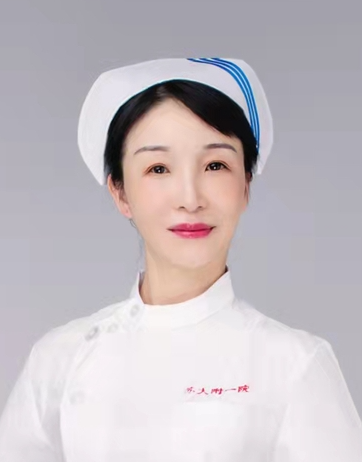 Hongyan Meng (孟红燕)合作论文数School of Nursing, Medical College of Soochow University1
 Huiling Li (李惠玲)合作论文数School of Nursing, Suzhou University1




