Contrastively pretrained audio–language models (e.g., CLAP) excel at clip-level understanding but struggle with frame-level tasks.Existing extensions fail to exploit the varying granularity of real-world audio–text data, where massive clip-level textual descriptions coexist with limited frame-level annotations. This paper proposes **Fine**-grained **L**anguage-**A**udio **P**retraining (**FineLAP**), a novel training paradigm that advances both clip- and frame-level alignment in CLAP with heterogeneous data.FineLAP introduces a dual-stream sigmoid loss with a cluster-based sampling strategy to jointly learn from clip- and frame-level supervision. To capture both global semantics and local details, FineLAP uses a decoupled audio projector on top of a self-supervised encoder.To alleviate the scarcity of temporally annotated data, we present FineLAP-100k, a large-scale synthetic SED dataset constructed through a scalable curation pipeline.Extensive experiments demonstrate that FineLAP achieves SOTA performance across multiple audio understanding tasks, including retrieval, classification, sound event detection, and text-to-audio grounding. Ablation studies further show that coarse- and fine-grained alignment are mutually beneficial, providing insights for building better audio-language models (ALMs).
DCASE 2026 Task 5 introduces Audio-Dependent Question Answering (ADQA), which tests whether large audio-language models answer from the audio rather than from textual priors. An Audio-Dependency Filtering (ADF) pipeline combines silent-audio probing, per-option perplexity, a large language model (LLM) commonsense check, and human review to remove items solvable from text alone. The 3000 items that pass form the ADQA-Bench evaluation set, spanning music, speech, and environmental audio. The inaugural edition draws 14 teams and 36 submissions across two tracks defined by total parameter count (up to 100B and under 10B). A Chung-Ang University ensemble of MOSS-Audio-8B-Thinking and Qwen3-Omni-30B reaches the top overall accuracy at 58.33, and a MOSS-only configuration from the same team leads the sub-10B track at 57.30. Across the 30 submissions with a comparable development score, evaluation accuracy falls by 11.91 percentage points (pp) on average (median 10.91 pp) on the hidden evaluation split, which is designed to be harder than the development split. The most common building blocks are: the MOSS-Audio-8B-Thinking backbone (13 of 36 submissions), Low-Rank Adaptation (LoRA) fine-tuning on AudioMCQ-StrongAC, and preference or reinforcement-learning objectives – Group Relative Policy Optimization (GRPO) in five teams, Group reward-Decoupled Normalization Policy Optimization (GDPO) in two. At test time, prompt engineering is near-universal, and majority or choice-permutation voting is common. Every system misses the same set of 233 evaluation items.
The growing reliance on large-scale speech data has made privacy protection a critical concern. However, existing anonymization approaches often degrade data utility, for example by disrupting acoustic continuity or reducing vocal diversity, which compromises the value of speech data for downstream tasks such as Automatic Speech Recognition (ASR), Text-to- Speech (TTS), and Speech Emotion Recognition (SER). Current evaluation practices are also limited, as they mainly rely on direct testing of anonymized speech with pretrained models, providing only a partial view of utility. To address these issues, we propose a novel two-stage framework that protects both linguistic content and acoustic identity while maintaining usability. For content privacy, we employ a generative speech editing model to seamlessly replace personally identifiable information (PII), and for voice privacy, we introduce F3-VA, a flow-matchingbased anonymization framework with a three-stage design that produces diverse and distinct anonymized speakers. To enable a more comprehensive assessment, we evaluate privacy using both acoustic- and content-based speaker verification metrics, and assess utility by training ASR, TTS, and SER models from scratch. Experimental results show that our framework achieves stronger privacy protection with minimal utility degradation compared to baselines from the VoicePrivacy Challenge, while the proposed evaluation protocol provides a more realistic reflection of the utility of anonymized speech under privacy protection.
Automatic speech recognition systems commonly rely on reference transcriptions for evaluation, while reference-free approaches often depend on internal confidence estimation or auxiliary language models. We propose READ (Reference-free Hypothesis Evaluation with Acoustic Discrepancy), a novel metric that evaluates ASR hypotheses directly from the speech signal. READ emphasizes the acoustic grounding of hypotheses. It uses a pretrained auto-regressive TTS model to compute the conditional likelihood of speech tokens given a text hypothesis, to measure fine-grained acoustic discrepancy between speech and text. Without additional training, READ can be applied for hypothesis refinement. Experiments show that READ correlates with specific recognition errors and improves ASR outputs, achieving up to 20% relative error rate reduction, with particularly strong gains under noisy conditions.
Cascaded Automatic Speech Recognition – Large Language Model (ASR-LLM) pipelines remain popular for industrial Spoken Dialogue Systems (SDS), primarily because their decoupled design ensures perceptual verifiability. However, cascaded systems suffer from error propagation, as transcription failures inevitably cascade to subsequent components, thereby degrading the final interaction quality. Although ASR confidence scores offer a simple filter for unreliable inputs, this approach is fundamentally limited because it typically fails to detect deletion errors or to distinguish between acoustic (inability to hear clearly) and linguistic (inability to understand) mismatches, both of which require targeted recovery strategies. In this paper, we propose a cause-aware error recovery paradigm that fundamentally rethinks robustness in SDS. Unlike traditional confidence filtering, we introduce a suite of small precision-focused detectors that exploit deep ASR latent representations to disentangle token-level errors into perception, comprehension, and deletion failures. This fine-grained diagnostic intelligence empowers the LLM to orchestrate targeted, multi-turn clarification strategies, effectively transforming ambiguous signals into seamless user interactions. Experimental results validate the precision of our approach, which more than doubles the recall on domain-shift errors (57.96
The recent surge in open-source Multimodal Large Language Models (MLLM) frameworks, such as LLaVA, provides a convenient kickoff for artificial intelligence developers and researchers. However, most of the MLLM frameworks take vision as the main input modality, and provide limited in-depth support for the modality of speech, audio, and music. This situation hinders the development of audio-language models, and forces researchers to spend a lot of effort on code writing and hyperparameter tuning. We present SLAM-LLM, an open-source deep learning framework designed to train customized MLLMs, focused on speech, language, audio, and music processing. SLAM-LLM provides a modular configuration of different encoders, projectors, LLMs, and parameter-efficient fine-tuning plugins. SLAM-LLM also includes detailed training and inference recipes for mainstream tasks, along with high-performance checkpoints like LLM-based Automatic Speech Recognition (ASR), Automated Audio Captioning (AAC), and Music Captioning (MC). Some of these recipes have already reached or are nearing state-of-the-art performance, and some relevant techniques have also been accepted by academic papers. We hope SLAM-LLM will accelerate iteration, development, data engineering, and model training for researchers. We are committed to continually pushing forward audio-based MLLMs through this open-source framework, and call on the community to contribute to the LLM-based speech, audio and music processing.
Large Audio Language Models (LALMs), which couple acoustic perception with large language models (LLMs) to extract and understand diverse information from audio, have attracted intense interest from both academic and industrial communities. However, existing LALMs are highly sensitive to how instructions are phrased, affecting both (i) instruction-following rates and (ii) task performance. Yet, no existing benchmarks offer a systematic and comprehensive evaluation of this sensitivity. We introduce ISA-Bench, a dynamic benchmark evaluating instruction sensitivity for LALMs along three axes: instruction description, output format, and task composition. We assess recent open-source and proprietary LALMs using ISA-Bench, profiling both compliance and accuracy under controlled instruction variations. Experimental results reveal that even state-of-the-art LALMs suffer significant instruction sensitivity, leading to degraded performance on fundamental audio understanding tasks. To mitigate this issue, we fine-tune Qwen2-Audio on a specifically constructed complex instruction-variant dataset, achieving a marked improvement in instruction-following performance. However, this also induces nontrivial catastrophic forgetting: the model loses some previously mastered task capabilities when exposed to new instruction styles. Our benchmark provides a standardized basis for assessing and improving instruction sensitivity in LALMs, underscoring the need for instruction-robust audio understanding in real-world pipelines.
Recent Large Audio Language Models (LALMs) excel in understanding but often lack transparent reasoning. To address this "black-box" limitation, we organized the Audio Reasoning Challenge at Interspeech 2026, the first shared task dedicated to evaluating Chain-of-Thought (CoT) quality in the audio domain. The challenge introduced MMAR-Rubrics, a novel instance-level protocol assessing the factuality and logic of reasoning chains. Featured Single Model and Agent tracks, the competition attracting 156 teams from 18 countries and regions. Results show agent systems currently lead in reasoning quality, utilizing iterative tool orchestration and cross-modal analysis. Besides, single models are rapidly advancing via reinforcement learning and sophisticated data pipeline. We details the challenge design, methodology, and a comprehensive analysis of state-of-the-art systems, providing new insights for explainable audio intelligence.
This report presents VibeVoice-ASR, a general-purpose speech understanding framework built upon VibeVoice, designed to address the persistent challenges of context fragmentation and multi-speaker complexity in long-form audio (e.g., meetings, podcasts) that remain despite recent advancements in short-form speech recognition. Unlike traditional pipelined approaches that rely on audio chunking, VibeVoice-ASRsupports single-pass processing for up to 60 minutes of audio. It unifies Automatic Speech Recognition, Speaker Diarization, and Timestamping into a single end-to-end generation task. In addition, VibeVoice-ASR supports over 50 languages, requires no explicit language setting, and natively handles code-switching within and across utterances. Furthermore, we introduce a prompt-based context injection mechanism that allows users to supply customized conetxt, significantly improving accuracy on domain-specific terminology and polyphonic character disambiguation.
Recent advances in large language models (LLMs) and multimodal LLMs (MLLMs) have created new opportunities for wearable speech interfaces, with smart glasses providing an egocentric platform for continuous audio sensing and assistance. However, speech recognition and understanding in this setting remain challenging because of dynamic acoustic conditions, speaker overlap, and the spatial ambiguity introduced by wearer-centered recording geometry. To support systematic evaluation in this setting, we introduce the IEEE SLT 2026 SmartGlasses Challenge for egocentric multi-speaker speech processing. The challenge consists of two tracks, Dyadic Dialogue Understanding and Multi-party Meeting Understanding, and jointly evaluates Time-Stamped Speaker-Attributed Automatic Speech Recognition (TSA-ASR) and Spoken Language Understanding (SLU). It is built on a 106-hour four-channel egocentric speech dataset containing 714 sessions collected in real-world scenarios. This paper describes challenge tasks, dataset construction, submissions, and summarizes the main findings from the shared evaluation. The results show that heavy speaker overlap remains a major factor affecting TSA-ASR performance, while paralinguistic acoustic understanding continues to be difficult for current audio-language models in complex SLU settings. Further details can be found on the official challenge website.
Integrating speech understanding and generation is a pivotal step toward building unified speech models. However, the different representations required for these two tasks currently pose significant compatibility challenges. Typically, semantics-oriented features are learned from self-supervised learning (SSL), and acoustic-oriented features from reconstruction. Such fragmented representations hinder the realization of truly unified speech systems. We present WavCube, a compact continuous latent derived from an SSL speech encoder that simultaneously supports speech understanding, reconstruction, and generation. WavCube employs a two-stage training scheme. Stage 1 trains a semantic bottleneck to filter off-manifold redundancy that makes raw SSL features intractable for diffusion. Stage 2 injects fine-grained acoustic details via end-to-end reconstruction, while a semantic anchoring loss ensures the representation remains grounded within its original semantic manifold. Comprehensive experiments show that WavCube closely approaches WavLM performance on SUPERB despite an 8x dimensional compression, attains reconstruction quality on par with existing acoustic representations, delivers state-of-the-art zero-shot TTS performance with markedly faster training convergence, and excels in speech enhancement, separation, and voice conversion tasks on the SUPERB-SG benchmark. Systematic ablations reveal that WavCube's two-stage recipe resolves two intrinsic flaws of SSL features for generative modeling, paving the way for future unified speech systems. Codes and checkpoints are available at https://github.com/yanghaha0908/WavCube.
We propose AUV, a unified neural audio codec with a single codebook, which enables a favourable reconstruction of speech and further extends to general audio, including vocal, music, and sound. AUV is capable of tackling any 16 kHz mixed-domain audio segment at bit rates around 700 bps. To accomplish this, we guide the matryoshka codebook with nested domain-specific partitions, assigned with corresponding teacher models to perform distillation, all in a single-stage training. A conformer-style encoder-decoder architecture with STFT features as audio representation is employed, yielding better audio quality. Comprehensive evaluations demonstrate that AUV exhibits comparable audio reconstruction ability to state-of-the-art domain-specific single-layer quantizer codecs, showcasing the potential of audio universal vector quantization with a single codebook. The pre-trained model and demo samples are available at https://swivid.github.io/AUV/.
The rapid advancement of speech generation technologies in the era of large language models (LLMs) has established discrete speech tokens as a foundational paradigm for speech representation. These tokens, characterized by their discrete, compact, and concise nature, are not only advantageous for efficient transmission and storage, but also inherently compatible with the language modeling framework, enabling seamless integration of speech into text-dominated LLM architectures. Current research categorizes discrete speech tokens into two principal classes: acoustic tokens and semantic tokens, each of which has evolved into a rich research domain characterized by unique design philosophies and methodological approaches. This survey systematically synthesizes the existing taxonomy and recent innovations in discrete speech tokenization, conducts a critical examination of the strengths and limitations of each paradigm, and presents systematic experimental comparisons across token types. Furthermore, we identify persistent challenges in the field and propose potential research directions, aiming to offer actionable insights to inspire future advancements in the development and application of discrete speech tokens.
Automatic speech recognition systems often produce confident yet incorrect transcriptions under noisy or ambiguous conditions, which can be misleading for both users and downstream applications. Standard evaluation based on Word Error Rate focuses solely on accuracy and fails to capture transcription reliability. We introduce an abstention-aware transcription framework that enables ASR models to explicitly abstain from uncertain segments. To evaluate reliability under abstention, we propose RAS, a reliability-oriented metric that balances transcription informativeness and error aversion, with its trade-off parameter calibrated by human preference. We then train an abstention-aware ASR model through supervised bootstrapping followed by reinforcement learning. Our experiments demonstrate substantial improvements in transcription reliability while maintaining competitive accuracy.
Recently, diffusion models operating on VAE latents or mel-spectrograms have become the dominant paradigm for zero-shot TTS. Although these compressed representations improve generation efficiency, they inevitably suffer from information loss and non-end-to-end training. Theoretically, directly modeling raw waveforms circumvents these issues; however, this direction remains underexplored and is often deemed difficult due to the extremely long sequence length of audio signals. To overcome this, we propose WavTTS, the first raw waveform generative TTS model that substantially narrows the gap with latent-space generative models. Built upon the flow matching with Diffusion Transformer (DiT), WavTTS directly models speech waveforms via a simple patchification strategy, while integrating multi-scale mel-spectrogram supervision to provide perceptual guidance during training. Furthermore, we investigate the impact of prediction targets and noise scheduling in waveform diffusion, and develop an effective schedule design to improve generation quality. Evaluations on open-source benchmarks demonstrate that WavTTS closely approaches the performance of current state-of-the-art latent generative zero-shot TTS models, while substantially outperforming previous end-to-end speech generation models. Our findings demonstrate the feasibility of scaling diffusion-based TTS directly in the waveform space, opening a new direction for end-to-end speech generation.
Real-time speech-to-speech translation (S2ST) systems must balance translation quality, latency, speech naturalness, and speaker consistency. Publicly documented S2ST systems have advanced direct, multilingual, streaming, and expressive modeling, while proprietary products and APIs increasingly expose real-time translation capabilities to users. However, practical deployment remains challenging for open and reproducible systems, especially in long-form and multi-speaker conversations where partial ASR hypotheses are unstable, turn boundaries are ambiguous, and target speech must be generated with an appropriate speaker prompt. We present X-Translator, a low-cost modular cascaded S2ST system that combines streaming ASR, machine translation, and prompt-conditioned TTS through a session-level runtime controller. The system uses incremental segment commitment to convert unstable ASR streams into translation-ready units, and an online speaker prompt manager to bind source speech spans to speaker-specific voice prompts for synthesis. We evaluate translation, speech quality, and latency with OpenSTBench, compare against proprietary speech translation APIs as behavioral baselines, measure long-form voice stability, evaluate speaker preservation in multi-speaker conversations, and assess multilingual translation quality. X-Translator provides an open platform for understanding the practical trade-offs of deployment-oriented S2ST. Code and demo are available at https://github.com/zhaoyx239/X-Translator.
In this paper, we present X-Voice, a 0.4B multilingual zero-shot voice cloning model that clones arbitrary voices and enables everyone to speak 30 languages. X-Voice is trained on a 420K-hour multilingual corpus using the International Phonetic Alphabet (IPA) as a unified representation. To eliminate the reliance on prompt text without complex preprocessing like forced alignment, we design a two-stage training paradigm. In Stage 1, we establish X-Voice$_{\text{s1}}$ through standard conditional flow-matching training and use it to synthesize 10K hours of speaker-consistent segments as audio prompts. In Stage 2, we fine-tune on these audio pairs with prompt text masked to derive X-Voice$_{\text{s2}}$, which enables zero-shot voice cloning without requiring transcripts of audio prompts. Architecturally, we extend F5-TTS by implementing a dual-level injection of language identifiers and decoupling and scheduling of Classifier-Free Guidance to facilitate multilingual speech synthesis. Subjective and objective evaluation results demonstrate that X-Voice outperforms existing flow-matching based multilingual systems like LEMAS-TTS and achieves zero-shot cross-lingual cloning capabilities comparable to billion-scale models such as Qwen3-TTS. To facilitate research transparency and community advancement, we open-source all related resources.
Recent advances in text-to-speech (TTS) have yielded remarkable improvements in naturalness and intelligibility. Building on these achievements, research has increasingly shifted toward enhancing the expressiveness of generated speech, such as dialectal and emotional TTS. However, cross-style synthesis combining both dialect and emotion remains challenging and largely unexplored, mainly due to the scarcity of dialectal data with emotional labels. To address this, we propose Hierarchical Expressive Vector (HE-Vector), a two-stage method for Emotional Dialectal TTS. In the first stage, we construct different task vectors to model dialectal and emotional styles independently, and then enhance single-style synthesis by adjusting their weights, a method we refer to as Expressive Vector (E-Vector). For the second stage, we hierarchically integrate these vectors to achieve controllable emotionally expressive dialect synthesis without requiring jointly labeled data, corresponding to Hierarchical Expressive Vector (HE-Vector). Experimental results demonstrate that HE-Vectors achieve superior performance in dialect synthesis, and promising results in synthesizing emotionally expressive dialectal speech in a zero-shot setting.
Previous studies have demonstrated that emotional features from a single acoustic sentiment label can enhance depression diagnosis accuracy. Additionally, according to the Emotion Context-Insensitivity theory and our pilot study, individuals with depression might convey negative emotional content in an unexpectedly calm manner, showing a high degree of inconsistency in emotional expressions during natural conversations. So far, few studies have recognized and leveraged the emotional expression inconsistency for depression detection. In this paper, a multimodal cross-attention method is presented to capture the Acoustic-Textual Emotional Inconsistency (ATEI) information. This is achieved by analyzing the intricate local and long-term dependencies of emotional expressions across acoustic and textual domains, as well as the mismatch between the emotional content within both domains. A Transformer-based model is then proposed to integrate this ATEI information with various fusion strategies for detecting depression. Furthermore, a scaling technique is employed to adjust the ATEI feature degree during the fusion process, thereby enhancing the model's ability to discern patients with depression across varying levels of severity. To best of our knowledge, this work is the first to incorporate emotional expression inconsistency information into depression detection. Experimental results on a counseling conversational dataset illustrate the effectiveness of our method.
Despite rapid progress in Multi-modal Large Language Models and Large Audio-Language Models, existing audio benchmarks largely test semantics that can be recovered from text captions, masking deficits in fine-grained perceptual reasoning. We formalize audio 4D intelligence that is defined as reasoning over sound dynamics in time and 3D space, and introduce STAR-Bench to measure it. STAR-Bench combines a Foundational Acoustic Perception setting (six attributes under absolute and relative regimes) with a Holistic Spatio-Temporal Reasoning setting that includes segment reordering for continuous and discrete processes and spatial tasks spanning static localization, multi-source relations, and dynamic trajectories. Our data curation pipeline uses two methods to ensure high-quality samples. For foundational tasks, we use procedurally synthesized and physics-simulated audio. For holistic data, we follow a four-stage process that includes human annotation and final selection based on human performance. Unlike prior benchmarks where caption-only answering reduces accuracy slightly, STAR-Bench induces far larger drops (-31.5\% temporal, -35.2\% spatial), evidencing its focus on linguistically hard-to-describe cues. Evaluating 19 models reveals substantial gaps compared with humans and a capability hierarchy: closed-source models are bottlenecked by fine-grained perception, while open-source models lag across perception, knowledge, and reasoning. Our STAR-Bench provides critical insights and a clear path forward for developing future models with a more robust understanding of the physical world.
 Kai Yu (俞凯)合作论文数Machine Intelligence Institute, School of Computer Science, Shanghai Jiao Tong University;Cross-media Language Intelligence Lab, Shanghai Jiao Tong University;AISpeech64
 Ziyang Ma合作论文数62
 Yiwei Guo (郭奕玮)合作论文数Cross Media Language Intelligence Lab, Shanghai Jiao Tong University;School of Computer Science, Shanghai Jiao Tong University25
 Chenpeng Du合作论文数X-LANCE Lab, Department of Computer Science and Engineering, Shanghai Jiao Tong University22
 Yifan Yang合作论文数22
 Zhikang Niu合作论文数18
 Guanrou Yang合作论文数17
 Xunying Liu (刘循英)合作论文数Department of Systems Engineering and Engineering Management, The Faculty of Engineering, The Chinese University of Hong Kong16
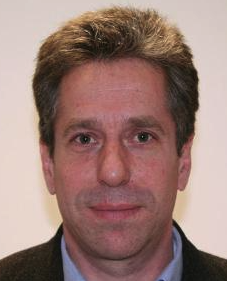 Mark Gales合作论文数Information Engineering Division, Department of Engineering, University of Cambridge14
 Zhisheng Zheng (郑之胜)合作论文数Amazon;The University of Texas at Austin13
 Zhifu Gao合作论文数Speech Lab, Alibaba Grp12
 Jianwei Yu (余建伟)合作论文数Shenzhen Universtiy12Yuzhe Liang合作论文数11
 Jinyu Li合作论文数Microsoft11
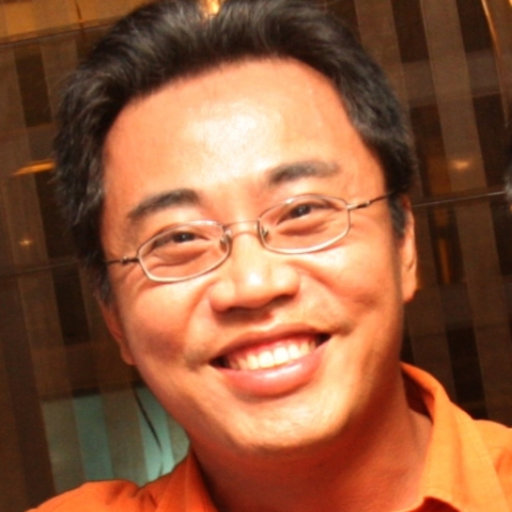 Eng Siong Chng合作论文数School of Computer Science and Engineering, Nanyang Technological University11
 Zhuo Chen合作论文数Bytedance10
 Philip Woodland合作论文数Machine Intelligence Laboratory, Division of Information Engineering, Department of Engineering, University of Cambridge10Wenxi Chen合作论文数9
 Xiquan Li合作论文数9
 Qi Chen合作论文数Microsoft Research Asia Vancouver9Weiqiang Zhang (张卫强)合作论文数9
 Shiliang Zhang (张仕良)合作论文数Alibaba Group9
 Xipeng Qiu (邱锡鹏)合作论文数College of Computer Science and Artificial Intelligence, Fudan University9
 Longbiao Wang (王龙标)合作论文数School of Artificial Intelligence, College of Intelligence and Computing, Tianjin University8
 Shujie Liu (刘树杰)合作论文数Microsoft Research Asia8
 Qian Chen (陈谦)合作论文数Alibaba Group7
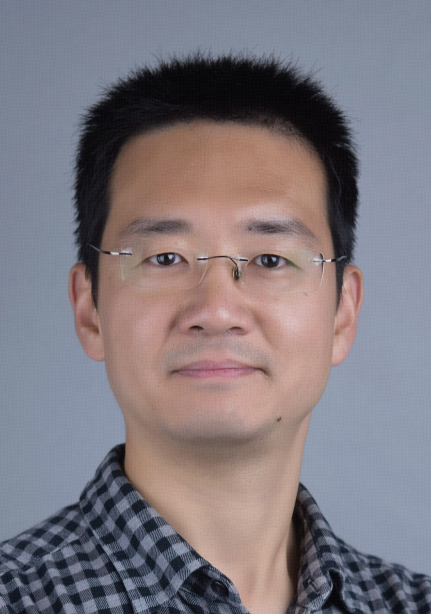 Lei Xie (谢磊)合作论文数Audio, Speech and Language Processing Lab, School of Computer Science, Northwestern Polytechnical University7
 Yanmin Qian (钱彦旻)合作论文数7
 Tianrui Wang (王天锐)合作论文数College of Intelligence and Computing, Tianjin University;Cross Media Language Intelligence Lab, School of Computer Science, Shanghai Jiao Tong University6
 王帅合作论文数Shanghai Jiao Tong University6
 Tian Tan (谭天)合作论文数AISpeech Co., Ltd.;ByteDance6Hankun Wang合作论文数5
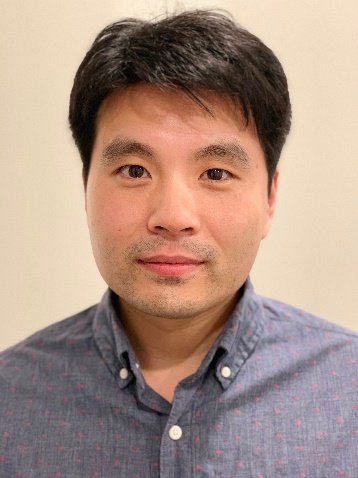 Yuxuan Wang合作论文数ByteDance5Fan Yu合作论文数5
 Xu Tan (谭旭)合作论文数Moonshot AI5
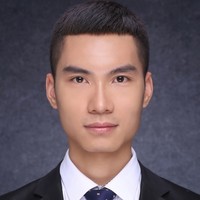 Xinsheng Wang (王新升)合作论文数miHoYo5
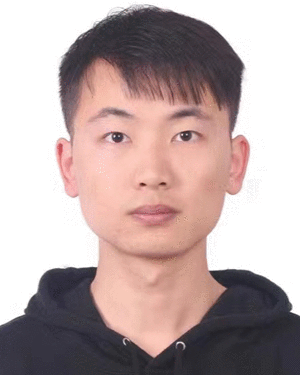 Bing Han合作论文数X-LANCE Lab, Department of Computer Science and Engineering, Shanghai Jiao Tong University;Auditory Cognition and Computational Acoustics Lab, Shanghai Jiao Tong University4Feiyu Shen合作论文数4
 Shan Yang合作论文数4Anbai Jiang合作论文数4SONG Zhe-shu (宋哲书)合作论文数4
 (Nicolaus) Yinghao Ma (马英浩)合作论文数Centre for Digital Music, School of Electronic Engineering and Computer Science, Queen Mary University of London4
 Changli Tang合作论文数Department of Electronic Engineering, Tsinghua University4
 Zhihao Du合作论文数4
 Yujin Wang合作论文数4
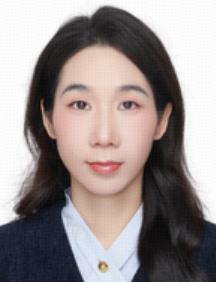 Liumeng Xue (薛浏蒙)合作论文数School of Intelligence Science and Technology, Nanjing University4
 Qiuqiang Kong (孔秋强)合作论文数Department of Electronic Engineering, The Chinese University of Hong Kong4Jianwu Dang (党建武)合作论文数4




