Methods for the synthesis of novel heterocyclic compounds bearing an unsaturated γ-lactone ring and an (S)-naproxen moiety were developed. The O-acylation reactions of 3,4-dihalo-5-hydroxy-2(5H)-furanones with (S)-(+)-2-(6-methoxy-2-naphthyl)propionyl chloride in the presence of Et3N afforded optically active furanone derivatives bearing an (S)-naproxen moiety at the 5 position of the lactone ring. Optically active 4-arylsulfanyl derivatives of 2(5H)-furanone were obtained by the reaction of the isolated (R,S) stereoisomers of 3,4-dihalofuranones with aromatic thiols. A series of heterocycles were synthesized based on 5-alkoxy- and 5-haloahkoxy-2(5H)-furanones containing an (S)-naproxen moiety in the side chain of the hydroxyethylthio substituent on the carbon atom C(4) of the five-membered ring. The structures of three new heterocycles were determined by X-ray diffraction.
The synthesis and characterization of previously unknown azides, iminophosphoranes and amines from commercially available mucochloric and mucobromic acids is reported. The reaction of 5-alkoxy-3,4-dihalo-2(5H)-furanones with sodium azide resulted in the regioselective formation of furanone 4-azidoderivatives. A series of novel iminophosphoranes was obtained from the reaction of corresponding azides with triphenylphosphine. Reduction of iminophosphoranes with stannous chloride dihydrate led to the heterocycles, possessing an amino group at the C4 carbon atom of the unsaturated γ-lactone ring.
Allylboration of the 1,2,3-triazole and pyrazole aldehydes with triallylborane or 2,4-pentadienyl(dipropyl)borane under mild reaction conditions provides high yields of the corresponding novel homoallylic and dihomoallylic alcohols that can be used to modify the side chain in the triazole- or diazole-based molecules. Enantioselective allylboration of triazole aldehydes with (+)-B-allyldiisopinocampheylborane gave optically active R(+) homoallylic alcohols in good yields with 80–93
The phenomenon of amplifying asymmetric autocatalysis (AAA) has recently been restricted to alkylation of several specific substrates with diisopropyl zinc (Soai reaction). Targeting the extension of the scope of this phenomenon, we studied the reaction of triazolic aldehydes with diisopropyl zinc. Experiments demonstrated a diversity of results for the dissipation of chirality, conserving the existent ee and spontaneous chirality generation. Computational analysis showed that depending on the level of oligomerization of the catalyst, one could expect amplification (monomeric catalyst) while maintaining the existing chirality (dimeric catalyst) or dissipation of chirality (tetrameric catalyst). These findings are promising for the elaboration of synthetic protocols controlling chirality generation. In addition, three optically active triazolic alcohols were characterized.
A previously unknown reduction of carbonyl compounds with dicyclopentylzinc is reported. Aldehydes react in mild conditions yielding corresponding primary alcohols and cyclopentene. Although cyclohexanone and acetophenone are inert to dicyclopentylzinc, a variety of heterocyclic ketones reacted readily, yielding reasonable to high yields of corresponding secondary alcohols. When the reaction was catalyzed with (–)-(1R,2S)-ephedrine, 3-acetylpyridine (10) resulted in a high yield of (S)-1-(pyridin-3-yl)ethanol (19) with >99% ee. 5-Acetyl-2-bromopyridine (11) also provided the corresponding optically active alcohol 20, albeit with a much lower optical yield. When 10% of 19 with 92% ee was used as an autocatalyst, 55% yield of the same compound was obtained, with 95% ee and 96% ee in two independent experiments. A three-stage reaction sequence starting from “no chirality” reaction yielded 19 with 6% ee. Thus, amplifying autocatalysis was detected in the reaction of ketone 10 with dicylopentylzinc.
The crystal structures of 3-chloro-5-hydroxy-1-(4-methylbenzyl)-4-[4-phenyl-1H-1,2,3-triazole-1-yl]-1,5-dihydro-2Н-pyrrol-2-one rac-1 and 1-benzyl-3-chloro-5-hydroxy-4-[4-phenyl-1H-1,2,3-triazole-1-yl]-1,5-dihydro-2Н-pyrrol-2-one rac-2 are studied. The reproducibility of a same-type homochiral chain in both chiral and racemic crystals is found. Molecular conformations, secondary interactions additionally cross-linking the chain, and π…π contacts between the cyclic molecular moieties are analyzed.
Изучены кристаллические структуры 5-гидрокси-1-(4-метилбензил)-4-[4-фенил-1H-1,2,3-триазол-1-ил]-3-хлор-1,5-дигидро-2Н-пиррол-2-она rac-1 и 1-бензил-5-гидрокси-4-[4-фенил-1H-1,2,3-триазол-1-ил]-3-хлор-1,5-дигидро-2Н-пиррол-2-она rac-2. Обнаружена воспроизводимость однотипной гомохиральной цепочки как в хиральных, так и в рацемическом кристаллах. Проанализированы конформации молекул, вторичные взаимодействия, дополнительно сшивающие цепочку, π…π контакты между циклическими фрагментами молекул.
In article number 1801479, Shinzaburo Noguchi, Katsunori Tanaka, and co-workers use a click-to-sense probe to detect acrolein, which is universally produced by cancer cells under oxidative stress, within five minutes at room temperature. All cancer types tested are imaged and discriminated through multiple cascade reactions in the living tissue of human patients. This probe can be used to quickly and accurately diagnose cancer morphology during breast-conserving surgery, by reforming the conventional pathological methods.
Clean operating margins in breast cancer surgery are important for preventing recurrence. However, the current methods for determining margins such as intraoperative frozen section analysis or imprint cytology are not satisfactory since they are time-consuming and cause a burden on the patient and on hospitals with a limited accuracy. A "click-to-sense" probe is developed based on the detection of acrolein, which is a substance released by oxidatively stressed cancer cells and can be visualized under fluorescence microscopy. Using live breast tissues resected from breast cancer patients, it is demonstrated that this method can quickly, selectively, and sensitively differentiate cancer lesion from normal breast gland or benign proliferative lesions. Since acrolein is accumulated in all types of cancers, this method could be used to quickly assess the surgical margins in other types of cancer.
Acrolein, a highly toxic α,β-unsaturated aldehyde, occurs as pollutant in the environment (e.g., tobacco smoke and exhaust gas) and ubiquitously generated in biosystems (e.g., lipid peroxidation process and metabolism of polyamine or amino acids). High accumulation of acrolein in the body is often linked pathologically with several oxidative stress-related diseases, including cancer and Alzheimer’s. Accordingly, acrolein holds great potential as key biomarker in oxidative stress-related diseases, and direct measurement of acrolein in biological samples is becoming important to provide information for diagnosis and therapeutic purposes. The available conventional analytical method for detection of acrolein, e.g., high-performance liquid chromatography (HPLC) analysis after derivatization with 3-aminophenol under harsh reaction conditions, is not suitable for high-throughput assay and inconvenient for measurement in clinical practice. A monoclonal antibody can be used for detection of acrolein–lysine adducts; however, this method is time-consuming and expensive. Consequently, developing new analytical tools that are straightforward, cost-effective, and selective for acrolein detection in live cells remains highly important for the diagnosis and therapeutic treatment of oxidative stress-related diseases. In this review, we will discuss several commonly used classical methods for detecting acrolein from biological samples, and describe our recent findings on the simple but robust method for detecting and visualizing acrolein generated by live cells in the context of oxidative stress processes or introduced via environmental exposure.
Acrolein, a highly toxic alpha,beta-unsaturated aldehyde, has been a longstanding key biomarker associated with a range of disorders related to oxidative stresses. Currently available analytical methods rely on the indirect protocols, e.g., derivatization/HPLC or mAb detection of the lysine adducts. Consequently, developing new analytical tools for acrolein detection that are straightforward, cost-effective, selective, and preferably feasible using live cells remains a highly essential pursuit in the diagnosis and therapeutic treatment of oxidative stress-related diseases. We demonstrated that for the first time aryl azides can rapidly and selectively react with acrolein in a "click" manner to provide 4-formyl-1,2,3-triazolines and 4-formyl-1,2,3-triazoles, which represents an unexplored reactivity of aryl azides. When treating a fluorescently labeled phenyl azide with oxidatively stressed or smoking-associated cell models, these heterocyclic compounds could be selectively taken up by the cells and preferably localized at the endoplasmic reticulum (ER) and lysosome, leading to a new tool for both effectively detecting acrolein level and directly imaging live cells that are under stress. The detection method developed here is convenient: target cells may be treated with fluorescently labeled azides to enable the direct and efficient detection of acrolein in live system. The simple stuctures of the azide probes allows for functional groups other than fluorescent groups to be readily linked to aryl azides to image, examine, or target cells associated with oxidative stress processes. We developed a new method for detecting and imaging acrolein extracellularly released by cells in the context of oxidative stress processes or introduced via environmental exposure.
We synthetically demonstrate that eight-membered heterocycles are the exclusive products of the reaction of acrolein with biologically relevant aminesviaan imino[4 + 4]cycloaddition.
An entry from the Cambridge Structural Database, the world’s repository for small molecule crystal structures. The entry contains experimental data from a crystal diffraction study. The deposited dataset for this entry is freely available from the CCDC and typically includes 3D coordinates, cell parameters, space group, experimental conditions and quality measures.
An entry from the Cambridge Structural Database, the world’s repository for small molecule crystal structures. The entry contains experimental data from a crystal diffraction study. The deposited dataset for this entry is freely available from the CCDC and typically includes 3D coordinates, cell parameters, space group, experimental conditions and quality measures.
A number of 4- and 5-R-sulfanylfuran-2(5 H )-one derivatives were synthesized, and their oxidation with various reagents was studied. The corresponding sulfones were obtained using hydrogen peroxide in acetic acid. 4-R-sulfanyl derivatives were selectively oxidized to sulfoxides with m -chloroperoxybenzoic acid. The molecular and crystal structures of some new sulfones and sulfoxides were determined by X-ray analysis.
 Almira R. Kurbangalieva合作论文数A.M. Butlerov Chemical Institute, Kazan Federal University;Alexander Butlerov Institute of Chemistry, Kazan Federal University15
 Olga A. Lodochnikova合作论文数8
 Ambara Rachmat Pradipta合作论文数Graduate School of Science, Osaka University6л з латыпова合作论文数5Daria P. Gerasimova合作论文数3
 d r chulakova合作论文数3
 Galina Alexeevna Chmutova合作论文数3Eugeny a Berdnikov合作论文数3Damir R. Islamov合作论文数3Mayumi Arata合作论文数2Liliya Latypova合作论文数2Motoko Fujii合作论文数2
 Akihiro Ito合作论文数2Koji Morimoto合作论文数2Tanaka Katsunori合作论文数2
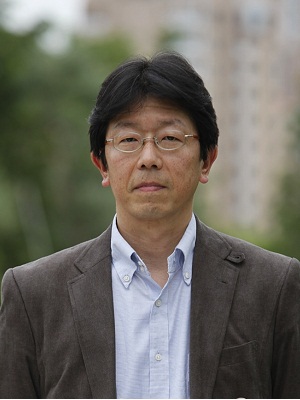 Katsunori Tanaka (田中克典)合作论文数Department of Biosciences, School of Biological and Environmental Sciences, Kwansei Gakuin University;Department of Applied Biosciences, Faculty of Agriculture and Life Science, Hirosaki University2
 Minoru Yoshida (吉田稔)合作论文数Center for Sustainable Resource Science, RIKEN;Department of Biotechnology, The University of Tokyo;Saitama University2
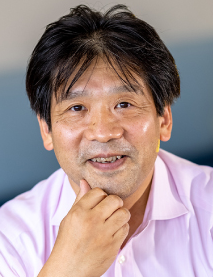 Eiichi Morii (森井英一)合作论文数Center for Infectious Disease Education and Research, Osaka University;Division of Medicine, Graduate School of Medicine, Osaka University2Shinzaburo Noguchi (野口眞三郎)合作论文数Graduate School of Medicine, Osaka University2
 Ilya D. Gridnev合作论文数Department of Applied Chemistry, Graduate School of Science and Engineering, Tokyo Institute of Technology2
 Dmitry Zakharychev合作论文数A.E. Arbuzov Institute of Organic and Physical Chemistry, Russian Academy of Sciences2Alina F. Saifina合作论文数2
 Tanei Tomonori合作论文数Department of Breast and Endocrine Surgery, Osaka University Graduate School of Medicine2Jun-ichiro Ikeda合作论文数2A. Kurbangalieva合作论文数1
 A. Khabibrakhmanova合作论文数Inst Fundamental Biol & Med, Kazan Fed Univ1
 Konstantin Usachev合作论文数Kazan Federal University1Takamatsu Masayuki合作论文数1
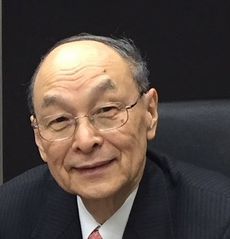 Naoyuki Taniguchi合作论文数Department of Glyco-Oncology and Medical Biochemistry, Osaka International Cancer Institute;Osaka University1Mikhail E. Gurskii合作论文数1Ikuhiko Nakase合作论文数1Misako Taichi合作论文数1
 Nikita V. Shtyrlin合作论文数Butlerov Chemical Institute, Kazan State University1Ayumi Tsutsui合作论文数1
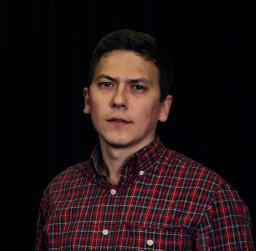 Arthur Zagidullin合作论文数1Shinobu Kitazume合作论文数Frontier Research System, RIKEN Glyco-chain Functions Laboratory, Supra-biomolecular System Group 2-1 Hirosawa Wako, Saitama 351-0198 Japan1




