BackgroundAn increasing number of studies suggest that environmental pollution may increase the risk of vitamin D deficiency (VDD). However, less is known about arsenic (As) exposure and VDD, particularly in Chinese pregnant women.ObjectivesThis study examines the correlations of different urinary As species with serum 25 (OH) D and VDD prevalence.MethodsWe measured urinary arsenite (As3+), arsenate (As5+), monomethylarsonic acid (MMA), and dimethylarsinic acid (DMA) levels and serum 25(OH)D2, 25(OH)D3, 25(OH) D levels in 391 pregnant women in Tianjin, China. The diagnosis of VDD was based on 25(OH) D serum levels. Linear relationship, Logistic regression, and Bayesian kernel machine regression (BKMR) were used to examine the associations between urinary As species and VDD.ResultsOf the 391 pregnant women, 60 received a diagnosis of VDD. Baseline information showed significant differences in As3+, DMA, and tAs distribution between pregnant women with and without VDD. Logistic regression showed that As3+ was significantly and positively correlated with VDD (OR: 4.65, 95% CI: 1.79, 13.32). Meanwhile, there was a marginally significant positive correlation between tAs and VDD (OR: 4.27, 95% CI: 1.01, 19.59). BKMR revealed positive correlations between As3+, MMA and VDD. However, negative correlations were found between As5+, DMA and VDD.ConclusionAccording to our study, there were positive correlations between iAs, especially As3+, MMA and VDD, but negative correlations between other As species and VDD. Further studies are needed to determine the mechanisms that exist between different As species and VDD.
Background: Gestational diabetes mellitus (GDM) is one of the most prevalent pregnancy problems, and there is still debate over the relationship between vitamin D and GDM. Objectives: Our objective is to investigate the correlation between vitamin D and GDM by employing Mendelian randomization (MR) with summary data obtained from genome-wide association studies (GWAS). Methods: Data on exposures and outcomes, namely vitamin D, vitamin D insufficiency, and GDM, were acquired from the IEU OpenGWAS Project. Bidirectional MR analysis was performed utilizing the inverse variance weighted (IVW) method as the principal analytical approach. The complementary approaches employed in this study encompassed weighted median, simple mode, weighted mode, and MR-Egger regression. A series of sensitivity analysis were conducted in order to assess the reliability of the obtained results. Results: The data were acquired from the IEU OpenGWAS Project. Following the application of the three assumptions of MR, 13 single nucleotide polymorphisms (SNPs) were included in the MR analysis for vitamin D levels and vitamin D deficiency on GDM, and 10 and 26 SNPs were included for GDM on vitamin D levels and deficiency, respectively. The findings from the IVW analysis revealed a significant positive correlation between vitamin D levels and GDM (OR = 1.057, 95% CI: 1.011–1.104, p = 0.015). Conversely, a negative correlation was seen between vitamin D deficiency and GDM (OR = 0.979, 95% CI: 0.959–0.999, p = 0.039). The results of the reverse MR study revealed no evidence of reverse causation between GDM and vitamin D. The findings from multiple MR approaches were in line with the direction of IVW analysis. Sensitivity analysis revealed no evidence of heterogeneity, pleiotropy, or outliers, suggesting the robustness of the results. Conclusions: There exists a causal association between vitamin D and GDM, whereby vitamin D levels serve as a risk factor for GDM.
给人以星火者,必心怀火炬.薪火相传的接力棒传递的不仅仅是一门技艺,更是一种情怀,一种感动,一种"拼却老红一万点,换将新绿百千重"的精神.只要能培一朵花,就不妨做会朽的草.每一名天医学子都铭记着"德高医粹,求真至善"的校训,每一名护院学子都承接着陈路得老前辈的梦想精神、奋斗精神、工匠精神和献身精神.
Objective:Construct the performance evaluation index system of standardized training programs for resident doctors,and provide a reference for the improvement of standardized training standards for residents in Tianjin.Methods:Two rounds of expert correspondence using the Delphi method were conducted to determine an indicator system containing four primary indicators(budget indicators,output indicators,benefit indicators,satisfaction indicators),eight secondary indicators and 31 tertiary indicators,and the weights were calculated using hierarchical analysis.Results:Both rounds of questionnaires achieved a valid return rate of 100.0%,and the authority coefficient of experts was 0.81,which was higher than 0.7.The experts answered the questionnaires positively,and the research results were more credible.The experts reached a consensus after two rounds of questionnaire consultation and finally formed a performance evaluation index system for the residency standardized training program that included 31 three-level indicators in four dimensions.Conclusion:The evaluation index system has certain practical guiding significance for the adjustment and improvement of standardized training for resident doctors,but it is also necessary to dynamically adjust the evaluation index system according to the specific situation to effectively reflect the effect of standardized training for resident doctors.
脑机接口(BCI)是脑部与外部设备互联的渠道,其经过发展已经成为了一个较为成熟的技术体系。现阶段BCI已经发展成为了3大模式:侵入式、半侵入式和非侵入式。而根据现阶段不同的测量脑功能技术,形成了基于不同神经影像学技术的各有优缺点的BCI,如:基于脑电图、皮层脑电图、功能性核磁共振或功能性近红外光谱等的BCI,而其中基于脑电图的BCI根据电位类型又可以细分为:基于事件相关电位-P300、运动想象、稳态视觉诱发电位、慢皮层电位的BCI。通过对现有不同BCI范式进行分析介绍,此后又分别探讨了BCI在信号融合、新型信号、采集方式和采集设备的研发与在脑功能改变和新兴技术结合应用等领域未来的发展方向。
目的:构建天津市急救中心绩效评价指标体系,为提高急救中心工作效率,促进资源合理配置提供参考.方法:运用德尔菲法进行两轮专家函询并获得专家意见,建立根据专家评分确立的判断矩阵,使用层次分析法计算各个指标权重.结果:两轮专家函询问卷有效回收率均大于 80%,参与函询问卷的专家权威系数均大于0.7,表明该问卷具有分析价值.同时,两轮函询问卷反映出专家的意见结果具有统一性.以两轮函询问卷结果为基本依据,最终建立了包括预算、产出、效益、满意度 4 项一级指标,8 项二级指标,38 项三级指标在内的急救中心绩效评价指标体系.结论:经实证研究发现,建立高效完整的指标体系,能够协助急救中心较好的发挥人才效力,但也要实时调整各指标内容、权重,切实反映急救中心员工绩效情况,提高工作效率.
目的 探讨老龄化背景下,寿险与长期护理保险责任转换的实施策略.方法 从 5 家媒体选取报道过与长期护理保险内容存在关联的文献,通过ROST CM6.0 软件对入选的文献进行词频及语义网络分析,并进行关键词筛选.同时研究团队聘请保险从业人员选择 5 个最重要的关键词,并对 3 款已上市的类责任转换保险进行打分与评价.结果 政府政策解析得到的长期护理保险未来发展方向更注重于"保障""服务"等,而保险从业人员则以"老人""寿险""转换""保障""服务"为主要关注点.产品模型选择分析显示,A5 产品更适合成为前期进行试点的模型并推广.结论 政府与保险公司对长期护理保险未来发展的方向与目标基本一致,符合政商一致性.其他长期护理保险产品可借鉴A5 产品作为前期试点的责任转换模型并进行自身改良,为长期护理保险进一步发展奠定基础.
 Xu Yaxuan (徐雅萱)合作论文数7
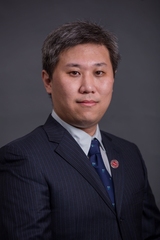 Zhuo Du (杜汋)合作论文数School of Public Health, Tianjin Medical University6HuaJun Sun (孙华君)合作论文数2
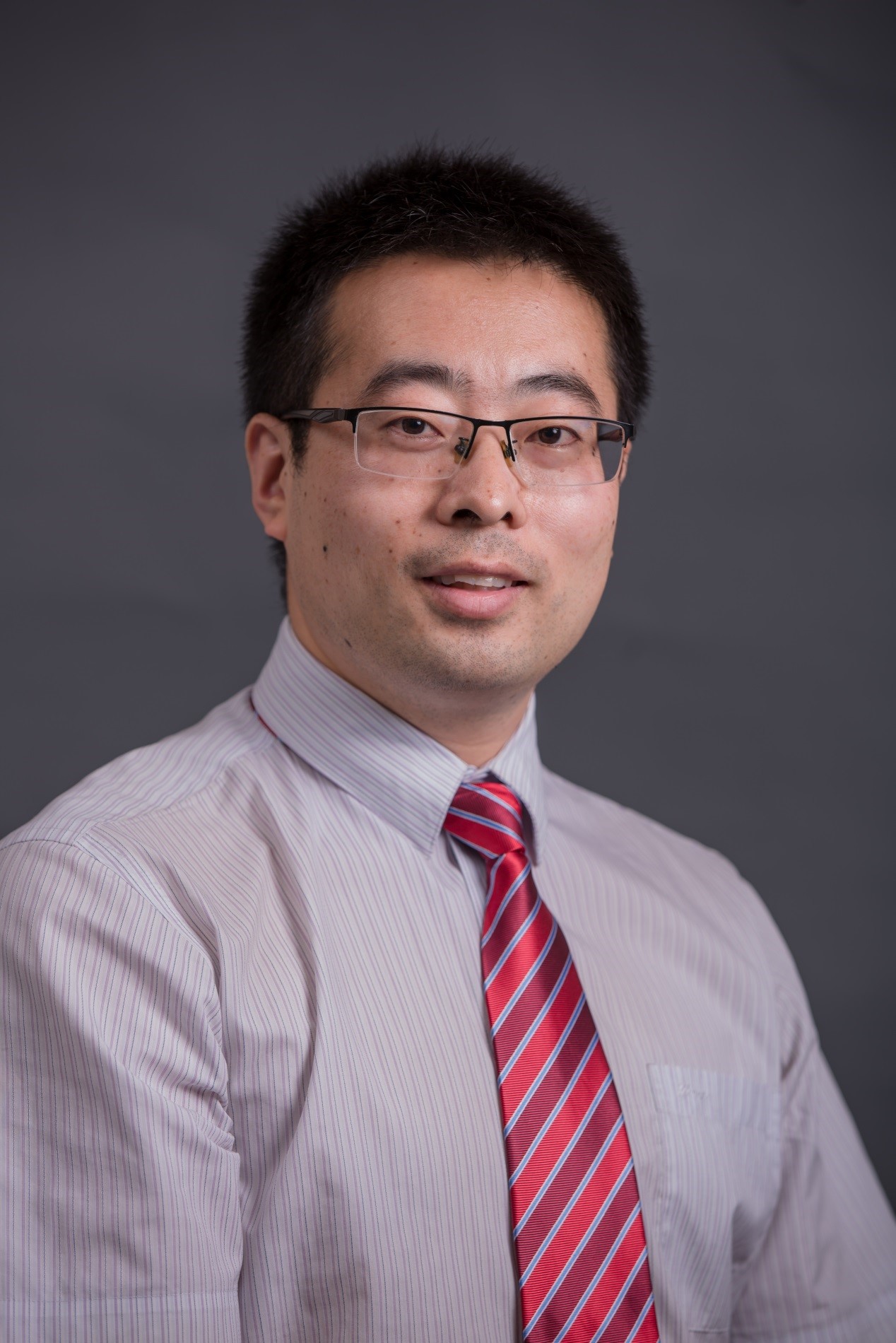 Qiang Zhang (张强)合作论文数School of Public Health, Tianjin Medical University2
 Xumei Zhang (张绪梅)合作论文数School of Public Health, Tianjin Medical University2Fangshi Li (李方石)合作论文数1Jingran Zhang合作论文数1Zhang Jiawen (张佳雯)合作论文数1ZHANG Ya-xin (张雅欣)合作论文数1ShuYing Li (李淑英)合作论文数1
 Xi Chen合作论文数Department of Economics, Yale University1
 Xueli Yang (杨学礼)合作论文数School of Public Health, Tianjin Medical University1




