慢性中性粒细胞白血病(chronic neutrophilic leukemia,CNL)是一种骨髓增殖性疾病,其特点为外周血中性粒细胞持续增多,骨髓粒细胞显著增生,脾肿大,pH染色体或BCR-ABL1融合基因阴性.1920年Tuohy[1]首次报道CNL,目前国际报道仅有200多病例.
Background Li-Fraumeni syndrome (LFS) is characterized as an autosomal dominant cancer predisposition disorder caused by germline TP53 gene mutations. Both primary and therapy-related hematopoietic malignancies with LFS are associated with dismal outcomes with standard therapies and even allogenic stem cell transplantation (SCT).Case presentation We reported a relapsed/refractory acute B-cell lymphoblastic lymphoma (B-LBL) patient in the context of LFS. He was identified to harbor a TP53 c.818G>A (p.R273H) germline mutation, and his family history was significant for rectal carcinoma in his father, an unknown cancer in his sister and acute lymphoblastic leukemia in his brother and one of his sons. The patient received murine monoclonal anti-CD19 and anti-CD22 chimeric antigen receptor (CAR) T-cell “cocktail” therapy and achieved complete remission with negative minimal residual disease (MRD), as assessed by morphology and multiparameter flow cytometry. Fifteen months after murine monoclonal CAR T-cell “cocktail” therapy, the patient’s B-LBL recurred. Fortunately, a round of fully human monoclonal anti-CD22 CAR T-cell therapy was still effective in this patient, and he achieved CR again and continued to be followed. Each time after infusion, the CAR T-cells underwent extremely rapid exponential expansion, which may be due to the disruption of TP53, a gene that can functionally control cell cycle arrest. Grade 4 and grade 1 cytokine release syndrome occurred after the first and second rounds of CAR T-cell therapy, respectively.Conclusions This case provides the first report of the use of CAR T-cell therapy in a hematologic malignancy patient with LFS. As traditional chemotherapy and allogenic SCT are not effective therapy strategies for patients with hematologic malignancies and LFS, CAR T-cell therapy may be an alternate choice.ChiCTR-OPN-16008526 and ChiCTR1900023922.
OBJECTIVE:To investigate the value of C-reactive protein (CRP) on transplantation day in predicting early post-transplant infections and outcomes of allogeneic hematopoietic stem cell transplantation (allo-HSCT).METHODS:We retrospectively analyzed the clinical data of 78 recipients undergoing allo-HSCT. The clinical reference value of CRP on transplantation day was determined, and its sensitivity and specificity for diagnosing bacteremia was analyzed using receiver-operating characteristic curve (ROC). The incidence of transplant-related complications, overall survival, and relapse rate of the patients were analyzed with respect to the CRP level.RESULTS:The clinical reference value of CRP for diagnosing bacteremia was 23.3 mg/L (AUC=0.735 [95% CI: 0.623-0.848], P=0.001), which had a diagnostic sensitivity and specificity of 0.793 and 0.592, respectively. Compared with the patients with low CRP levels, the patients with high CRP levels tended to have delayed neutrophil reconstitution and platelet engraftment by 0.71 days (P=0.237) and 4.09 days (P=0.048), respectively, and had a significantly higher incidence of bacteremia (17.1% vs 53.5%, P=0.001) and CMV viremia (37.1% vs 72.1%, P=0.003) within 100 days following the transplantation; the incidences of EBV viremia, pulmonary invasive fungal infection, or acute graft versus host disease (aGVHD) showed no significant difference between the two groups (41.9% vs 22.9%, P=0.094; 14.0% vs 5.7%, P=0.285; 51.2% vs 45.7, P=0.656, respectively). During the follow-up for a median of 318 (7-773) days in high-CRP group and for 299 (78-747) days in low-CRP group, the high-CRP group showed a significantly lower 2-year overall survival than the low-CRP group (42.5% vs 78.4%, P=0.022), and tended to have a higher 2-year cumulative relapse rate (52.3% vs 19.8%, P=0.235). Logistic multivariate analysis identified a high CRP level on transplantation day as the independent risk factor for post-transplant bacteremia within 100 days (OR=5.090 [95% CI: 1.115 -23.229], P=0.036).CONCLUSION:A high CRP level on transplantation day can be indicative of a high risk of early post-transplant bacteremia and CMV viremia and also a poor prognosis following allo-HSCT.
 Wang Jin合作论文数2Xiaolu Long合作论文数1Jing Sun合作论文数1Zhang Yu合作论文数1Bin Xu合作论文数1Yaoyao Lou合作论文数1
 Kefeng Shen合作论文数Tongji Hosp, Huazhong Univ Sci & Technol1
 Na Wang合作论文数1Gaoxiang Wang合作论文数Huazhong Univ Sci & Technol, Tongji Hosp, Tongji Med Coll, Dept Hematol, Wuhan 430030, Hubei, Peoples R China1Liting Chen合作论文数1Jia Gu合作论文数1Min Dai合作论文数1HongSheng Zhou (周红升)合作论文数1
 Di Wang (王迪)合作论文数School of Medicine, Zhejiang University1
 Chunrui Li (李春蕊)合作论文数Tongji Hospital Affiliated to Tongji Medical College, Huazhong University of Science & Technology1Jin Wang (王瑾)合作论文数1
 Yi Xiao (肖毅)合作论文数Tongji Hospital, Tongji Medical College, Huazhong University of Science & Technology1Qinlu Li (李钦璐)合作论文数1
 Li Zhu (朱丽)合作论文数Shanghai General Hospital1
 Cao Yang (杨操)合作论文数Union Hospital, Tongji Medical College, Huazhong University of Science and Technology1Min Xiao (肖敏)合作论文数1
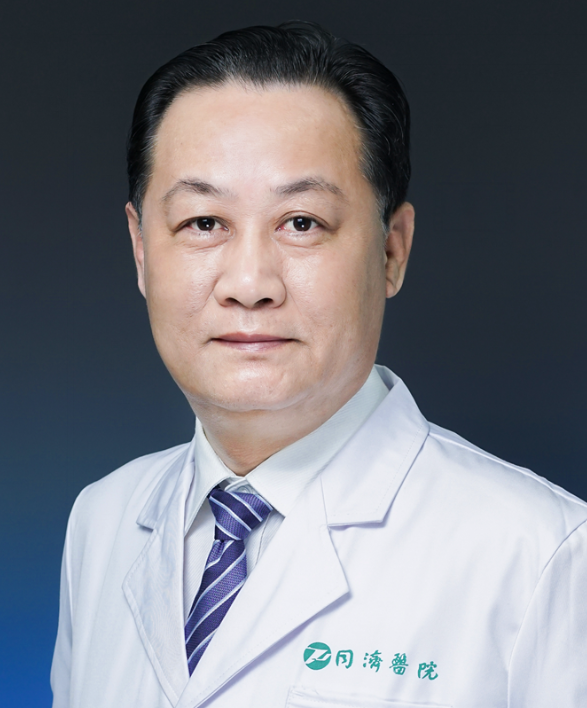 Jianfeng Zhou (周剑峰)合作论文数Tongji Hospital, Tongji Medical College, Huazhong University of Science and Technology1
 Zhenya Hong (洪振亚)合作论文数Tongji Hospital, Tongji Medical College of Huazhong University of Science and Technology1Qian-Li Jiang合作论文数1Qifa Liu合作论文数1




