目的综合颞骨连续切片、计算机三维重建技术和体视学研制颞骨系列立体解剖图谱.方法制作50套带参照点的颞骨连续切片,应用计算机三维重建技术恢复颞骨内系列结构的三维形态,配合体视镜制作系列颞骨结构立体图谱.结果共进行针对骨迷路、膜迷路、听骨链、耳内肌、面神经、圆窗龛和膜、后壶腹神经、内淋巴囊、前庭水管、耳蜗导水管、前庭蜗神经的三维重建48例次,选取最佳的有代表性的图片制成系列颞骨立体解剖图谱,系统显示了上述结构的细微形态和结构间的空间关系,应用于颞骨手术指导和颞骨解剖教学.结论颞骨立体解剖图谱是一种强有力的新型解剖工具,在耳科以及其他学科均有很好的推广应用前景.
Objective To establish a method for resuming the three dimensional shape of micro-structures in the inner ear and for designing the surgical approach of the posterior ampullary nerve (PAN) assisted by computer.Methods Four normal temporal bones were harvested within 24 hours after death and processed according to the traditional celloidin sectioning protocol. With the reference points to determine accurate orientation, the structural contours of each serial section were entered into an imaging computer via a digitizer. The data files were generated by a reconstruction software to display 3-D images of the structures on the computer monitor. The measuring software written by authors was adapted to obtain 3-D parameters and carry out surgical approach calculation and simulation of the PAN transection on the imaging computer.Results The lifelike 3-D images of the PAN and its neighboring structures and many important 3-D anatomic parameters were obtained. The PAN can he dissected completely and perfectly without damaging itself and its neighboring structures. For the exposure of the round window membrane (RWM), the postero-superior bony edge of the round window niche (RWN) was partially removed with a diamond bur. The limit in removing bony tissue of the RWN which suggested by the measuring results should be 1 mm superiorly and 2 mm posteriorly, otherwise the RWM might be damaged. A mathematical method which has the mid-point of inferior margin of the round window membrane as the reference point to find the PAN was built up. The 3-D surgical simulation of the PAN transection can be played step by step on the monitor.Conclusions The technique of computer-aided 3-D reconstruction which was introduced into the process of the micro-surgery's study and design, provides abundant anatomic knowledge and useful information for the PAN transection. In the near future, the technique of the computer-assisted surgery will be developed consummately and most operations will be performed more effectively and safely.
 YaoYun Fang (方耀云)合作论文数2
 Pu Dai (戴朴)合作论文数Chinese PLA General Hospital2
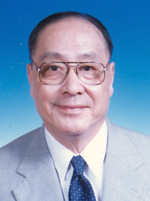 Sichang Jiang (姜泗长)合作论文数Chinese PLA General Hospital2Fang Yy合作论文数1P Dai (戴朴)合作论文数1liya shi (石丽亚)合作论文数1
 Dongyi Han (韩东一)合作论文数Chinese PLA General Hospital1
 Yang Liu (刘阳)合作论文数Chinese PLA General Hospital1
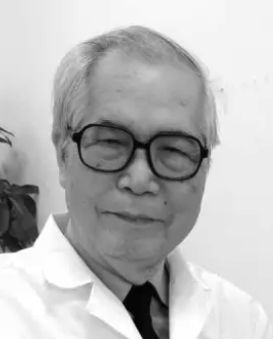 Weiyan Yang (杨伟炎)合作论文数Chinese PLA General Hospital1S Jiang合作论文数1




