Aiming to accurately identify apple targets and achieve segmentation and the extraction of branch and trunk areas of apple trees, providing visual guidance for a picking robot to actively adjust its posture to avoid branch trunks for obstacle avoidance fruit picking, the spindle-shaped fruit trees, which are widely planted in standard modern apple orchards, were focused on, and an algorithm for apple tree fruit detection and branch segmentation for picking robots was proposed based on an improved YOLOv8s model design. Firstly, image data of spindle-shaped fruit trees in modern apple orchards were collected, and annotations of object detection and pixel-level segmentation were conducted on the data. Training set data were then augmented to improve the generalization performance of the apple detection and branch segmentation algorithm. Secondly, the original YOLOv8s network architecture’s design was improved by embedding the SE module visual attention mechanism after the C2f module of the YOLOv8s Backbone network architecture. Finally, the dynamic snake convolution module was embedded into the Neck structure of the YOLOv8s network architecture to better extract feature information of different apple targets and tree branches. The experimental results showed that the proposed improved algorithm can effectively recognize apple targets in images and segment tree branches and trunks. For apple recognition, the precision was 99.6%, the recall was 96.8%, and the mAP value was 98.3%. The mAP value for branch and trunk segmentation was 81.6%. The proposed improved YOLOv8s algorithm design was compared with the original YOLOv8s, YOLOv8n, and YOLOv5s algorithms for the recognition of apple targets and segmentation of tree branches and trunks on test set images. The experimental results showed that compared with the other three algorithms, the proposed algorithm increased the mAP for apple recognition by 1.5%, 2.3%, and 6%, respectively. The mAP for tree branch and trunk segmentation was increased by 3.7%, 15.4%, and 24.4%, respectively. The proposed detection and segmentation algorithm for apple tree fruits, branches, and trunks is of great significance for ensuring the success rate of robot harvesting, which can provide technical support for the development of an intelligent apple harvesting robot.
为了解决预训练集和跟踪视频的域不一致性导致跟踪模型判别能力不足的问题,提出了一种基于原型注意力的多域网络目标跟踪方法.以实时多域网络目标跟踪方法为研究对象,在训练过程中引入原型网络提取注意力特征.基于支撑集正负样本得到目标与背景的域特定原型注意力,将其与待跟踪视频的特征图进行逐通道自适应融合,使得模型在大型数据集上得到判别力更强的目标表示,从而增强跟踪算法的性能.在OTB100和TrackingNet两个基准数据集上的实验结果表明,提出方法的精度和成功率优于现有的代表性跟踪方法.
Visual object tracking is a significant technology for camera-based sensor networks applications. Multilayer convolutional features comprehensively used in correlation filter (CF)-based tracking algorithms have achieved excellent performance. However, there are tracking failures in some challenging situations because ordinary features are not able to well represent the object appearance variations and the correlation filters are updated irrationally. In this paper, we propose a local–global multiple correlation filters (LGCF) tracking algorithm for edge computing systems capturing moving targets, such as vehicles and pedestrians. First, we construct a global correlation filter model with deep convolutional features, and choose horizontal or vertical division according to the aspect ratio to build two local filters with hand-crafted features. Then, we propose a local–global collaborative strategy to exchange information between local and global correlation filters. This strategy can avoid the wrong learning of the object appearance model. Finally, we propose a time-space peak to sidelobe ratio (TSPSR) to evaluate the stability of the current CF. When the estimated results of the current CF are not reliable, the Kalman filter redetection (KFR) model would be enabled to recapture the object. The experimental results show that our presented algorithm achieves better performances on OTB-2013 and OTB-2015 compared with the other latest 12 tracking algorithms. Moreover, our algorithm handles various challenges in object tracking well.
In recent years, the ensembled trackers composed of multi-level features from the pre-trained Convolutional Neural Network (CNN) have achieved top performance in visual tracking. However, due to the background clutters and the distractors in the search area, the tracker tends to drift towards an area that is similar to the target. In order to suppress interference of background and similar objects, we propose an effective Distractor-Aware Map (DAM), which can reduce the weights of the interference area in the multi-level features. Thus, the tracker can focus on the target to greatly eliminate the risk of drift. In addition, we build a Hierarchical Correlation Filters Model (HCFM) based on the multi-level convolutional features to track targets in parallel. To further improve the robustness of tracking, a novel Multi-Model Adaptive Selection (MAS) mechanism is presented. This mechanism can evaluate the confidence of the response map in HCFM to adaptively select the most reliable model. Finally, in order to appropriately update the model to adapt to appearance changes of the target, we propose an adaptive updating strategy for the updates of the DAM and HCFM. We perform comprehensive experiments on OTB-2013, OTB-2015 and Temple Color datasets and the experimental results show the superiority of our algorithm over other state-of-the-art approaches.
Background The Gravitational wave high-energy Electromagnetic Counterpart All-sky Monitor (GECAM) satellite developed a SiPM-based gamma-ray detector to monitor the gravitational wave-related GRBs and guide subsequent observations in other wavelengths of EM. Purpose As all the available SiPM devices belong to commercial grade, quality assurance tests need to be performed in accordance with the aerospace specifications. Methods In the SiPM application of GECAM, quality assurance experiments were conducted. The mechanism of the failure of SiPM devices was analyzed during the development process. Result Based on the quality assurance test results, the final pass rate of SiPM array was 95%. Based on the failure analysis, it was found that a piece of SiPM had a leakage channel after longtime operation due to device defects. Conclusion According to the accumulated experience, in the reliability test of SiPM, it is necessary to pay special attention to test the impedance of each pin of SiPM to ground and confirm that the power switch state of SiPM is controllable.
 Daoyou Guo (郭道友)合作论文数Zhejiang Sci-Tech University26
 Shuo Xiao合作论文数Chinese Acad Sci, Inst High Energy Phys, Key Lab Particle Astrophys, Beijing, Peoples R China26
 Zhenghua An (安正华)合作论文数Institute of High Energy Physics, Chinese Academy of Sciences;University of Chinese Academy of Sciences26
 Wenxi Peng (彭文溪)合作论文数26
 Shaolin Xiong (熊少林)合作论文数Institute of High Energy Physics, Chinese Academy of Sciences;University of Chinese Academy of Sciences26
 Kuanping Gong (龚宽平)合作论文数北京师范大学化学学院26
 Xilei Sun (孙希磊)合作论文数Institute of High Energy Physics, Chinese Academy of Sciences;University of Chinese Academy of Sciences25fan zhang (张凡)合作论文数25
 Fangjun Lu (卢方军)合作论文数Institute of High Energy Physics, Chinese Academy of Sciences;University of Chinese Academy of Sciences25Lei Zhang合作论文数25
 Yupeng Xu (徐玉朋)合作论文数Key Laboratory of Particle Astrophysics, Institute of High Energy Physics, Chinese Academy of Sciences;University of Chinese Academy of Sciences25
 Xiaohua Liang (梁晓华)合作论文数Institute of High Energy Physics, Chinese Academy of Sciences;University of the Chinese Academy of Sciences25Chunlin Cai合作论文数25Q. B. Yi合作论文数24J. Z. Wang合作论文数23R. Qiao合作论文数23W. C. Xue合作论文数23K. Zhang合作论文数23Yue Zhao合作论文数23
 Liming Song (宋黎明)合作论文数Key Laboratory of Particle Astrophysics, Institute of High Energy Physics, Chinese Academy of Sciences;University of Chinese Academy of Sciences23
 Fei Zhang (张飞)合作论文数Technology and Engineering Center for Space Utilization, Chinese Academy of Sciences;University of Chinese Academy of Sciences23
 Shijie Zheng (郑世界)合作论文数Institute of High Energy Physics, Chinese Academy of Sciences23M. Yao合作论文数22D. L. Shi合作论文数22Gecam Team合作论文数22Jinyuan Liao (廖进元)合作论文数Institute of High Energy Physics, Chinese Academy of Sciences;University of Chinese Academy of Sciences22
 Youli Tuo合作论文数Institute of High Energy Physics, Chinese Academy of Sciences22Ge Ou合作论文数Key Laboratory of Particle Astrophysics, Institute of High Energy Physics,Chinese Academy of Sciences,Beijing,China22
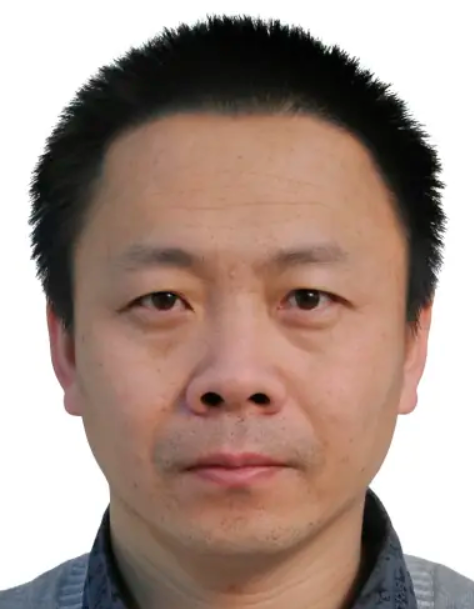 Jianjun He (何建军)合作论文数College of Nuclear Science and Technology, Beijing Normal University;Institute of Modern Physics, Fudan University22
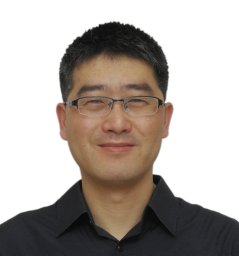 Yuejiang Shi (石跃江)合作论文数ENN Science & Technology Development Co., Ltd.22
 Yong Cun Zhang合作论文数21Y. X. Song合作论文数21
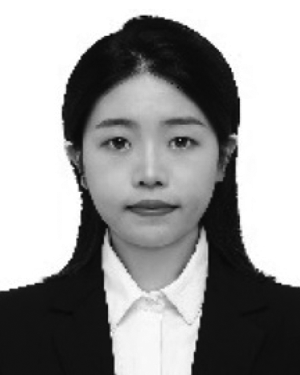 Gao Min合作论文数21
 Huimin Zhang (张惠敏)合作论文数XinJiang Technical Institute of Physics and Chemistry, Chinese Academy of Sciences University of Chinese Academy of Sciences21Chen Wang合作论文数20Xiao-Yun Zhao合作论文数20Qingyu Luo合作论文数20Jin Li合作论文数19Peng Zhang合作论文数19
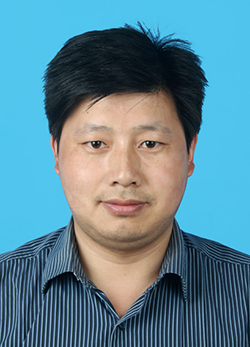 Genfu Chen (陈根富)合作论文数State Key Lab for Superconductivity, Institute of Physics, Chinese Academy of Sciences;University of Chinese Academy of Sciences19Sisi Yang合作论文数18
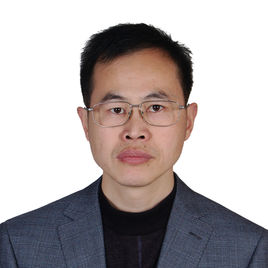 Xubo Ma (马续波)合作论文数School of Nuclear Science and Engineering, North China Electric Power University18Ya Fang Huang合作论文数17
 Cheng Chen合作论文数Oklahoma State Univ, Sch Civil & Environm Engn, Stillwater, OK 74078 USA16Y. G. Li合作论文数15BX Zhang合作论文数14
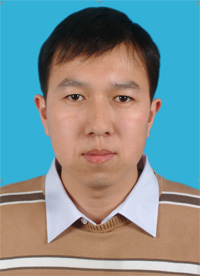 Xinqiao Li (李新乔)合作论文数中国科学院高能物理研究所13
 Bing Li (李小波)合作论文数12
 Qing Li (李青)合作论文数Technical Institute of Physics and Chemistry, Chinese Academy of Sciences11




