文章以浙江大学信息与电子工程学院"新工科"建设为契机,通过调研国内外10所高校相关课程,对"通信原理"课程的教学内涵进行探索与实践.在"通信原理"课程基础内容指引下,讨论了不同高校的课程定位和课程体系设计,以及课程理论内容设置和考核方式比较,给出了电子信息类"通信原理"课程的教学方案与预期成果.课程教学方案以培养学生掌握数字通信系统的基本原理与关键技术,以及分析和设计通信系统的能力为目标,坚持以学生为中心、科研反哺教学的理念,通过数字通信系统相关理论与实践教学,融合前沿技术内容与思政元素,全方位培养学生的阅读能力、工程意识和实践创新能力,帮助学生深入理解数字通信系统.
介绍了浙江大学信息与电子工程学院针对电子信息技术专业人才培养的特点,以金课建设为目标,依据国家级一流线上线下混合课程的评审指标,设计符合专业学位研究生实践类课程要求的教学模式及探索实践.重点讨论"校企共建实训平台结合PBL教学法"的实践类课程群教学模式,在工程训练平台上,培养学生解决复杂工程问题时的自主学习能力、问题分析能力、应用创新能力.再通过课程思政实现授业解惑和传道育人的双重育人目标.该教学模式也为今后专业学位研究生案例教学的深入探索实践提供了经验和借鉴.
With the continuous development of 5G, the era of the internet of everything is coming.Problems such as massive device connections, massive application requests, ultra-high network load and complex dynamic network environment pose great challenges to the optimization of 5G systems in the context of the internet of everything.Facing these challenges, artificial intelligence (AI) shows its unique advantages.Firstly, the advantages of deep learning driven AI algorithms in 5G system compared with conventional algorithms were briefly introduced.Then, the application of AI algorithms in multi-access edge computing (MEC) and mmWave massive multiple-input multiple-output (MIMO) system were described in detail, with advantages and disadvantages of each method being compared and analyzed.Finally, according to the existing research, the shortcomings of AI algorithms in 5G application scenarios were summarized and the future research directions were forecasted.
 QianHua Zhang (章谦骅)合作论文数1
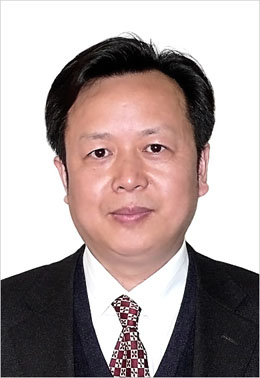 Jianyu Zhang (章坚武)合作论文数Hangzhou Dianzi University1
 Dongxiao Yang (杨冬晓)合作论文数College of Information Science & Electronic Engineering, Zhejiang University1
 Xinyu Jin (金心宇)合作论文数College of Information Science & Electronic Engineering, Zhejiang University;Wanma Technology Co.,Ltd.1
 Lingfen Sun合作论文数School of Computing and Mathematics, University of Plymouth1




