A model of a passive 3-mm range radioimaging system with tilt scanning was designed and built to detect potentially dangerous items hidden under clothing. The basic elements and characteristics of the system are described. Obtained radio images are shown.
A passive millimeter-wave imaging system has been developed for detecting potentially dangerous metal, plastic, and ceramic subjects hidden under clothes. This system makes it possible to obtain visualized radio-thermal images of subjects.
We consider the principles and methods of radio-thermal imaging in the millimeter wavelength band. An implemented system operating at a wavelength of 3 mm is briefly described, and its parameters are given. A method used to neutralize dynamic aberrations, which is necessary to create high-speed radiovision systems, is described. Super-resolution algorithms, which are the methods of improving the angular (space) resolution by using mathematical processing of the experimental data, are presented. The described results confirm the efficiency of the methods considered.
In this paper we present the overview of problems and difficulties, which are common in passive millimeter-wave imaging or radiovision. The central part of the article is dedicated to mathematical resolution enhancement methods - superresolution. We consider several algorithms and discuss benefits and drawbacks they have. Performance of the algorithms is demonstrated using a set of test images, both simulated and real-life. Such advanced questions as subpixeling technique and artifact suppression using the wavelet transform are also reflected in the paper. The illustrations are included in order to demonstrate significant improvement of the resolution along with artifact suppression achieved on real-life observed images. Influence of side lobes of PSF on image quality is considered.
In this paper we present the overview of problems and difficulties, which are common in passive radiovision. The central part of the article is dedicated to mathematical resolution enhancement methods - superresolution. We consider several algorithms and discuss benefits and drawbacks they have. Performance of the algorithms is demonstraited using a set of test images, both simulated and real-life. Such advanced questions as subpixeling technique and artifact suppression using the wavelet transform are also reflected in the paper. The illustrations are included in order to demonstrate significant improvement of the resolution along with artifact suppression achieved on real-life observed images.
Passive radiovision system is an imaging system which detects radio-thermal radiation coming from the object or scene. Widespread of the technology is delayed due to inherent features of this system - relatively poor angular resolution and slow imaging rate. The imaging rate is limited by the radiometry principle itself as the sensitivity is proportional to the integration time, which is usually around tenths of second. The problem of superresolution of passive radiovision images is considered and extension of the algorithms to the multichannel case is proposed and evaluated. The experimental data and superresolution results are presented.
 ю а пирогов合作论文数19Ya Pirogov合作论文数19
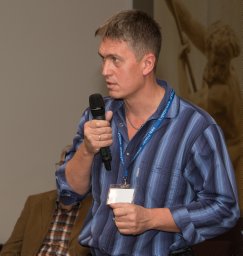 Artur a Tishchenko合作论文数Air Plasma Jet;Acad . Sciences;Air Plasma Jet|Acad . Sciences13EN Terentiev合作论文数9Da Tischenko合作论文数9Gubskiĭ L V合作论文数9е н терентьев合作论文数7Vs Ivanov合作论文数5н в анисимов合作论文数3а и дубина合作论文数3magdy f attia合作论文数3
 Galina Kedrova合作论文数Philol Fac, Moscow State Lomonosov Univ3
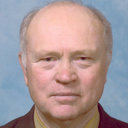 Yu. A. Pirogov合作论文数3р а гущин合作论文数2а с смычков合作论文数2Ne Terentiev合作论文数2в в маркелов合作论文数2д п солдатов合作论文数2igor v shlemin合作论文数2л м захаров合作论文数2I. E. Mogilevskii合作论文数2А. Н. Боголюбов合作论文数2V. P. Petukhov合作论文数2N. E. Shapkina合作论文数2Oksana A. Tarasova合作论文数Atmospheric Environment Research Division, WMO2a e ekzhanov合作论文数1VS KOLESNIKOV合作论文数1alexey l timanovskiy合作论文数1Ee Fominova合作论文数1а г павлов合作论文数1
 A. V. Lebedev合作论文数Institute for Theoretical Physics1Isaiah M. Blankson合作论文数1V. P. Modenov合作论文数1Yuri A. Pirogov合作论文数1




