In order to improve the performance of the brain-computer interface system of motion imagination, based on the brain-computer interface competition data, this paper compares the classification effect of CSP features obtained in different spatial filters(linear kernel support vector machine, LSVM and Gaussian kernel support vector machine, GSVM), linear discrimination analysis(LDA), and gradient boosting decision tree(GBDT).The comparison results show that GBDT achieves better classification results than other classifiers. The Least Absolute Shrinkage and Selection Operator(LASSO) is further combined with the above four classifiers, and it is found that the average classification accuracy obtained by combining it with GBDT is the highest, which is 5.57%, 4.57% and 3.16% higher than LSVM, GSVM and LDA respectively.
Background Due to the redundant information contained in multichannel electroencephalogram (EEG) signals, the classification accuracy of brain-computer interface (BCI) systems may deteriorate to a large extent. Channel selection methods can help to remove task-independent electroencephalogram (EEG) signals and hence improve the performance of BCI systems. However, in different frequency bands, brain areas associated with motor imagery are not exactly the same, which will result in the inability of traditional channel selection methods to extract effective EEG features. New Method To address the above problem, this paper proposes a novel method based on common spatial pattern- (CSP-) rank channel selection for multifrequency band EEG (CSP-R-MF). It combines the multiband signal decomposition filtering and the CSP-rank channel selection methods to select significant channels, and then linear discriminant analysis (LDA) was used to calculate the classification accuracy. Results The results showed that our proposed CSP-R-MF method could significantly improve the average classification accuracy compared with the CSP-rank channel selection method.
在BCI (Brain computer interface)的研究中,导联选择能够用于确定与目标任务关联较大的脑功能区域.以往的导联选择方法都是基于一个数据集进行统一的导联选择,不同任务下的对应脑区是不一样的,无法抑制同一数据集中不同任务特征的干扰.基于运动想象脑电数据展开相关研究,利用SVM_RFE (Support vector machine recursive feature elimination)导联选择方法以召回率作为依据为两类运动任务分别选择最适合的导联.研究结果表明,基于SVM RFE多任务导联选择方法在平均分类准确率上优于传统的SVM RFE导联选择方法.
The start of the cue is often used to initiate the feature window used to control motor imagery (MI)-based brain-computer interface (BCI) systems. However, the time latency during an MI period varies between trials for each participant. Fixing the starting time point of MI features can lead to decreased system performance in MI-based BCI systems. To address this issue, we propose a novel correlation-based time window selection (CTWS) algorithm for MI-based BCIs. Specifically, the optimized reference signals for each class were selected based on correlation analysis and performance evaluation. Furthermore, the starting points of time windows for both training and testing samples were adjusted using correlation analysis. Finally, the feature extraction and classification algorithms were used to calculate the classification accuracy. With two datasets, the results demonstrate that the CTWS algorithm significantly improved the system performance when compared to directly using feature extraction approaches. Importantly, the average improvement in accuracy of the CTWS algorithm on the datasets of healthy participants and stroke patients was 16.72% and 5.24%, respectively when compared to traditional common spatial pattern (CSP) algorithm. In addition, the average accuracy increased 7.36% and 9.29%, respectively when the CTWS was used in conjunction with Sub-Alpha-Beta Log-Det Divergences (Sub-ABLD) algorithm. These findings suggest that the proposed CTWS algorithm holds promise as a general feature extraction approach for MI-based BCIs.
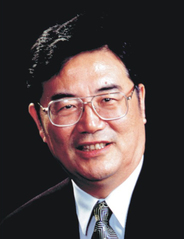 Xingyu Wang (王行愚)合作论文数East China University of Science and Technology3
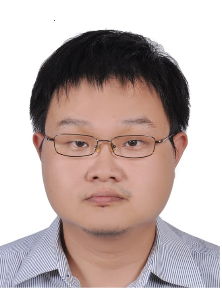 Jing Jin (金晶)合作论文数Department of Automation, School of information Science and Engineering, East China University of Science and Technology;Key Laboratory of Smart Manufacturing in Energy Chemical Process, Ministry of Education, School of information Science and Engineering, East China University of Science and Technology3
 Yugang Niu (牛玉刚)合作论文数Department of Automation, School of Information Science and Engineering, East China University of Science and Technology2
 Ian Daly合作论文数University of Reading2
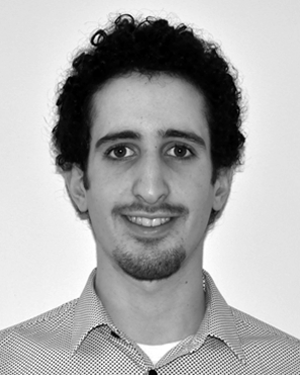 Rami Saab合作论文数1
 Jiale Zhou (周家乐)合作论文数School of Information Science and Engineering, East China University of Science and Technology1
 Bei Wang (王蓓)合作论文数School of Information Science and Engineering, East China University of Science and Technology;Key Laboratory of Smart Manufacturing in Energy Chemical Process, Ministry of Education, East China University of Science and Technology1
 Dewen Hu (胡德文)合作论文数National University of Defense Technology1
 Erwei Yin (印二威)合作论文数Tianjin Artificial Intelligence Innovation Center;National Academy of Defense Technology Innovation, Academy of Military Science of the Chinese People's Liberation Army1




