The demand for long and accurate gravitational waveforms is increasing as we prepare for the next generation of detectors and seek to improve current waveform models. However, numerical relativity waveforms, while highly accurate, are often too short for these applications due to their high computational cost. Hybrid waveforms, which stitch together gravitational wave signals from different modeling approaches, provide a way to generate complete inspiral-merger-ringdown signals. While hybridization is well-established for aligned-spin systems, precession introduces additional complexities due to gauge ambiguities, frame dependence, or spin dynamics. Here we study the challenges associated with alignment of precessing waveforms and present a systematic approach for constructing hybrid waveforms of precessing quasi-circular systems. Our approach relies on minimal assumptions about the merger waveforms and employs the quadrupole-aligned frame to mitigate mode-mixing. Our method is designed to be robust and broadly applicable, imposing minimal constraints on the input waveforms. This framework expands the applicability of hybridization techniques, facilitating flexible hybrid construction for parameter estimation, model calibration, and gravitational-wave data analysis.
The GWTC-4.0 catalog of transient gravitational wave signals describes observations made in the first part of the fourth observing run of the LIGO-Virgo-KAGRA (LVK) gravitational wave detector network. Here we extend the LVK's GWTC-4.0 analysis to elliptic orbits, and an improved description of spin precession in the frequency domain. For this study we use state-of-the-art waveforms from the IMRPhenom family (specifically XPNR, TPHM, and TEHM), and we consider the 84 confidently detected events that are consistent with binary-black-hole mergers. We present an extended catalog of updated posterior samples, quantify how incorporation of these waveform effects alters inferred source properties relative to previous analyses, and discuss waveform systematics.
We present the first directed searches for long-transient and continuous gravitational waves from ultralight vector boson clouds around known black holes (BHs). We use LIGO data from the first part of the fourth LIGO-Virgo-KAGRA observing run. The searches target two distinct types of BHs and use two new semicoherent methods: hidden Markov model (HMM) tracking for the remnant BHs of the mergers GW230814_230901 and GW231123_135430 (referred to as GW230814 and GW231123 in this study), and a dedicated method using the Band Sampled Data (BSD) framework for the galactic BH in the Cygnus X-1 binary system. Without finding evidence of a signal from vector bosons in the data, we estimate the mass range that can be constrained. For the HMM searches targeting the remnants from GW231123 and GW230814, we disfavor vector boson masses in the ranges [0.94, 1.08] and [2.75, 3.28] × 10^-13 eV, respectively, at 30
This document sets out the conventions used for data simulations, waveforms, and analysis pipelines within the Distributed Data Processing Centre (DDPC) of the Laser Interferometer Space Antenna (LISA). It can also be considered a best practice guide for all publications related to the LISA mission. Topics covered include time-to-frequency transformations, gravitational-wave source parametrization, the instrumental response to gravitational waves, time-delay interferometry, and reference frame definitions.
We present a search for gravitational waves from inspiraling, planetary-mass ultra-compact binaries using data from the first part of the fourth observing run of LIGO, Virgo and KAGRA. Finding no evidence of such systems, we determine the maximum distance reach for such objects and their merger rate densities, independently of how they could have formed. Then, we identify classes of primordial black-hole mass distributions for which these rate limits can be translated into relevant constraints on the mass distribution of primordial black holes, assuming that they compose all of dark matter, in the mass range [10^-6,10^-3]M_⊙. Our constraints are consistent with existing microlensing results in the planetary-mass range, and provide a complementary probe to sub-solar mass objects.
We present an all-sky search for long-duration gravitational waves (GWs) from the first part of the LIGO-Virgo-KAGRA fourth observing run (O4), called O4a and comprising data taken between May 24, 2023, and January 16, 2024. The GW signals targeted by this search are the so-called " long-duration" (greater than or similar to 1 s) transients expected from a variety of astrophysical processes, including nonaxisymmetric deformations in magnetars or eccentric binary coalescences. We make minimal assumptions on the emitted GW waveforms in terms of morphologies and durations. Overall, our search targets signals with durations of similar to 1-1000 s and frequency content in the range 16-2048 Hz. In the absence of significant detections, we report the sensitivity limits of our search in terms of root-sum-square signal amplitude (h(rss)) of reference waveforms. These limits improve upon the results from the third LIGO-Virgo-KAGRA observing run (O3) by about 30% on average. Moreover, this analysis demonstrates substantial progress in our ability to search for long-duration GW signals owing to enhancements in pipeline detection efficiencies. As detector sensitivities continue to advance and observational runs grow longer, unmodeled long-duration searches will increasingly be able to explore a range of compelling astrophysical scenarios involving neutron stars and black holes.
Einstein Telescope (ET) is the European project for a gravitational-wave (GW) observatory of third-generation. In this paper we present a comprehensive discussion of its science objectives, providing state-of-the-art predictions for the capabilities of ET in both geometries currently under consideration, a single-site triangular configuration or two L-shaped detectors. We discuss the impact that ET will have on domains as broad and diverse as fundamental physics, cosmology, early Universe, astrophysics of compact objects, physics of matter in extreme conditions, and dynamics of stellar collapse. We discuss how the study of extreme astrophysical events will be enhanced by multi-messenger observations. We highlight the ET synergies with ground-based and space-borne GW observatories, including multi-band investigations of the same sources, improved parameter estimation, and complementary information on astrophysical or cosmological mechanisms obtained combining observations from different frequency bands. We present advancements in waveform modeling dedicated to third-generation observatories, along with open tools developed within the ET Collaboration for assessing the scientific potentials of different detector configurations. We finally discuss the data analysis challenges posed by third-generation observatories, which will enable access to large populations of sources and provide unprecedented precision.
We present results from the search for an isotropic gravitational-wave background using Advanced LIGO and Advanced Virgo data from O1 through O4a, the first part of the fourth observing run. This background is the accumulated signal from unresolved sources throughout cosmic history and encodes information about the merger history of compact binaries throughout the Universe, as well as exotic physics and potentially primordial processes from the early cosmos. Our cross-correlation analysis reveals no statistically significant background signal, enabling us to constrain several theoretical scenarios. For compact binary coalescences which approximately follow a 2/3 power-law spectrum, we constrain the fractional energy density to Ω_ GW(25 Hz)≤ 2.0× 10^-9 (95
Parity invariance of general relativity imposes exact relations between waveforms and remnant properties of binary-black-hole configurations related by reversal of the in-plane spins and observer direction. We summarize these relations and construct consistency tests for spin-precessing waveform and remnant models. Applying a conservative, unmaximized overlap diagnostic to seven state-of-the-art waveform models, we find that models built from aligned-spin calibrated waveforms and parity-covariant precession dynamics satisfy the symmetry to numerical precision. The original and implementations instead exhibit median parity residuals of approximately 1.6×10^-3 with broad upper tails, while shows its largest violations at high mass ratio and large spin magnitude. The asymmetric extension of exhibits a smaller, localized violation, while shows larger residuals in the recoil than in the final mass and spin. We trace these violations to an observer-dependent phase anchor in the antisymmetric mode, non-invariant parameterization of the surrogate fits, and one non-invariant NR-calibrated coefficient in the asymmetric extension. Local corrections restore waveform parity to numerical precision for the and cases; restoring it in requires refitting the surrogate. Reanalyses of eight GWTC-5.0 events show no qualitative change in astrophysical interpretation, although the correction yields Jensen-Shannon divergences up to 5×10^-2 in individual marginalized posteriors. Exact symmetries thus provide inexpensive, model-independent consistency tests and should be imposed by construction in calibrated waveform models.
We perform Bayesian model selection to test for the presence of the (ℓ=2,m=0) spherical harmonic mode in gravitational wave events that have previously been identified as binary black hole mergers. As our signal model we use the quasi-circular, non-precessing IMRPhenomTHM_20 waveform model, which includes the oscillatory and displacement memory contributions. Including the oscillatory component of the (2,0) mode increases the signal-to-noise ratio and evidence for this mode, compared to testing only for the presence of gravitational wave memory. Our analysis thus constitutes a natural stepping stone toward detecting gravitational wave memory. We perform our analysis for the binary black hole signals identified in the GWTC-4.0 catalog, and for selected GWTC-5.0 events. In our Bayesian model comparison we find a cumulative log_10ℬ=1.38±0.79 in favor of the presence of the (2,0) mode for the GWTC-4.0 catalog. We also stack the signal-to-noise ratio of the full (2,0) mode and of its individual contributions, obtaining results consistent with previous studies and reaching SNR_memory = 0.89^+0.29_-0.11 after approximately 7.5 months of O4a observations. In addition, we study the precessing candidate GW241127_061008, and find no additional evidence for the (2,0) mode when precession is included in IMRPhenomTPHM_20. Overall, our results provide an assessment of the observational support for the (2,0) mode in current gravitational wave data and allow us to discuss prospects for its future detection. We find that decisive statistical evidence will likely require a larger catalog, with an optimistic estimated number of events of N_events = 166^+82_-55, based on the specific assumptions adopted in this work. We also expect that decisive evidence will require a more extensive waveform systematics study.
Determining the astrophysical origin of binary black holes and whether merger remnants are retained in their birth environments is essential for understanding hierarchical mergers and the growth of intermediate-mass black holes. We identified the gravitational-wave (GW) events most consistent with dynamical formation and assessed whether their merger remnants are retained in globular clusters, nuclear star clusters, or galactic potentials. We considered the 84 events consistent with binary-black-hole (BBH) mergers from the first part of the fourth observing run (O4a) of the LIGO-Virgo-KAGRA (LVK) GW detector network, and 3 selected events from the second part (O4b). We compared parameter-estimation posteriors with synthetic population models for field and cluster binaries using Bayes factors, accounting for the relative abundances of these formation channels in the local Universe. We computed recoil-velocity posteriors for all events using the IMRPhenomXPNR waveform model, which incorporates multipole asymmetries. We identified five events showing preference for a dynamical origin, including the most massive O4a event GW231123_135430, while excluding the high-spinning O4b event GW241011_233834. Typical recoil velocities of analyzed events are of order a few hundred km/s, with extended high-velocity tails. These kicks suggest that merger remnants are likely ejected from typical globular clusters, while retention in nuclear star clusters remains possible but not guaranteed. Our results disfavour efficient hierarchical growth in globular clusters, whereas nuclear star clusters remain viable environments for repeated mergers. Although results depend on the adopted astrophysical population models, this analysis highlights the importance of improved and larger population models, as well as higher-quality detections enabled by future developments in GW detectors.
We introduce IMRPhenomTEHM, a new phenomenological time-domain model for eccentric aligned-spin binary black holes. Building upon the accurate quasi-circular IMRPhenomTHM model, IMRPhenomTEHM integrates the eccentric post-Newtonian (PN) dynamics and introduces eccentric corrections into the waveform multipoles up to 3PN, including spin effects. The model incorporates the dominant (2, $\pm$2) spherical harmonic mode, as well as the subdominant modes (2, $\pm$1), (3, $\pm$3), (4, $\pm$4), and (5, $\pm$5), assuming the binary has circularized by the time of merger. This approach ensures a smooth transition to the non-eccentric limit, providing an accurate quasi-circular limit against the IMRPhenomTHM model. When comparing against 28 public eccentric numerical relativity simulations from the Simulating eXtreme Spacetimes catalog, IMRPhenomTEHM achieves lower than 2% unfaithfulness, confirming its accurate description without calibration to numerical relativity eccentric datasets. IMRPhenomTEHM provides a reliable description of the evolution of eccentric black hole binaries with aligned spins and eccentricities lower than $e=0.4$ at a frequency of 10 Hz, making it suitable for upcoming gravitational-wave observing runs. We validate the model's accuracy through parameter estimation studies, recovering injected parameters within 90% credible intervals for three numerical relativity eccentric simulations and reanalyzing GW150914 and GW190521, obtaining results consistent with the literature.
We present the frequency-domain quasicircular precessing binary-black-hole model PhenomXPNR. This model combines the most precise available post-Newtonian description of the evolution of the precession dynamics through inspiral with merger-ringdown model informed by numerical relativity. This, along with a phenomenological model of the dominant multipole asymmetries, results in the most accurate and complete representation of the physics of precessing binaries natively in the frequency-domain to date. All state-of-the-art precessing models show bias when inferring binary parameters in certain regions of the parameter space. We demonstrate that the developments presented here ensure that PhenomXPNR shows the least degree of bias for some high mass systems with a large degree of precession. Further, as a phenomenological, frequency-domain model, PhenomXPNR is one of the most computationally efficient models available and is therefore well suited to the era of gravitational-wave astronomy with its ever growing rate of detected signals.
We present the results of a blind all-sky search for continuous gravitational-wave signals from neutron stars in binary systems using data from the first part of the fourth observing run (O4a) using LIGO detectors data. Rapidly rotating, non-axisymmetric neutron stars are expected to emit continuous gravitational waves, whose detection would significantly improve our understanding of the galactic neutron star population and matter under extreme conditions, while also providing valuable tests of general relativity. Neutron stars in binary systems likely constitute a substantial fraction of the unobserved galactic population and, due to potential mass accretion, may emit stronger gravitational-wave signals than their isolated counterparts. This search targets signals from neutron stars with frequencies in the 100-350 Hz range, with orbital periods between 7 and 15 days and projected semi-major axes between 5 and 15 light-seconds. The analysis employs the GPU-accelerated fasttracks pipeline. No credible astrophysical signals were identified, and, in the absence of a detection, we report search sensitivity estimates on the population of neutron stars in binary systems in the Milky Way.
Gravitational-wave detectors can probe the existence of dark matter with exquisite sensitivity. Here, we perform a search for three kinds of dark matter – dilatons (spin-0), dark photons (spin-1) and tensor bosons (spin-2) – using three independent methods on the first part of the most recent data from the fourth observing run of LIGO–Virgo–KAGRA. Each form of dark matter could have interacted with different standard-model particles in the instruments, causing unique differential strains on the interferometers. While we do not find any evidence for a signal, we place the most stringent upper limits to-date on each of these models. For scalars with masses between [4× 10^-14,1.5× 10^-13] eV that couple to photons or electrons, our constraints improve upon those from the third observing run by one order of magnitude, with the tightest limit of ∼ 10^-20 GeV^-1 at a mass of ∼2× 10^-13 eV. For vectors with masses between [7× 10^-13,8.47× 10^-12] eV that couple to baryons, our constraints supersede those from MICROSCOPE and Eöt-Wash by one to two orders of magnitude, reaching a minimum of ∼ 5× 10^-24 at a mass of ∼ 10^-12 eV. For tensors with masses of [4× 10^-14,8.47× 10^-12] eV (the full mass range analyzed) that couple via a Yukawa interaction, our constraints surpass those from fifth-force experiments by four to five orders of magnitude, achieving a limit as low as ∼ 8× 10^-9 at ∼2× 10^-13 eV. Our results show that gravitational-wave interferometers have become frontiers for new physics and laboratories for direct multi-model dark-matter detection.
We report the observation of gravitational waves from two binary black hole coalescences during the fourth observing run of the LIGO--Virgo--KAGRA detector network, GW241011 and GW241110. The sources of these two signals are characterized by rapid and precisely measured primary spins, non-negligible spin--orbit misalignment, and unequal mass ratios between their constituent black holes. These properties are characteristic of binaries in which the more massive object was itself formed from a previous binary black hole merger, and suggest that the sources of GW241011 and GW241110 may have formed in dense stellar environments in which repeated mergers can take place. As the third loudest gravitational-wave event published to date, with a median network signal-to-noise ratio of $36.0$, GW241011 furthermore yields stringent constraints on the Kerr nature of black holes, the multipolar structure of gravitational-wave generation, and the existence of ultralight bosons within the mass range $10^{-13}$--$10^{-12}$ eV.
We present a reanalysis of 17 gravitational wave events detected with Advanced LIGO and Advanced Virgo in their first three observing runs, using the new IMRPhenomTEHM model-a phenomenological time-domain multipolar waveform model for aligned-spin black hole binaries in elliptical orbits with two eccentric parameters: eccentricity and mean anomaly. We also analyze all events with the underlying quasicircular model IMRPhenomTHM to study the impact of including eccentricity and compare the eccentric and quasicircular binary hypotheses. The high computational efficiency of IMRPhenomTEHM enables us to explore the impact of two different eccentricity priors-uniform and log-uniform-as well as different sampler and data settings. We find evidence for eccentricity in two publicly available LIGO-Virgo-KAGRA events, GW200129 and GW200208_22, with Bayes factors favoring the eccentric hypothesis over the quasicircular aligned-spin scenario: log10 BE/QC E [1.30 & thorn;0.15-0.15, 5.14 & thorn;0.15-0.15] and log10 BE/QC E [0.49 & thorn;0.08-0.08, 1.14 & thorn;0.08-0.08], respectively. Additionally, the two high-mass events GW190701 and GW190929 exhibit potential eccentric features. For all four events, we conduct further analyses to study the impact of different sampler settings. We also investigate waveform systematics by exploring the support for spin precession using IMRPhenomTPHM and NRSur7dq4, offering new insights into the formation channels of detected binaries. Our results highlight the importance of considering eccentric waveform models in future observing runs, alongside precessing models, as they can help mitigate potential biases in parameter estimation studies. This will be particularly relevant with the expected increase in the diversity of the binary black hole population with new detectors.
We present the frequency-domain quasi-circular precessing binary-black-hole model PhenomXPNR. This model combines the most precise available post-Newtonian description of the evolution of the precession dynamics through inspiral with merger-ringdown model informed by numerical relativity. This, along with a phenomenological model of the dominant multipole asymmetries, results in the most accurate and complete representation of the physics of precessing binaries natively in the frequency-domain to date. All state-of-the-art precessing models show bias when inferring binary parameters in certain regions of the parameter space. We demonstrate that the developments presented ensure that for some precessing systems PhenomXPNR shows the least degree of bias. Further, as a phenomenological, frequency-domain model, PhenomXPNR remains one of the most computationally efficient models available and is therefore well-suited to the era of gravitational-wave astronomy with its ever growing rate of detected signals.
The angular distribution of gravitational-wave power from persistent sources may exhibit anisotropies arising from the large-scale structure of the Universe. This motivates directional searches for astrophysical and cosmological gravitational-wave backgrounds, as well as continuous-wave emitters. We present results of such a search using data from the first observing run through the first portion of the fourth observing run of the LIGO-Virgo-KAGRA Collaborations. We apply gravitational-wave radiometer techniques to generate skymaps and search for both narrowband and broadband persistent gravitational-wave sources. Additionally, we use spherical harmonic decomposition to probe spatially extended sources. No evidence of persistent gravitational-wave signals is found, and we set the most stringent constraints to date on such emissions. For narrowband point sources, our sensitivity estimate to effective strain amplitude lies in the range (0.03 - 8.4) × 10^-24 across all sky and frequency range (20 - 160) Hz. For targeted sources – Scorpius X-1, SN 1987A, the Galactic Center, Terzan 5, and NGC 6397 – we constrain the strain amplitude with best limits ranging from ∼ 1.1 × 10^-25 to 6.5 × 10^-24. For persistent broadband sources, we constrain the gravitational-wave flux F_α, n̂^95%, UL(25 Hz) < (0.008 - 5.5) × 10^-8 erg cm^-2 s^-1 Hz^-1, depending on the sky direction n̂ and spectral index α=0, 2/3, 3. Finally, for extended sources, we place upper limits on the strain angular power spectrum C_ℓ^1/2 < (0.63 - 17) × 10^-10 sr^-1.
We present the results of a search for gravitational-wave transients associated with core-collapse supernova SN 2023ixf, which was observed in the galaxy Messier 101 via optical emission on 2023 May 19, during the LIGO–Virgo–KAGRA 15th Engineering Run. We define a five-day on-source window during which an accompanying gravitational-wave signal may have occurred. No gravitational waves have been identified in data when at least two gravitational-wave observatories were operating, which covered ∼14% of this five-day window. We report the search detection efficiency for various possible gravitational-wave emission models. Considering the distance to M101 (6.7 Mpc), we derive constraints on the gravitational-wave emission mechanism of core-collapse supernovae across a broad frequency spectrum, ranging from 50 Hz to 2 kHz, where we assume the gravitational-wave emission occurred when coincident data are available in the on-source window. Considering an ellipsoid model for a rotating proto-neutron star, our search is sensitive to gravitational-wave energy 1 × 10 −4 M ⊙ c 2 and luminosity 2.6 × 10 −4 M ⊙ c 2 s −1 for a source emitting at 82 Hz. These constraints are around an order of magnitude more stringent than those obtained so far with gravitational-wave data. The constraint on the ellipticity of the proto-neutron star that is formed is as low as 1.08, at frequencies above 1200 Hz, surpassing past results.
 C. Hanna合作论文数147
 Alberto Gennai合作论文数Università di Pisa;Istituto Nazionale di Fisica Nucleare139Luciano Di Fiore合作论文数Università degli studi di Napoli " Federico II "126T. Huynh-Dinh合作论文数125
 De Rosa Rosario合作论文数Dipartimento Di Fisica "Ettore Pancini", Università degli Studi di Napoli Federico II124
 Irene Di Palma合作论文数Dipartimento di Fisica, Sapienza Università di Roma;School for Advanced Studies, Sapienza Università di Roma123
 Gianluca Maria Guidi合作论文数Dipartimento di Scienze Pure e Applicate, Università degli Studi di Urbino Carlo Bo122
 Walter Del Pozzo合作论文数Department of Physics, University of Pisa121Farit Ya. Khalili合作论文数Faculty of Physics, Lomonosov Moscow State University119
 Stefan Hild合作论文数Faculty of Science and Engineering, Maastricht University119
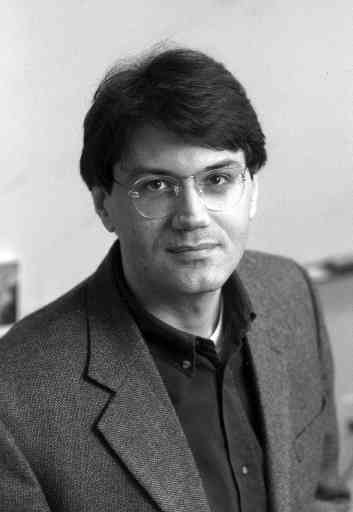 E. C. Katsavounidis合作论文数Department of Physics, Kavli Institute for Astrophysics and Space Research, Massachusetts Institute of Technology;Laser Interferometer Gravitational-wave Observatory, Massachusetts Institute of Technology118
 J. S. Kissel合作论文数LIGO Hanford Observatory118
 Iain Martin合作论文数Institute for Gravitational Research, School of Physics and Astronomy, University of Glasgow118
 Ettore Majorana合作论文数Dipartimento di Fisica, Sapienza Università di Roma118
 Brennan John Hughey合作论文数Physics and Astronomy Department, College of Arts & Sciences, Embry‑Riddle Aeronautical University117
 Stephen Fairhurst合作论文数Gravity Exploration Institute, School of Physics and Astronomy, Cardiff University117
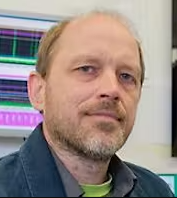 Hartmut Grote合作论文数Gravity Exploration Institute, School of Physics and Astronomy, Cardiff University117
 James Hough合作论文数School of Physics & Astronomy, University of Glasgow117
 Vicky Kalogera合作论文数Department of Physics and Astronomy, Weinberg College of Arts & Sciences, Northwestern University;Center for Interdisciplinary Exploration and Research in Astrophysics, Northwestern University.117G. Kuehn合作论文数116
 Paola Leaci合作论文数Department of Physics, Università degli Studi di Roma "La Sapienza"116
 IK Siong Heng合作论文数School of Physics & Astronomy, University of Glasgow116
 Andreas Freise合作论文数Department of Physics and Astronomy, Vrije Universiteit Amsterdam116
 Ian Jones合作论文数University of Southampton116
 Li Ju (鞠莉)合作论文数Department of Physics, University of Western Australia116V. Kringel合作论文数115Keita Kawabe合作论文数Laser Interferometer Gravitational-wave Observatory - Hanford Observatory;California Institute of Technology115
 Szabolcs Márka合作论文数Department of Physics, Columbia University115
 Saritha Kandhasamy合作论文数Department of Mathematics, P. A. College of Engineering and Technology115
 I. W. Harry合作论文数Nicolaus Copernicus Astron Ctr, Polish Acad Sci115Eric Howell合作论文数115
 Christopher Messenger合作论文数School of Physics & Astronomy, University of Glasgow115
 Giles Hammond合作论文数School of Physics & Astronomy, University of Glasgow115
 Nergis Mavalvala合作论文数Department of Physics, School of Science, Massachusetts Institute of Technology;Kavli Institute for Astrophysics & Space Research, Massachusetts Institute of Technology115
 Calum Gray合作论文数School of Physics & Astronomy, University of Glasgow114V. P. Mitrofanov合作论文数Department of Oscillations Physics, Lomonosov Moscow State University114H. Miao合作论文数114
 Paul Fulda合作论文数Department of Physics, College of Liberal Arts and Sciences, University of Florida114
 Andrew Melatos合作论文数School of Physics, Faculty of Science, The University of Melbourne114
 Gregory Harry合作论文数Department of Physics, College of Arts & Sciences, American University114Robert A Mercer合作论文数Department of Physics, University of Wisconsin–Milwaukee114
 Richard Mittleman合作论文数Kavli Institute for Astrophysics and Space Research, Massachusetts Institute of Technology113M. Lormand合作论文数113V. Kondrashov合作论文数113
 Evan Goetz合作论文数Department of Physics & Astronomy, The University of British Columbia113E. Maros合作论文数113S. H. Huttner合作论文数113K. D. Giardina合作论文数113
 Gerardo Moreno合作论文数LIGO Hanford Observatory113




