Einstein Telescope (ET) is the European project for a gravitational-wave (GW) observatory of third-generation. In this paper we present a comprehensive discussion of its science objectives, providing state-of-the-art predictions for the capabilities of ET in both geometries currently under consideration, a single-site triangular configuration or two L-shaped detectors. We discuss the impact that ET will have on domains as broad and diverse as fundamental physics, cosmology, early Universe, astrophysics of compact objects, physics of matter in extreme conditions, and dynamics of stellar collapse. We discuss how the study of extreme astrophysical events will be enhanced by multi-messenger observations. We highlight the ET synergies with ground-based and space-borne GW observatories, including multi-band investigations of the same sources, improved parameter estimation, and complementary information on astrophysical or cosmological mechanisms obtained combining observations from different frequency bands. We present advancements in waveform modeling dedicated to third-generation observatories, along with open tools developed within the ET Collaboration for assessing the scientific potentials of different detector configurations. We finally discuss the data analysis challenges posed by third-generation observatories, which will enable access to large populations of sources and provide unprecedented precision.
Gravitational-wave detectors, such as LIGO, are predominantly limited by coating Brownian thermal noise (CTN), which arises from mechanical losses in the Bragg mirror coatings of test-mass optics. Accurately characterising and minimising these losses is crucial for enhancing detector sensitivity. This paper introduces a Bayesian framework for precisely analysing mechanical ring-down measurements of disk resonators, a standard method for quantifying mechanical loss in coating materials. Our approach incorporates an improved model that captures the non-linear behaviour of beam spot motion on split photodiode sensors, significantly improving upon traditional simplified exponential-decay methods, and models the non-stationary noise present in the data. We perform analyses using nested sampling and show, using Bayesian model comparison, that our improved model is strongly preferred over the existing model. We obtain more accurate estimates of the decay constants ( τ 1 and τ 2 ), particularly for measurements with large oscillation amplitudes and for signals dominated by a single decay mode. This leads to improved accuracy in the measured losses: the uncertainty decreases by a factor of 2.9 for 1 / Q 1 and 3.8 for 1 / Q 2 , whilst the median change in the inferred values is less than 3% for both losses. Our method can also reliably analyze measurements that were previously discarded due to fitting errors, recovering 15% more usable measurements from our dataset, and can robustly characterise measurements where only a single decay is measured. This enhanced analytical capability yields more precise and reliable loss estimates from disk resonator data and provides a diagnostic tool for systematic errors, thereby supporting efforts to reduce coating thermal noise and improve gravitational-wave detector sensitivity.
We present the results of a search for gravitational-wave transients associated with core-collapse supernova SN 2023ixf, which was observed in the galaxy Messier 101 via optical emission on 2023 May 19, during the LIGO–Virgo–KAGRA 15th Engineering Run. We define a five-day on-source window during which an accompanying gravitational-wave signal may have occurred. No gravitational waves have been identified in data when at least two gravitational-wave observatories were operating, which covered ∼14% of this five-day window. We report the search detection efficiency for various possible gravitational-wave emission models. Considering the distance to M101 (6.7 Mpc), we derive constraints on the gravitational-wave emission mechanism of core-collapse supernovae across a broad frequency spectrum, ranging from 50 Hz to 2 kHz, where we assume the gravitational-wave emission occurred when coincident data are available in the on-source window. Considering an ellipsoid model for a rotating proto-neutron star, our search is sensitive to gravitational-wave energy 1 × 10 −4 M ⊙ c 2 and luminosity 2.6 × 10 −4 M ⊙ c 2 s −1 for a source emitting at 82 Hz. These constraints are around an order of magnitude more stringent than those obtained so far with gravitational-wave data. The constraint on the ellipticity of the proto-neutron star that is formed is as low as 1.08, at frequencies above 1200 Hz, surpassing past results.
We present results from a search for X-ray/gamma-ray counterparts of gravitational-wave (GW) candidates from the third observing run (O3) of the LIGO-Virgo-KAGRA network using the Swift Burst Alert Telescope (Swift-BAT). The search includes 636 GW candidates received with low latency, 86 of which have been confirmed by the offline analysis and included in the third cumulative Gravitational-Wave Transient Catalogs (GWTC-3). Targeted searches were carried out on the entire GW sample using the maximum-likelihood Non-imaging Transient Reconstruction and Temporal Search pipeline on the BAT data made available via the GUANO infrastructure. We do not detect any significant electromagnetic emission that is temporally and spatially coincident with any of the GW candidates. We report flux upper limits in the 15-350 keV band as a function of sky position for all the catalog candidates. For GW candidates where the Swift-BAT false alarm rate is less than 10(-3) Hz, we compute the GW-BAT joint false alarm rate. Finally, the derived Swift-BAT upper limits are used to infer constraints on the putative electromagnetic emission associated with binary black hole mergers.
In this work, a new optical coating design concept is proposed for gravitational wave detector (GWD) utilising, microwave plasma assisted sputtering of a high reflector (HR) multi-material stack coating consisting of hydrogenated amorphous silicon (a-Si:H), Ta2O5 and SiO2 for GWD's mirror coatings. This work includes the study of the optical, mechanical, structural and morphological properties of the coating to evaluate the potential of the materials for GWDs. Benefits of the microwave plasma assisted sputter deposition technique are described. a-Si is a promising alternative material for GWD mirror coatings, as it has been demonstrated to have reduced thermal noise, however, has optical absorption above the required level for GWDs. The HR multi-material coating design concept is a way potentially mediate the high absorption a-Si whilst taking advantage of its reduced thermal noise, incorporating the a-Si material into a Ta2O5 and SiO2 based HR multilayer coating. Hydrogenating a-Si (a-Si:H) is another method to reduce the absorption with the hydrogen concentration being an important parameter, this work combines these techniques to further lower the absorption. The multi-material coating consists of an 'upper stack' of Ta2O5/SiO2 low absorbing material on the incident side of the coating used to reflect the majority of the incident laser power and a 'lower stack' of a a-Si:H/SiO2 higher absorbing materials at the bottom of the coating where there is less laser power to be absorbed. In addition to investigating the effectiveness of the two-stack approach for optimum compromise between optical and mechanical loss reduction, this work also studies the effect of annealing on the properties of the multi-material coating. Moreover, effects of the deposition parameters such as deposition rate on each material are investigated and utilised to optimise properties the two-stack coating approach.
We present Fermi Gamma-ray Burst Monitor (Fermi-GBM) and Swift Burst Alert Telescope (Swift-BAT) searches for gamma-ray/X-ray counterparts to gravitational wave (GW) candidate events identified during the third observing run of the Advanced LIGO and Advanced Virgo detectors. Using Fermi-GBM on-board triggers and sub-threshold gamma-ray burst (GRB) candidates found in the Fermi-GBM ground analyses, the Targeted Search and the Untargeted Search, we investigate whether there are any coincident GRBs associated with the GWs. We also search the Swift-BAT rate data around the GW times to determine whether a GRB counterpart is present. No counterparts are found. Using both the Fermi-GBM Targeted Search and the Swift-BAT search, we calculate flux upper limits and present joint upper limits on the gamma-ray luminosity of each GW. Given these limits, we constrain theoretical models for the emission of gamma-rays from binary black hole mergers.
The mirror suspensions in gravitational wave detectors demand low mechanical loss jointing to ensure good enough detector performance and to enable the detection of gravitational waves. Hydroxide catalysis bonds have been used in the fused silica suspensions of the GEO600, Advanced LIGO, and Advanced Virgo detectors. Future detectors may use cryogenic cooling of the mirror suspensions and this leads to a potential change of mirror material and suspension design. Other bonding techniques that could replace or be used alongside hydroxide catalysis bonding are of interest. A design that incorporates repair scenarios is highly desirable. Indeed, the mirror suspensions in KAGRA, which is made from sapphire and operated at cryogenic temperatures, have used a combination of hydroxide catalysis bonding and gallium bonding. This Letter presents the first measurements of the mechanical loss of a gallium bond measured between 10 K and 295 K. It is shown that the loss, which decreases with temperature down to the level of (1.8±0.3)×10−4 at 10 K, is comparable to that of a hydroxide catalysis bond. Published by the American Physical Society 2024
Despite the growing number of confident binary black hole coalescences observed through gravitational waves so far, the astrophysical origin of these binaries remains uncertain. Orbital eccentricity is one of the clearest tracers of binary formation channels. Identifying binary eccentricity, however, remains challenging due to the limited availability of gravitational waveforms that include effects of eccentricity. Here, we present observational results for a waveform-independent search sensitive to eccentric black hole coalescences, covering the third observing run (O3) of the LIGO and Virgo detectors. We identified no new high-significance candidates beyond those that were already identified with searches focusing on quasi-circular binaries. We determine the sensitivity of our search to high-mass (total mass $M>70$ $M_\odot$) binaries covering eccentricities up to 0.3 at 15 Hz orbital frequency, and use this to compare model predictions to search results. Assuming all detections are indeed quasi-circular, for our fiducial population model, we place an upper limit for the merger rate density of high-mass binaries with eccentricities $0 < e \leq 0.3$ at $0.33$ Gpc$^{-3}$ yr$^{-1}$ at 90\% confidence level.
One of the main noise sources in current gravitational-wave detectors is the thermal noise of the high-reflectivity coatings on the main interferometer optics. Coating thermal noise is dominated by the mechanical loss of the high-refractive index material within the coating stacks, Ta 2 O 5 mixed with TiO 2 . For upgrades to room-temperature detectors, a mixture of GeO 2 and TiO 2 is an interesting alternative candidate coating material. While the rather low refractive index of GeO 2 increases with increasing TiO 2 content, a higher TiO 2 content results in a lower threshold temperature before heat treatment leads to crystallisation, and potentially to a degradation of optical properties. For future cryogenic detectors, on the other hand, a higher TiO 2 content is beneficial as the TiO 2 suppresses the low-temperature mechanical loss peak of GeO 2 . In this paper, we present the optical properties of coatings—produced by plasma-assisted ion-beam evaporation—with high TiO 2 content at 1550 nm, a laser wavelength considered for cryogenic gravitational-wave detectors, as a function of heat-treatment temperature. For comparison, the absorption of pure GeO 2 was also measured. Furthermore, results at the currently-used wavelength of 1064 nm are presented.
Silicon nitride thin films were deposited at room temperature employing a custom ion beam deposition (IBD) system. The stoichiometry of these films was tuned by controlling the nitrogen gas flow through the ion source and a process gas ring. A correlation is established between the process parameters, such as ion beam voltage and ion current, and the optical and mechanical properties of the films based on post-deposition heat treatment. The results show that with increasing heat treatment temperature, the mechanical loss of these materials as well as their optical absorption decreases producing films with an extinction coefficient as low as k = 6.2 ( +/- 0.5 ) x 10 - 7 at 1064 nm for samples annealed at 900 circle C. This presents the lowest value for IBD SiN x within the context of gravitational wave detector applications. The mechanical loss of the films was measured to be phi = 2.1 ( +/- 0.6 ) x 10 - 4 once annealed post deposition to 900 circle C.
The magnetar SGR 1935+2154 is the only known Galactic source of fast radio bursts (FRBs). FRBs from SGR 1935+2154 were first detected by the Canadian Hydrogen Intensity Mapping Experiment (CHIME)/FRB and the Survey for Transient Astronomical Radio Emission 2 in 2020 April, after the conclusion of the LIGO, Virgo, and KAGRA Collaborations' O3 observing run. Here, we analyze four periods of gravitational wave (GW) data from the GEO600 detector coincident with four periods of FRB activity detected by CHIME/FRB, as well as X-ray glitches and X-ray bursts detected by NICER and NuSTAR close to the time of one of the FRBs. We do not detect any significant GW emission from any of the events. Instead, using a short-duration GW search (for bursts <= 1 s) we derive 50% (90%) upper limits of 10(48) (10(49)) erg for GWs at 300 Hz and 10(49) (10(50)) erg at 2 kHz, and constrain the GW-to-radio energy ratio to <= 10(14)-10(16). We also derive upper limits from a long-duration search for bursts with durations between 1 and 10 s. These represent the strictest upper limits on concurrent GW emission from FRBs.
Magnetars are neutron stars with exceptionally strong dipole magnetic fields which are observed to display a range of x-ray flaring behavior, but the flaring mechanism is not well understood. The third observing run of Advanced LIGO and Virgo extended from April 1, 2019 to March 27, 2020, and contained x-ray flares from known magnetar SGR 1935+2154, as well as the newly-discovered magnetar, Swift J1818-1607. We search for gravitational waves coincident with these magnetar flares with minimally modeled, coherent searches which specifically target both short-duration gravitational waves produced by excited f-modes in the magnetar's core, as well as long-duration gravitational waves motivated by the Quasi-Periodic Oscillations observed in the tails of giant flares. In this paper, we report on the methods and sensitivity estimates of these searches, and the astrophysical implications.
Among the various candidates for dark matter (DM), ultralight vector DM can be probed by laser interferometric gravitational wave detectors through the measurement of oscillating length changes in the arm cavities. In this context, KAGRA has a unique feature due to differing compositions of its mirrors, enhancing the signal of vector DM in the length change in the auxiliary channels. Here we present the result of a search for $U(1)_{B-L}$ gauge boson DM using the KAGRA data from auxiliary length channels during the first joint observation run together with GEO600. By applying our search pipeline, which takes into account the stochastic nature of ultralight DM, upper bounds on the coupling strength between the $U(1)_{B-L}$ gauge boson and ordinary matter are obtained for a range of DM masses. While our constraints are less stringent than those derived from previous experiments, this study demonstrates the applicability of our method to the lower-mass vector DM search, which is made difficult in this measurement by the short observation time compared to the auto-correlation time scale of DM.
Gravitational lensing by massive objects along the line of sight to the source causes distortions to gravitational wave (GW) signals; such distortions may reveal information about fundamental physics, cosmology, and astrophysics. In this work, we have extended the search for lensing signatures to all binary black hole events from the third observing run of the LIGO-Virgo network. We search for repeated signals from strong lensing by (1) performing targeted searches for subthreshold signals, (2) calculating the degree of overlap among the intrinsic parameters and sky location of pairs of signals, (3) comparing the similarities of the spectrograms among pairs of signals, and (4) performing dual-signal Bayesian analysis that takes into account selection effects and astrophysical knowledge. We also search for distortions to the gravitational waveform caused by (1) frequency-independent phase shifts in strongly lensed images, and (2) frequency-dependent modulation of the amplitude and phase due to point masses. None of these searches yields significant evidence for lensing. Finally, we use the nondetection of GW lensing to constrain the lensing rate based on the latest merger-rate estimates and the fraction of dark matter composed of compact objects.
The second Gravitational-Wave Transient Catalog reported on 39 compact binary coalescences observed by the Advanced LIGO and Advanced Virgo detectors between 1 April 2019 15:00 UTC and 1 October 2019 15:00 UTC. We present GWTC-2.1, which reports on a deeper list of candidate events observed over the same period. We analyze the final version of the strain data over this period with improved calibration and better subtraction of excess noise, which has been publicly released. We employ three matched-filter search pipelines for candidate identification, and estimate the astrophysical probability for each candidate event. While GWTC-2 used a false alarm rate threshold of 2 per year, we include in GWTC-2.1, 1201 candidates that pass a false alarm rate threshold of 2 per day. We calculate the source properties of a subset of 44 high-significance candidates that have an astrophysical probability greater than 0.5. Of these candidates, 36 have been reported in GWTC-2. If the 8 additional high-significance candidates presented here are astrophysical, the mass range of events that are unambiguously identified as binary black holes (both objects $\geq 3M_\odot$) is increased compared to GWTC-2, with total masses from $\sim 14 M_\odot$ for GW190924_021846 to $\sim 182 M_\odot$ for GW190426_190642. The primary components of two new candidate events (GW190403_051519 and GW190426_190642) fall in the mass gap predicted by pair instability supernova theory. We also expand the population of binaries with significantly asymmetric mass ratios reported in GWTC-2 by an additional two events (the mass ratio is less than $0.65$ and $0.44$ at $90\%$ probability for GW190403_051519 and GW190917_114630 respectively), and find that 2 of the 8 new events have effective inspiral spins $\chi_\mathrm{eff} > 0$ (at $90\%$ credibility), while no binary is consistent with $\chi_\mathrm{eff} < 0$ at the same significance.
Supplementary Legends for Figures 1-5 from E-Cadherin Deficiency Initiates Gastric Signet-Ring Cell Carcinoma in Mice and Man
This work presents the characterization of the optical and mechanical properties of thin films based on (Ta2O5)1-x (SiO2)x mixed oxides deposited by microwave plasma assisted co-sputtering, including post-annealing treatments. The deposition of low mechanical loss materials (3×10⁻⁵) with a high refractive index (1.93) while maintaining low processing costs was achieved and the following trends were demonstrated: The energy band gap increased as the SiO2 concentration was increased in the mixture, and the disorder constant decreased when the annealing temperatures increased. Annealing of the mixtures also showed positive effects to reduce the mechanical losses and the optical absorption. This demonstrates their potential as an alternative high-index material for optical coatings in gravitational wave detectors using a low-cost process.
Coating thermal noise is one of the dominant noise sources in current gravitational wave detectors and ultimately limits their ability to observe weaker or more distant astronomical sources. This Letter presents investigations of TiO_{2} mixed with SiO_{2} (TiO_{2}:SiO_{2}) as a coating material. We find that, after heat treatment for 100 h at 850 °C, thermal noise of a highly reflective coating comprising of TiO_{2}:SiO_{2} and SiO_{2} reduces to 76% of the current levels in the Advanced LIGO and Advanced Virgo detectors-with potential for reaching 45%, if we assume the mechanical loss of state-of-the-art SiO_{2} layers. Furthermore, those coatings show low optical absorption of <1 ppm and optical scattering of ≲5 ppm. Notably, we still observe excellent optical and thermal noise performance following crystallization in the coatings. These results show the potential to meet the parameters required for the next upgrades of the Advanced LIGO and Advanced Virgo detectors.
We search for gravitational-wave (GW) transients associated with fast radio bursts (FRBs) detected by the Canadian Hydrogen Intensity Mapping Experiment Fast Radio Burst Project, during the first part of the third observing run of Advanced LIGO and Advanced Virgo (2019 April 1 15:00 UTC–2019 October 1 15:00 UTC). Triggers from 22 FRBs were analyzed with a search that targets both binary neutron star (BNS) and neutron star–black hole (NSBH) mergers. A targeted search for generic GW transients was conducted on 40 FRBs. We find no significant evidence for a GW association in either search. Given the large uncertainties in the distances of our FRB sample, we are unable to exclude the possibility of a GW association. Assessing the volumetric event rates of both FRB and binary mergers, an association is limited to 15% of the FRB population for BNS mergers or 1% for NSBH mergers. We report 90% confidence lower bounds on the distance to each FRB for a range of GW progenitor models and set upper limits on the energy emitted through GWs for a range of emission scenarios. We find values of order 10 51 –10 57 erg for models with central GW frequencies in the range 70–3560 Hz. At the sensitivity of this search, we find these limits to be above the predicted GW emissions for the models considered. We also find no significant coincident detection of GWs with the repeater, FRB 20200120E, which is the closest known extragalactic FRB.
Coating thermal noise (CTN) in amorphous coatings is a drawback hindering their application in precision experiments such as gravitational wave detectors (GWDs). Mirrors for GWDs are Bragg’s reflectors consisting of a bilayer-based stack of high- and low-refractive-index materials showing high reflectivity and low CTN. In this paper, we report the characterization of morphological, structural, optical, and mechanical properties of high-index materials such as scandium sesquioxide and hafnium dioxide and a low-index material such as magnesium fluoride deposited by plasma ion-assisted electron beam evaporation. We also evaluate their properties under different annealing treatments and discuss their potential for GWDs.
 Sheila Rowan合作论文数School of Physics and Astronomy, University of Glasgow;Institute for Gravitational Research, University of Glasgow217
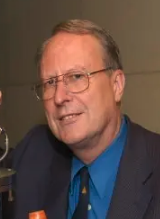 James Hough合作论文数School of Physics & Astronomy, University of Glasgow213
 Stuart Reid合作论文数University of Strathclyde188
 Ettore Majorana合作论文数Dipartimento di Fisica, Sapienza Università di Roma188
 Nergis Mavalvala合作论文数Department of Physics, School of Science, Massachusetts Institute of Technology;Kavli Institute for Astrophysics & Space Research, Massachusetts Institute of Technology184
 M. Lormand合作论文数183
 Christopher Messenger合作论文数School of Physics & Astronomy, University of Glasgow183
 Szabolcs Márka合作论文数Department of Physics, Columbia University182E. Maros合作论文数182
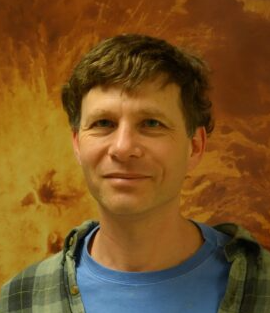 Richard Mittleman合作论文数Kavli Institute for Astrophysics and Space Research, Massachusetts Institute of Technology180
 Jesper Munch合作论文数The University of Adelaide179K. Mason合作论文数179
 J. S. Kissel合作论文数LIGO Hanford Observatory178
 Gerardo Moreno合作论文数LIGO Hanford Observatory178
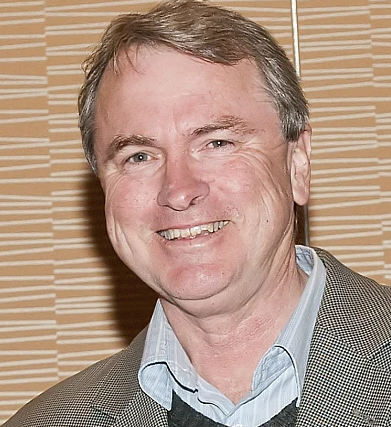 David McClelland合作论文数Centre for Gravitational Astrophysics, Research School of Physics, Australian National University178V. P. Mitrofanov合作论文数Department of Oscillations Physics, Lomonosov Moscow State University176G. Mendell合作论文数175
 Guenakh Mitselmakher合作论文数Institute for High Enery Physics and Astrophysics, Department of Physics, College of Liberal Arts and Sciences, University of Florida174
 Steven Penn合作论文数Department of Physics, College of Arts & Sciences, Syracuse University;Hobart & William Smith Colleges174Robert A Mercer合作论文数Department of Physics, University of Wisconsin–Milwaukee172
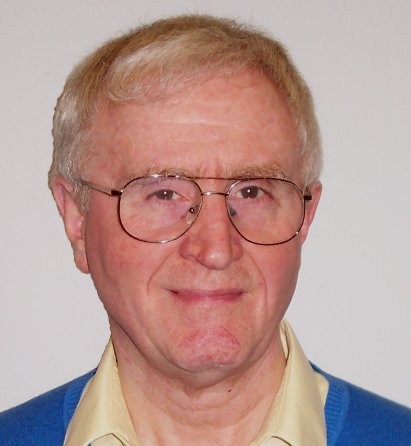 Robert L. McCarthy合作论文数Department of Physics and Astronomy, College of Arts and Sciences, Stony Brook University171H. Overmier合作论文数170
 Gregory Harry合作论文数Department of Physics, College of Arts & Sciences, American University170Keita Kawabe合作论文数Laser Interferometer Gravitational-wave Observatory - Hanford Observatory;California Institute of Technology168Albert J. Lazzarini合作论文数LIGO Laboratory, California Institute of Technology168Sydney Meshkov合作论文数California Institute of Technology168V. Kondrashov合作论文数166
 Brian Lantz合作论文数Logo Group, Stanford University;Applied Physics Department, School of Humanities and Sciences, Stanford University166
 E. C. Katsavounidis合作论文数Department of Physics, Kavli Institute for Astrophysics and Space Research, Massachusetts Institute of Technology;Laser Interferometer Gravitational-wave Observatory, Massachusetts Institute of Technology164C. Hanna合作论文数163
 Vicky Kalogera合作论文数Department of Physics and Astronomy, Weinberg College of Arts & Sciences, Northwestern University;Center for Interdisciplinary Exploration and Research in Astrophysics, Northwestern University.162S. C. McGuire合作论文数159M. Pedraza合作论文数159
 Hartmut Grote合作论文数Gravity Exploration Institute, School of Physics and Astronomy, Cardiff University159
 Li Ju (鞠莉)合作论文数Department of Physics, University of Western Australia159B. O’Reilly合作论文数Christopher Newport University159
 Matthew Pitkin合作论文数CEDAR Audio Ltd159
 Conor Mow-Lowry合作论文数Faculty of Science, The Australian National University159A. Markosyan合作论文数158
 Richard O Shaughnessy合作论文数School of Mathematics and Statistics, College of Science, Rochester Institute of Technology158
 Ian Jones合作论文数University of Southampton158
 Stefan Hild合作论文数Faculty of Science and Engineering, Maastricht University157
 Evan Goetz合作论文数Department of Physics & Astronomy, The University of British Columbia153
 Calum Gray合作论文数School of Physics & Astronomy, University of Glasgow153K. D. Giardina合作论文数153
 IK Siong Heng合作论文数School of Physics & Astronomy, University of Glasgow153Adam J. Mullavey合作论文数Australian National University153
 Joseph A. Giaime合作论文数Department of Physics & Astronomy, College of Science, Louisiana State University;LIGO Livingston Observatory, California Institute of Technology152
 Fabrice Matichard合作论文数Mechanical Engineering Department, Lawrence Berkeley National Laboratory152




