The article is devoted to the results of mineralogical and geochemical studies of argillizites at Compleksnoe Au–Ag ore occurrence, localized on the southern flank of the Kajenmyvaam volcanic uplift in the inner zone of the Late Cretaceous marginal–continental Okhotsk-Chukchi volcanic belt (OChVB). At the ore occurrence, a series of isometric (oval) in plan view argillizite “hats” with diameters of 200 to 900 m are described. They are composed of red and light gray clay formations and accompanied by complex (Au–Ag–Mo–Cu–Pb–Zn–Bi–Sn) anomalies. In the recent relief, argillizite “hats” are characterized by gently sloping domes and crown subvolcanic bodies of granitoids and explosive breccias. A series of argillizite “hats” is surrounded by elongated lenticular bodies of secondary quartzites, which form the outer boundary of a large annular volcanostructure. The argillizites are composed of the following minerals: illite-smectite (mixed-layered formation), kaolinite, muscovite, jarosite, quartz, and rutile. The average content of Au and Ag in bulk samples are 0.06 and 0.075 g/t, respectively. Au is found in invisible form. According to the geological and geochemical data, argillizite “hats” record a near-surface (up to 300 m), slightly eroded, level of a large porphyry-epithermal mineral-forming system.
Особенности флюидных включений, изотопного состава O, C вмещающих пород, жильных минералов, включений и S, Pb сульфидов позволили установить две группы флюидов, характеризующиеся близкими температурами, солёностью и сходным источником водной части, продуцируемой при метагенезе и мобилизованной при коллизионных событиях. Отложение кварца-А происходит из CO-HO гидрокарбонатно-Na-флюида с низким количеством примесей и солёностью 7-10 мас.%-экв. NaCl на глубинах ~6 км (290-340 °C, 1550 бар). Регенерация кварца (кварц-С), отложение кварца-В, кварца-АВ с карбонатом и хлоритом происходили на глубинах 3,5-1,5 км (250380 °C, 1250-900-350 бар) из CO-CH-N-водных сульфатно-гидрокарбонатных Na-Mg с Cl, Ca, K флюидов с солёностью 5-10 мас.%-экв. NaCl и большим разнообразием примесей. Локализация жил в левосдвиговых нарушениях и резкая неоднородность PT-условий позволяют связать образование флюида-2 с позднеколлизионными событиями.
Представлены результаты впервые выполненного геохронологического исследования метасоматитов, сопровождающих золоторудные кварцевые жилы Уряхского рудного поля (Восточно-Забайкальский сегмент Центрально-Азиатского складчатого пояса). На основе полученных геохронологических RbSr-, 39Ar 40Ar-данных показано, что гидротермально-метасоматические процессы в рудном поле происходили в раннепермское время около 280 млн лет назад и коррелируются с финальными фазами становления Ангаро-Витимского батолита.
Mineral assemblages, stages, and the evolution of metasomatic processes were examined in the ore field of the Maiskoe gold-quartz deposit. The metasomatic processes affected the Lower Proterozoic volcano-sedimentary sequence of the Salla-Kuolajarvi graben-synclinorium in northern Karelia and proceeded in two stages. The first of them involved propylitization and magnesian metasomatism, and the second stage was marked by gumbeitization and the deposition of gold-sulfide ore mineralization. The paper presents a detailed characterization of the gumbeites, which were the first rocks of this type found in the Precambrian of the Baltic Shield. They consist of Kfs + Cal + Qtz and sometimes also contain Ms, Ccp, and Bn.(1)A prograde evolutionary trend of the propylites and magnesian metasomatites with an increase in the X-Mg of the minerals with time is identified based on the chemistry of minerals and data on fluid inclusions. The gumbeitization and ore deposition differed from the earlier processes by an increase in the CO2 fugacity and the activities of K2O and BaO in the solution. The temperature of these processes, which was determined by fluid inclusions and chlorite geo-thermometers was 330-380 degrees C for the early propylitization, 470-490 degrees C for younger veinlets in the propylites, 250-300 degrees C for the onset of magnesian metasomatism (actinolite veinlets), similar to 400 degrees C for the late magnesian metasomatism (Hbl + Bt assemblage), 350-370 degrees C for gumbeitization, and 180-250 degrees C for ore deposition. The metasomatic processes were dated (Rb-Sr and K-Ar ages of minerals) at 1800 Ma for the propylitization, 17001600 Ma for the magnesian metasomatism, and approximately 1400 Ma for the gumbeitization and ore deposition. The propylitization and magnesian metasomatism are thought to have been genetically related to (and roughly coeval with) the strike-slip faulting, shearing, and mafic magmatism. The gumbeitization and the development of ore mineralization could be linked with the origin of a chamber of a crustal granodiorite (or monzonite) magma. According to the Sr isotopic composition, it could have had two sources: the country rocks and the fluid. All of the metasomatic processes were related to the same tectonic style, which was controlled by strike-slip fault zones and the tectonic and magmatic evolution.
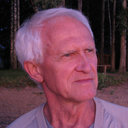 A. V. Volkov合作论文数Institute of Geology of Ore Deposits, Petrography, Mineralogy, and Geochemistry Staromonetnyi per. 35, Russian Academy of Sciences5
 в ю прокофьев合作论文数4Aa Sidorov合作论文数4А. Л. Галямов合作论文数2К. Ю. Мурашов合作论文数2
 Tatiana Zlobina合作论文数2
 Peter Belousov合作论文数2N. V. Sidorova合作论文数2Ю. В. Гольцман合作论文数1O. B. Ryzhov合作论文数1А.Б. Лексин合作论文数1ю о ларионова合作论文数1с г кряжев合作论文数1в ю алексеев合作论文数1K. Yu. Murashov合作论文数1A. L. Galyamov合作论文数1
 I.V. Chernyshev合作论文数Institute of Geology of Ore Deposits, Petrography, Mineralogy, and Geochemistry, Russian Academy of Sciences1
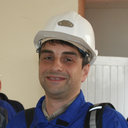 Vasily Aristov合作论文数1
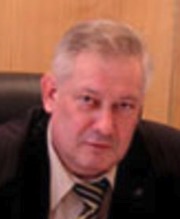 Nikolay Bortnikov合作论文数Department of Mineralogy, Institute of Geology of Ore Deposits, Petrography, Mineralogy and Geochemistry, Russian Academy of Sciences1
 Aleksey A. Kotov合作论文数Institute of Precambrian Geology and Geochronology, Russian Academy of Sciences1
 Yury V. Petrov合作论文数St. Petersburg State Technical University1
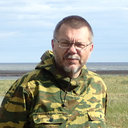 Alexey Kotov合作论文数Laboratory for Ecology of Aquatic Communities and Invasions, A.N. Severtsov Institute of Ecology and Evolution of Russian Academy of Sciences1A. A. Nosova合作论文数Institute of Geology of Ore Deposits, Petrography, Mineralogy, and Geochemistry Staromonetnyi per. 35, Russian Academy of Sciences1S. S. Abramov合作论文数Institute of Geology of Ore Deposits, Petrography, Mineralogy, and Geochemistry Staromonetnyi per. 35, Russian Academy of Sciences1Andrey V. Chugaev合作论文数1S. A. Abramov合作论文数Dorodnicyn Computing Centre
Russian Academy of Sciences1
Alexey Kotov合作论文数Laboratory for Ecology of Aquatic Communities and Invasions, A.N. Severtsov Institute of Ecology and Evolution of Russian Academy of Sciences1A. A. Nosova合作论文数Institute of Geology of Ore Deposits, Petrography, Mineralogy, and Geochemistry Staromonetnyi per. 35, Russian Academy of Sciences1S. S. Abramov合作论文数Institute of Geology of Ore Deposits, Petrography, Mineralogy, and Geochemistry Staromonetnyi per. 35, Russian Academy of Sciences1Andrey V. Chugaev合作论文数1S. A. Abramov合作论文数Dorodnicyn Computing Centre
Russian Academy of Sciences1




