Recent advancements in reasoning with large language models (RLLMs), such as OpenAI-O1 and DeepSeek-R1, have demonstrated their impressive capabilities in complex domains like mathematics and coding. A central factor in their success lies in the application of long chain-of-thought (Long CoT) characteristics, which enhance reasoning abilities and enable the solution of intricate problems. However, despite these developments, a comprehensive survey on Long CoT is still lacking, limiting our understanding of its distinctions from traditional short chain-of-thought (Short CoT) and complicating ongoing debates on issues like "overthinking" and "inference-time scaling." This survey seeks to fill this gap by offering a unified perspective on Long CoT. (1) We first distinguish Long CoT from Short CoT and introduce a novel taxonomy to categorize current reasoning paradigms. (2) Next, we explore the key characteristics of Long CoT: deep reasoning, extensive exploration, and feasible reflection, which enable models to handle more complex tasks and produce more efficient, coherent outcomes compared to the shallower Short CoT. (3) We then investigate key phenomena such as the emergence of Long CoT with these characteristics, including overthinking, and inference-time scaling, offering insights into how these processes manifest in practice. (4) Finally, we identify significant research gaps and highlight promising future directions, including the integration of multi-modal reasoning, efficiency improvements, and enhanced knowledge frameworks. By providing a structured overview, this survey aims to inspire future research and further the development of logical reasoning in artificial intelligence.
Abstract Despite rapid progress in AI agents for computer-aided drug design (CADD), protein-ligand simulation workflows remain fragmented across disparate tools, creating a major bottleneck for scalable candidate evaluation. Here, we present PRISM ( P rotein- R eceptor I nteraction Simulation M odeler), a Python platform built on GROMACS that unifies ligand parameterization across multiple force fields, automated system construction, enhanced sampling, multi-tier binding free energy estimation, and trajectory analysis within a single workflow. Through the Model Context Protocol (MCP), PRISM further serves as the computational infrastructure for CADD-Agent , an expert-workflow-driven AI agent designed to orchestrate hierarchical drug screening pipelines. As a pilot application, we applied PRISM to riboflavin synthase and demonstrated end-to-end automation from candidate library assembly to binding pocket characterization, identifying a potential allosteric inhibition site at the oligomerization interface. Together, these results establish PRISM as a high-throughput simulation infrastructure for agent-enabled CADD.
Unstructured model editing aims to update models with real-world text, yet existing methods often memorize text holistically without reliable fine-grained fact access. To address this, we propose FABLE, a hierarchical framework that decouples fine-grained fact injection from holistic text generation. FABLE follows a two-stage, fact-first strategy: discrete facts are anchored in shallow layers, followed by minimal updates to deeper layers to produce coherent text. This decoupling resolves the mismatch between holistic recall and fine-grained fact access, reflecting the unidirectional Transformer flow in which surface-form generation amplifies rather than corrects underlying fact representations. We also introduce UnFine, a diagnostic benchmark with fine-grained question-answer pairs and fact-level metrics for systematic evaluation. Experiments show that FABLE substantially improves fine-grained question answering while maintaining state-of-the-art holistic editing performance. Our code is publicly available at https://github.com/caskcsg/FABLE.
When using supervised fine-tuning (SFT) to adapt large language models (LLMs) to specific domains, a significant challenge arises: should we use the entire SFT dataset for fine-tuning? Common practice often involves fine-tuning directly on the entire dataset due to limited information on the LLM's past training data. However, if the SFT dataset largely overlaps with the model's existing knowledge, the performance gains are minimal, leading to wasted computational resources. Identifying the unknown knowledge within the SFT dataset and using it to fine-tune the model could substantially improve the training efficiency. To address this challenge, we propose a self-learning framework for LLMs inspired by human learning pattern. This framework takes a fine-tuning (SFT) dataset in a specific domain as input. First, the LLMs answer the questions in the SFT dataset. The LLMs then objectively grade the responses and filter out the incorrectly answered QA pairs. Finally, we fine-tune the LLMs based on this filtered QA set. Experimental results in the fields of agriculture and medicine demonstrate that our method substantially reduces training time while achieving comparable improvements to those attained with full dataset fine-tuning. By concentrating on the unknown knowledge within the SFT dataset, our approach enhances the efficiency of fine-tuning LLMs.
Acoustic Leak Detection (ALD) plays a pivotal role in ensuring the operational safety of water distribution networks (WDNs). However, the cross-domain deployment of single-scenario ALD models is significantly hindered by environmental heterogeneity (pipe materials and diameters, etc.) and data scarcity in practical WDNs. This study presents the first systematic investigation into the generalizability and transferability of ALD models across multi-source WDNs through comprehensive cross-domain evaluation. The results show that: (1) The global model trained on the multi-region WDNs exhibits better generalization ability with an average accuracy improvement of about 2 % compared to the local model. (2) Fine Tuning strategy achieves high transfer performance (96.8 % and 96.2 % accuracy for cross-material and cross-diameter scenarios respectively), outperforming Direct Transfer and Feature Extraction methods. (3) Transfer asymmetry is related to the distribution of input data under different conditions, where metal-to-nonmetal and large-to-small diameter transfers exhibit enhanced adaptability through broader source-domain frequency coverage. (4) Target-domain data requirements with the Fine Tuning strategy can be reduced by 50 % while maintaining superior accuracy compared to source-domain local models. These findings advance AI-driven ALD techniques from a single-scenario-specific perspective to more mature applications of multi-scenario-universal.
We present a generative dialogue system capable of operating in a full-duplex manner, allowing for seamless interaction. It is based on a large language model (LLM) carefully aligned to be aware of a perception module, a motor function module, and the concept of a simple finite state machine (called neural FSM) with two states. The perception and motor function modules operate in tandem, allowing the system to speak and listen to the user simultaneously. The LLM generates textual tokens for inquiry responses and makes autonomous decisions to start responding to, wait for, or interrupt the user by emitting control tokens to the neural FSM. All these tasks of the LLM are carried out as next token prediction on a serialized view of the dialogue in real-time. In automatic quality evaluations simulating real-life interaction, the proposed system reduces the average conversation response latency by more than threefold compared with LLM-based half-duplex dialogue systems while responding within less than 500 milliseconds in more than 50% of evaluated interactions. Running an LLM with only 8 billion parameters, our system exhibits an 8% higher interruption precision rate than the best available commercial LLM for voice-based dialogue.
Previous knowledge graph embedding approaches usually map entities to representations and utilize score functions to predict the target entities, yet they typically struggle to reason rare or emerging unseen entities. In this paper, we propose kNN-KGE, a new knowledge graph embedding approach with pre-trained language models, by linearly interpolating its entity distribution with k-nearest neighbors. We compute the nearest neighbors based on the distance in the entity embedding space from the knowledge store. Our approach can allow rare or emerging entities to be memorized explicitly rather than implicitly in model parameters. Experimental results demonstrate that our approach can improve inductive and transductive link prediction results and yield better performance for low-resource settings with only a few triples, which might be easier to reason via explicit memory (Code is available at: https://github.com/zjunlp/KNN-KG ).
 Songshuo Lu (卢颂硕)合作论文数Moore Threads Technology Co. Ltd1
 Xiaohan Wang合作论文数Zhejiang University;ZJU-Ant Group Joint Research Center for Knowledge Graphs1
 Xiang Liu (刘翔)合作论文数Hong Kong University of Science and Technology (Guangzhou)1
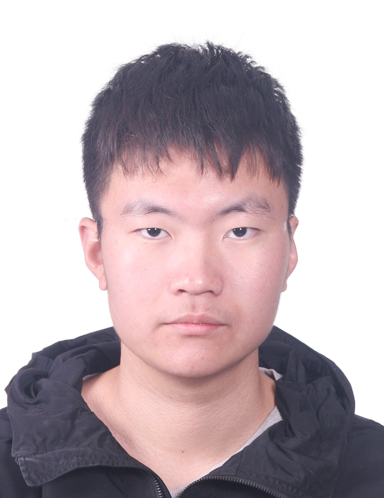 Yuhang Zhou合作论文数Meta1
 Kai Xiong (熊凯)合作论文数Research Center for Social Computing and Interactive Robotics, Harbin Institute of Technology1
 Mengkang Hu合作论文数1Yaohua Tang合作论文数1Dandan Tu合作论文数1Huan Hu合作论文数Clouminds, Beijing, Peoples R China1
 Qiguang Chen合作论文数哈尔滨工业大学1ZhiHong Long (龙志宏)合作论文数1
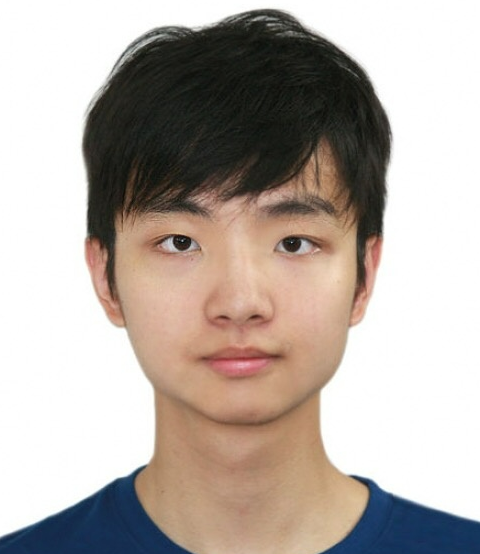 Sijie Yan (颜思捷)合作论文数Huawei IAS BU1
 Xiao Ding (丁效)合作论文数Research Center for Social Computing and Information Retrieval, Faculty of Computing, Harbin Institute of Technology1Xuehai Tang合作论文数1
 Zhaoxiang Liu合作论文数AI Department, CloudMinds Technologies Inc.1
 Kai Wang合作论文数1
 Xin Xie合作论文数School of Software Technology, Zhejiang University1
 Songlin Hu (虎嵩林)合作论文数Institute of Information Engineering, Chinese Academy of Sciences;University of Chinese Academy of Sciences1
 Libo Qin (覃立波)合作论文数School of Computer Science and Technology, Harbin Institute of Technology (Shenzhen);Institute of Computing and Intelligence, Harbin Institute of Technology (Shenzhen)1
 Wei Xia (夏威)合作论文数AWS;Amazon AI1
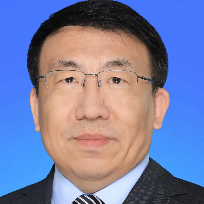 Ting Liu (刘挺)合作论文数Faculty of Computing, Harbin Institute of Technology1
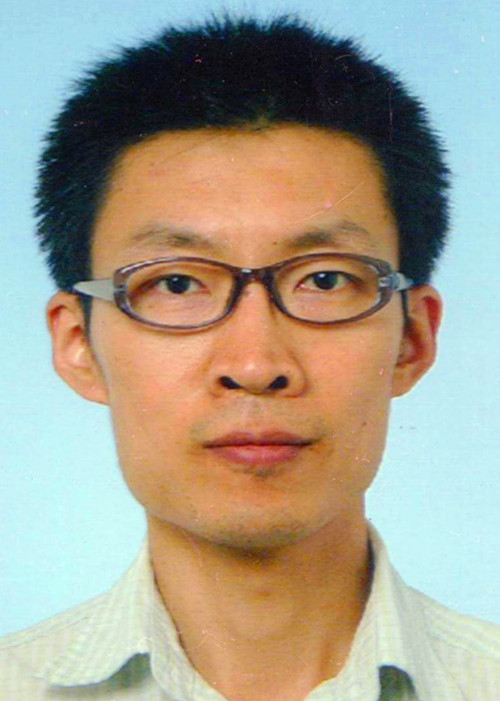 Jizhong Han (韩冀中)合作论文数University of Chinese Academy of Science1Bibo Cai (蔡碧波)合作论文数Research Center for Social Computing and Information Retrieval, Harbin Institute of Technology1
 Tingchao Yu (俞亭超)合作论文数College of Civil Engineering and Architecture, Zhejiang University1
 Yuanjun Xiong (熊元骏)合作论文数1
 Bing Qin (秦兵)合作论文数Social Computing and Interactive Robotics Center, Harbin Institute of Technology;School of Computer Science and Technology, Harbin Institute of Technology1
 Wanxiang Che (车万翔)合作论文数School of Computer Science and Technology, Harbin Institute of Technology;Research Center for Social Computing and Information Retrieval, Harbin Institute of Technology;Institute for Artificial Intelligence, Harbin Institute of Technology1
 Yutai Hou (侯宇泰)合作论文数Harbin Institute of Technology1
 Biyu Zhou (周碧玉)合作论文数中国科学院信息工程研究所1




