We investigate the proposal of hole doping RuO_2 via alloying with Cr ions to induce altermagnetism. Thin film samples of Ru_1-xCr_xO_2 (0 ≤ x ≤ 0.28) were prepared by reactive magnetron co-sputtering on TiO_2 substrates, with epitaxial nature verified by X-ray diffraction and composition depth profiles determined by X-ray photoelectron spectroscopy combined with Ar etching. Neutron diffraction measurements of samples with x = 0 and x = 0.23 at low temperatures show no evidence of long-range altermagnetic order with spins oriented along the c-axis or within the ab-plane. In contrast, temperature dependent susceptibility measurements in samples with x ≥ 0.16 show a gradual downturn below T≈20K, suggestive of antiferromagnetic interactions, although this coexists with ferromagnetic hysteresis and remnant magnetization at 4K for samples with x ≥ 0.23. Together, our magnetometry and neutron scattering measurements suggest the coexistence of antiferromagnetically coupled ferromagnetic CrO2 clusters. This indicates that Cr ions do not hole dope Ru bands to induce an altermagnet state, but rather the holes remain localized to the Cr ions.
We investigate the magnetic ground state of CuNdO_2, which is a delafossite with a triangular lattice of magnetic Nd^3+ ions that are well separated by non-magnetic Cu spacer layers. From inelastic neutron scattering measurements of the crystal electric field, we determine the strong Ising character of the pseudo-spin 1/2 Nd^3+ moments. Magnetic susceptibility and heat capacity measurements reveal the onset of long-range antiferromagnetic order at T_N=0.78 K. While the magnetic transition is definitively observed with muon spin relaxation, accompanied by the formation of a weakly dispersing spin wave excitation, no dipole-ordered moment is detected with neutron diffraction. We show that the apparent absence of a dipolar ordered moment is a consequence of the dominant Ising character of the antiferromagnetically coupled Nd^3+ moments, which experience extreme frustration on the triangular lattice. Consequently, the frustration in CuNdO_2 is relieved through in-plane ordering of the substantially smaller perpendicular component of the Nd^3+ moments into a 120° structure, with a nearly vanishing ordered moment.
Magnetoresistive materials that respond sensitively to applied fields are central to modern data storage technologies. Here we unveil a novel Magnetoresistive Memory (MRM) in Eu_5In_2As_6, where the electrical resistivity depends not only on the magnitude but also on the history of the applied magnetic field. Such an effect has been reported in only two classes of strongly correlated electron systems: perovskite manganites and pyrochlore iridates. In both cases, the effect has been observed in the magnetically ordered phase. It has been attributed to metastable magnetic states in manganites and conducting domain walls in iridates. Remarkably, the MRM in Eu_5In_2As_6 onsets at twice the antiferromagnetic transition temperature, well within the paramagnetic phase. The temperature, field, and time dependence of resistivity suggest that either a hidden order or a fluctuating phase with short-range correlations underlies this effect. Our results offer MRM as a new platform for quantum sensing and memory technologies, and encourage searching for MRM in related materials.
Magnetic pyrochlores with non-Kramers rare-earth ions provide a platform for exploring emergent gauge physics and quantum spin-ice behavior, yet the influence of structural disorder on their ground states remains insufficiently understood. Here we combine bulk characterization and single-crystal neutron-scattering measurements to investigate the non-Kramers pyrochlore Pr2Sn2O7. At temperatures below ∼1 K, the system exhibits key hallmarks of quantum spin-ice physics, including anisotropic spin-ice correlations and two distinct dynamical timescales. Upon further cooling, however, we observe a complete spin-freezing transition at Tf≈0.15 K, accompanied by recovery of the full nuclear Schottky anomaly, the emergence of a gapped magnetic excitation, and the development of incipient (100) magnetic correlations. Comparison with related Pr-based pyrochlores places Pr2Sn2O7 near the spin-frozen boundary of a disorder-perturbed phase diagram. These results establish a disorder-driven framework for the evolution of quantum spin-ice behavior into frozen ground states, revealing how signatures of a proximate quantum spin liquid can persist despite disorder-induced spin freezing in non-Kramers pyrochlores.
We report single-crystal neutron spectroscopy and bulk characterization on hydrothermally grown Nd2Sn2O7, revealing a dynamical moment fragmentation embedded within the all-in-all-out ordered state. The spectra show a nearly flat band with pinch-point-like momentum dependence, accompanied by dispersive branches that generate half-moon features across multiple Brillouin zones. These defining signatures are captured quantitatively by a minimal dipolar-octupolar spin Hamiltonian, demonstrating excellent agreement between experiment and theory. The higher flat-mode energy helps account for the absence of dynamical interference in prior muon spin relaxation (muSR) studies, while the lack of any photon-like excitation imposes strict constraints on the proposed Coulombic antiferromagnet scenario. Our results extend dynamical moment fragmentation to Nd2Sn2O7 and identify it as a clean, tractable platform for quantitative exploration of emergent gauge-field physics and multipolar spin-wave dynamics in frustrated magnets.
Pyrochlore magnets of the form R2B2O7, in which rare-earth ions on the R site form a three-dimensional network of corner-sharing tetrahedra, provide a canonical setting for geometrical frustration. Ho-based pyrochlores host a dipolar spin-ice ground state, characterized by Ising moments constrained by the ice rules and elementary excitations analogous to magnetic monopoles. Here we examine how controlled chemical disorder influences this state by introducing site mixing on the nonmagnetic B site in two compounds. Ho2GaSbO7 contains only Ga3+/Sb5+ charge disorder, whereas Ho2ScSbO7 exhibits both charge and substantial size disorder arising from the large ionic-radius mismatch between Sc3+ and Sb5+. Although both materials retain the pyrochlore structure, neutron-scattering measurements reveal a reduced correlation length for the R/B-site cation ordering and enhanced local structural distortions in Ho2ScSbO7. Despite these structural differences, bulk thermodynamic measurements and magnetic diffuse scattering demonstrate that both systems exhibit the defining signatures of that develop within the dipolar spin-ice regime, a feature absent in pristine Ho pyrochlores and indicative of disorder-induced splitting of the non-Kramers ground-state doublet. Together, these results show that controlled disorder generates tunable transverse-field-driven quantum fluctuations in Ho-based pyrochlores, although the dipolar spin-ice state is remarkably robust to this disorder.
Competing interactions in frustrated magnets can give rise to highly degenerate ground states from which correlated liquidlike states of matter often emerge. The scaling of this degeneracy influences the ultimate ground state, with extensive degeneracies potentially yielding quantum spin liquids, while subextensive or smaller degeneracies yield static orders. A long-standing problem is to understand how ordered states precipitate from this degenerate manifold and what echoes of the degeneracy survive ordering. Here, we use neutron scattering to experimentally demonstrate a new “nodal-line” spin liquid, where spins collectively fluctuate within a subextensive manifold spanning one-dimensional lines in reciprocal space. Realized in the spin-orbit-coupled, face-centered-cubic iridate K_{2}IrCl_{6}, we show that the subextensive degeneracy is robust, but remains susceptible to fluctuations or longer-range interactions which cooperate to select a magnetic order at low temperatures. Proximity to the nodal-line spin liquid influences the ordered state, enhancing the effects of quantum fluctuations that in turn act to stabilize the sublattice magnetization through the self-consistent opening of a large spin-wave gap. Our results demonstrate how quantum fluctuations can act counterintuitively in frustrated materials: Even in a case where fluctuations are ineffective at selecting an ordered state from a degenerate manifold, at the brink of the nodal spin liquid, they can act to protect the ordered state and dictate its low-energy physics.
In CrX2(X = Br, I), a Jahn-Teller effect distorts the octahedral configuration of the anions about Cr, resulting in a ribbon chain structure. We previously observed helimagnetism in CrI2 propagating along the ribbon chains, with an 80-90 degrees rotation per Cr ion. Via neutron scattering, we report that CrBr2 and the solid solution CrIBr are also helimagnetic, with N & eacute;el temperatures of 17 and 12 K, respectively, and signs of intermediate magnetic transitions in both compounds. The helical angle between spins on consecutive Cr ions along the ribbon chains increases with increasing Br substitution, from 89.7 degrees (CrI2) to 116 degrees (CrIBr) to 147 degrees (CrBr2), possibly as a result of decreasing longer-range intrachain spin interactions with the increased electron localization of the lighter anions.
Recent reports of colossal negative magnetoresistance (CMR) in a few magnetic semimetals and semiconductors have attracted attention, because these materials are devoid of the conventional mechanisms of CMR such as mixed valence, double exchange interaction, and Jahn-Teller distortion. New mechanisms have thus been proposed, including topological band structure, ferromagnetic clusters, orbital currents, and charge ordering. The CMR in these compounds has been reported in two forms: either a resistivity peak or a resistivity upturn suppressed by a magnetic field. Here we reveal both types of CMR in a single antiferromagnetic semiconductor Eu5In2As6. Using the transport and thermodynamic measurements, we demonstrate that the peak-type CMR is likely due to the percolation of magnetic polarons with increasing magnetic field, while the upturn-type CMR is proposed to result from the melting of a charge order under the magnetic field. We argue that similar mechanisms operate in other compounds, offering a unifying framework to understand CMR in seemingly different materials.
Exchange interactions are mediated via orbital overlaps across chemical bonds. Thus, modifying the bond angles by physical pressure or strain can tune the relative strength of competing interactions. Here we present a remarkable case of such tuning between the Heisenberg (J) and Kitaev (K) exchange, which respectively establish magnetically ordered and spin liquid phases on a honeycomb lattice. We observe a rapid suppression of the Néel temperature (TN) with pressure in Ag3LiRh2O6, a spin-1/2 honeycomb lattice with both J and K couplings. Using a combined analysis of x-ray data and first-principles calculations, we find that pressure modifies the bond angles in a way that increases the ∣K/J∣ ratio and thereby suppresses TN. Consistent with this picture, we observe a spontaneous onset of muon spin relaxation (μSR) oscillations below TN at low pressure, whereas in the high pressure phase, oscillations appear only when T < TN/2. Unlike other candidate Kitaev materials, Ag3LiRh2O6is tuned toward a quantum critical point by pressure while avoiding a structural dimerization in the relevant pressure range.
Pair condensates appear in multiple branches of physics, always introducing exotic phenomena. The pair condensate in quantum magnetism is the spin nematic, whose static (quadrupolar) order is difficult to access, favoring dynamical probes. Here, we perform high-resolution neutron spectroscopy to obtain direct evidence for the presence of two spin-nematic phases induced in the triangular-lattice antiferromagnet Na2BaNi(PO4)2 by controlling the applied magnetic field. By combining precise experiments with quantitative theoretical and numerical analysis, we identify universal dynamics arising from the pair condensate. We show explicitly how the gapless Goldstone mode influences the dispersion and induces Cherenkov-like velocity-selective decay of the gapped single-quasiparticle band. These common spectral features shed new light on spin-nematic dynamics and underline the universal phenomenology shared by pair condensates across different physical systems.
We have investigated the electronic and magnetic structures of topological kagome Fe1-xMnxSn (0 x 0.3) thin films via neutron diffraction, electronic transport measurements, and ab initio density functional theory (DFT) to understand the interplay between hole doping, magnetism, and the electronic structures. Temperaturedependent neutron diffraction measurements on parent FeSn reveal the N & eacute;el temperature to be TN similar to 355 K and the underlying A-type antiferromagnetic ordering is associated with a wave vector q = (0 0 1/2). Upon Mn doping to x = 0.15, TN decreases slightly while the magnetic ordering vector remains the same. Resistivity measurements show metallic characteristics and in-plane anisotropy down to 10 K for all the investigated samples. The effects of hole doping are mapped in terms of electronic ground state calculations via DFT which show that the Dirac point is moved closer to the Fermi level (EF) and the flat bands get pushed away from EF upon hole doping. However, a comparison between hole-doped Fe1-xMnxSn and electron-doped Fe1-xCoxSn indicates that the N & eacute;el temperature does not scale with the position of EF relative to the flat band. Our results establish the antiferromagnetic state of FeSn and Fe1-xMnxSn films at room temperature, laying the groundwork for future studies of magnetism in kagome heterostructures.
We report single-crystal neutron spectroscopy and bulk characterization on hydrothermally grown Nd2Sn2O7, revealing a dynamical moment fragmentation embedded within the all-in-all-out ordered state. The spectra show a nearly flat band with pinch-point-like momentum dependence, accompanied by dispersive branches that generate half-moon features across multiple Brillouin zones. These defining signatures are captured quantitatively by a minimal dipolar-octupolar spin Hamiltonian, demonstrating excellent agreement between experiment and theory. The higher flat-mode energy helps account for the absence of dynamical interference in prior muon spin relaxation (muSR) studies, while the lack of any photon-like excitation imposes strict constraints on the proposed Coulombic antiferromagnet scenario. Our results extend dynamical moment fragmentation to Nd2Sn2O7 and identify it as a clean, tractable platform for quantitative exploration of emergent gauge-field physics and multipolar spin-wave dynamics in frustrated magnets.
La 0.5 Sr 0.5 CoO 2.5 and La 0.5 Sr 0.5 CoO 3
Pyrochlore materials are characterized by their hallmark network of corner-sharing rare-earth tetrahedra, which can produce a wide array of complex magnetic ground states. Ferromagnetic Ising pyrochlores often obey the "two-in-two-out" spin ice rules, which can lead to a highly-degenerate spin structure. Large moment systems, such as Ho$_2$Ti$_2$O$_7$ and Dy$_2$Ti$_2$O$_7$, tend to host a classical spin ice state with low-temperature spin freezing and emergent magnetic monopoles. Systems with smaller effective moments, such as Pr$^{3+}$-based pyrochlores, have been proposed as excellent candidates for hosting a "quantum spin ice" characterized by entanglement and a slew of exotic quasiparticle excitations. However, experimental evidence for a quantum spin ice state has remained elusive. Here, we show that the low-temperature magnetic properties of Pr$_2$Sn$_2$O$_7$ satisfy several important criteria for continued consideration as a quantum spin ice. We find that Pr$_2$Sn$_2$O$_7$ exhibits a partially spin-frozen ground state with a large volume fraction of dynamic magnetism. Our comprehensive bulk characterization and neutron scattering measurements enable us to map out the magnetic field-temperature phase diagram, producing results consistent with expectations for a ferromagnetic Ising pyrochlore. We identify key hallmarks of spin ice physics, and show that the application of small magnetic fields ($\mu_0 H_c \sim$0.75T) suppresses the spin ice state and induces a long-range ordered magnetic structure. Together, our work clarifies the current state of Pr$_2$Sn$_2$O$_7$ and encourages future studies aimed at exploring the potential for a quantum spin ice ground state in this system.
Polycrystalline and single-crystal samples of the insulating Shastry-Sutherland compound Er2Be2SiO7 were synthesized via a solid-state reaction and the floating zone method, respectively. The crystal structure, Er single-ion anisotropy, zero-field magnetic ground state, and magnetic phase diagrams along high-symmetry crystallographic directions were investigated with bulk measurement techniques, x-ray and neutron diffraction, and neutron spectroscopy. We establish that Er2Be2SiO7 crystallizes in a tetragonal space group with planes of orthogonal Er dimers and a strong preference for the Er moments to lie in the local plane perpendicular to each dimer bond. We also find that this system has a noncollinear ordered ground state in zero field with a transition temperature of 0.841 K consisting of antiferromagnetic dimers and in-plane moments. Finally, we mapped out the H-T phase diagrams for Er2Be2SiO7 along the directions H [001], [100], and [110]. While an increasing in-plane field simply induces a phase transition to a field-polarized phase, we identify three metamagnetic transitions in the H [001] case. Single-crystal neutron diffraction results reveal that the H [001] phase diagram can be explained predominantly by the expected field-induced behavior of classical, anisotropic moments, although the microscopic origin of one phase requires further investigation.
The parallel stripe phase is remarkable both in its own right, and in relation to the other phases with which it coexists. Its inhomogeneous nature makes such states susceptible to random fields from quenched magnetic vacancies. We argue this is the case by introducing low concentrations of nonmagnetic Zn impurities (0%--10%) into ${\mathrm{La}}_{1.6\ensuremath{-}x}{\mathrm{Nd}}_{0.4}{\mathrm{Sr}}_{x}{\mathrm{CuO}}_{4}$ (Nd-LSCO) with $x=0.125$ in single-crystal form, well below the percolation threshold of $\ensuremath{\sim}41%$ for a two-dimensional square lattice. Elastic neutron scattering measurements on these crystals show clear magnetic quasi-Bragg peaks at all Zn dopings. While all the Zn-doped crystals display order parameters that merge into each other and the background at $\ensuremath{\sim}68$ K, the temperature dependence of the order parameter as a function of Zn concentration is drastically different. This result is consistent with meandering charge stripes within the parallel stripe phase, which are pinned in the presence of quenched magnetic vacancies. In turn it implies vacancies that preferentially occupy sites within the charge stripes, and hence that can be very effective at disrupting superconductivity in Nd-LSCO ($x=0.125$), and, by extension, in all systems exhibiting parallel stripes.
Compounds forming the quasi-two-dimensional Shastry-Sutherland lattice (SSL) have attracted significant experimental and theoretical attention in the field of frustrated magnetism. This is primarily due to their realization of an exactly soluble J1-J2 orthogonal dimer model capable of hosting magnetic order, dimer singlet, and plaquette singlet phases in zero applied field and their complex magnetic phase diagrams with fractional magnetization plateaus and possible superfluid and supersolid phases found between the plateau states. The discovery and characterization of SSL compounds based on rare-earth magnetic ions provide a direct route to study the stability and properties of these exotic magnetic phases in systems with a variety of different magnetic anisotropies. In this paper, we discuss the synthesis and magnetic characterization of polycrystalline samples of the R2Be2SiO7 family, where R = Nd, Sm, and Gd-Yb. All family members crystallize in the space group P4 over bar 21m (113) and show no signs of long-range magnetic order above 2 K, except for R = Tb which orders antiferromagnetically at 2.6 K.
A modern cold triple-axis spectrometer to study quantum condensed matter systems is planned for the High Flux Isotope Reactor (HFIR) at Oak Ridge National Laboratory. Here, we describe the conceptual principles and design of a secondary spectrometer using a multiplexed, prismatic analyzer system relying on graphite crystals and inspired by the successful implementation of the Continuous Angle Multiple Energy Analysis (CAMEA) spectrometers at the Paul Scherrer Institute. This project is currently known as MANTA for Multi-analyzer Neutron Triple-Axis. We report Monte-Carlo ray-tracing simulations on a simple but realistic sample scattering kernel to further illustrate the prismatic analyzer concept's workings, calibration, and performance. Then, we introduce a new statistical analysis approach based on the prismatic analyzer concept to improve the number of final energies measured on the spectrometer. We also study possible evolutions in the CAMEA design relevant for MANTA.
Most iron-based superconductors exhibit stripe-type magnetism, characterized by the ordering vector Q = (21, 21). In contrast, Fe1+yTe, the parent compound of the Fe1+yTe1-xSex superconductors, exhibits double-stripe magnetic order associated with the ordering vector Q = (12, 0). Here, we use elastic neutron scattering to investigate heavily Cu-substituted (Fe1-xCux)1+yTe compounds and reveal that (1) for x >= 0.4, short-range magnetic order emerges around the stripe-type vector at Q = (12 +/- delta, 12 +/- delta, 12 ) with delta approximate to 0.05; (2) the short-range magnetic order is associated with a superstructure modulation at Q = (13, 13, 1 2 ), with the magnetic correlation length shorter than that for the superstructure; and (3) for x >= 0.55, we observe an additional intergrown phase with higher Cu content, characterized by a superstructure modulation vector Q = (13, 31, 0) and magnetic peaks 12)/(13,23, 12 ). The positions of superstructure peaks suggest that relative to the tetragonal unit cell of Fe1+yTe, heavy Cu substitution leads to Fe-Cu orderings that expand the unit cell by 2 x 3 2 times in the ab plane, corroborated by first-principles calculations that suggest the formation of spin chains and spin ladders. Our findings show that stripe-type magnetism is common in magnetically diluted iron pnictides and chalcogenides, despite the varying associated atomic orderings.
 Graeme Luke合作论文数Department of Physics & Astronomy, McMaster University62
 Gregory MacDougall合作论文数Department of Physics, The Grainger College of Engineering, University of Illinois Urbana-Champaign57
 Travis Williams合作论文数ISIS Neutron & Muon Source54
 Jeremy P. Carlo合作论文数Institut Paoli Calmettes;Bd de Sainte Marguerite;Institut Paoli Calmettes36
 Haidong Zhou合作论文数Department of Physics and Astronomy, The University of Tennessee33
 Yj Uemura合作论文数32
 Christopher Wiebe合作论文数Department of Chemistry, University of Winnipeg;Department of Physics and Astronomy, McMaster University30Tatsuo Goko合作论文数30
 Stephen E Nagler合作论文数Oak Ridge National Laboratory;Department of Physics, University of Tennessee, Knoxville28
 Stuart A Calder合作论文数Oak Ridge National Laboratory24
 Jiaqiang Yan合作论文数Materials Science and Technology Division, Oak Ridge National Laboratory;Tickle College of Engineering, The University of Tennessee, Knoxville23Reig-i-Plessis Dalmau合作论文数Department of Physics, Northeastern University20
 David Mandrus合作论文数Department of Materials Science and Engineering, Tickle College of Engineering, University of Tennessee, Knoxville17A. T. Savici合作论文数Department of Physics;Columbia University;Department of Physics, Columbia University16
 Jonathan Gaudet合作论文数McMaster Univ, Dept Phys & Astron, Hamilton, ON L8S 4M1, Canada14
 Matthew B Stone合作论文数Neutron Scattering Division, Oak Ridge National Laboratory14
 Garrett E Granroth合作论文数Neutron Scattering Division, Oak Ridge National Laboratory14
 Hanna Dabkowska合作论文数International Union of Crystallography14
 Sergey Budko合作论文数Department of Materials Sciences and Engineering, Ames Laboratory;Department of Physics and Astronomy, Iowa State University14
 Paul C. Canfield合作论文数Department of Physics and Astronomy, College of Liberal Arts and Sciences, Iowa State University of Science and Technology13
 Bruce D Gaulin合作论文数Faculty of Science, McMaster University13
 Andrew Christianson合作论文数Oak Ridge National Laboratory13P. L. Russo合作论文数12
 Huibo Cao合作论文数Neutron Scattering Division, Oak Ridge National Laboratory12H. Kageyama合作论文数11
 Fazel Tafti合作论文数Dept Phys, Boston Coll11
 Vasile O Garlea合作论文数Neutron Scattering Division, Oak Ridge National Laboratory11
 Qiang Chen合作论文数Dept Phys & Astron, Univ Tennessee10
 Masaaki Matsuda合作论文数Neutron Scattering Division, Oak Ridge National Laboratory10J. Rodriguez合作论文数10
 John Schneeloch合作论文数Department of Physics, University of Virginia;Brookhaven National Laboratory, Stony Brook University10
 Mark D Lumsden合作论文数Neutron Scattering Division, Oak Ridge National Laboratory10
 Tao Hong合作论文数Division of Neutron Scattering, Oak Ridge National Laboratory10
 Jaime A Fernandez-Baca合作论文数Neutron Scattering Division, Oak Ridge National Laboratory10
 Atsushi Kitada合作论文数10
 Wei Tian合作论文数Oak Ridge National Laboratory10
 Despina Louca合作论文数Los Alamos National Laboratory10
 M. B. Stone合作论文数Oak Ridge Natl Lab, Quantum Condensed Matter Div, Oak Ridge, TN 37831 USA9
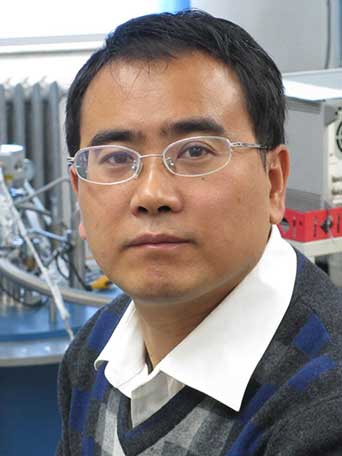 Weiqiang Yu (于伟强)合作论文数School of Physics, Renmin University of China9
 Jie Ma (马杰)合作论文数School of Physics and Astronomy, Shanghai Jiao Tong University9E. Baggio Saitovitch合作论文数9G. Luke合作论文数8G. M. Luke合作论文数8
 P. M. Sarte合作论文数Ctr Sci Extreme Condit, Univ Edinburgh8
 Alannah Hallas合作论文数Department of Physics & Astronomy, The University of British Columbia8
 Wilson Murray N合作论文数8
 Michael A. Mcguire合作论文数Correlated Electron Materials Group, Foundational Materials Science Section, Materials Science and Technology Division, Oak Ridge National Laboratory8
 Yasutomo Uemura合作论文数Department of Physics, Columbia University8
 Jose A. Rodriguez合作论文数National Institute of Standards and Technology Center for Neutron Research;Department of Materials Science and Engineering, University of Maryland, College Park8




