Generating a truly photo-realistic 3D real-time view capability in an ergonomic and cost effective manner is a crucial engineering challenge. In this paper, the advanced integral imaging methodology is proposed that is based on microlens arrays to generate 3D Holoscopic images by the intersection ray bundle that defines each image point in the associated scene at the correct spatial place. The core idea of the novel algorithm reported in this paper is to accelerate the computer generation of photo-realistic still 3D Holoscopic images based on multiprocessor ray-traced system. Consequently a significantly reduce in running time is successfully completed. Multiple subjective and objective images quality assessments are addressed and as a result there was not any observable distortion in images quality. The results obtained are very satisfactory and for the first time that the new hybrid algorithm has achieved the saving in terms of execution rendering time approximately (60 % - 78 %) that a near to real-time computer generation of 3D Holoscopic images. Keywords: Real-time Computer Generation content of 3D Holoscopic Images, Interpolation 3D integral images, Computer Graphics, Spatial Coherence, Ray Tracing, 3DTV.
The fast growth of the world population associated with the ever-increasing need for food and the significant contribution of agriculture to anthropogenic global warming is driving the changes from conventional farming approaches to innovative and sustainable agriculture ones. One of these approaches is aquaculture which is founded on the principle of circular economy combining aquaculture and hydroponics in symbiose with aquaculture waste serving as nutrients for plant growth. Conventional Aquaponics has evolved to Aquaponics 4.0 with a fully automated and remote-controlled system for producing foods at an industrial scale. The implementation of the Internet of Things (IoT) and Artificial Intelligence (AI) could simplify farmers' tasks with remote operations while allowing them to achieve automatic and precise control of inputs and outputs as well as to improve the overall efficiency of the system. This review focuses on the use of these smart technologies to analyze, monitor, and maintain good water quality and appropriate replenishment in Aquaponics systems. The identified research gap and future possible contributions in this area are also discussed.
We aim to help improve the quality of life of people with visual disabilities through the application of emerging technologies. Our current research investigates the viability of virtual reality (VR) as an aid for persons with visual disabilities. In this article, we explore the potential of VR-assisted reading. We investigate the reading effects of VR equipment on persons with visual disabilities by utilising variations of standardised optometry-informed reading tests conducted across 24 participants. Test results uncovered that, when comparing a worn VR head-mounted display (HMD) to physical unaided tests, results within a HMD scaled better at closer distances, while unaided tests scaled better with further distances. Using the findings collected and requirements elicited from participants, a prototype document reader was developed for reading text within a VR-immersed 3D environment, allowing low-vision users to customise and configure accessibility features for enhanced reading. This software was tested with 11 new participants alongside user evaluations, allowing us to discover how users perceived text best within our 3D virtual environments, and what features and techniques are required to evolve this accessibility tool further. The user test reported an overwhelmingly positive response to our tool as a feasible reading aid, allowing persons who could not engage (or, due to the difficulty, refusing to) in the reading of material to do so. We also register some limitations and areas for improvement, such as a need for non-functional requirements to be improved, and the aesthetics of our design to be improved going forward.
Industrial control systems (ICSs) are integral parts of smart cities and critical to modern societies. Despite indisputable opportunities introduced by disruptor technologies, they proliferate the cybersecurity threat landscape, which is increasingly more hostile. The quantum of sensors utilized by ICS aided by artificial intelligence (AI) enables data collection capabilities to facilitate automation, process streamlining, and cost reduction. However, apart from the operational use, the sensors generated data combined with AI can be innovatively utilized to model anomalous behavior as part of layered security to increase resilience to cyberattacks. We introduce a framework to profile anomalous behavior in ICS and derive a cyber-risk score. A novel super learner ensemble for one-class classification is developed, using overlapping rolling windows with stratified, k-fold, n-repeat cross-validation applied to each base learner followed by majority voting to derive the best learner. Our approach is demonstrated on a liquid distribution sensor data set. The experimental results reveal that the proposed technique achieves an overall F1-score of 99.13 %, an anomalous recall score of 99% detecting anomalies lasting only 17 s. The key strength of the framework is the low computational complexity and error rate. The framework is modular, generic, applicable to other ICS, and transferable to other smart city sectors.
Digital twin technologies – comprised of data-rich models and machine learning – allow the operators of smart city applications to gain an accurate representation of complex cyber-physical models. However, the implicit need for resilient data protection must be achieved by integrating privacy-preserving mechanisms into the DT system design as part of an effective defence-in-depth strategy.
By law, schools are required to protect the well-being of students against problems such as on-campus bullying and physical abuse. In the UK, a report by the Office for Education (OfE) showed 17% of young people had been bullied during 2017–2018. This problem continues to prevail with consequences including depression, anxiety, suicidal thoughts, and eating disorders. Additionally, recent evidence suggests this type of victimisation could intensify existing health complications. This study investigates the opportunities provided by Internet of Medical Things (IoMT) data towards next-generation safeguarding. A new model is developed based on blockchain technology to enable real-time intervention triggered by IoMT data that can be used to detect stressful events, e.g., when bullying takes place. The model utilises private permissioned blockchain to manage IoMT data to achieve quicker and better decision-making while revolutionising aspects related to compliance, double-entry, confidentiality, and privacy. The feasibility of the model and the interaction between the sensors and the blockchain was simulated. To facilitate a close approximation of an actual IoMT environment, we clustered and decomposed existing medical sensors to their attributes, including their function, for a variety of scenarios. Then, we demonstrated the performance and capabilities of the emulator under different loads of sensor-generated data. We argue to the suitability of this emulator for schools and medical centres to conduct feasibility studies to address sensor data with disruptive data processing and management technologies.
Light-field cameras play a vital role for rich 3D information retrieval in narrow range depth sensing applications. The key obstacle in composing light-fields from exposures taken by a plenoptic camera is to computationally calibrate, align and rearrange four-dimensional image data. Several attempts have been proposed to enhance the overall image quality by tailoring pipelines dedicated to particular plenoptic cameras and improving the consistency across viewpoints at the expense of high computational loads. The framework presented herein advances prior outcomes thanks to its novel micro image scale-space analysis for generic camera calibration independent of the lens specifications and its parallax-invariant, cost-effective viewpoint color equalization from optimal transport theory. Artifacts from the sensor and micro lens grid are compensated in an innovative way to enable superior quality in sub-aperture image extraction, computational refocusing and Scheimpflug rendering with sub-sampling capabilities. Benchmark comparisons using established image metrics suggest that our proposed pipeline outperforms state-of-the-art tool chains in the majority of cases. Results from a Wasserstein distance further show that our color transfer outdoes the existing transport methods. Our algorithms are released under an open-source license, offer cross-platform compatibility with few dependencies and different user interfaces. This makes the reproduction of results and experimentation with plenoptic camera technology convenient for peer researchers, developers, photographers, data scientists and others working in this field.
We present our work on creating a virtual reality personal library environment to enable people with severe visual disabilities to engage in reading tasks. The environment acts as a personal study or library to an individual, who under other circumstances would not be able to access or use a public library or a physical study at home. We present tests undertaken to identify the requirements and needs of our users to inform this environment and finally present the working prototype.
In this paper, we report the theoretical and experimental implementation of a photonic mixer for Radio-Over-Fiber (RoF) transmission systems, which incorporates an all-optical 10.87 GHz microwave frequency signal generator based on beating laser frequency with its first order Stimulated Brillouin Scattering (SBS) frequency shift. A 13GHz Radio Frequency (RF) is down-converted to 2.13 GHz Intermediate Frequency (IF) signal. The proposed system configuration represents a cost-effective photonic mixer that can be deployed for up and down conversion around 11 GHz in RoF transmission systems. The optically generated microwave signal of 10.87 GHz has a phase noise of -109 dBc/Hz at 15-MHz offset. The proposed photonic mixer exhibits a Spurious-Free Dynamic Range (SFDR) of 93dB.Hz (2/3). This RoF transmission system configuration deploys dual parallel Gallium Arsenide (GaAs) Mach Zehnder Modulator as a photonic mixer, and a single laser source as a Brillouin pump and as an optical carrier at the same time. To the best of our knowledge, this type of photonic mixers has not been reported in the literature.
Plenoptic imaging enables a light-field to be captured by a single monocular objective lens and an array of micro lenses attached to an image sensor. Metric distances of the light-field's depth planes remain unapparent prior to acquisition. Recent research showed that sampled depth locations rely on the parameters of the system's optical components. This paper presents PlenoptiSign, which implements these findings as a Python software package to help assist in an experimental or prototyping stage of a plenoptic system.
Integral imaging, also known as Holoscopic imaging to be promising approach for glassless 3D and Its methodology uses the principle of “Fly’s eye” and hence allows natural viewing of objects (i.e. fatigue free viewing), In this paper, the main objective is to provide a new plug-in tools for full parallax computer generated 3D Holoscopic content, based mainly on 3D Virtual Reality Modeling Language parser to enable 3D integral images content and rendering to be produced from VRML file format, and displayed on auto-stereoscopic. In the proposed system, the 3D content is either captured by a single camera with a micro lens, cylindrical lens array or computer generated to allow for mixed 3D video generation. Multiprocessor ray tracing system is adapted to be able to generate 3D integral images that containing 3D IIVRML integral images content parser modules; new 3D IIVRML file format is created by uses 3D unidirectional camera parameters in order to import/accept into ray tracer renderer software. Experimental results show validation of the new plug-in software tool and tests on such Tie scene and Cessna scene . Consequently, 3D integral images frames and short time 3D II movie are generated and displayed without a glass on PC screen, LCD and the HoloVizio.
In this work, we present a bespoke assistive tool for people with severe visual disabilities. We are able to download text from books and present these books to our users in a virtual reality environment. This gives them specific capabilities to manipulate the text and factors such as brightness, size and contrast, in order for them to gain a comfortable reading experience.
In this paper, we aim to develop a low-computational system for real-time image processing and analysis in endoscopy images for the early detection of the human esophageal adenocarcinoma and colorectal cancer. Rich statistical features are used to train an improved machine-learning algorithm. Our algorithm can achieve a real-time classification of malign and benign cancer tumours with a significantly improved detection precision compared to the classical HOG method as a reference when it is implemented on real time embedded system NVIDIA TX2 platform. Our approach can help to avoid unnecessary biopsies for patients and reduce the over diagnosis of clinically insignificant cancers in the future.
In this paper, we demonstrate light field triangulation to determine depth distances and baselines in a plenoptic camera. Advances in micro lenses and image sensors have enabled plenoptic cameras to capture a scene from different viewpoints with sufficient spatial resolution. While object distances can be inferred from disparities in a stereo viewpoint pair using triangulation, this concept remains ambiguous when applied in the case of plenoptic cameras. We present a geometrical light field model allowing the triangulation to be applied to a plenoptic camera in order to predict object distances or specify baselines as desired. It is shown that distance estimates from our novel method match those of real objects placed in front of the camera. Additional benchmark tests with an optical design software further validate the model’s accuracy with deviations of less than ±0.33% for several main lens types and focus settings. A variety of applications in the automotive and robotics field can benefit from this estimation model.
Plenoptic cameras are receiving increased attention in scientific and commercial applications because they capture the entire structure of light in a scene, enabling optical transforms (such as focusing) to be applied computationally after the fact, rather than once and for all at the time a picture is taken. In many settings, real-time interactive performance is also desired, which in turn requires significant computational power due to the large amount of data required to represent a plenoptic image. Although GPUs have been shown to provide acceptable performance for real-time plenoptic rendering, their cost and power requirements make them prohibitive for embedded uses (such as in-camera). On the other hand, the computation to accomplish plenoptic rendering is well structured, suggesting the use of specialized hardware. Accordingly, this paper presents an array of switch-driven finite impulse response filters, implemented with field programmable gate array (FPGA) to accomplish high-throughput spatial-domain rendering. The proposed architecture provides a power-efficient rendering hardware design suitable for full-video applications as required in broadcasting or cinematography. A benchmark assessment of the proposed hardware implementation shows that real-time performance can readily be achieved, with a one order of magnitude performance improvement over a GPU implementation and three orders of magnitude performance improvement over a general-purpose CPU implementation.
In this paper, a novel design for a metamaterial lens (superlens) based on a Photonic Crystal (PC) operating at visible wavelengths is reported. The proposed superlens consist of a gallium phosphide (GaP) dielectric slab waveguide with a hexagonal array of silver rods embedded within the GaP dielectric. In-house 2DFDTD numerical method is used to design and optimize the proposed superlens. Several superlenses are designed and integrated within a same dielectric platform, promoting the proof-of-concept (POC) of possible construction of an array of superlenses (or sub-lenses to create an M-Lens) for light field imaging applications. It is shown that the concavity of the superlens and positioning of each sub-lens within the array strongly affects the performances of the image in terms of resolution. Defects and various geometrical shapes are introduced to construct and optimize the proposed superlenses and increase the quality of the image resolution. It is shown that the orientation of the active region (ellipse) along x and y axis has tremendous influence on the quality of image resolution. In order to investigate the performance characteristics of the superlenses, transmitted power is calculated using 2D FDTD for image projections at various distances (in x and y plane). It is also shown, how the proposed superlens structures could be fabricated using standard micro fabrication techniques such as electron beam lithography, inductively coupled Reactive ion etching, and glancing angle evaporation methods. To the best of our knowledge, these are the first reported POC of superlenses, integrated in a monolithic platform suitable for high imaging resolution that can be used for light field imaging applications at visible wavelength. The proposed superlenses (integrated in a single platform M-Lens) will have tremendous impact on imaging applications.
Massive multi-input multioutput (MIMO) is believed to be an effective technique for future terrestrial broadcasting systems. Reciprocity calibration is one of the major practical challenges for massive MIMO systems operating in time-division duplexing mode. A new closed-loop reciprocity calibration method is investigated in this paper which can support online calibration with a higher accuracy com...
Recent advances in camera technologies has led to the design of plenoptic cameras. This camera type can capture multiple images of the same scene using arrays of microlenses, where each microlens has a shifted location providing a separate view of the scene. Such a design results in a superior performance as compared to traditional cameras, enabling multi-view or multi-focal imaging captured in a single shot. However, currently available plenoptic cameras are limited in spatial resolution, which makes it difficult to use them in applications where sharpness or high resolution is key, such as the film industry. Our paper presents a novel light field hybrid super-resolution method that combines two classical super-resolution techniques for efficient application to plenoptic images. After this combination, we first segment the output hybrid super-resolution image into the objects of interest. Afterward, we apply sparse representation to super resolve the segmented image. This technique helps to improve the quality by decrease computations for light field images and extract significant features from the objects of interest. We demonstrate the gain achieved by the novel method as compared to the current relevant approaches in terms of both PSNR and SSIM for various enhanced spatial resolutions.
 Mohammed K. Ibrahim合作论文数22
 Emmanuel Tsekleves合作论文数School of Engineering and Design, Brunel University20
 M. Rafiq Swash合作论文数Brunel University15
 Malcolm Mccormick合作论文数15
 Ashur, Ahmed.S.合作论文数11
 Christopher Hahne合作论文数University of Bedfordshire Luton10J. C. Fernandez合作论文数9
 Eman Alazawi合作论文数9O. Abdulfatah合作论文数8
 Shyqyri Haxha合作论文数Group of Photonics, Kent University Canterbury8B. Li合作论文数6
 Vladan Velisavljevic合作论文数Deutsche Telekom Laboratories6John Cosmas合作论文数Professor of Multimedia Systems,
Multimedia Systems & Parallel Computing Technology Research Group
Objectives of Multimedia Systems Research Group
The "Multimedia System and Parallel Computing Technology" research group develops:6
Vladan Velisavljevic合作论文数Deutsche Telekom Laboratories6John Cosmas合作论文数Professor of Multimedia Systems,
Multimedia Systems & Parallel Computing Technology Research Group
Objectives of Multimedia Systems Research Group
The "Multimedia System and Parallel Computing Technology" research group develops:6 Osama Hassan Youssef Atallah合作论文数5
 O. AbdulFatah合作论文数5Neil Davies合作论文数5M. Dekhili合作论文数5
 Steven Adedoyin合作论文数5
 Sun-Yuan Kung合作论文数Department of Electrical and Computer Engineering, School of Engineering and Applied Science, Princeton University5Mc Forman合作论文数4Jinsong Ren合作论文数4El-Mabrouk, A.合作论文数3
 Kurtis Weir合作论文数3Mahmoud Geat Eljadid合作论文数Sch Engn & Design, Brunel Univ3Susanne Fiebig合作论文数3
 Haider M. Al-Khateeb合作论文数Univ Wolverhampton, WCRI, Wolverhampton, W Midlands, England3Forman, M.合作论文数3Jalloh, I.合作论文数3
 W. A. C. Fernando合作论文数3
 Vinita Nahar合作论文数School of Information Technology and Electrical Engineering, The University of Queensland3
 Fernando Loizides合作论文数School of Computer Science and Informatics, Cardiff University3
 Maysam Abbod合作论文数Brunel University London3
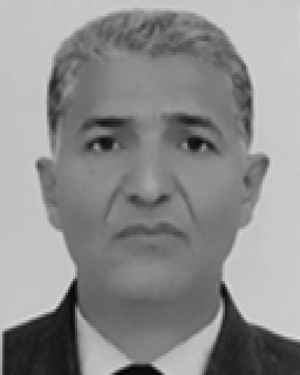 Fathi Abdelmalek合作论文数National Institute of Applied Sciences and Technology3
 Jonathan Loo合作论文数School of Engineering & Information Sciences, Middlesex University3
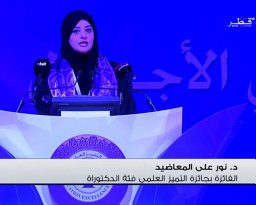 Noor Almaadeed合作论文数Department of Computer Engineering, Brunel University3Graham Milnthorpe合作论文数2
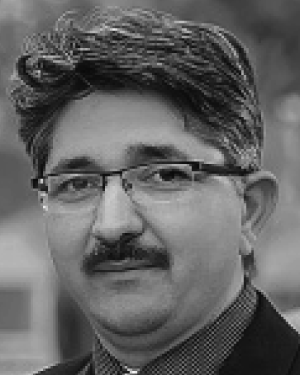 Muhammad Nawaz合作论文数2
 Gabriela Ahmadi-Assalemi合作论文数Cyber Quarter – Midlands Centre for Cyber Security, University of Wolverhampton2Matthias Pesch合作论文数2Silvia Cirstea合作论文数2A. Mehanna合作论文数2
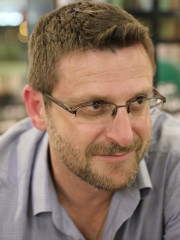 Petros Daras合作论文数Visual Computing Laboratory of Information Technologies Institute of The Centre for Research and Technology Hellas;d-Cube Private Company;COMPLAGO2
 Paulo Nunes合作论文数Instituto Superior de Ciências;Instituto de Telecomunicações;Instituto Superior de Ciências, Instituto de Telecomunicações2
 Anastasios Dimou合作论文数Institute for Communications and RF Engineering;Vienna University of Technology;Institute for Communications and RF Engineering, Vienna University of Technology2
 Gregory Epiphaniou合作论文数Warwick Manufacturing Group, Faculty of Science, Engineering and Medicine, The University of Warwick2Abdelmagid Khalil合作论文数2
 Abbes Amira合作论文数College of Computing and Informatics, University of Sharjah2




