This study investigates the optimization of a photovoltaic-integrated Trombe wall (PV-TW) system for Moroccan administrative buildings in cold climate zones, aiming to achieve net-negative CO₂ emissions. A dynamic simulation framework based on EnergyPlus was developed to evaluate the combined effects of glazing type, vent scheduling, and hybrid ventilation strategies on energy performance and carbon emissions. The results show that triple glazing improves thermal insulation and reduces heat losses, while optimized vent scheduling enhances seasonal heat management. Among the tested strategies, vent control was identified as the most influential parameter, followed by hybrid ventilation and glazing type. The combined optimization of these parameters resulted in a progressive reduction in electricity demand and associated CO₂ emissions, reaching 12.5% with glazing optimization, 22.4% with vent scheduling, and up to 46.0% with full integration of hybrid ventilation. When coupled with on-site photovoltaic electricity generation, the system achieved a net positive energy balance and net-negative CO₂ emissions on an annual basis. These findings highlight the effectiveness of integrating passive solar systems, smart control strategies, and renewable energy technologies for low-carbon building design. Future work will focus on experimental validation and the integration of seasonal energy storage solutions, such as power-to-X technologies, to ensure year-round carbon neutrality.
This paper presents a validated model of an indirect solar water-heating system equipped with a flat-plate collector operating under a Mediterranean climate using TRNSYS (TRaNsient SYstem Simulation) software. Only solar energy was used for water heating, with no auxiliary electrical input. The system comprised a 2.25 m2 flatplate collector and a 200 L storage tank. A data comparison of measured and modelled ones resulted in lower error factors with PMAE values of 7.58%, 5.53% and 7.15% for the collector outlet temperature, load temperature and the delivered heat. The PME results further indicate a slight underestimation and overestimation of the collector and tank outlet temperatures by -2.65% and 3.43%, while the delivered heat is marginally overestimated by 2.90%. The RMSE values for the collector outlet and load temperatures are 3.56 degrees C and 3.70 degrees C, respectively, confirming the reliability of the developed model in predicting real-world system performance. A parametric analysis was conducted to investigate the influence of key operating parameters, including mass flow rate, water-draw profile, and collector tilt angle. The results show that increasing mass flow rate enhances thermal performance, with the variable mass-flow strategy identified as the most favorable within the investigated discrete operating scenarios, attributable to its improved dynamic response. Although draw-offs during solar hours yield higher performance, the daily-use profile is identified as the preferred configuration, as it represents consumption while preserving thermal stratification and ensuring stable energy availability. The collector tilt angle exhibited only a modest influence under the investigated conditions.
Green roofs are increasingly recognized as a sustainable strategy for mitigating energy consumption and reducing CO2 emissions in buildings. This study evaluates the potential of green roofs in Moroccan office buildings across six climatic zones, focusing on three critical design parameters: Leaf Area Index (LAI), plant height, and minimum stomatal resistance (MSR). Through simulations conducted using EnergyPlus, the results reveal significant energy-saving potential, particularly in hotter zones, where cooling demand is dominant. Taller plants and higher LAI values enhance shading and evapotranspiration, reducing cooling energy use by up to 4.75%, but they also increase heating energy requirements during cooler months by up to 20.23%. The findings underscore the need for region-specific optimization, including strategies like seasonal plant height adjustment and LAI selection, to balance cooling benefits and heating trade-offs. By providing insights into the thermal and environmental performance of green roofs, this research contributes to the development of practical design guidelines for integrating sustainable building practices into Morocco’s growing urban landscape.
Green roofs are a sustainable solution to reduce energy consumption and carbon footprints, especially in hot climates. This study investigates the influence of two key design parameters, Leaf Area Index (LAI) and plant height, on the thermal performance and carbon footprint of residential buildings in Morocco. Using advanced simulation techniques, the study evaluates the impact of these parameters on electricity consumption for heating and cooling. The results show that increasing LAI and plant height reduces cooling-related CO₂ emissions by up to 3.87%, with taller plants and denser vegetation improving shading and evapotranspiration. However, during heating days, these parameters increase CO₂ emissions by up to 13.12%, due to reduced solar heat gain. Annual CO₂ emissions are reduced by approximately 1.13% when green roofs with optimized vegetation are implemented. The findings highlight the need for season specific maintenance practices, such as watering green roofs during cooling seasons and trimming vegetation during heating seasons, to balance energy performance. This study provides practical recommendations for optimizing green roof designs to support Morocco’s climate goals and sustainable urban development.
This study investigates the potential of bio-based phase change materials (bio-PCMs) to reduce both operational and embodied carbon in Moroccan service buildings. Using EnergyPlus 8.3 simulations and life cycle assessment (LCA), the research evaluates the integration of five bio-PCM types across six Moroccan climate zones. Results show that climate-specific PCMs can lower heating and cooling energy demands by up to 20.3% and 28.0%, respectively, leading to operational CO2 emission reductions between 17.0% and 24.0%. Bio-PCM Q25 performed best in Coastal, Mediterranean, and Saharan zones, Q23 in Continental and Mountainous areas, and Q29 in hot-arid climates. In parallel, bio-based PCM M27 exhibited an embodied carbon of only 0.08 kgCO2/kg over 97% lower than conventional PCMs like paraffin or stearic acid. These findings confirm that optimized bio-PCM integration, combined with passive design strategies, offers a robust solution to decarbonize buildings in hot and diverse climates like Morocco. The study provides practical guidelines for material selection and policy direction toward climate-adapted, low-carbon construction.
The construction and operation of commercial buildings significantly contribute to global greenhouse gas emissions. This study investigates the effectiveness of photovoltaic (PV)-integrated double-skin facades (DSFs) in reducing operational energy use and carbon emissions in Moroccan commercial buildings. Using dynamic energy simulations, various DSF glazing configurations were analyzed for their impact on heating and cooling energy demand, electricity consumption, and CO2 emissions. The results reveal that PV-integrated triple glazing reduces cooling energy demand by nearly 10% and decreases total electricity consumption by about 5% annually. Compared to single glazing, this configuration achieves an additional 2.85% reduction in CO₂ emissions. Despite minor differences in solar energy conversion efficiency, the system maintains high levels of on-site renewable energy generation. These findings highlight the potential of PV-DSF systems to support Morocco’s net-zero carbon goals by enhancing building energy performance. However, seasonal variations in performance suggest the need for energy storage integration to achieve year-round carbon neutrality. The study recommends further research focusing on experimental validation and the large-scale implementation potential of PV-DSF solutions in the commercial building sector.
This work presents a TRNSYS simulation model for three model of collectors: a conventional flat plate solar collector (FPC), an evacuated tube (ETC) collector, and a hybrid PV thermal (PVT) collector. A comparison between these systems was conducted under two different weather conditions and various mass flow rates (0.5 to 2 kg/min). The study also investigated the use of black iron oxide nanoparticles to enhance thermal efficiency. The results showed that the FPC performed better under sunny weather, while the PVT collector demonstrated higher performance on cloudy days, achieving an efficiency of 96%. Additionally, using nanofluid as the heat transfer fluid caused the outlet temperature to rise by approximately 10°C for the two conventional configurations and 6°C for the PVT collector.
This paper investigates the impact of shading and glazing types on the performance of Trombe walls in reducing the carbon footprint of Moroccan residential buildings. Trombe walls, as passive solar heating systems, offer significant potential for energy savings and carbon emissions reduction in residential constructions. Our study evaluates various shading devices and glazing materials to determine their effectiveness in optimizing thermal performance and minimizing energy consumption. Through simulation, we analyze the influence of different configurations on indoor temperature regulation and overall energy efficiency. The findings highlight that Triple Clear (TG 3-13) glazing achieves a substantial 22.5% annual decrease in CO2 emissions compared to buildings without Trombe walls, while local shading for this glazing type increases emissions by 4.5%. Additionally, dynamic window shading controlled by a predefined schedule reduces emissions by 2% annually compared to static glazing setups. These results underscore the critical role of glazing selection and shading strategies in enhancing sustainability and reducing carbon footprints in Moroccan residential buildings. This research contributes to the development of energy-efficient building practices, supporting Morocco’s commitment to reducing its carbon footprint and promoting environmental sustainability.
Effective thermal control is crucial for ensuring the reliable of spacecraft subsystems in the space environment. This paper presents a comprehensive framework for the thermal design, analysis, and testing of CubeSats, highlighting the importance of each stage. The framework details the critical design elements, including mission parameters, subsystem specifications, material selection, and thermal control techniques. The methodology simplifies the CubeSat's geometry to enable efficient simulations using COMSOL Multiphysics software. The developed mathematical model incorporates heat balance calculations, accounting for various thermal fluxes and thermal contact conductance. The proposed approach is flexible of various spacecraft and saves both time and computational resources. A case study of a 3U CubeSat designed by a university is presented, showcasing the application of the framework. The simulation results are compared with thermal balance test outcomes, demonstrating satisfactory margins less than 5 degrees C for all subsystems and validating the CubeSat design.
Particle accumulation within curved pipes poses an ongoing challenge across various engineering and industrial applications. This research aims to explore the particle deposition within a 90 circular curved pipe when a rib is introduced, employing the Eulerian-Lagrangian methodology within ANSYS Fluent. The chosen operational conditions involve a turbulent flow with a Reynolds number of 10,000. The particle size range under consideration is from 3 mu m to30 mu m corresponding to a Stokes number range from 0.11 to 10.14. The reliability of the model is ensured by comparing the particle deposition behavior with previous experimental data. Following validation, the rib is placed at different angular positions (theta), and its impact on deposition efficiency is investigated. Additionally, the influence of bend curvature ratio, rib height, and rib width were evaluated. The findings reveal an anti-deposition effect observed in cases with theta values of 5(degrees) and 75(degrees). Installing the rib at theta = 5 leads to a maximum reduction in deposition of 6 % for a St value of 0.1 and a reduction of 21 % for St values greater than or equal to 1.3. In contrast, for St values ranging from 0.1 to 1.3, theta = 75(degrees) demonstrates the most optimal configuration in reducing deposition, achieving a maximum reduction of 13 %.
Download This Paper Open PDF in Browser Add Paper to My Library Share: Permalink Using these links will ensure access to this page indefinitely Copy URL Copy DOI
The resonator is one of the key components of thermoacoustic machines and the choice of its geometry is of course of crucial importance, as it determines the way the machine operates. The resonator must be designed so that the quality factor of the resonance is as high as possible and must satisfy the technological production constraints related to the high pressurization of the working fluid and the presence of temperature non-uniformities. The shape of the resonator can be modified to reduce certain loss phenomena, particularly on the walls, and to limit the formation of harmonics in the high-level acoustic field. In this work, an acoustic power losses analysis and a numerical study of a standing-wave TAE with air working gas, considering changes in resonator shape, are performed to investigate the effect of resonator geometry on the thermoacoustic energy conversion. The acoustic power dissipation in the resonator is analyzed based on the simplified thermoacoustic theory and the numerical study is conducted based on a 2D numerical model based on a CFD analysis. Results show that the shape of the resonator significantly affects the frequency, the temperature along the stack, and the acoustic pressure produced on the TAE. In addition, it is shown that the resonator composed of two different diameters showed its ability to produce a high acoustic pressure amplitude (20.5% than the iso-diameter resonator) and minimize the viscous and thermal losses.
This paper examines the evaluation of thermal control performance of a heat sink designed for an electronic device subjected to transient heat flux shock. Its primary objective is to assess the efficacy of thermal management in mitigating the impact of sudden thermal shocks on electronic devices. Thermal control effectiveness is examined by minimizing peak temperatures, enhancing natural convection, optimizing heat transfer with ambient air, and ensuring overall temperature regulation efficiency. The findings indicate that employing a heat sink with triangular fins and phase change material leads to a reduction in maximum temperature by 10 K compared to a heat sink with rectangular fins. Achieving peak thermal efficiency is possible when the phase-altering substance envelops the triangular fins completely. With a combination of PCM and triangular fins, exceptional temperature control efficiency can be attained.
This study examines how the convective heat transfer coefficient impacts the carbon footprint of a service building situated in Morocco. This coefficient is pivotal in shaping the thermal efficiency of buildings, influencing energy consumption and environmental impact. Through simulations and analyses, we evaluate the extent to which variations in this coefficient affect overall energy efficiency and carbon emissions. Our analysis, based on specific climate data for Morocco and detailed architectural and operational parameters of a typical service building, reveals significant annual deviations. Heating energy fluctuates by up to ±48%, and cooling energy varies by up to ±32%. Furthermore, our findings demonstrate that the carbon footprint of electricity consumption for heating and cooling can vary by as much as ±31% of total CO2 emissions annually. Optimizing the convective heat transfer coefficient emerges as a critical strategy for reducing the carbon footprint, underscoring its importance in sustainable building design. These results offer valuable insights for architects, engineers, and policymakers seeking to enhance building performance and minimize environmental impact within the unique climate conditions of Morocco.
Mixed convection flows are commonly observed in various technological and industrial applications, including solar stills that are exposed to wind currents and other weather conditions. Combined free and forced convection flows can significantly improve the productivity of solar still devices, making them of practical interest. In fact, a passive solar desalination system with heat storage material is investigated in six climate zones of Morocco and presented by six cities namely: Tangier, Rabat, Ifran, Marrakech, Meknes and Errachidia. This study aims to analyze the effect of mixed convection on the inclined surface of solar desalination systems. Thus, a transient Computational fluid dynamics (CFD) model is developed and investigated under the instantaneous climatic data of the different cities aforementioned. The results indicate that forced convection dominated heat transfer during broad daylight, with the Nusselt number increasing as the Reynolds number increased. Overall, the productivity in Tangier city was found to be significantly higher than that of Rabat, Meknes, Marrakech, Ifran, and Errachidia city, with increases of 45.02%, 50.48%, 23.48%, 83.31%, and 24.89%, respectively.
In thermal design of space applications, calculating thermal contact conductance present a challenge. The absence of convective heat transfer necessitates the essential requirement for a comprehensive of thermal contact conductance and the pivotal physical factors that influence it. This article explores a thermal management for 3U CubeSat in LEO. It covers the space thermal environment, thermal analysis methodology, and the determination of thermal contact conductance using both elastic and plastic models. The study also outlines CubeSat design considerations and the assumptions made for simulations using Comsol Multiphysics software. Experimental results from thermal balance tests are presented and compared to simulations results. The research concludes that the CMY method is the best suited for CubeSat applications to identify the thermal contact conductance, but notes the need for further refinement when dealing with materials that have high roughness or less-than-ideal contact conditions.
Thermoacoustic devices are converters of thermal energy into acoustic energy and vice versa. Although these machines contain simple components, the design of these machines is very challenging. In order to predict the behavior and optimize the efficiency of a standing-wave thermoacoustic engine designed to drive a thermally driven thermoacoustic refrigerator, considering changes in geometrical parameters and operating conditions, two analogies have been presented in this paper. The first analogy is based on a CFD simulation carried out to investigate the influence of stack parameters, working gas and boundary conditions on the thermoacoustic process. The second analogy is performed by the use of an optimization algorithm based on the simplified linear thermoacoustic theory to design and optimize the parameters investigated by the CFD study. Stack of parallel plates of normalized stack center positions of 0.007 to 0.26, normalized stack lengths of 0.018 to 0.11, and several gaps and thicknesses of plates and working gases are used. The results from the algorithm give the ability to design any thermoacoustic engine with high efficiency by picking the appropriate parameters. Simulation results show that decreasing thickness and position of the plates gives a significant efficiency. However, there are optimum values for length of the stack and the gap between two plates. The material chosen for the construction of plates should have a low thermal conductivity and gases with higher ratios of specific heats and lower Prandtl numbers are well suitable for thermoacoustic systems.
We keep the focus in this paper on the heat transfer coefficients affecting the performance of building for different climatic zones of Morocco. In this respect, the building model is developed using COMSOL Multiphysics based on the convective and radiative equations. Furthermore, the U-shape of the south external wall of the building is modified and tested according to three scenarios (A 0.25 m, B 0.75 m, and C 1.25 m). The results showed a significant increase of radiative heat transfer coefficient (HTC) by 33% and 64.62% by increasing the U-shape from 0.25 to 0.75 m and from 0.75 m to 1.25 m respectively. In fact, the convective coefficient decreases progressively in the U-shape wall. Hence, a maximum reduction of total energy consumption is observed as well as the HTC decreases.
The freshwater availability remains a big challenge for various countries in the world; especially in arid and semi-arid regions. Furthermore, to overcome the freshwater shortage problem; solar desalination technology is considered the most suitable, clean and, cost-effective solution for the drinking water production without requiring fossil assets. This paper aims to present seasonal thermal performances of single slope solar still developed by using rectangular channels filled with heat storage material. Thus, a parametric study of the developed passive solar still was numerically formulated using a finite element method carried out by COMSOL Multiphysics to predict the effect of design parameters: number and width of rectangular channels. Hence, the optimum values were tested at various seasons to define the increasing rate of daily yield. In fact, for selected typical days, it was deduced from the simulation results that the optimal design for modified solar still with rectangular channels is suggested with 5 numbers and 2 cm width for best output productivity. Also, the analysis of MSSRC during autumn, winter, spring, and summer shows that the daily yield is 24.40%, 37.79%, 9.80%, and 22.66% greater than the conventional solar still respectively.
In this paper, we present a thermal analysis of university 3U CubeSat in critical cases of orbit using the software COMSOL Multiphysics. First, the thermal environment and thermal modelling are presented in order to describe the method, the equations and the assumptions used by the numerical software to model the behaviour of temperature in each node of the nanosatellite. Second, an overview of the satellite is given to describe the design of the CubeSat, the mission and to fix the assumptions and boundary conditions. Finally, the results, based on the software, are presented for the two cases with and without a thermal control. The analysis has been used to validate the importance of the passive thermal control techniques.
 Mustapha Malha合作论文数26
 Asbik Mohamed合作论文数19
 Hafs Hajar合作论文数15
 Omar Ansari合作论文数Energy Research Center, Thermal and Energy Research Team (ERTE), ENSAM- Mohammed V University in Rabat12
 Anass Zaaoumi合作论文数ERTE, Mohammed V Univ Rabat9
 Mohammed Alaoui合作论文数9O. Ansari合作论文数7Zahra Bouramdane合作论文数7
 Nadia Martaj合作论文数Pôle Scientifique et Technologique de Ville D’Avray, Université Paris X6
 Youssef Hamidi合作论文数ERTE, Mohammed V Univ5Raja Idlimam合作论文数5
 Zakaria Aketouane合作论文数Arts et Métiers ParisTech, I2M;ENSAP de Bordeaux4Abdelghani Koukouch合作论文数Green Energy Pk IRESEN, UM6P4N. Dupont-Pavlovsky合作论文数4Fatima Zahrae Erraghroughi合作论文数3Imane Srhayri合作论文数3
 Anas El Maakoul合作论文数LERMA Lab Parc Technopolis, Int Univ Rabat3
 Abdellah Mechaqrane合作论文数3Ben Abdellah, A.合作论文数3
 A. Idlimam合作论文数3Omar Zegaoui合作论文数Laboratoire de Chimie-Physique: Cinétique et Catalyse, Université Mohamed ler3
 Boujema Izrar合作论文数Laboratoire d'aérothermique, CNRS-UPR 90203Brahim Sarh合作论文数3
 Kawtar Feddi合作论文数Lab Engn Innovat & Management Ind Syst LEIMIS, Abdelmalek Essaadi Univ2
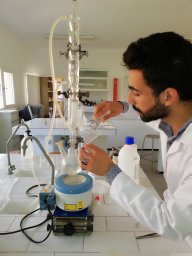 Haytem Moussaoui合作论文数Marrakech Lab Proc Energy & Environm ProcEDE, Cadi Ayyad Univ Marrakech2Nadia Zari合作论文数2Bostyn Stephane合作论文数2
 Francis Dujardin合作论文数LCP A2MC, Univ Lorraine2A. Amine合作论文数2J.-C. Therriault合作论文数2
 Serge Demers合作论文数Dept Phys, Univ Montreal2
 Elmustapha Feddi合作论文数ENSET de Rabat, Université Mohamed V Souissi2
 Denis Bruneau合作论文数2
 C. A. Duque合作论文数Instituto de Física, Universidad de Antioquia2Soumia El Hani合作论文数1Brahim Daouchi合作论文数1Latifa El-Kaddadi合作论文数1
 Mimet Abdelaziz合作论文数1
 Boushaba Hassan合作论文数1Mihaela Ciocan合作论文数1Mehdi Karkouri合作论文数1Khaoula Chatir合作论文数1Nadia Elmechrafi合作论文数1Al Blum合作论文数1
 Amina Daghouri合作论文数1K. Javed合作论文数1X Duval合作论文数1F Froehlich合作论文数1
 Azeddine Frimane合作论文数Laboratory of Electronic Systems, Information Processing, Mechanics and EnergeticsFaculty of Sciences, University Ibn Tofail Kenitra1




