The ultra-thin and highly granular CMOS Monolithic Active Pixel Sensors (MAPS) are typically optimized for high rate high precision tracking, which implies the use of a very thin active medium and digital readout. Both features hamper using the devices for identifying low momentum particles by means of dE/dx. Still, MAPS feature charge sharing and typically clusters of more than one fired pixel per impinging particles are formed. It was previously shown that the number of fired pixels per cluster scales with the dE/dx, which allowed identifying highly ionizing nuclear fragments [1]. Assuming a sufficiently strong response to different dE/dx, this approach could also be considered for distinguishing minimum ionizing particles (MIP) from light fragments like alpha particles in tracking detectors. In this work, we study this response with particle beams with a dE/dx of up to four times the ones of MIPs, for non-irradiated and irradiated chips, with different sensing nodes as implemented in the MIMOSIS-1 prototype used for the vertex detector of the CBM experiment.
MIMOSIS is a CMOS Monolithic Active Pixel Sensor (CPS) developed to equip the Micro Vertex Detector (MVD) of the Compressed Baryonic Matter (CBM) experiment at FAIR/GSI. The sensor will combine a spatial resolution of -5 µm with a time resolution of 5 µs and provide a peak hit rate capability of ∼80 MHz/cm 2 . To fulfil its task, MIMOSIS will have to withstand ionising radiation doses of ∼5 MRad and fluences of ∼7 × 10 13 n eq /cm 2 per year of operation. The paper summarises major requirements of the CBM-MVD and compares them to the detection performances of the first full scale prototype, called MIMOSIS-1, recently evaluated in the laboratory and with particle beams. The tolerance of the sensor to the expected ionising radiation load was evaluated; the paper describes the measurements performed and their outcome.
Being installed as close as 5.5 mm to the beam axis, the Micro Vertex Detector (MVD) of the CBM experiment will be exposed to a sizable flow of heavy beam ions and nuclear fragments. The CMOS Monolithic Active Pixel Sensor for the MVD, MIMOSIS, must resist the related heavy ion impacts without permanent damage or frequent interrupt of operation as caused by single event effects (SEE). We motivate the requirements on the sensor and introduce our concept for protecting the device against SEEs. Moreover, we report the results of a related test campaign carried out with the first full size sensor prototype, MIMOSIS-1, and different heavy ion beams at GSI.
Pourquoi l’attente de la prochaine saison d’une série télévisée est-elle aussi insoutenable que courte, alors que celle du roman équivalent, inconfortable sans doute, est cependant, à l’évidence, possible ? Cet article propose des pistes de réponse à partir des exemples comparés de A song of Ice and Fire de George Martin et de Game of Thrones (Weiss et Benioff, HBO) : la démarche veut ainsi repérer des points de différenciations entre des consommations sérielles, littéraire et télévisuelle, qui présentent par ailleurs de nombreux points communs. En notre ère du transmedia et alors même que la carrière de Martin le place au cœur de ces logiques de convergence, il n’en reste pas moins que son œuvre illustre une certaine spécificité résistante du livre, qui a à voir avec le rapport à l’auteur et à ses intermittences.
A detector prototype based on MAPS (monolithic active pixel sensor) is under development for the upgrade of the BESIII inner tracker. Pixel detector ladders with low material budget and high chip position precision are being developed. Each ladder consists of ten MIMOSA28 chips thinned to 50 mu m, a flex cable and a carbon fibre support. In order to verify the design and quantify the performance of the ladders in terms of the spatial resolution, the detection efficiency, the gap between the neighbouring chips on the ladder and the material budget of the ladder, a detector prototype system was set up and tested at the T24 beamline at DESY. The system consists of five layers of ladders, readout electronics and data acquisition. The test results show that the spatial resolution is about 5 mu m, and a tracking efficiency of 96% is achieved, the loss of about 4% of the efficiency most likely coming from the readout and the DAQ system. The average gap between the active areas of the neighbouring chips is about 380 mu m. The actual gap and the chip location accuracy is better than 10 mu m if the insensitive part of the chip is taken into account. The material budget of one ladder is 0.35 +/- 0.03 (sys.)% X-0, which is consistent with the predicted value of 0.37% X-0. These test results validate a good performance of the prototype.
On the vertex detector of the International Linear Collider, a large number of hits are generated by the charged particles coming from the beam background. These charged particles produce large angles of incidence and generate elongated clusters. The CMOS pixel sensor (CPS) which would contain on-chip artificial neural networks could tag and remove these clusters to reduce the data flow of the detector system. The clustering procedure is the first step of data preprocessing. The conventional clustering algorithm is not suitable for on-chip integration since it requires sequential and iterative processing. In this article, a 2-D real-time clustering algorithm is proposed. The clustering algorithm is tested by 4500 frames of pixel values (12 bit/pixel) from MIMOSA-18. The clustering algorithm is implemented using Very High-Speed Integrated Circuit Hardware Description Language (VHDL), synthesized for different windows, multiplexers, and analog-to-digital converter (ADC) resolution. Power consumption and the occupied surface of the clustering implementation are presented. This implementation provides a possibility to integrate the clustering procedure into a CPS.
HAL is a multi-disciplinary open access archive for the deposit and dissemination of scientific research documents, whether they are published or not. The documents may come from teaching and research institutions in France or abroad, or from public or private research centers. L’archive ouverte pluridisciplinaire HAL, est destinée au dépôt et à la diffusion de documents scientifiques de niveau recherche, publiés ou non, émanant des établissements d’enseignement et de recherche français ou étrangers, des laboratoires publics ou privés. ”L’adolescence comme chimère : trois cycles d’imaginaire contemporain” Anne Besson
Introduction On sait combien le contexte culturel de la postmodernite apparait marque par une de-hierarchisation des pratiques « savantes » et « populaires » de plus en plus nette, accentuee encore par l’usage des outils numeriques.Les reflexions reunies ici entendentinterroger les consequences tres actuelles d’une telle hybridation (supposee ou non) des composantes de la « culture » sur la recherche et l’enseignement de la litterature et sur la definition de son objet, en concentrant precise...
Presses de l'enssib, 2018.< http://
L’ampleur du succès rencontré par le cycle des Harry Potter de J.K. Rowling en fait à elle seule un terrain de premier choix pour les théories de fans (dont cet article ne prétend nullement proposer ni évaluation ni présentation exhaustive). Il se trouve également que l’effet du temps (la publication du premier Harry Potter datant de 1998) a produit de très intéressants effets dans l’équilibre des pouvoirs entre autrice et lecteurs, qui n’a cessé de se reconfigurer – Harry Potter présente donc aussi un cas, largement inédit dans ses manifestations spécifiques, de partage contemporain de l’autorité sur les prolongements possibles d’une narration. En simplifiant un peu les choses pour davantage de clarté, on peut distinguer un « pendant » et un « après » Harry Potter, que cet article développera successivement1. Le « pendant » correspond au temps de parution de l’heptalogie et de première diffusion des films sur grand écran – soit une durée qui s’étend sur plus de dix ans déjà, 1998‑2011, si l’on tient compte du double public originel de ce cycle multimédiatique2. Cette première étape permettra de décrire un fonctionnement qu’on peut estimer exemplaire des lectures faniques en régime sériel : entre les épisodes, et stimulés par ceux‑ci, les consommateurs passionnés émettent des hypothèses, en discutent, les soumettent à l’approbation du groupe – et puis l’auteur (ici, l’autrice) donne la « bonne » réponse, stabilisant un état du texte qui intègre donc le « canon », et ainsi de
Les créations d’univers secondaires présentent une nette tendance à entraîner leurs auteurs plus loin qu’ils ne l’auraient souhaité – plus loin, en tout cas, qu’ils ne l’avaient prévu. Tolkien, le grand maître en ce domaine comme en tant d’autres, en fut déjà la « victime », lui qui a consacré sa vie durant son énergie fictionnelle au même monde d’Arda. Il a vu son Seigneur des Anneaux, promis dès 1937 comme suite du Hobbit, publié seulement en 1954‑1955, prendre des directions et un volume inattendus, et il n’est pas parvenu ensuite à produire un Silmarillion assez complet et cohérent pour accepter de le publier de son vivant1. Parmi ses épigones directs, on peut penser à Raymond Feist, dont l’univers de Midkemia était au départ une création collective de jeu de rôles, auquel un premier roman a été consacré en 1982 : plus de 30 ans après, et 30 romans plus tard, Feist referme en 2013 les cycles successifs de « La Guerre de la Faille » (Riftwar Cycle) avec Magician’s End, affirmant à cette occasion qu’explorer cet univers à la totalité « organique » a été comme « peler un oignon pour s’apercevoir que chaque couche est plus grande que la précédente2 ». George Martin, qui s’impose de toute évidence comme le créateur de monde le plus important de la fantasy contemporaine, se présente aussi comme un cas d’école absolument remarquable quand il s’agit d’illustrer ces mêmes phénomènes d’expansion, dont je vais donner chaque fois de multiples exemples : inflation progressive de la ta
 Alice L. Bean合作论文数Department of Physics & Astronomy, College of Liberal Arts & Sciences, University of Kansas94
 F. Borcherding合作论文数93Michael Begel合作论文数Department of Physics, Brookhaven National Laboratory92Levan R. Babukhadia合作论文数Physics Dept ., Univ . of Arizona92G. Briskin合作论文数92V. Bezzubov合作论文数91Marc Buehler合作论文数91B. Connolly合作论文数91D. Coppage合作论文数90
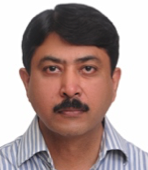 Vipin Bhatnagar合作论文数Department of Physics, Panjab University90
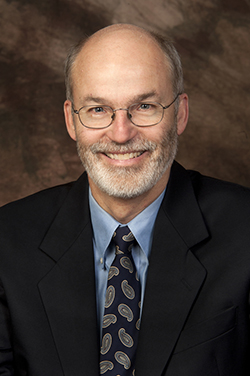 Gerald C. Blazey合作论文数Department of Physics, College of Liberal Arts and Sciences, Northern Illinois University90Gelio A. Alves合作论文数Centro Brasileiro de Pesquisas Fisicas, Rio de Janeiro, Brazil90
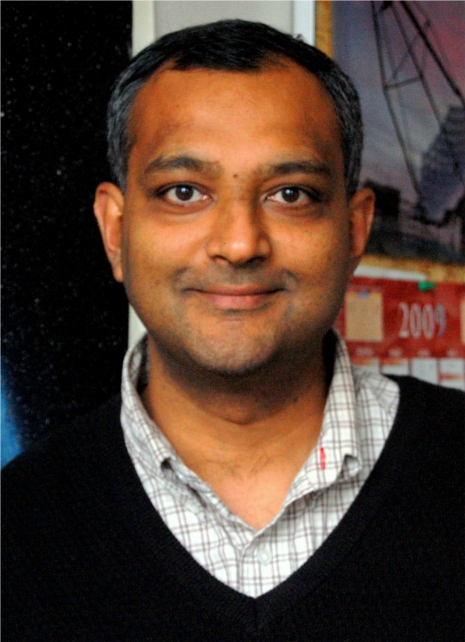 Dhiman Chakraborty合作论文数Department of Physics, Northern Illinois University90
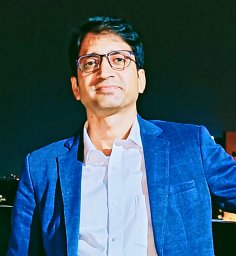 Mrinmoy Bhattacharjee合作论文数State University of New York at Stony Brook, Stony Brook University90Boris Yu Baldin合作论文数89
 Emanuela Barberis合作论文数College of Science, Northeastern University89
 John Ellison合作论文数Department of Physics and Astronomy, University of California, Riverside89
 Drew Baden合作论文数Department of Physics, College of Computer, Mathematical, and Natural Sciences, University of Maryland89H. Thomas Diehl合作论文数Fermilab89S. Chopra合作论文数89S. Doulas合作论文数88Pw Balm合作论文数88P. Demine合作论文数88
 Gustaaf Brooijmans合作论文数Department of Physics, Columbia University88
 Brad Abbott合作论文数Homer L. Dodge Department of Physics and Astronomy, Dodge Family College of Arts and Sciences, The University of Oklahoma88J Frederick Bartlett合作论文数Fermi National Accelerator Laboratory88
 Susan K Blessing合作论文数Department of Physics, College of Arts & Sciences, Florida State University88
 Michael Diesburg合作论文数Fermi National Accelerator Laboratory87R. Demina合作论文数87D. Casey合作论文数87
 Philip S. Baringer合作论文数Department of Physics & Astronomy, College of Liberal Arts & Sciences, University of Kansas87Daniel Edmunds合作论文数Department of Physics and Astronomy, Michigan State University87
 Marcel W Demarteau合作论文数Physics Division, Oak Ridge National Laboratory87J. Kohli合作论文数87
 Suman Bala Beri合作论文数Department of Physics, Panjab University86T. Ferbel合作论文数86
 Andrew Brandt合作论文数Department of Physics, College of Science, The University of Texas at Arlington86
 Amber S. Boehnlein合作论文数Computational Sciences and Technology Division, Jefferson Laboratory86
 Dmitri Denisov合作论文数Brookhaven National Laboratory86
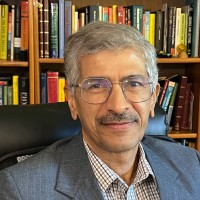 Chandrashekhara M. Bhat合作论文数Fermi National Accelerator Laboratory86G. Ginther合作论文数85H. Eugene Fisk合作论文数Fermilab85Chan K合作论文数85
 Stuart Fuess合作论文数Scientific Computing Division, Fermi National Accelerator Laboratory85Alexander S. Dyshkant合作论文数85
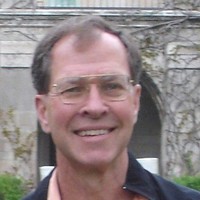 D. Bruce Buchholz合作论文数Department of Materials Science and Engineering, Northwestern University85Leslie S. Groer合作论文数85Herbert B. Greenlee合作论文数Fermilab85
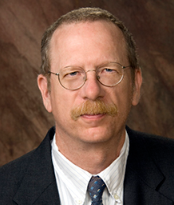 David Hedin合作论文数Department of Physics, College of Liberal Arts and Sciences, Northern Illinois University85




