The Quasi-Biennial Oscillation initiative (QBOi) is a model intercomparison programme that specifically targets simulation of the QBO in current global climate models. Eleven of the models or model versions that participated in a QBOi intercomparison study have upper boundaries in or above the mesosphere and therefore simulate the region where the stratopause semiannual oscillation (SAO) is the dominant mode of variability of zonal winds in the tropical upper stratosphere. Comparisons of the SAO simulations in these models are presented here. These show that the model simulations of the amplitudes and phases of the SAO in zonal-mean zonal wind near the stratopause agree well with the information derived from available observations. However, most of the models simulate time-average zonal winds that are more westward than determined from observations, in some cases by several tens of m center dot s(-1). Validation of wave activity in the models is hampered by the limited observations of tropical waves in the upper stratosphere but suggests a deficit of eastward forcing either by large-scale waves, such as Kelvin waves, or by gravity waves.
The processes occurring in the tropical tropopause layer (TTL) are of great importance for stratosphere–troposphere exchanges and the variability of the Earth's climate. Previous studies demonstrated the increasing ability of atmospheric general circulation models (AGCMs) in simulating the TTL, depending on factors such as the horizontal and vertical resolution, with the major role for physical parametrizations. In this work we assess the mean state and variability of the tropical upper troposphere and lower stratosphere simulated by 13 AGCMs of the Stratosphere–troposphere Processes And their Role in Climate Quasi‐Biennial Oscillation initiative (QBOi) for the historical period. As these models internally generate quasi‐biennial oscillations (QBOs) of the stratospheric zonal wind, we can analyse the simulated QBO influence on the TTL on interannual time‐scales. We find that model biases in temperature near the tropopause are strongly related to water vapour concentrations in the lower stratosphere. A source of intermodel spread derives from stratospheric aerosols, as the responses to eruptions differ between those models prescribing volcanic aerosol forcing. The QBO influence on the thermal structure is generally realistic in the equatorial region, but the subtropical response is weak compared with the reanalysis. This is associated with a limited downward penetration of QBO winds, generally smaller QBO meridional widths, and weaker temperature anomalies, which disappear above the tropopause for most models. We discuss the QBO impacts on tropopause pressure and precipitation, characterized by large uncertainties due to the small signal in the observational records and sampling uncertainty. Realistic QBO connection with the troposphere in some models suggests that the underlying physical processes can be correctly simulated. Overall, we find that the QBOi models have limited ability to reproduce the observed modulation of the TTL processes, which is consistent with biases in the vertical and latitudinal extent of the simulated QBOs degrading this connection.
The Stratosphere-troposphere Processes And their Role in Climate (SPARC) Quasi-Biennial Oscillation initiative (QBOi) seeks to improve confidence in general circulation and earth system model (GCM and ESM) simulations of the QBO, a prominent feature of middle atmosphere tropical variability first identified nearly sixty years ago. Although only five out of 47 models contributing to the Coupled Model Intercomparison Project Phase 5 (CMIP5) had spontaneous QBOs, simulated QBOs are anticipated to be more common among CMIP6 models as more atmospheric GCMs are able to reproduce the phenomenon, both by ensuring adequate vertical resolution in the stratosphere and by parametrizing accelerations due to subgrid nonorographic gravity waves (NOGWs). The complexity of CMIP6 models and their forcing scenarios, however, is an obstacle to using the CMIP6 multimodel ensemble for analysis of modelling uncertainties that are specific to the QBO and its impacts. The QBOi multimodel ensemble represents an alternative approach in which modelling uncertainties related to the QBO are assessed by performing coordinated experiments with atmospheric GCMs that have simplified external forcings and boundary conditions, designed to characterize QBO representation and its response to idealised future climate scenarios. Results are presented from an analysis of QBOs in thirteen atmospheric GCMs forced with both observed and annually repeating sea surface temperatures (SSTs). Mean QBO periods in most of these models are close to, though shorter than, the period of 28 months observed in ERA-Interim. Amplitudes are within ±20% of the observed QBO amplitude at 10hPa, but typically about half of that observed at lower altitudes (50 and 70hPa). For almost all models the oscillation's amplitude profile shows an overall upward shift compared to reanalysis and its meridional extent is too narrow. Asymmetry in the duration of eastward and westward phases is reasonably well captured though not all models replicate the observed slowing as the westward shear descends. Westward phases are generally too weak, and most models have an eastward time mean wind bias throughout the depth of the QBO. Intercycle period variability is realistic and in some models is enhanced in the experiment with observed SSTs compared to the experiment with repeated annual cycle SSTs. Mean periods are also sensitive to this difference between SSTs but only when parametrized NOGW sources are coupled to tropospheric parameters and not prescribed with a fixed value. But, overall, modelled QBOs are very similar whether or not the prescribed SSTs vary interannually. A portrait of the overall ensemble performance is provided by a normalised grading of QBO metrics. To simulate a QBO all but one model used parametrized NOGWs, which provided the majority of the total wave forcing at altitudes above 70hPa in most models. Thus the representation of NOGWs either explicitly or through parametrization is still a major uncertainty underlying QBO simulation in these present-day experiments.
A convective gravity‐wave parameterization (GWP) is introduced in the Met Office Unified Model (MetUM) in addition to the existing GWPs, and the tropical quasi‐biennial oscillation (QBO) is simulated. We replace a significant amount of momentum flux, which is originally launched by the background GWP, with the convective gravity‐wave (CGW) momentum flux with a broad wave spectrum that is explicitly determined by the convective sources. Compared to the experiment without the CGW parameterization, including the CGW parameterization results in a greater variability in the duration of each phase of the QBO, which is closer to observed. Including the CGWs also strengthens the annual cycle of zonal wind and it allows for stronger modulation of the semi‐annual oscillation.
We describe Global Atmosphere 4.0 (GA4.0) and Global Land 4.0 (GL4.0): configurations of the Met Office Unified Model and JULES (Joint UK Land Environment Simulator) community land surface model developed for use in global and regional climate research and weather prediction activities. GA4.0 and GL4.0 are based on the previous GA3.0 and GL3.0 configurations, with the inclusion of developments made by the Met Office and its collaborators during its annual development cycle. This paper provides a comprehensive technical and scientific description of GA4.0 and GL4.0 as well as details of how these differ from their predecessors. We also present the results of some initial evaluations of their performance. Overall, performance is comparable with that of GA3.0/GL3.0; the updated configurations include improvements to the science of several parametrisation schemes, however, and will form a baseline for further ongoing development.
The 2011 Royal Meteorological Society conference Middle Atmosphere Focus workshop reviewed progress over the six years since Exeter last hosted the conference and addressed prospects for the next six years with an invitation for interactive discussion on areas that offer promise for expanding the scientific capabilities of middle atmosphere configurations in general circulation models or which might imply new scientific challenges for the decade. In order to initiate discussion, invited speakers gave presentations that offered a flavour of developing areas, covering middle atmosphere interactions with extended-range forecast prediction, tracer advection, impact of solar variability and geoengineering insights from volcanic eruptions.Copyright (c) 2012 Royal Meteorological Society
First appearing on the commercial market in the mid 1980's, diode-pumped, continuous-wave (cw) Nd:Y AG lasers have more recently been used to obtain visible output, by the incorporation of frequency doubling optics in the laser cavity.The laser diode pumping of a Nd:Y AG laser rod is selective and highly efficient, resulting in compact, high power, lEMoo spatial mode lasers. Frequency-doubling processes are non-linear and lead to doub1ing only of the high energy fundamental temporal mode, resulting in operation of the 532 nm laser in a single spatial and single longitudinal mode. The technology is rapidly advancing, and green lasers with energies of up to IW could soon be availab1e. The beam properties of the lasers described above are highly desirable in the field of interferometry, where such lasers are now in direct competition with the much larger Argon lasers, which have already been employed in high power interferometric systems. We describe here the performance of a modified Michelson interferometer [1-4], built to incorporate a 90 mW ADLAS 300 diodepumped Nd: Y AG laser. In previous versions of the Michelson interferometer, we have used HeNe lasers with a few milli watts output, requiring mirror-quality surfaces on our sampies. A 90 m W laser power enables us to make displacement measurements on metal surfaces with little or no preparation. The laser could also, of course, be used in other, more elaborate interferometer types, such as the confocal Fabry-Perot, which are better suited to industrial environments.
We describe Global Atmosphere 3.0 (GA3.0): a configuration of the Met Office Unified Model (MetUM) developed for use across climate research and weather prediction activities. GA3.0 has been formulated by converging the development paths of the Met Office's weather and climate global atmospheric model components such that wherever possible, atmospheric processes are modelled or parametrized seamlessly across spatial resolutions and timescales. This unified development process will provide the Met Office and its collaborators with regular releases of a configuration that has been evaluated, and can hence be applied, over a variety of modelling régimes. We also describe Global Land 3.0 (GL3.0): a configuration of the JULES community land surface model developed for use with GA3.0.This paper provides a comprehensive technical and scientific description of the GA3.0 and GL3.0 (and related GA3.1 and GL3.1) configurations and presents the results of some initial evaluations of their performance in various applications. It is to be the first in a series of papers describing each subsequent Global Atmosphere release; this will provide a single source of reference for established users and developers as well as researchers requiring access to a current, but trusted, global MetUM setup.
We describe Global Atmosphere 3.0 (GA3.0): a configuration of the Met Office Unified Model (MetUM) developed for use across climate research and weather prediction activities. GA3.0 has been formulated by converging the development paths of the Met Office’s weather and climate global atmospheric model components such that wherever possible, atmospheric processes are modelled or parametrized seamlessly across spatial resolutions and timescales. This unified development process will provide the Met Office and its collaborators with regular releases of a configuration that has been evaluated, and can hence be applied, over a variety of modelling r égimes. We also describe Global Land 3.0 (GL3.0): a configuration of the JULES community land surface model developed for use with GA3.0. This paper provides a comprehensive technical and scientific description of the GA3.0 and GL3.0 (and related GA3.1 and GL3.1) configurations and presents the results of some initial evaluations of their performance in various applications. It is to be the first in a series of papers describing each subsequent Global Atmosphere release; this will provide a single source of reference for established users and developers as well as researchers requiring access to a current, but trusted, global MetUM setup.
This paper describes the impact of changing the current imposed ozone climatology upon the tropical Quasi‐Biennial Oscillation (QBO) in a high top climate configuration of the Met Office U.K. general circulation model. The aim is to help distinguish between QBO changes in chemistry climate models that result from temperature‐ozone feedbacks and those that might be forced by differences in climatology between previously fixed and newly interactive ozone distributions. Different representations of zonal mean ozone climatology under present‐day conditions are taken to represent the level of change expected between acceptable model realizations of the global ozone distribution and thus indicate whether more detailed investigation of such climatology issues might be required when assessing ozone feedbacks. Tropical stratospheric ozone concentrations are enhanced relative to the control climatology between 20–30 km, reduced from 30–40 km and enhanced above, impacting the model profile of clear‐sky radiative heating, in particular warming the tropical stratosphere between 15–35 km. The outcome is consistent with a localized equilibrium response in the tropical stratosphere that generates increased upwelling between 100 and 4 hPa, sufficient to account for a 12 month increase of modeled mean QBO period. This response has implications for analysis of the tropical circulation in models with interactive ozone chemistry because it highlights the possibility that plausible changes in the ozone climatology could have a sizable impact upon the tropical upwelling and QBO period that ought to be distinguished from other dynamical responses such as ozone‐temperature feedbacks.
The UK Chemistry and Aerosols (UKCA) model is a new aerosol-chemistry model coupled to the Met Office Unified Model capable of simulating composition and climate from the troposphere to the mesosphere. Here we introduce the model and assess its performance with a particular focus on the stratosphere. A 20-year perpetual year-2000 simulation forms the basis of our analysis. We assess basic and derived dynamical and chemical model fields and compare to ERA-40 reanalyses and satellite climatologies. Polar temperatures and the lifetime of the southern polar vortex are well captured, indicating that the model is suitable for assessing the ozone hole. Ozone and long-lived tracers compare favourably to observations. Chemical-dynamical coupling, as evidenced by the anticorrelation between winterspring northern polar ozone columns and the strength of the polar jet, is also well captured. Remaining problems relate to a warm bias at the tropical tropopause, slow ascent in the tropical pipe with implications for the lifetimes of long-lived species, and a general overestimation of ozone columns in middle and high latitudes.
The impact of increased vertical resolution in the Hadley Centre Climate Model upon the simulation of stratocumulus is investigated in experiments using single column (SCM) and general circulation (GCM) model configurations. A threefold enhancement of vertical resolution in the boundary layer leads to improvements in the vertical structure of the cloud-topped boundary layer produced by the SCM and GCM in both well-mixed and decoupled situations. However, single and decoupled mixed layers in the marine stratocumulus subsidence regions are still too shallow and, despite increasing, layer cloud amounts remain generally too low. Moreover, closer examination of GCM data and SCM timeseries reveals an underlying sensitivity to vertical resolution in model interactions between boundary layer and convection processes which appears unrealistic. Stratocumulus simulation is thus unlikely to improve significantly as a result of enhanced resolution alone and further work is being undertaken to improve the Hadley Centre model's boundary layer scheme and, in particular, its interaction with the convection scheme. Nevertheless, this study shows that the full benefit of an improved boundary layer scheme will not be realized if the boundary layer structure is constrained by the rather poor lower troposphere resolution of the standard 19-level climate model. Future Hadley Centre model versions will seek to combine the added flexibility of a better resolved structure with improvements to the subgrid boundary layer parametrizations.
An optical method for generating and detecting periodic surface acoustic waves is described. The periodic source is created by splitting the beam from a Nd:YAG laser and recombining the beams at a sample surface to form an interference pattern. The periodic surface waves launched from the source are detected optically using either a modified Michelson interferometer or by laser probe beam deflection. In both cases the detection spot is smaller than the ultrasonic wavelength. Rayleigh waves in the 1–20 MHz frequency range can readily be generated and detected on thick aluminium samples (plate thickness greater than the wavelength). It is also possible to generate narrowband Lamb waves in plates which are thin compared to the wavelength, experimental and theoretical waveforms are presented for this case.
 Scott Osprey合作论文数Department of Physics, University of Oxford;National Centre for Atmospheric Science6
 Neal Butchart合作论文数6
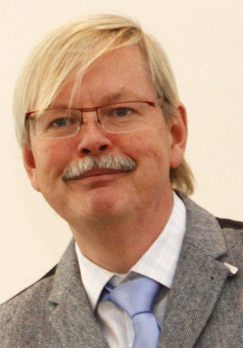 Peter Braesicke合作论文数Institute of Meteorology and Climate Research - Atmospheric Trace Gases and Remote Sensing, Karlsruhe Institute of Technology5
 D. N. Walters合作论文数5D. Copsey合作论文数4James Anstey合作论文数Canadian Ctr Climate Modelling & Anal, Victoria, BC, Canada4
 Ian Boutle合作论文数Met Office;University of Exeter4
 Lesley J Gray (Lesley Gray)合作论文数Atmospheric Physics Clarendon Laboratory, Department of Physics, University of Oxford4K. D. Williams合作论文数4
 Steven Hardiman合作论文数Hadley Centre, Met Office4John M. Edwards合作论文数4A. P. Lock合作论文数3
 Young-Ha Kim合作论文数3Federico Serva合作论文数3c maclachlan合作论文数3
 Kohei Yoshida合作论文数Meteorol Res Inst, Tsukuba, Ibaraki, Japan3James Manners合作论文数Met Off, Exeter EX1 3PB, Devon, England3David Jackson合作论文数Met Office3Susan B Palmer合作论文数3
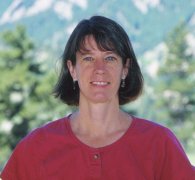 Anne K. Smith (Anne Smith)合作论文数Atmospheric Chemistry Observations & Modeling Lab, National Center for Atmospheric Research3R. A. Stratton合作论文数3
 Chiara Cagnazzo合作论文数Istituto Nazionale di Geofisica e Vulcanologia3
 Jadwiga H. (Yaga) Richter合作论文数Climate and Global Dynamics Laboratory, National Center for Atmospheric Research3Colin E. Johnson合作论文数3
 Fiona O'Connor合作论文数Met Office Hadley Centre3
 Malcolm Roberts合作论文数Met Office Hadley Centre3
 Pete Falloon合作论文数The Met. Office, Hadley Centre for Climate Prediction and Research3
 Cyril Morcrette合作论文数Met Off, Exeter EX1 3PB, Devon, England3
 Paul Earnshaw合作论文数3
 Hye-Yeong Chun合作论文数Department of Atmospheric Sciences, Yonsei University;Laboratory for Atmospheric Dynamics, Yonsei University3
 Matt Palmer合作论文数School of Earth Sciences, University of Bristol;Cabot Institute for the Environment, University of Bristol;Hadley Centre, Met Office3
 Olaf Morgenstern合作论文数National Institute of Water and Atmospheric Research3M. J. Best合作论文数Department of Combinatorics and Optimization;University of Waterloo;Department of Combinatorics and Optimization, University of Waterloo3Jonathan M. Wilkinson合作论文数Department of Meteorology3T. J. Hinton合作论文数2M. R. Willett合作论文数2
 Shingo Watanabe合作论文数2Gill M. Martin合作论文数2cc chen合作论文数2
 Laura A. Holt合作论文数2
 Peter G. Hill合作论文数2
 Rolando Garcia合作论文数Atmospheric Chemistry Division, National Center for Atmospheric Research;Atmospheric Chemistry Observations & Modeling Lab, National Center for Atmospheric Research2
 Stuart Webster合作论文数Met Office2G. G. Rooney合作论文数2
 François Lott合作论文数Laboratoire de Météorologie Dynamique, PSL Research Institute, Ecole Normale Supérieure, Paris, France2
 Wilfran Moufouma-Okia合作论文数2
 Adam Scaife合作论文数Department of Mathematics and Statistics, University of Exeter;Met Office2
 Paul Field合作论文数School of Earth and Environment, Faculty of Environment, University of Leeds;Met Office2
 Jon C. Petch合作论文数University of Washington2




