The inclusive semileptonic branching ratios b —► e u X , uX , r vX and vX have been measured at LEP with a Supported by the German Bundesministerium für Bildung, Wissenschaft, Forschung und Technologie b Supported by the Hungarian OTKA fund under contract number T 14459 c Supported also by the Comisión Interministerial de Ciencia y Technologia d Also supported by CONICET and Universidad Nacional de La Plata, CC 67, 1900 La Plata, Argentina e Also supported by Panjab University, Chandigarh-160014, India the L3 detector. The analysis is based on 2-jet hadronic Z decays obtained in the data collected between 1991 and 1992. Three separate event samples are analysed, contain ing electrons, muons and large missing energy (neutrinos), respectively. From the electron sample, we measure Br(b —> ez/X) (10.89±0.20=b0.51)% and, from the muon sam ple, Br(b —► ¡jl vX ) = (10.82±0.15±0.59)%, where the first error is statistical and the second is systematic. From
The measurement of the force acting between two parallel, current-carrying wires is known as Ampere’s experiment. A mechanical balance was historically employed to measure that force. We report a simple experiment based on an electronic precision balance that is useful in clearly showing students the existence of this interaction and how to measure it. The ampere (A) is one of the fundamental quantities of the international system of units, defined only on the basis of the force acting between a pair of parallel wires through which current is flowing.
Bose–Einstein correlations of pairs of identical charged pions produced in hadronic Z decays are analyzed in terms of various parametrizations. A good description is achieved using a Lévy stable distribution in conjunction with a model where a particle’s momentum is correlated with its space–time point of production, the τ-model. Using this description and the measured rapidity and transverse momentum distributions, the space–time evolution of particle emission in two-jet events is reconstructed. However, the elongation of the particle emission region previously observed is not accommodated in the τ-model, and this is investigated using an ad hoc modification.
The data collected by the L3+C muon spectrometer at the CERN Large ElectronPositron collider, LEP, have been used to search for short duration signals emitted by cosmic point sources. A sky survey performed from July to November 1999 and from April to November 2000 has revealed one single flux enhancement (chance probability = 2.6·10) between the 17th and 20th of August 2000 from a direction with a galactic longitude of (265.02 ± 0.42) and latitude of (55.58 ± 0.24). The energy of the detected muons was above 15 GeV. Reference: Astroparticle Physics, 33 (2010 )24 − 39
The data collected by the L3+C muon spectrometer at the CERN Large Electron-Positron collider, LEP, have been used to search for short duration signals emitted by cosmic point sources. A sky survey performed from July to November 1999 and from April to November 2000 has revealed one single flux enhancement (chance probability = 2.6 x 10(-3)) between the 17th and 20th of August 2000 from a direction with a galactic longitude of (265.02 +/- 0.42)degrees and latitude of (55.58 +/- 0.24)degrees. The energy of the detected muons was above 15 GeV. (C) 2009 Elsevier B.V. All rights reserved.
We describe some of the educational experiments carried out in the framework of the "Operi Lab" at the Florence University. In particular we focus our attention on three measurements, which can be carried out in a laboratory of the secondary school and concern the electromagnetism: the determination of the Earth's magnetic field in two methods, the construction of a simple electrometer and some measurements showing the operation of a moving-iron ammeter. The described measurements are quantitative and well reproducible, and have been tested with students and teachers.
The Kohlrausch ammeter is based on the measurement of the force acting between a solenoid and a soft iron rod inserted inside it. In this article, we present a new version of the instrument for educational purposes: in our device the dynamometer, which is usually employed to measure the force, is replaced by an electronic balance. The operation of the instrument is satisfactory: the precision is better than 1%. Furthermore, the measurements can be useful to improve students' knowledge of magnetism and magnetic materials.
A low-cost, easy-to-use absolute electrometer is presented: two thin metallic plates and an electronic balance, usually available in a laboratory, are used. We report on the very good performance of the device that allows precise measurements of the force acting between two charged plates.
Two methods for measuring the Earth's magnetic field are described. In the former, according to Gauss, the Earth's magnetic field is compared with that of a permanent magnet; in the latter, a well-known method, the comparison is made with the magnetic field generated by a current. As all the used instruments are available off the shelf, both methods are cheap. With some attention to the procedure, both methods give accurate results.
The (KSK +/-)-K-0 pi(-/+) final state in two-photon collisions is studied with the L3 detector at LEP at e(+)e(-) centre- of- mass energies from 183 to 209 GeV with an integrated luminosity of 664.6 pb(-1). The eta (1475) and f(1)(1420) mesons are observed and their contribution is separated by measuring the formation rates as a function of the photon virtuality Q(2). The eta(1475) is found to be dominant for Q(2) <= 0.01 GeV2 and its two- photon width is measured to be 0.23 +/- 0.05 (stat.) +/- 0.05 (sys.) keV. At higher Q(2), the f(1)(1420) is formed and decays to K*(892) K. The coupling and form factor parameters of this state are measured to be Gamma(gamma gamma) = 3.2 +/- 0.6 (stat.) +/- 0.7 ( sys.) keV and Lambda(1) = 926 +/- 72 (stat.) +/- 32 (sys.) MeV, respectively.
Measurements of inclusive production of the Lambda, Xi- and Xi*(1530) baryons in two-photon collisions with the L3 detector at LEP are presented. The inclusive differential cross sections for Lambda and Xi- are measured as a function of the baryon transverse momentum, pt, and pseudo-rapidity, eta. The mean number of Lambda, Xi- and Xi*(1530) baryons per hadronic two-photon event is determined in the kinematic range 0.4 GeV < pt< 2.5 GeV, |eta| < 1.2. Overall agreement with the theoretical models and Monte Carlo predictions is observed. A search for inclusive production of the pentaquark theta+(1540) in two-photon collisions through the decay theta+ -> proton K0s is also presented. No evidence for production of this state is found.
The reactions gamma gamma ->pi^+pi^-pi^+pi^- and gamma gamma ->pi^+pi^0pi^-pi^0 are studied with the L3 detector at LEP in a data sample collected at centre-of-mass energies from 161GeV to 209GeV with a total integrated luminosity of 698/pb. A spin-parity-helicity analysis of the rho^0 rho^0 and rho^+ rho^- systems for two-photon centre-of-mass energies between 1GeV and 3GeV shows the dominance of the spin-parity state 2+ with helicity 2. The contribution of 0+ and 0- spin-parity states is also observed, whereas contributions of 2- states and of a state with spin-parity 2+ and zero helicity are found to be negligible.
The L3+C muon detector at the CERN electron-positron collider, LEP, is used for the detection of very-high-energy cosmic gamma-ray sources through the observation of muons of energies above 20, 30, 50 and 100 GeV. Daily or monthly excesses in the rate of single-muon events pointing to some particular direction in the sky are searched for. The periods from mid July to November 1999, and April to November 2000 are considered. Special attention is also given to a selection of known gamma-ray sources. No statistically significant excess is observed for any direction or any particular source. (c) 2006 Elsevier B.V. All rights reserved.
The cross section for open-beauty production in photon–photon collisions is measured using the whole high-energy and high-luminosity data sample collected by the L3 detector at LEP. This corresponds to 627 pb−1 of integrated luminosity for electron–positron centre-of-mass energies from 189 to 209 GeV. Events containing b quarks are identified through their semi-leptonic decay into electrons or muons. The e+e−→e+e−bb¯X cross section is measured within our fiducial volume and then extrapolated to the full phase space. These results are found to be in significant excess with respect to Monte Carlo predictions and next-to-leading order QCD calculations.
The shadowing of high-energy cosmic rays by the Moon has been observed with a significance of 9.4 standard deviations with the L3+C muon spectrometer at CERN. A significant effect of the Earth magnetic field is observed. Since no event deficit on the east side of the Moon has been observed, an upper limit at 90% confidence level on the antiproton to proton ratio of 0.11 is obtained for primary energies around 1TeV.
Exclusive rho+rho- production in two-photon collisions between a quasi-real photon, gamma, and a mid-virtuality photon, gamma*, is studied with data collected at LEP at centre-of-mass energies root(s)=183-209GeV with a total integrated luminosity of 684.8pb^-1. The cross section of the gamma gamma* -> rho+ rho- process is determined as a function of the photon virtuality, Q^2, and the two-photon centre-of-mass energy, W_gg, in the kinematic region: 0.2GeV^2 < Q^2 <0.85GeV^2 and 1.1GeV < W_gg < 3GeV. These results, together with previous L3 measurements of rho0 rho0 and rho+ rho- production, allow a study of the gamma gamma* -> rho rho process over the Q^2-region 0.2GeV^2 < Q^2 < 30 GeV^2.
Neutral-current four-fermion production, e+e- -> ffff is studied in 0.7/fb of data collected with the L3 detector at LEP at centre-of-mass energies root(s)=183-209GeV. Four final states are considered: qqvv, qqll, llll and llvv, where l denotes either an electron or a muon. Their cross sections are measured and found to agree with the Standard Model predictions. In addition, the e+e- -> Zgamma* -> ffff process is studied and its total cross section at the average centre-of-mass energy 196.6GeV is found to be 0.29 +/- 0.05 +/- 0.03 pb, where the first uncertainty is statistical and the second systematic, in agreement with the Standard Model prediction of 0.22 pb. Finally, the mass spectra of the qqll final states are analysed to search for the possible production of a new neutral heavy particle, for which no evidence is found.
The evolution of the electromagnetic coupling, alpha, in the momentum-transfer range 1800 GeV2 < -Q(2) < 21600 GeV2 is studied with about 40 000 Bhabha-scattering events collected with the L3 detector at LEP at centre-of-mass energies root s = 189-209 GeV. The running of a is parametrised as:alpha(Q(2)) = (1-C Delta alpha(Q2))/(alpha 0)where alpha(0) = alpha(Q(2) = 0) is the fine-structure constant and C = 1 corresponds to the evolution expected in QED. A fit to the differential cross section of the e(+)e(-) -> e(+)e(-) process for scattering angles in the range vertical bar cos theta vertical bar < 0.9 excludes the hypothesis of a constant value of alpha, C = 0, and validates the QED prediction with the result:C = 1.05 +/- 0.07 +/- 0.14,where the first uncertainty is statistical and the second systematic. (c) 2005 Elsevier B.V. All rights reserved.
A search for a Higgs boson produced in e^+e^- collisions in association with a Z boson and decaying into invisible particles is performed. Data collected at LEP with the L3 detector at centre-of-mass energies from 189 GeV to 209 GeV are used, corresponding to an integrated luminosity of 0.63/fb. Events with hadrons, electrons or muons with visible masses compatible with a Z boson and missing energy and momentum are selected. They are consistent with the Standard Model expectations. A lower limit of 112.3 GeV is set at 95% confidence level on the mass of the invisibly-decaying Higgs boson in the hypothesis that its production cross section equals that of the Standard Model Higgs boson. Relaxing this hypothesis, upper limits on the production cross section are derived.
The double-radiative process e+e−→Zγγ→qq¯γγ where the two hard photons escape detection at low polar angles into opposite directions, is studied in 0.62 fb−1 of data collected with the L3 detector at LEP at centre-of-mass energies between 188.6 and 209.2 GeV. The cross sections are measured and found to be consistent with the Standard Model expectations.
 Robert Clare合作论文数University of California Riverside79W James Metzger合作论文数77A. Engler合作论文数Carnegie Mellon University75
 Adriaan König合作论文数Institute for Mathematics, Astrophysics and Particle Physics, Radboud University70G. Landi合作论文数70Rw Kraemer合作论文数68
 Helmut Vogel合作论文数Department of Physics, Carnegie Mellon University61
 W. Van Rossum合作论文数NIKHEF, Utrecht University59W. Kittel合作论文数50Bl Betev合作论文数50Robert Leiste合作论文数50
 Jean Fay合作论文数Institut de Physique des deux Infinis de Lyon, Université Claude Bernard Lyon 149
 Jean-Jacques J Blaising合作论文数49Guy G. Coignet合作论文数49Piero Spillantini合作论文数49H. Nowak合作论文数48W. Lohmann合作论文数48
 Tariq Aziz合作论文数Department of High Energy Physics, Tata Institute of Fundamental Research48Hans Hofer合作论文数48M. Chemarin合作论文数48
 Dimitri Bourilkov合作论文数University of Florida48c timmermans合作论文数47g chiefari合作论文数47Dj Schotanus合作论文数47L. Romero合作论文数47A. Hervé合作论文数47Fj Eppling合作论文数47A. Gurtu合作论文数47
 F. Filthaut (Frank)合作论文数Department of Experimental High Energy Physics, Radboud University47P. Berges合作论文数47
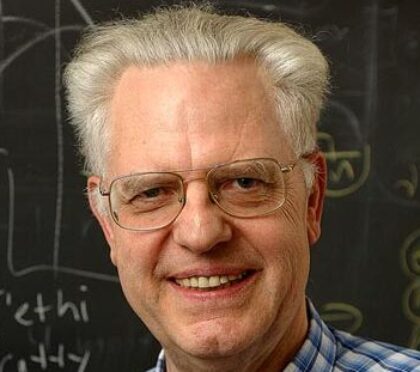 Ulrich Becker合作论文数Laboratory for Nuclear Science, Massachusetts Institute of Technology;Department of Physics, Massachusetts Institute of Technology47
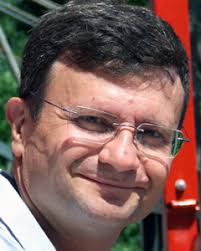 Oscar Adriani合作论文数Dipartimento di Fisica e Astronomia, Università degli Studi di Firenze;Istituto Nazionale di Fisica Nucleare47L. Baksay合作论文数47A. Arefiev合作论文数47
 Marcos Cerrada合作论文数Departamento de Investigación Básica, Centro Investigaciones Energéticas, Medioambientales y Tecnológicas47Marco Meschini合作论文数Istituto Nazionale di Fisica Nucleare47
 Bruno Borgia合作论文数47Renzo Ramelli合作论文数47
 Francesco Becattini合作论文数University of Florence47A. Biland合作论文数Eidgenössische Technische Hochschule, ETH Zürich47K. Deiters合作论文数46Bruna Bertucci合作论文数46H. Milcent合作论文数46s patricelli合作论文数46A. Eline合作论文数46G. Sultanov合作论文数46Me Sarakinos合作论文数46C. Luci合作论文数46A. Aloisio合作论文数46




