We search for anomalous ZZg and Zgg couplings with the L3 detector at LEP. The analysis is based on the study of the process e ' e ' TM Zg at center-of-mass energies in the range 161 GeV <'s < 183 GeV. No evidence for anomalous effects is found. Limits at the 95% confidence level are set on the values of the eight possible anomalous couplings. Depending on the type of coupling new physics scales below 213 GeV to 1083 GeV are excluded. © 1998 Elsevier Science B.V. All rights reserved.
We report measurements of the inclusive production of heavy quarkonium states in Z decays based on the analysis of 3.6 million hadronic events collected by the L3 detector at LEP. The measurement of inclusive J production and an improved 95% confidence level upper limit on F production are presented. In addition, two independent measurements of the ratio, f of prompt J mesons to those from B decay are made using two different isolation cuts to separate prompt J mesons from J mesons produced in the decays of b hadrons. The results are: Br(Z TM J + X) = (3.21 + 0.21 (stat.) J^1/ (sys.)) X 10 y 3, Br(Z TM F(1S) + X) < 4.4 X 10 y 5, fp = (7.1 + 2.1 (stat.) + 1.2(sys.) qjg (theo.)) X 10 y 2 . © 1999 Published by Elsevier Science B.V. All rights reserved. 1 Also supported by CONICET and Universidad Nacional de La Plata, CC 67, 1900 La Plata, Argentina. 2 Also supported by Panjab University, Chandigarh-160014, India. 3 Supported by Deutscher Akademischer Austauschdienst. 4 Also supported by the Hungarian OTKA fund under contract numbers T22238 and T026178. 5 Supported by the German Bundesministerium fur Bildung, Wissenschaft, Forschung und Technologie. 6 Supported by the National Natural Science Foundation of China. 7 Supported by the Hungarian OTKA fund under contract num bers T019181, F023259 and T024011. 8 Supported also by the Comisión Interministerial de Ciencia y Tecnología.
A search for unstable neutral and charged heavy leptons as well as for stable charged heavy leptons has been made at center-of-mass energies fi = 161 GeV and 6 = 172 GeV with the L3 detector at LEP. No evidence for their existence was found. We exclude unstable neutral leptons of Dirac (Majorana) type for masses below 78.0 (66.7), 78.0 (66.7) and 72.2 (58.2) GeV, if the heavy neutrino couples to the electron, muon or tau family, respectively. We exclude unstable charged heavy leptons for masses below 81.0 GeV for a wide mass range of the associated neutral heavy lepton. The production of stable charged heavy leptons with a mass less than 84.2 GeV is also excluded. If the unstable charged heavy lepton decays via mixing into a massless neutrino, we exclude masses below 78.7 GeV.
The inclusive semileptonic branching ratios b —► e u X , uX , r vX and vX have been measured at LEP with a Supported by the German Bundesministerium für Bildung, Wissenschaft, Forschung und Technologie b Supported by the Hungarian OTKA fund under contract number T 14459 c Supported also by the Comisión Interministerial de Ciencia y Technologia d Also supported by CONICET and Universidad Nacional de La Plata, CC 67, 1900 La Plata, Argentina e Also supported by Panjab University, Chandigarh-160014, India the L3 detector. The analysis is based on 2-jet hadronic Z decays obtained in the data collected between 1991 and 1992. Three separate event samples are analysed, contain ing electrons, muons and large missing energy (neutrinos), respectively. From the electron sample, we measure Br(b —> ez/X) (10.89±0.20=b0.51)% and, from the muon sam ple, Br(b —► ¡jl vX ) = (10.82±0.15±0.59)%, where the first error is statistical and the second is systematic. From
A search for pair–produced charged Higgs bosons is performed with the L3 detector at LEP using data collected at a centre–of–mass energy of 188.6 GeV, corresponding to an integrated luminosity of 176.4 pb−1. Higgs decays into a charm and a strange quark or into a tau lepton and its associated neutrino are considered. The observed events are consistent with the expectations from Standard Model background processes. A lower limit of 65.5 GeV on the charged Higgs mass is derived at 95% confidence level, independent of the decay branching ratio Br(H± → τν). Submitted to Phys. Lett. B
We have studied the structure of hadronic events with a hard, isolated photon in the final state (e+e_—> Z -» hadrons + y) in the 3.6 million hadronic events collected with the L3 detector at centre-of-mass energies around 91 GeV. The centre-of-mass energy of the hadronic system is in the range 30 GeV to 86 GeV. Event shape variables have been measured at these reduced centre-of-mass energies and have been compared with the predictions of different QCD Monte Carlo programs. The event shape variables and the energy dependence of their mean values are well reproduced by QCD models. 5 Supported by the Hungarian OTKA fund under contract numbers T14459 and T24011. 6 Supported also by the Comisión Interministerial de Ciencia y Technologia. p Massachusetts Institute of Technology, Cambridge, MA 02139, USA q INFN Sezione di Firenze and University of Florence, 1-50125 Florence, Italy r European Laboratory for Particle Physics, CERN, CH-1211 Geneva 23, Switzerland s World Laboratory, FBLJA Project, CH-1211 Geneva 23, Switzerland 1 University of Geneva, CH-1211 Geneva 4, Switzerland u Chinese University of Science and Technology, USTC, Hefei, Anhui 230 029, China 4 v SEFT, Research Institute for High Energy Physics, P.O. Box 9, SF-00014 Helsinki, Finland w University of Lausanne, CH-1015 Lausanne, Switzerland x INFN-Sezione di Lecce and Università Degli Studi di Lecce, 1-73100 Lecce, Italy y Los Alamos National Laboratory, Los Alamos, NM 87544, USA L Institut de Physique Nucléaire de Lyon, IN2P3-CNRS, Università Claude Bernard, F-69622 Villeurbanne, France “““ Centro de Investigaciones Energéticas, Medioambientales y Tecnológicas, CIEMAT, E-28040 Madrid, Spain 6 ab INFN-Sezione di Milano, 1-20133 Milan, Italy ac Institute of Theoretical and Experimental Physics, ITEP, Moscow, Russia ad INFN-Sezione di Napoli and University of Naples, I-80I25 Naples, Italy “ Department of Natural Sciences, University of Cyprus, Nicosia, Cyprus af University of Nijmegen and NIKHEF, NL-6525 ED Nijmegen, The Netherlands a* Oak Ridge National Laboratory, Oak Ridge, TN 37831, USA * California Institute of Technology, Pasadena, CA 91125, USA “ INFN-Sezione di Perugia and Università Degli Studi di Perugia, 1-06100 Perugia, Italy “j Camegie Mellon University, Pittsburgh, PA 15213, USA ak Princeton University, Princeton, NJ 08544, USA al INFN-Sezione di Roma and University of Rome, “La Sapienza”, 1-00185 Rome, Italy am Nuclear Physics Institute, St. Petersburg, Russia a" University and INFN, Salerno, 1-84100 Salerno, Italy a° University of California, San Diego, CA 92093, USA ap Dept, de Fisica de Partículas Elementales, Univ, de Santiago, E-15706 Santiago de Compostela, Spain Bulgarian Academy of Sciences, Central Lab. of Mechatronics and Instrumentation, BU-1113 Sofia, Bulgaria “ Center for High Energy Physics, Korea Adv. Inst, of Sciences and Technology, 305-701 Taejon, South Korea as University of Alabama, Tuscaloosa, AL 35486, USA “ Utrecht University and NIKHEF, NL-3584 CB Utrecht, The Netherlands “ Purdue University, West Lafayette, IN 47907, USA av Paul Scherrer Institut, PSI, CH-5232 Villigen, Switzerland aw DESY-Institut für Hochenergiephysik, D-15738 Zeuthen, FRG “ Eidgenössische Technische Hochschule, ETH Zürich, CH-8093 Zürich, Switzerland ay University of Hamburg, D-22761 Hamburg, FRG az High Energy Physics Group, Taiwan, ROC Received 23 June 1997 Editor: K. Winter M. Acciarri et al./Physics Letters B 411 (1997) 339-353 343 We fit distributions of several global event shape variables to resummed calculations to determine the strong coupling constant as over a wide range of energies. We find that the strong coupling constant as decreases with increasing energy, as expected from QCD. © 1997 Elsevier Science B.V.
Inclusive production of D * ± mesons in two-photon collisions was measured by the L3 experiment at LEP. The data were collected at a centre-of-mass energy Js = 189 GeV with an integrated luminosity of 176.4 pb 1 2345678. Differential cross sections of the process ee ^ee l)‘ X are determined as functions of the transverse momentum and pseudorapidity of the D* ± mesons in the kinematic region 1 GeV < p'/ < 5GeV and |t|d | < 1.4. The cross section integrated over this phase space domain is measured to be 132 + 22(stat.) + 26(syst.)pb. The differential cross sections are compared with next-to-leading order perturbative QCD calculations. © 1999 Published by Elsevier Science B.V. All rights reserved. 1 Also supported by CONICET and Universidad Nacional de La Plata, CC 67, 1900 La Plata, Argentina. 2 Also supported by Panjab University, Chandigarh-160014, India. 3 Deceased. 4 Also supported by the Hungarian OTKA fund under contract numbers T22238 and T026178. 5 Supported by the German Bundesministerium für Bildung, Wissenschaft, Forschung und Technologie. 6 Supported by the National Natural Science Foundation of China. 7 Supported by the Hungarian OTKA fund under contract num bers T019181, F023259 and T024011. 8 Supported also by the Comisión Interministerial de Ciencia y Tecnología.
A precision measurement by the Alpha Magnetic Spectrometer on the International Space Station of the positron fraction in primary cosmic rays in the energy range from 0.5 to 350 GeV based on 6 : 8 (cid:1) 10 6 positron and electron events is presented. The very accurate data show that the positron
A precision measurement by the Alpha Magnetic Spectrometer on the International Space Station of the positron fraction in primary cosmic rays in the energy range from 0.5 to 350 GeV based on 6.8 × 10(6) positron and electron events is presented. The very accurate data show that the positron fraction is steadily increasing from 10 to ∼ 250 GeV, but, from 20 to 250 GeV, the slope decreases by an order of magnitude. The positron fraction spectrum shows no fine structure, and the positron to electron ratio shows no observable anisotropy. Together, these features show the existence of new physical phenomena.
The First G-APD Cherenkov Telescope (FACT) became operational at La Palma in October 2011. Since summer 2012, due to very smooth and stable operation, it is the first telescope of its kind that is routinely operated from remote, without the need for a data-taking crew on site. In addition, many standard tasks of operation are executed automatically without the need for manual interaction. Based on the experience gained so far, some alterations to improve the safety of the system are under development to allow robotic operation in the future. We present the setup and precautions used to implement remote operations and the experience gained so far, as well as the work towards robotic operation.
The First G-APD Cherenkov telescope (FACT) is the first telescope using silicon photon detectors (G-APD aka. SiPM). It is built on the mount of the HEGRA CT3 telescope, still located at the Observatorio del Roque de los Muchachos, and it is successfully in operation since Oct. 2011. The use of Silicon devices promises a higher photon detection efficiency, more robustness and higher precision than photo-multiplier tubes. The FACT collaboration is investigating with which precision these devices can be operated on the long-term. Currently, the telescope is successfully operated from remote and robotic operation is under development. During the past months of operation, the foreseen monitoring program of the brightest known TeV blazars has been carried out, and first physics results have been obtained including a strong flare of Mrk501. An instantaneous flare alert system is already in a testing phase. This presentation will give an overview of the project and summarize its goals, status and first results.
Since two years, the FACT telescope is operating on the Canary Island of La Palma. Apart from its purpose to serve as a monitoring facility for the brightest TeV blazars, it was built as a major step to establish solid state photon counters as detectors in Cherenkov astronomy. The camera of the First G-APD Cherenkov Telesope comprises 1440 Geiger-mode avalanche photo diodes (G-APD), equipped with solid light guides to increase the effective light collection area of each sensor. Since no sense-line is available, a special challenge is to keep the applied voltage stable although the current drawn by the G-APD depends on the flux of night-sky background photons significantly varying with ambient light conditions. Methods have been developed to keep the temperature and voltage dependent response of the G-APDs stable during operation. As a cross-check, dark count spectra with high statistics have been taken under different environmental conditions. In this presentation, the project, the developed methods and the experience from two years of operation of the first G-APD based camera in Cherenkov astronomy under changing environmental conditions will be presented.
Geiger-mode avalanche photodiodes (G-APD, SiPM) are a much discussed alternative to photomultiplier tubes in Cherenkov astronomy. The First G-APD Cherenkov Telescope (FACT) collaboration builds a camera based on a hexagonal array of 1440 G-APDs and has now finalized its construction phase. A light-collecting solid PMMA cone is glued to each G-APD to eliminate dead space between the G-APDs by increasing the active area, and to restrict the light collection angle of the sensor to the reflector area in order to reduce the amount of background light. The processing of the signals is integrated in the camera and includes the digitization using the domino ring sampling chip DRS4.
In the past years, the second generation of imaging air-Cherenkov telescopes has proven its power detecting weak sources with high sensitivity and low energy threshold. The goal to further improve the sensitivity and lower the energy threshold requires a robust and hlghly efficient sensor technology. A promising detector technology are silicon based photon detectors, namely Geiger-mode avalanche photo-diodes (G-APDs). They promise robustness and easy manage-ability compared photo-multiplier tubes so far in use.To prove the applicability of this technology for Cherenkov telescopes, one of the former HEGRA telescopes was revived and equipped with a camera using G-APDs all photo sensors. Since G-APDs are comparably small, solid light guides are used to significantly increase the light collection area of each sensor. With this technologies, the First G-APD Cherenkov Telescopes (FACT) promises an increase in sensitivity and decrease in energy threshold, compared with a classical photo-multiplier based camera.
Within the FACT project, we construct a new type of camera based on Geiger-mode avalanche photodiodes (G-APDs). Compared to photomultipliers, G-APDs are more robust, need a lower operation voltage and have the potential of higher photon-detection efficiency and lower cost, but were never fully tested in the harsh environments of Cherenkov telescopes. The FACT camera consists of 1440 G-APD pixels and readout channels, based on the DRS4 (Domino Ring Sampler) analog pipeline chip and commercial Ethernet components. Preamplifiers, trigger system, digitization, slow control and power converters are integrated into the camera.
The variety of isotopes in cosmic rays allows us to study different aspects of the processes that cosmic rays undergo between the time they are produced and the time of their arrival in the heliosphere. In this paper we present measurements of the isotopic ratios 2H/4He, 3He/4He, 6Li/7Li, 7Be/(9Be+10Be) and 10B/11B in the range 0.2-1.4 GeV of kinetic energy per nucleon. The measurements are based on the data collected by the Alpha Magnetic Spectrometer, AMS-01, during the STS-91 flight in 1998 June.
Bose–Einstein correlations of pairs of identical charged pions produced in hadronic Z decays are analyzed in terms of various parametrizations. A good description is achieved using a Lévy stable distribution in conjunction with a model where a particle’s momentum is correlated with its space–time point of production, the τ-model. Using this description and the measured rapidity and transverse momentum distributions, the space–time evolution of particle emission in two-jet events is reconstructed. However, the elongation of the particle emission region previously observed is not accommodated in the τ-model, and this is investigated using an ad hoc modification.
The field of gamma-ray astronomy has expanded rapidly during the last decade. In the energy regime from 100 GeV up to several TeV, Imaging Atmospheric Cherenkov Telescopes (IACT) are the most sensitive detectors. Presently all IACTs use photomultiplier tubes for light detection, but for future projects Geiger-mode Avalanche Photodiodes (G-APD) are very promising alternatives. In order to demonstrate their potential, the First G-APD Cherenkov Telescope (FACT) collaboration has constructed an IACT camera comprising 1440 G-APDs. By means of specially designed light concentrators the collection area of each sensor is enlarged. The entire electronics for analog signal processing, digitization and triggering is fully integrated into the camera body. Event data are sent via Ethernet to the counting house. The FACT camera was installed during fall 2011 at the Observatorio del Roque de los Muchachos on La Palma, Canary Islands (Spain), on a refurbished telescope mount.
The maximization of the photon detection efficiency (PDE) is a key issue in the development of cameras for Imaging Atmospheric Cherenkov Telescopes. Geiger-mode Avalanche Photodiodes (G-APD) are a promising candidate to replace the commonly used photomultiplier tubes by offering a larger PDE and in addition a facilitated handling. The FACT (First G-APD Cherenkov Telescope) project evaluates the feasibility of this change by building a camera based on 1440 G-APDs for an existing small telescope. As a first step towards a full camera, a prototype module using 144 G-APDs was successfully built and tested. The strong temperature dependence of G-APDs is compensated using a feedback system, which allows to keep the gain of the G-APDs constant to 0.5%.
We present results from a study of hadronic event structure in high energy e+e− interactions using the L3 detector at LEP. A new class of event shape distributions are measured at and above the Z boson pole for light quark (u, d, s, c) flavours. Energy flow correlations are studied for all hadronic events. Next-to-leading-log QCD calculations and QCD models with improved leading-log approximations are compared to data and good agreement is found at the Z-pole whereas some discrepancies are observed at higher centre-of-mass energies.
 A. Biland合作论文数Eidgenössische Technische Hochschule, ETH Zürich344Felicitas Paüss合作论文数302Juan Alcaraz合作论文数277Hans Hofer合作论文数276
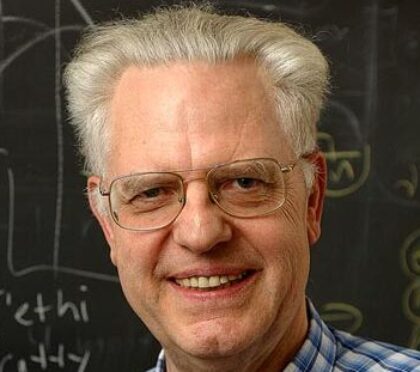 Ulrich Becker合作论文数Laboratory for Nuclear Science, Massachusetts Institute of Technology;Department of Physics, Massachusetts Institute of Technology275Jeremie Berdugo合作论文数272A. Arefiev合作论文数271A. Aloisio合作论文数270
 Tariq Aziz合作论文数Department of High Energy Physics, Tata Institute of Fundamental Research269
 Tofigh Azemoon合作论文数269
 Gert Viertel合作论文数266Maurice H. Bourquin合作论文数265M. Capell合作论文数264
 Mariagrazia Alviggi合作论文数Department of Physics, University of Naples Federico II;Laboratory of Particle Physics, University of Naples Federico II262Bruna Bertucci合作论文数261Fj Eppling合作论文数259M. Aguilar-Benitez合作论文数Centro de Investigaciones Energeticas, Medioambientales y Tecnologicas, CIEMAT258P. Extermann合作论文数257P. Berges合作论文数256L. Baksay合作论文数256
 Jean-Jacques J Blaising合作论文数255C. Mana合作论文数255M. Steuer合作论文数253Ren Danyang合作论文数253g chiefari合作论文数252I. Clare合作论文数252Bl Betev合作论文数252Guy G. Coignet合作论文数252Paolo Bagnaia合作论文数252Juergen Ulbricht合作论文数252Albrecht Böhm合作论文数251Xd Cai合作论文数249Henry Suter合作论文数249
 Oscar Adriani合作论文数Dipartimento di Fisica e Astronomia, Università degli Studi di Firenze;Istituto Nazionale di Fisica Nucleare249M. Chemarin合作论文数248Robert Clare合作论文数University of California Riverside246
 Marcos Cerrada合作论文数Departamento de Investigación Básica, Centro Investigaciones Energéticas, Medioambientales y Tecnológicas246Hans Fesefeldt合作论文数246G. Landi合作论文数246Peter Denes合作论文数Lawrence Berkeley National Laboratory246Vladimir Koutsenko合作论文数245K. Freudenreich合作论文数Eidgenössische Technische Hochschule, ETH Zürich, CH-8093 Zürich, Switzerland245
 Bruno Borgia合作论文数245A. Kunin合作论文数245
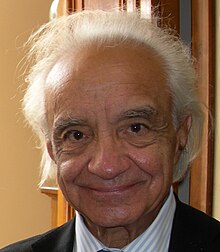 Antonino Zichichi合作论文数University of Bologna244G. Forconi合作论文数244
 Joachim Mnich合作论文数Deutsches Elektronen-Synchrotron244A. Degré合作论文数243
 Ren-Yuan Zhu合作论文数Division of Physics, Mathematics and Astronomy, California Institute of Technology243




