We report on the first production of an antihydrogen beam by charge exchange of 6.1 keV antiprotons with a cloud of positronium in the GBAR experiment at CERN. The antiproton beam was delivered by the AD/ELENA facility. The positronium target was produced from a positron beam itself obtained from an electron linear accelerator. We observe an excess over background indicating antihydrogen production with a significance of 3-4 standard deviations.
We present a description of the GBAR positron (e+) trapping apparatus, which consists of a three stage Buffer Gas Trap (BGT) followed by a High Field Penning Trap (HFT), and discuss its performance. The overall goal of the GBAR experiment is to measure the acceleration of the neutral antihydrogen (H) atom in the terrestrial gravitational field by neutralising a positive antihydrogen ion (H+), which has been cooled to a low temperature, and observing the subsequent H annihilation following free fall. To produce one H + ion, about 1010 positrons, efficiently converted into positronium (Ps), together with about 107 antiprotons (p), are required. The positrons, produced from an electron linac-based system, are accumulated first in the BGT whereafter they are stacked in the ultra-high vacuum HFT, where we have been able to trap 1.4(2) x 109 positrons in 1100 s.
For the GBAR (Gravitational Behaviour of Antihydrogen at Rest) experiment at CERN's Antiproton Decelerator (AD) facility we have constructed a source of slow positrons, which uses a low-energy electron linear accelerator (linac). The driver linac produces electrons of 9 MeV kinetic energy that create positrons from bremsstrahlung-induced pair production. Staying below 10 MeV ensures no persistent radioactive activation in the target zone and that the radiation level outside the biological shield is safe for public access. An annealed tungsten-mesh assembly placed directly behind the target acts as a positron moderator. The system produces 5×10⁷ slow positrons per second, a performance demonstrating that a low-energy electron linac is a superior choice over positron-emitting radioactive sources for high positron flux.
The GBAR (Gravitational Behavior of Antihydrogen at Rest) experiment at CERN requires efficient deceleration of 100 keV antiprotons provided by the new ELENA synchrotron ring to synthesize antihydrogen. This is accomplished using electrostatic deceleration optics and a drift tube that is designed to switch from-99 kV to ground when the antiproton bunch is inside ? essentially a charged particle ?elevator?? producing a 1 keV pulse. We describe the simulation, design, construction and successful testing of the decelerator device at-92 kV on-line with antiprotons from ELENA.
We have developed a PbWO4 (PWO) detector with a large dynamic range to measure the intensity of a positron beam and the absolute density of the ortho-positronium (o-Ps) cloud it creates.A simulation study shows that a setup based on such detectors may be used to determine the angular distribution of the emission and reflection of o-Ps to reduce part of the uncertainties of the measurement.These will allow to improve the precision in the measurement of the cross-section for the (anti)hydrogen formation by (anti)proton-positronium charge exchange and to optimize the yield of antihydrogen ion which is an essential parameter in the GBAR experiment.
The Brillouin gain spectrum of a test sample (liquid acetone at room temperature) on scales simultaneously confined in space (~30 μm) and time (~170 ns) is reported. This is done using a pulsed stimulated Brillouin scattering gain spectrometer in a θ ≈ 90° crossing beam configuration. After having identified and corrected for different sources of background signals, we obtained a Brillouin gain spectrum allowing an accurate measurement (MHz range) of the Brillouin frequency (few GHz). This is of interest for probing acoustic properties of transparent media subjected to repetitive fast transient phenomena on small length scales.
The GBAR experiment aims to measure the gravitational acceleration of antihydrogen (H) over bar. It will use (H) over bar (+) ions formed by the interaction of antiprotons with a dense positronium ...
T. Louvradouxa, J. Heinricha, M. Haidara, A. Douilleta,b, L. Hilicoa,b, J.-Ph. Karra,b, V.I. Korobovc, S. Patrad, M. Germannd, J.C.J. Koelemeijd a Laboratoire Kastler Brossel, Sorbonne Université, CNRS, ENS-PSL University, Collège de France, Case 74, 4 place Jussieu, 75005 Paris, France b Université d’Evry-Val d’Essonne, Boulevard Franois Mitterrand, 91025 Evry, France c Bogolyubov Laboratory of Theoretical Physics, Joint Institute for Nuclear Research, Dubna 141980, Russia d LaserLaB and Department of Physics & Astronomy, VU University, De Boelelaan 1081, 1081 HV Amsterdam, The Netherlands
In this paper we present a new variable time step criterion for the velocity-Verlet algorithm allowing to correctly simulate the dynamics of charged particles exchanging energy via Coulomb collisions while minimising simulation time. We present physical arguments supporting the use of the criterion along with numerical results proving its validity. We numerically show that H̅^+ ions with 18 meV initial energy can be captured and sympathetically cooled by a Coulomb crystal of Be^+ and HD^+ in less than 10 ms, an important result for the GBAR project.
The aim of the GBAR (Gravitational Behavior of Antimatter at Rest) experiment is to measure the free fall acceleration of an antihydrogen atom, in the terrestrial gravitational field at CERN and therefore test the Weak Equivalence Principle with antimatter. The aim is to measure the local gravity with a 1% uncertainty which can be reduced to few parts of 10 -3 .
High-accuracy spectroscopy of hydrogen molecular ions has important applications for the metrology of fundamental constants and tests of fundamental theories. Up to now, the experimental resolution has not surpassed the part-per-billion range. We discuss two methods by which it could be improved by a huge factor. Firstly, the feasibility of Doppler-free quasidegenerate two-photon spectroscopy of trapped and sympathetically cooled ensembles of HD+ ions is discussed, and it is shown that rovibrational transitions may be detected with a good signal-to-noise ratio. Secondly, the performance of a molecular quantum-logic ion clock based on a single Be+-H2+ ion pair is analyzed in detail. Such a clock could allow testing the constancy of the proton-to-electron mass ratio at the 10-17/yr level.
The GBAR project (Gravitational Behaviour of Anti hydrogen at Rest) at CERN, aims to measure the free fall acceleration of ultracold neutral anti hydrogen atoms in the terrestrial gravitational field. The experiment consists preparing anti hydrogen ions (one antiproton and two positrons) and sympathetically cooling them with Be + ions to less than 10 μK. The ultracold ions will then be photo-ionized just above threshold, and the free fall time over a known distance measured. We will describe the project, the accuracy that can be reached by standard techniques, and discuss a possible improvement to reduce the vertical velocity spread.
We discuss an experimental approach allowing to prepare antihydrogen atoms for the GBAR experiment. We study the feasibility of all necessary experimental steps: The capture of incoming [Formula: see text] ions at keV energies in a deep linear RF trap, sympathetic cooling by laser cooled Be + ions, transfer to a miniaturized trap and Raman sideband cooling of an ion pair to the motional ground state, and further reducing the momentum of the wavepacket by adiabatic opening of the trap. For each step, we point out the experimental challenges and discuss the efficiency and characteristic times, showing that capture and cooling are possible within a few seconds.
The Einstein classical Weak Equivalence Principle states that the trajectory of a particle is independent of its composition and internal structure when it is only submitted to gravitational forces. This fundamental principle has never been directly tested with antimatter. However, theoretical models such as supergravity may contain components inducing repulsive gravity, thus violating this principle. The GBAR project (Gravitational Behaviour of Antihydrogen at Rest) proposes to measure the free fall acceleration of ultracold neutral antihydrogen atoms in the terrestrial gravitational field. The experiment consists in preparing antihydrogen ions (one antiproton and two positrons) and sympathetically cool them with Be + ions to a few 10 μ K. The ultracold ions will then be photoionized just above threshold, and the free-fall time over a known distance measured. In this work, the GBAR project is described as well as possible improvements that use quantum reflection of antihydrogen on surfaces to use quantum methods of measurements.
We discuss an experimental approach allowing to prepare antihydrogen atoms for the GBAR experiment. We study the feasibility of all necessary experimental steps: The capture of incoming H̅^+ ions at keV energies in a deep linear RF trap, sympathetic cooling by laser cooled Be^+ ions, transfer to a miniaturized trap and Raman sideband cooling of an ion pair to the motional ground state, and further reducing the momentum of the wavepacket by adiabatic opening of the trap. For each step, we point out the experimental challenges and discuss the efficiency and characteristic times, showing that capture and cooling are possible within a few seconds.
P. Dupré , P. Grandemange, D. Lunney, V. Manea, A. Badertscher, D. Banerjee, P. Crivelli, A. Curioni, A. Marchionni, B. Rossi, A. Rubbia, V. Nesvizhevsky, P-A. Hervieux, G. Manfredi, D. Brook-Roberge, P. Comini, P. Debu, L. Liszkay, B. Mansoulié, T. Mortensen, P. Pérez, J-M. Rey, J-M. Reymond, Y. Sacquin, B. Vallage, O. Dalkarov, N. Kolachevskiy, K. Khabarova, A. Voronin, F. Biraben, P. Cladé, A. Douillet, G. Dufour, S. Guellati, L. Hilico, P. Indelicato, A. Lambrecht, J-P. Karr, F. Nez, S. Reynaud, V-Q. Tran, F. Schmidt-Kaler, S. Wolf , J. Walz, M. Staszczak, S. Wronka, A. Mohri, Y. Yamazaki, M. Charlton, S. Eriksson, N. Madsen, D.P. van der Werf , N. Kuroda, Y. Matsuda, H. Torii, Y. Nagashima, P. Froelich, S. Jonsell
We study the feasibility of nearly degenerate two-photon rovibrational spectroscopy in ensembles of trapped, sympathetically cooled hydrogen molecular ions using a resonance-enhanced multiphoton dissociation (REMPD) scheme. Taking advantage of quasicoincidences in the rovibrational spectrum, the excitation lasers are tuned close to an intermediate level to resonantly enhance two-photon absorption. Realistic simulations of the REMPD signal are obtained using a four-level model that takes into account saturation effects, ion trajectories, laser frequency noise, and redistribution of population by blackbody radiation. We show that the use of counterpropagating laser beams enables optical excitation in an effective Lamb-Dicke regime. Sub-Doppler lines having widths in the 100-Hz range can be observed with good signal-to-noise ratio for an optimal choice of laser detunings. Our results indicate the feasibility of molecular spectroscopy at the 10(-14) accuracy level for improved tests of molecular QED, a new determination of the proton-to-electron mass ratio, and studies of the time (in)dependence of the latter.
We study the photodissociation of trapped \(\mathrm{H}_{2}^{+}\) ions by 248 nm light from an excimer laser. Our results are in good agreement with calculated populations and photodissociation cross sections of the involved vibrational levels and yield a determination of the ion cloud radius. These data are used to obtain a reliable estimate of the efficiency of the resonance-enhanced multiphoton dissociation (REMPD) scheme in our \(\mathrm{H}_{2}^{+}\) vibrational spectroscopy experiment. We go on to estimate the expected signal-to-noise ratio and discuss future improvements of the experimental setup.
 Laurent Hilico合作论文数30
 Jean-Philippe Karr合作论文数LKB - Jussieu14
 Jean-Jacques Zondy合作论文数Department of Physics, School of Science and Technology, Nazarbayev University14
 Jp Karr合作论文数13
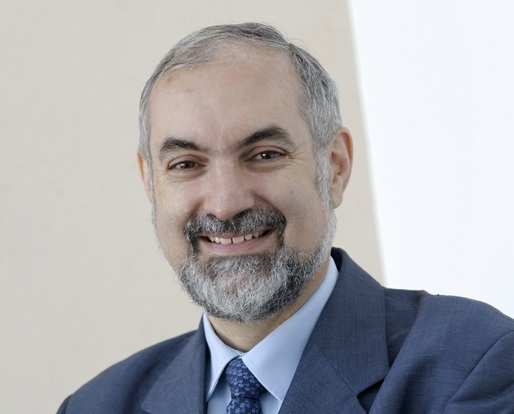 Paul Indelicato合作论文数Laboratoire Kastler Brossel13
 Pauline Comini合作论文数12P. Debu合作论文数12
 Serge Reynaud合作论文数Laboratoire Kastler-Brossel, Sorbonne University11N. Kuroda合作论文数11pierre clade合作论文数11
 Paolo Crivelli合作论文数Department of Physics, Eidgenössische Technische Hochschule Zürich11
 Giovanni Manfredi合作论文数Department of Ultrafast Optics and Nanophotonics, Institut de Physique et Chimie des Matériaux de Strasbourg11Laszlo Liszkay合作论文数11D. P. Van Der Werf合作论文数11M. Staszczak合作论文数10O. D. Dalkarov合作论文数10francois nez合作论文数10D. Lunney合作论文数10
 Yasunori Yamazaki (山崎泰規)合作论文数Wako Institute, RIKEN;Advanced Science Institute, Riken10
 Michael Charlton合作论文数Department of Physics, Swansea University10P. Perez合作论文数10
 Y. Sacquin合作论文数10A. Yu. Voronin合作论文数Physical Institute10
 Paulantoine Hervieux合作论文数Institut de Physique et Chimie des Mat ´10
 Svante Jonsell合作论文数Department of Physics;Umeû a University;Department of Physics, Umeû a University10
 Valery Nesvizhevsky合作论文数Institut Laue-Langevin10S. Wolf合作论文数9
 Bertrand Vallage合作论文数9Alexander P. Yelisseyev合作论文数9S. Guellati合作论文数9
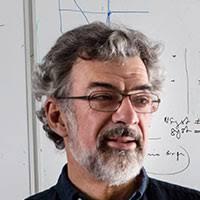 Bruno Mansoulié合作论文数CEA9Audric Husson合作论文数8
 Ludmila I. Isaenko合作论文数8C. Regenfus合作论文数8A. M. M. Leite合作论文数7L. Dodd合作论文数7M. Chung合作论文数7Rousse J-Y合作论文数7
 André Rubbia合作论文数Institute for Particle and Astroparticle Physics, ETH Zurich7Sergei Lobanov合作论文数6G. Mornacchi合作论文数6K-H. Yoo合作论文数6S. Niang合作论文数6T. Kosinski合作论文数6
 G. Janka合作论文数ETH Zurich6Y. J. Ko合作论文数6
 Nancy Paul合作论文数Sch Biomed, Univ Manchester6Matusiak, M.合作论文数6E Lim合作论文数6




