Assessment is an important component in learning mathematics. The practice of mathematics assessment is influenced by teachers' beliefs about the assessment. This study aims to explore the beliefs of primary school mathematics teachers regarding mathematics assessment. The research used quantitative research methods using survey methods to 71 prospective elementary school mathematics teachers. Confidence data regarding mathematics assessment was collected using closed and open questionnaires based on a framework of productive beliefs and unproductive beliefs. Data from closed questionnaires were analyzed using descriptive statistics. Meanwhile, open questionnaire data were analyzed using deductive coding method based on productive and unproductive beliefs. The results showed that prospective elementary school mathematics teachers held mixed beliefs in mathematics assessment. On the one hand, it can be said that the beliefs of prospective elementary school mathematics teachers regarding mathematics assessment tend to be contradictory. These results imply the importance of an attempt to intervene in the beliefs of prospective elementary school mathematics teachers regarding mathematics assessment. Thus, assessment practice can lead to productive assessment, which is to encourage meaningful mathematics learning.
Okoubaka aubrevillei is one of the forest trees critically threatened and rare in its natural ranges inNigeria. This study conducted a field search and ethnobotanical survey for O. aubrevillei in selected areas ofOyo and Osun States, aimed towards sustainable conservation and utilization. Ethnobotanical informationgathering followed a participatory rural appraisal (PRA) approach, whereas, for the search and speciesidentification, standard botanical procedures were followed. While two stands of O. aubrevillei were foundat Ameere village in Osun state, none was encountered in Oyo state. The bark was the predominantly knownpart, with a 94 % fidelity level (FL) of use. Other FL of use computed in the study were for leaves (70 %),seeds (50 %) as well as bark and seed (25 %). The medicinal potentials of the plant include the treatment ofinsanity, convulsion, miscarriage, skin infections, food poisoning, stomach upset, snake bite, leprosy, andvenereal diseases. Taboos and reverence ascribed to the plant, coupled with mandatory rituals required toassess and harvest the parts, contributed mainly to the low level of concerted research efforts to promote thecultivation, management/improvement of its genetic resources, conservation, and utilization. The use ofbiotechnological conservatory approaches could considerably stem some of the constraints and substantiallyenhance its cultivation and utilization.
Sustainable agricultural productivity is hampered by over-dependency on major staple crops, neglect and underutilization of others, climate change, as well as land deterioration. Challenges posed by these limiting factors are undoubtedly contributing to global food insecurity, increased rural poverty, and malnutrition in the less developed countries. Miscellaneous neglected and underutilized grain legumes (MNUGLs) are crops primarily characterized by inherent features and capabilities to withstand the effects of abiotic stress and climate change, significantly replenish the soil, as well as boost food and protein security. This chapter provides insight into the benefits of MNUGLs as food and nutritional security climate smart crops, capable of growing on marginal lands. Exploring and improving MNUGLs depend on a number of factors among which are concerted research efforts, cultivation and production, as well as utilization awareness across global populace geared toward reawakening the interest on the abandoned legumes. The emergence of the clustered regularly interspaced short palindromic repeat (CRISPR/cas9) technology combined with marker-assisted selection (MAS) offers great opportunities to improve MNUGLs for sustainable utilization. Advances in improvement of MNUGLs using omic technologies and the prospects for their genetic modification were highlighted and discussed.
A plant that showed morphological closeness to Aspilia africana (Pers) C. D. Adams (Asteraceae) was spotted and collected in 2015 along Afe Babalola University road, Ado‐Ekiti, Ekiti State, Nigeria with coordinates 7°36′59.99″N, 5°12′60.00″E. However, upon closer observation some distinct and peculiar characteristics that clearly distinguished it from Aspilia africana were revealed, e.g. sterility of the disc florets and production of achenes by ray florets only. Another striking character of the plant was total emptying of the capitulum after achene maturation, leaving an empty capitulum cup on the plant. Literature and herbarium searches revealed that the plant had neither been reported from West Tropical Africa nor collected in any herbarium in Nigeria before. The plant was eventually identified as Melampodium divaricatum (L.) which is an annual erect herb, distributed in tropical and subtropical regions but mostly restricted to Mexico, North America and Central America. Morphological, reproductive and cytological studies carried out on the plant revealed it to possess a highly branched erect pigmented stem, simple opposite sub sessile leaves with acute apex and distantly serrated margins, capitula with yellow unisexual disc and ray florets, sterile disc florets, fertile ray florets, relatively high pollen fertility (92.85%), a somatic chromosome number of 2n = 24 and regular formation of 12 bivalents, indicating the plant to be a diploid species. Further studies on Melampodium in Nigeria and a general revision of the flora of West Tropical Africa is suggested as well as the need to monitor M. divaricatum in the region since it appears to have the capacity to become invasive.
Evaluation of agronomic practices, genetic diversity and population structure of Moringa oleifera (Lam.) is crucial to its sustainable utilization to ensure food and nutritional security. Four agronomic practices of field preparation and soil analysis, regeneration, weeding and pruning, as well as harvesting, were adopted. Genetic diversity and population structure of 20 populations were evaluated using amplified fragment length polymorphism (AFLP) primer pairs (E-ACC/M-CAC and E-ACA/M-CAG). The effects of agronomic practices on leaf quantity production were evaluated using standard procedures. The physico-chemical and morphological data were analyzed using descriptive statistics, while genetic diversity, population structure, dendrogram reconstruction, and Principal Component Analysis (PCA) were analyzed from the AFLP genetic data. Significant effects (P ≤ 0.05) of agronomic practices on the quantity of leaf production were recorded across the accessions. The two primer pairs generated a total of 80 alleles with a mean major allele frequency of 0.0250. Gene diversity and polymorphic information content (PIC) values were high with a mean of 0.98 and 0.974, respectively. The Gst value of 0.0490 indicated that 5 % of the total genetic divergence was among the population while 95 % within the population. Dendrogram reconstruction with genetic distance ranging from 0.87 to 0.96 segregated the accessions into eleven clusters while PCA generated six cluster groups. Field preparation and physico-chemical soil properties, regeneration, weeding and pruning, and stand development, as well as harvesting, influenced the leaf yield and genetic diversity observed in this study. The genetic data revealed that some accessions were clustered along eco-geographical lines while others grouped disparately. Identified potential parent genotypes with valuable and desirable genetic traits can be exploited for commercial, breeding and conservation purposes to ensure sustainable utilization of the species in Nigeria.
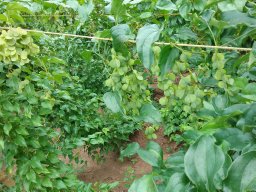
The many reported inherent nutritional potential in African yam bean (Sphenostylis stenocarpa (Hochst. Ex. A. Rich.) Harms) seem to provide platform for the need of its genetic improvement. A good understanding of the breeding system of the crop species is a needed criterion in plant breeding program. Four accessions of African yam bean (AYB) collected from the Genetic Resources Centre of the International Institute of Tropical Agriculture (IITA), Ibadan, Nigeria were grown out in a fifteen plants/accession row on a field at IITA, Ibadan (7.5°N, 3.9°E), Nigeria. Five pollination mechanisms were investigated as treatments on the four accessions. The four accessions set fruits and seeds in four treatments: plants left to open-pollination (A), plants isolated with fine net mesh (B), artificially selfed flowers (C) and inter-varietal cross-pollination (D). Emasculated flowers which were not pollinated (treatment E) produced neither fruit nor seed. Treatment A differed significantly (P<0.05) from B, likewise C and D. Fruit set percentage was higher in A (19.7-21.2) than B (18.3–18.7). Higher pollination/fertilization success (46.5%) was obtained in C compared to 32.3% in D. More seeds (88.6%) were set by self-pollination. The four accessions had a mean selfing rate of 89.8% and an outcrossing rate of 10.17%. The observed 1:9 allogamy: autogamy in this study could form the basis for developing the breeding strategy for the genetic improvement of AYB via hybridization.
Aim: The objectives of this study were to characterize and evaluate intraspecific relationship among twenty-six accessions of Vigna vexillata (L.) and work out interrelationship among the morphological traits which could be used for genetic improvement of cowpea, V. unguiculata (L.) Walp. Study Design: Field experiment was laid out in blocks of five buckets per accession in a row giving a total of 260 plants. Place and Duration of Study: At the experimental field of the Department of Biological Sciences, Covenant University, Ota, Ogun state, Nigeria, during the dry planting season (September – December, 2012). Methodology: A total of 26 traits comprising 18 quantitative and 8 qualitative traits of the vegetative, floral, pod and seed were evaluated using descriptive statistics, Pearson Correlation Coefficient (PCC), Principal Component Analysis (PCA) and Cluster Analysis (CA). Mitotic chromosome counts and meiotic behaviour were studied using root tip cells and pollen mother cells from young flower buds. Results: The analysis of variance showed that all quantitative morphological characters were significantly different among the accessions (P = 0.01) except stipule length and width. There were significant correlations among characters such as calyx lobe length, standard petal length and width, peduncle length, days to 50% flowering, days to 50% pod maturity, pod length and width, number of locules per pod, number of seeds per pod, and 100-seed weight which could be used for breeding and conservation purposes. The first six principal components accounted for 89.84% of the total variance. The cluster analysis segregated the 26 accessions into three main clusters; cluster I (15 accessions), cluster II (10 accessions) and cluster III (1 accession). Mitotic chromosome counts of 2n = 22 were recorded for all the accessions and meiosis was observed to be normal with the formation of eleven bivalents (n = 11). Conclusion: The intraspecific variabilities indicates plasticity in the genomes of the studied accessions, with high correlations among the morphological characters which are common to all accessions, thus justifying their grouping as a species. The morphological and reproductive attributes displayed by accessions TVnu93 and TVnu97 in terms of plant vigour, early flowering and pod maturity, longer pods and relatively high 100-seed weight made them good potential candidates in breeding for host plant resistance in cowpea.
African Yam Bean (AYB) (Sphenostylis stenocarpa, Hochst. ex A. Rich, Harms) is an indigenous underutilized legume mainly grown in Sub-saharan African as a source of protein. Intraspecific variability studies were carried out on 10 accessions of AYB obtained from the International Institute of Tropical Agriculture (IITA) Ibadan, Nigeria. Fourteen (14) fruit morphometric characters and nine (9) arbitrary RAPD primers were employed for evaluation of genetic intra-specific variability among the accessions. A total of 410 bands were generated with 261 (63.66%) polymorphic bands. There is significant correlation among some reproductive characters; days to 50% flowering, pods per peduncle, number of locules per pod, number of seeds per pod, pod length and seed set percentage. These characters represent good markers of the taxon suitable for breeding and genetic improvement purposes. Morphometric and RAPD cluster analysis using UPGMA resulted in a dendrogram each; with membership similarity ranging from 72% to 93%. Two accessions (TSs56 and TSs94) recorded higher level of similarity index of 93% based on RAPD profiling. The morphometric evidences shows inherent stability of AYB across varied eco-geographical settings, which demands further investigation and exploitation. However, the RAPD evidences show that the species have evolved and adapted to distinct geographical setting with a clear Nigeria and Ghana demarcation. This fact can be engaged to guide future studies, germplasm collection, characterization, documentation, utilization and conservation of AYB to boost knowledge and awareness on the genetic diversity and utility of the species.
Cytological studies were carried out on twenty-five accessions of six species of Vigna in order to assess their genetic relationships. The accessions composed of 6 accessions of V. unguiculata, ten accessions of V. vexillata, four accessions of V. luteola, one accession of V. ambacensis, two accessions of V. oblongifolia, and two accessions of V. racemosa. Somatic chromosome counts of 2n=22 were made for all the Vigna accessions studied and meiosis was observed to be regular in all the accessions with formation of eleven bivalents. The pollen studies revealed that all the accessions produced highly fertile pollen grains, which is the direct effect of regular meiosis observed in all the accessions. The mitotic metaphase chromosomes are very small and are largely metacentrics or submetacentrics. The study indicated that the karyotype number would not itself contribute to genetic incompatibility in interspecific crosses.
Vigna vexillata (L.) Richard is a wild relative of cowpea characterized by heavy pubescence of the leaves, stems and pods which could be utilized for genetic improvement of cowpea V unguiculata (L.) Walp. Twenty-six (26) accessions collected from six African countries; Cameroun, Zaire, Ghana, Swaziland, Congo and Nigeria were obtained from International Institute of Tropical Agriculture (liT A), Ibadan, Nigeria for morphological and cytological characterizations. Twenty-four morphological characters involving eighteen quantitative and six qualitative characters were used for intra-specific variabilities among the accessions. Young bud flowers were collected at the flowering stage for meiotic and mitotic chromosome behaviour of the accessions. The results showed significant differences among vegetative and floral characters (p::::: 0.000) while pod and seed characters do not show much variability. The high significant correlation among characters such as calyx lobe length, standard petal length and width, peduncle length, days to 50% flowering, days to pod maturity, pod length and width, number of locules per pod, number of seeds per pod, and 1 00-seed weight indicates their suitability for breeding and genetic improvement purposes. The cluster analysis using the UPGMA method segregated the 26 accessions into three main clusters; cluster I (super group of 16 accessions), cluster II (9 accessions) and cluster III (1 isolated accession). All the accessions analysed for cytological relationship presented 2n = 22 chromosomes as previously reported for the genus Vigna. Chromosomes paired as bivalents and regular
The genus Vigna (L.) Walp is a large cosmopolitan leguminous genus comprising both cultivated and wild species.Vigna unguiculata (L.) Walp.(Cowpea) is an important food legume that is widely cultivated in the tropics, but its production and storage are hampered by insect pests.The present study evaluated the intra-and inter-specific morphological variabilities among 20 accessions of six Vigna species, comprising wild and cultivated species.The species are Vigna unguiculata (L.) Walp, V. vexillata (A.Richard), V. oblongifolia (A.Richard), V. ambacensis (Baker), V. luteola (Jacq.)(Bentham) and V. racemosa (G.Don) (Hutch and Dalziel).Thirty-one morphological characters involving qualitative and quantitative vegetative and reproductive traits were used for the evaluation.Multivariate analysis such as Pearson Correlation Coefficient (PCC), Principal Component Analysis (PCA) and Cluster Analysis (CA) were employed to evaluate the intra and inter specific variabilities.The paired-sample T test indicated significant differences among the 20 accessions (p#0.000,df = 19) in their morphometric traits.The relative significant correlation observed among some traits such as pod length, number of locules per pod and number of seeds per pod indicated their closeness and potential for genetic improvement of cowpea.The PCA showed that reproductive traits such as days to 50% flowering (0.984), days to 50% ripe pod (0.993), number of pods per peduncle (0.340) and 100-seed weight (0.132) are the major traits that accounted for the variations among the species.The UPGMA using the average (between groups) segregated the 20 accessions into two main clusters, cluster I (comprising mainly wild Vigna species) and cluster II (comprising both wild and cultivated species).The taxonomic affinities and genetic diversity among the species are of great importance in the utilization of the species for food and nutrition, fodder for ruminant animals, cover crop for rotational farming and more importantly genetic improvement of cowpea.
Accurate knowledge of intra-specific diversity of underutilized crop species is a prerequisite for their genetic improvement and utilization. The diversity of 77 accessions of African yam bean (AYB, Sphenostylis stenocarpa) was assessed by amplified fragment length polymorphism (AFLP) markers. A total of EcoRI/MseI primer pairs were selected and 227 AFLP bands were generated, of which 59(26%) were found to be polymorphic in the 77 accessions of AYB. The most efficient primer combination for polymorphic detection was E-ACT/M-CAG with a polymorphic efficiency of 85.5%, while the least efficient was E-AGC/M-CAG with a polymorphic efficiency of 80.6%. The Jaccard genetic distance among the accessions of AYB ranged between 0.048 and 0.842 with a mean of 0.444. TSs98 and TSs104B were found to be the most similar accessions with a genetic similarity of 0.952. The neighbour-joining dendrogram grouped the 77 accessions of AYB into four distinct clusters comprising 8, 20, 21 and 28 accessions. The major clustering of the accessions was not related to their geographical origin. Cluster I was found to be the most diverse. The mean fixation index (0.203) and the mean expected heterozygosity (0.284) revealed a broad genetic base of the AYB accessions. The same germplasm set was previously evaluated for several agro-morphological traits. As the collection of additional AYB germplasm continues, the phenotypic profile, the clustering of the accessions and the AFLP primer combinations from this study can be used to augment breeding programmes.
Inter-character correlations and path coefficient analysis of yield related characters were evaluated in some quantitative traits of okra (Abelmoschus esculentus (L.) Moench) grown in different cropping seasons. Data collected were subjected to correlation and path coefficient analyses to determine the relationships among the characters and the direct and indirect effects of some yield related characters on seed yield. Correlation coefficients among characters varied among seasons. Days to flowering, number of pods per plant, length of matured pod, weight of matured pods per plant, number of ridges per pod, number of seeds per pod and 100 seed weight had significant genotypic correlations with seed yield/plant across the seasons. Environmental correlation coefficients were generally low and non-significant except for number of leaves per plant, length of matured pod, width of matured pod and weight of matured pods per plant in all the seasons of study. The genotypic correlation coefficients of eight selected characters with seed yield were partitioned into their direct and indirect effects. Weight of matured pods per plant had the largest direct effect on seed yield/plant in early rain 2005, (season 1) and off season, 2006 (season 2), branch length in the early rain, 2006 (season 3) and stem height at flowering in late rain 2006 (season 4). The residual effects of 0.16 in season 1, 0.74 in season 2, 0.55 in season 3 and 0.38 in season 4 implied that 84%, 26%, 45% and 62%, respectively of the total variation could be accounted for by the characters utilized in this study.
African yam bean (AYB, Sphenostylis stenocarpa Hochst. ex A. Rich.) Harms is a tuber and seed crop, rich in protein, with the potential to contribute to food security. To date, available information on the diversity of AYB is scarce. This study aims at understanding the genetic diversity of 79 AYB accessions of various origins. Twenty-four morphological and taxonomic features of high descriptive values were used and the diversity within the germplasm was assessed by clustering analysis. The 79 accessions differed significantly, with the similarity distances spanning from 0.0646 to 0.5720 and a mean distance of 0.2820. The accessions were grouped into five clusters of 10–26 members. Of the 24 phenotypic variables analyzed, variegation in testa color was the most discriminatory trait, classifying the accessions in the proportion of 25% with variegated to 75% with non-variegated seeds. The ranking by significance (P ≤ 0.05) of the ordinal variables of discriminating importance were in the order of pattern of testa variegation, basal color of variegated seeds, and testa basal color. The stepwise discriminant and frequency procedures in SAS identified other phenotypic variables with significant discriminatory attributes, such as pigmentation of plant parts, seed cavity ridges, and pod dehiscence. Accessions with desirable agronomic traits, such as longer pod length, high number of seeds/pod, non-shattering characteristics of pods at maturity, lower number of days to flowering, and a higher seed set percentage, were also identified in this study. These discriminatory traits are discussed and proposed for germplasm conservation and use.
Seeds of six species of twelve accessions of miscellaneous legumes were obtained from the germplasm unit of the International Institute of Tropical Agriculture (IITA), Ibadan, Oyo State, Nigeria. The seeds were planted into plots of 5m long, spaced 1 meter apart at the botanical garden of the University of Agriculture, Abeokuta (UNAAB), Ogun State, Nigeria. Leaves of the plants were assessed for their genetic and phylogenetic relatedness through diagnostic epidermal studying of the cell shapes, anticlinal wall types and stomatal characteristics at the abaxial and adaxial surfaces. The cell shapes, anticlinal wall types and the stomatal characteristics revealed some correlations among the studied taxa. All the species were amphiostomatic possessing stomata on both the abaxial and adaxial surfaces. Proportions of the stomata distributions among the taxa were 75% (paracytic), 16.67% (anomocytic) and 8.3% (anisocytic) at both surfaces. There was no accession with diacytic stoma. Cell shapes were 75% polygonal, 25% irregular at the abaxial surfaces and 66.67%, 33.33% irregular and polygonal respectively at the adaxial surface. The prevalent anticlinal wall type was curved (41.67%) followed by curved/slightly straight (33.3%) and slightly straight (25%) at both surfaces. Result of the epidermal features of the studied taxa revealed some diagnostic characteristics that could be used for taxonomic decision
Intraspecific variabilities in 25 IITA accessions of African yam bean (AYB) (Sphenostylis stenocarpa Ex. A. Rich.) Harms were assessed through characterization of 36 morphological characters. The intraspecific variabilities among the accessions were evaluated by the following statistical analysis tools: Analysis of Variance (ANOVA), principal component and cluster analysis (Semi – partial R-squared method). The accessions showed significant differences in a number of morphological characters and the P values indicated significant differences (p ≤ 0.0001) in 27 characters. Statistical analysis showed that terminal leaflet length, terminal leaflet width, peduncle length, pod length, pod width, number of locules per pod and number of seeds per pod contributed significantly to seed set percentages in all the studied populations. Cluster analysis on the morphological data clustered the accessions into six distinct groups with pod and seed traits contributing significantly to the grouping. Pod lengths, number of seeds per pod and seed weight were observed to be useful characters for genetic improvement of AYB. Key words: Morphological characterization, intraspecific variabilities, Sphenostylis stenocarpa, cluster groups.
Studies on flowering, pollen, pod and seed characters, germination rate and seed set percentage were carried out on twenty five accessions of African Yam Bean (AYB). Self compatibility tests confirmed all the accessions as obligate selfers, while the reciprocal crosses were not successful. Germination rate, percentage seed set and pollen fertility were observed to be high in the accessions. Correlation analysis among the reproductive traits revealed that pod length, pod width, number of locules per pod and number of seeds per pod contributed significantly to the percentage seed set in all the accessions. Pollen fertility and seed viability were also observed to be high in all the accessions except in TSs23 where low pollen fertility, low seed viability and low percentage seed set were recorded. All the accessions produced tricolporate pollen grains. Pollen size ranged from 66.15 μm in TSs40 to 82.75 μm in TSs119, pollen fertility ranged from 53.39% in TSs23 to 95.30% in TSs119, seed set ranged from 83.32% in TSs90, 89.21% in TSs23 and 95.72% in TSs3. The germination rate ranged from 59.68% in TSs23 to 99.03% in TSs22. The percentage moisture content ranged between 4.38% in TSs22 and 11.43% in TSs119.
 Jacob Olagbenro Popoola合作论文数College of Science and Technology, Covenant University10
 Bukola Rhoda Aremu合作论文数Food Secur & Safety Niche Area, North West Univ4
 Conrad Asotie Omonhinmin合作论文数Department of Biological Sciences, Applied Biology &Biotechnology Unit, Covenant University Ota;Department of Biological Sciences, Covenant University Ota4
 Olawole Obembe合作论文数Laboratory of Plant Breeding;Wageningen University;Laboratory of Plant Breeding, Wageningen University4
 Muyiwa Segun Ayodele合作论文数4
 O. B. Kehinde合作论文数Department of Plant;Seed Technology;University of Agriculture4
 James Oludare Agbolade合作论文数Dept Plant Sci & Biotechnol, Fed Univ Oye Ekiti3
 Daniel Adewale合作论文数Public Health Division, Nigerian Institute of Medical Research3
 D.K. Ojo .合作论文数3
 Agwuegbo Samuel-Obi-Nnamdi合作论文数2
 Akpoyovware Samuel Ejoh合作论文数Dept Biol Sci, Covenant Univ2
 Fisayo Daramola合作论文数2
 Jorge Franco合作论文数Department of Biometry, Statistics and Computation, Faculty of Agronomy,University of the Republic,Montevideo,Uruguay2
 Olubukola Oluranti Babalola合作论文数Faculty of Natural & Agricultural Sciences, North-West University2Dominique Dumet合作论文数2
 Emmanuel Idehen合作论文数Department of Plant;Seed Technology;University of Agriculture;Department of Plant, University of Agriculture2I. Vroh-Bi合作论文数2
 Funmilola Mabel Akinnubi-Ojo合作论文数1Daniel Babasola Adewale合作论文数1Joseph Francis合作论文数1Odewo As合作论文数1Adesola Adebambo合作论文数1IA Biobaku合作论文数1OOR Pitan合作论文数1
 Kimura Patar Tamba合作论文数Pelita Harapan University1
 Wiputra Cendana合作论文数Pelita Harapan University1
 Olubukola Abraham合作论文数Obafemi Awolowo University1
 Oluwadurotimi Samuel Aworunse合作论文数Plant Sci Res Cluster, Covenant Univ1
 Modinat A. Adekoya合作论文数Federal University1
 Ayandiran Daniel Aina合作论文数1
 Paterne Agre合作论文数IITA, Int Inst Trop Agr1
 Omena Bernard Ojuederie合作论文数Food Secur & Safety Focus Area, North West Univ1
 O.J Olawuyi合作论文数1
 Omolayo Ariyo合作论文数1
 Oluwatoyin Temitayo Ogundipe合作论文数Department of Botany;University of Lagos;Department of Botany, University of Lagos1K. R. Odunbaku合作论文数1G. O. Olatunde合作论文数1E. B. Sanyaolu合作论文数1
 Babajide Olugbeminiyi Odu合作论文数1




