examine whether these nurses are providing HF education in their daily practice. Methods: It’s a cross-sectional survey. A HF-self care knowledge survey tool was administered among nurses that are routinely providing care to HF patients. Five public urban hospitals of the territory were included in the study and sample was taken from intensive care units, medical and cardiology wards. T-test, ANOVA and linear regression were used. Results: A number of 123 registered nurses were included. The mean HF self-care knowledge score was 13.52/20 (SD 2.19) − 67.6%. Intensive care nurses scored significantly higher than floor nurses (14.19, SD 2.0) vs. (13.09, SD 2.13) respectively, t=2.89, p = 0.004]. Regression analysis yielded weak negative correlation between correct scoring and duration of nursing practice [r=-0.257, p = 0.005]. A percentage of 15.4 % participants reported that they are not educating their HF-patients claiming that education does not count as a routine practice of their working unit and that they lack time. Conclusions: The current study reveals that Cypriot cardiac nurses have weaknesses in the field of HF self care management; consequently they have limited ability to provide adequate education to their HF-patients. There is an absolute need for updating the current knowledge of nurses’ in order to offer HF oriented training and develop evidence-based education protocols.
The International Journal of Integrated Care (IJIC) is an online, open-access, peer-reviewed scientific journal that publishes original articles in the field of integrated care on a continuous basis.IJIC has an Impact Factor of 5.120 (2020 JCR, received in June 2021)
Time-of-flight distributions of sputtered Au atoms have been measured under 4 ke V ${\mathrm{I}}^{+}$ and 8 keV ${\mathrm{I}}_{2}^{+}$ impact. The results show that a developing thermal spike contributes to the sputtering yield. It is higher under ${\mathrm{I}}_{2}^{+}$ bombardment but the measured temperature obtained from Maxwell-Boltzmann fits is lower, suggesting a lower effective surface binding energy ${U}_{0}$ for ${\mathrm{I}}_{2}^{+}$ bombardment. A correlation between spike temperatures and ${U}_{0}$ is discussed.
Si sputtering yields and Si to SiO2 etch rate ratios have been determined by measuring the depth of the etched craters after Ar+ ion bombardment. The experiments have been performed with energies down to 50 eV both with and without Cl2. Surprisingly high Si sputtering yields are obtained in a Cl2 environment by low-energy Ar+ ions. Hence, the influence of Cl2 on the Si sputtering mechanism is much larger for low ion energies than for high ion energies. Whereas the Si sputtering yield is enhanced by the presence of Cl2, the SiO2 sputtering yield is hardly affected. Therefore, large differences in the etch rate (high selectivities) between Si and SiO2 are obtained at low ion energies.
Recent experiments show that MeV ions passing through frozen gases cause an erosion that is at least one order of magnitude higher than predicted by classical theory. When frozen molecules of different atomic species are bombarded, mobile fragments and even new molecules as compared to the starting material have been observed within the target. Since a cascade of collisions resulting from single elastic collisions of the incident particles with target atoms account for only a very small fraction of the energy loss of MeV ions, the inelastic collisions are assumed to be exclusively responsible for the observed features [1,2].
It has been established that incident ionizing radiation on alkalihalides mainly activates the halogen sublattice. Potential energy, stored in localized excited states, formed by this radiation, can be converted into kinetic energy of F and H centers, leading to their separation along a closely packed direction of the crystal. This is known as the Pooley-Hersh mechanism of defect formation [1,2] with some further refinements [3]. It is believed that high mobility of the H-centre (in fact an interstitial halogen atom), which may easily migrate to the surface, is responsible for sputtering of alkali halides with photons or electrons.
TIBr is studied by photofragment spectroscopy in a wavelength range between 264 and 268 nm. The results are explained by a model with two curve crossings of intermediate coupling strength. The observed variation with wavelength of the branching fractions of product states permits the determination of the Landau-Zener parameter.
The emission of molecules during bombardment of several alkali halides with a 540 eV electron beam has been investigated. Using a time of flight method the energy distributions of the halogen molecules have been measured at various temperatures of the target. The relative halogen molecule to atom ratio has also been examined as a function of the target temperature. It has been found that the molecules were formed from the atoms at the alkali halide surface. This process and the subsequent desorption of the molecules account for the experimental results.
Accurate partial and integral cross sections for chemi-ionization have been calculated for a two-state model representing collisions between ground state K and I atoms from threshold to 6 eV relative energy using a coupled equations method. In addition, these quantities have been calculated in the Landau-Zener and Stueckelberg approximations. They furnish results for the charge transfer channel which agree with the accurate ones, down to the threshold energy, to within 7%. The integral cross sections for charge neutralization are obtained from the ionization cross sections by microscopic reversibility, and it diverges asE−1.
With a spectrophone vibrational relaxation times in CH 4 and in mixtures of CH 4 with rare gases were measured. Both the amplitude and the phase method were used. The two infrared active modes of CH 4 (ν 4 and ν 3 ) were investigated separately. The relaxation times, at one atmosphere, after exciting the lowest mode ν 4 , were found to be: τ (CH 4 -CH 4 ) = 1.65 μ s; τ (CH 4 -He) = 1.97 μ s; τ (CH 4 -Ne) = 8.6 μ s; τ (CH 4 -Ar) = 12 μ s and τ (CH 4 -Kr) ≈ 60 μ s. From these values one may in that vibrational-rotational (V-R) energy transfer is the dominant relaxation mechanics. By exciting the higher mode the first step in the deactivation of ν 3 was found to be a V-V transfer to the lowest modes ν 4 , ν 2 .
 A. Haring合作论文数7
 Tiny Jaarsma合作论文数Division of Nursing Sciences and Reproductive Health, Department of Health, Medicine and Caring Sciences, Linköping University;Department of Social and Welfare Studies, Faculty of Health Sciences, Linköping University6H HILLEGE合作论文数5Anna Strömberg合作论文数Sweden4Doeke J. Oostra合作论文数4I. Kraai合作论文数3Richard M De Jong合作论文数3R. Van Ingen合作论文数3Rene B Van Dijk合作论文数3Imke H. Kraai合作论文数3g n a van veen合作论文数2A.P.M. Baede合作论文数2J. Los合作论文数2Edita Lycholip合作论文数2
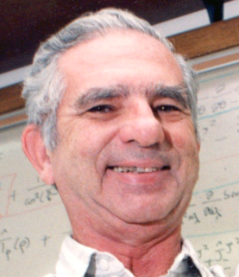 Aron Kuppermann合作论文数California Institute of Technology2J. Grosser合作论文数2
 Irene Lie合作论文数Department of Nursing Research, Ullevål University Hospital2
 Jelena Celutkiene合作论文数Department of Cardiovascular Medicine, Vilnius University Hospital Santariskiu Klinikos2W. Slots合作论文数2N.J.A. Van Veen合作论文数1a m rulis合作论文数1I. T. Aamodt合作论文数1F.W. Saris合作论文数1b baranowski合作论文数1B. Baranowski合作论文数1M Szymonski合作论文数1Okada Ikuko合作论文数1
 Roma Puronaite合作论文数Department of Cardiovascular Medicine, Vilnius University;Centre of Cardiology and Angiology, Vilnius University Hospitals Santariskiu Klinikos;Vilnius University, Vilnius University Hospitals Santariskiu Klinikos1van der Wal M合作论文数1
 D.J. (Dirk Jan ) Van Veldhuisen合作论文数Faculty of Medical Sciences, University of Groningen;Department of Cardiology, The University Medical Center Groningen1B. Andresen合作论文数1
 Peter Johansson合作论文数Department of Cardiology, Linköping University Hospital1Naoko Kato合作论文数1C.A. Velds合作论文数1A.J.H. Boerboom合作论文数1Marek Szymonski合作论文数1
 J.L. (Hans) Hillege合作论文数Faculty of Medical Sciences, University of Groningen;University Hospital Groningen1R. Pedrys合作论文数1Marie Louise Luttik合作论文数Department of Cardiology;University Medical Center1T.S. Baller合作论文数Philips Research Laboratories1
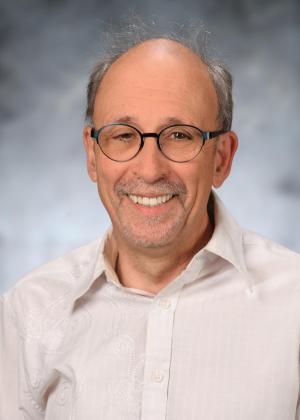 Mattanjah S. de Vries合作论文数Department of Chemistry & Biochemistry, College of Letters and Science, University of California, Santa Barbara1
 Hans Overeijnder合作论文数FOM-Institute for Atomic and Molecular Physics, Kruislaan 407, Amsterdam/Wgm., The Netherlands1M.H. De Vasconcelos合作论文数1
 Leonie Verheijden Klompstra合作论文数1Gunther P Können合作论文数1Koichiro Kinugawa合作论文数1F. Cannemeyer合作论文数1H.W. Grotendorst合作论文数1Wendy Bedijn合作论文数1




