We present a general formalism showing that nanophotonic environments mediate entanglement between free-electron pairs. Dispersive and dissipative interactions induce electron–electron quantum correlations beyond the Coulomb force, establishing a new mechanism for free-electron quantum control.
Scintillation, the process of converting high-energy radiation into detectable visible light underpins technologies from medical imaging to particle physics, yet conventional scintillators are limited by the oscillator strength of their individual emission centers. Here, we propose and demonstrate quantum optical scintillators, showcasing collective scintillation under X-ray excitation, where quantum correlations between emitters accelerate their emission beyond the intrinsic individual-oscillator rate. The effect appears as a red-shifted spectral peak and an enhanced emission rate, with an average lifetime of 230 ps at 80 K, 14× faster than room-temperature spontaneous emission. Unlike UV-driven superfluorescence, each X-ray photon generates a photoelectron that excites multiple neighboring, coupled quantum dots, producing a faster rate, larger spectral shift, and broader spectrum. We characterize the temperature-dependent temporal response using a Hanbury-Brown-Twiss g(2)(τ) setup. A many-body quantum-optics theory reproduces both UV- and X-ray-driven regimes. These quantum enhancements surpass emission-rate limits and could substantially improve time-of-flight detector performance.
Phase singularities-points carrying quantized topological charge-are universal features found across diverse wave systems from superfluids and superconductors to acoustic and optical fields1-4. Ensembles of these singularities exhibit distance correlations resembling particles in liquids5-8, extensively studied for their role in exotic material phases9-11. By contrast, the full correlations in phase space that govern the system evolution have remained unexplored and experimentally inaccessible. Here we directly measure the ultrafast dynamics of optical singularity ensembles, capturing their full phase-space correlations, presenting the joint distance-velocity distribution. Our observations show a breakdown of the particle-singularity analogy12: phase singularities accelerate towards formally divergent velocities in the moment before annihilation7,13,14, indicated by measurements of velocities exceeding the speed of light. These apparent superluminal velocities are paradoxically amplified by the slow group velocity of hyperbolic phonon polaritons in our material platform, hexagonal boron nitride membranes15-19. We demonstrate these phenomena using combined hardware and algorithmic advances in ultrafast electron microscopy18,20-25, achieving spatial and temporal resolutions, each an order of magnitude below the polaritonic wavelength and cycle period. Our findings deepen our understanding of phase singularities and their universality, enabling to probe topological defect dynamics at previously unattainable timescales.
Revealing and quantifying entanglement of particles is central for understanding the foundations of quantum mechanics and its implications for modern technology. Recent works have demonstrated entanglement of free electrons and photons; however, the quantum properties of multiple free electrons, and the extent of their entanglement, remain largely unexplored. Here we investigate the degree of coherence and entanglement in a free-space electron beam in an ultrafast electron microscope. We introduce a two-electron quantum walk that transforms the quantum state into different bases for quantum state tomography of entangled or partially entangled electron-electron pairs. The method can distinguish point-like particles from delocalized two-electron matter waves with or without classical correlations or entanglement. As a first application, we study multiparticle quantum effects in short pulses of hundreds of electrons under strong Coulomb correlations. Pairs of postselected electrons are delocalized matter waves with correlation between different parts of the two-electron state. The degree of entanglement is less than 7% due to a limited purity of the initial states and decoherence effects from unmeasured reservoir electrons. This measurement tool provides the necessary means to create and measure entangled free electrons for exploring fundamental quantum physics and advancing quantum electron microscopy.
We study the quantum interaction between free electrons and photons in a time-varying media, and find that periodic modulation exponentially amplifies electron-photon coupling within momentum gaps, enabling arbitrarily large momentum transfer. By preparing the light in a two-mode squeezed vacuum state, the electron momentum grows faster than its spectral spreading, establishing time-modulated photonic media as a platform for accelerating free-electrons and shaping their quantum state.
High harmonic generation (HHG) is a nonlinear process in which systems driven by an intense laser emit integer harmonics of the driving field. Here we report that the strong nonlinear response of systems with isolated bound states split the HHG spectrum into nonharmonic Mollow-type triplets that reveal the internal electronic dynamics. We identify the conditions required to observe these phenomena and propose potential experimental systems that could enable their detection. Our findings offer new insights into the fundamental physics of HHG and may have applications in high-harmonic spectroscopy, X-ray physics, and the study of ultrafast dynamics.
Artificial quantum systems with synthetic dimensions enable exploring novel quantum phenomena difficult to create in conventional materials. These synthetic degrees of freedom increase the system's dimensionality without altering its physical structure, accessing higher-dimensional physics in lower-dimensional setups. However, synthetic quantum systems often suffer from intrinsic disorder, causing rapid decoherence that limits scalability, a major obstacle in quantum information science. Here, we show that introducing just a few long-range interactions can mitigate decoherence, creating persistent collective coherence in highly symmetric collective excited states. We term this universal phenomenon "supercoherence" and show its exceptional robustness against disorder up to a dynamical phase transition at critical interaction strength and disorder. Supercoherence stabilizes not only coherence but also all other quantum properties of the states, challenging traditional views on the inevitability of decoherence in disordered interacting quantum systems and suggesting new opportunities for quantum memory and information processing.
We present a generalization of the conditional displacement operator, conditioned on a qudit ancilla, and discuss possible implementations. This generalization provides a building block for quantum computation with grid states, allowing efficient error correction protocols.
Classical physics is often a good approximation for quantum systems composed of many interacting particles, although wavepacket dispersion and scattering processes continuously induce delocalization and entanglement. According to decoherence theory, an entangled ensemble can appear classical when only a subset of all particles is observed. This emergence of macroscopic phenomena from quantum interactions is, for example, relevant for phase transitions, quantum thermalization, hydrodynamics, spin liquids, or time crystals. However, entanglement and decoherence in free electrons have not yet been explored, although the electron is a fundamental elementary particle with extraordinary technological relevance. Here, we investigate the degree of coherence and entanglement in a free-space electron gas in the beam of an ultrafast electron microscope. We introduce a two-electron quantum walk that transforms the quantum state into different bases for quantum state tomography of entangled or partially entangled electron-electron pairs. We apply this novel diagnostic to study quantum effects in short pulses of hundreds of electrons under strong Coulomb correlation. We observe a high contrast interference in the electron-electron correlations but no significant signs of electron-electron entanglement which we explain by limited purity of the initial states and decoherence effects from unmeasured reservoir electrons. The ability to characterize quantum states of multiple free electrons may allow verification of electron-electron entanglement for use in fundamental studies and quantum electron microscopy.
Strong optical nonlinearities are key to a range of technologies, particularly in the generation of photonic quantum states. The strongest nonlinearity in hot atomic vapors originates from electromagnetically induced transparency (EIT), which, while effective, often lacks tunability and suffers from significant losses due to atomic absorption. We propose and demonstrate an N-level EIT scheme, created by an optical frequency comb that excites a warm rubidium vapor. The massive number of comb lines simultaneously drive numerous transitions that interfere constructively to induce a giant and highly tunable cross-Kerr optical nonlinearity. The obtained third-order nonlinearity values range from 1.2 × 10^-7 to 7.7 × 10^-7 m^2 V^-2. Above and beyond that, the collective N-level interference can be optimized by phase shaping the comb lines using a spectral phase mask. Each nonlinearity value can then be tuned over a wide range, from 40% to 250% of the initial strength. We utilize the nonlinearity to demonstrate squeezing by self polarization rotation of CW signals that co-propagate with the pump and are tuned to one of the EIT transparent regions. Homodyne measurements reveal a quadrature squeezing level of 3.5 dB at a detuning of 640 MHz. When tuned closer to an atomic resonance, the nonlinearity is significantly enhanced while maintaining low losses, resulting in the generation of non-Gaussian cubic phase states. These states exhibit negative regions in their Wigner functions, a hallmark of quantum behavior. Consequently, N-level EIT enables the direct generation of photonic quantum states without requiring postselection.
We experimentally investigate the coherence and entanglement of free electrons. Femtosecond photoemission creates a strongly interacting electron gas, and two-electron quantum walks in coherent laser fields reveal the loss of coherence and entanglement. © 2025 the authors.
The ultrafast transmission electron microscope (UTEM) enables imaging of dynamical phenomena down to the femtosecond temporal regime, with sub-nanometer spatial resolution [1]. Techniques like photon-induced nearfield electron microscopy (PINEM) provide access to the dynamics of optical excitations such as photons, plasmons, and phonon-polaritons, by relying on the inelastic interaction of electrons with the optical fields.
Quantum metrology experiments in atomic physics and quantum optics have demonstrated measurement accuracy beyond the shot-noise limit via multi-particle entanglement. At the same time, electron microscopy, an essential tool for high-resolution imaging of biological systems, is severely constrained in its signal-to-noise ratio (SNR) by shot noise, due to the dose limit imposed by electron beam-induced damage. Here, we show theoretically that spin squeezing, a form of quantum metrology based on entanglement, is a natural fit for improving the SNR in electron microscopy. We investigate the generation of the necessary entangled states through electron-electron Coulomb interactions and quantum non-demolition measurements. Our results connect the fields of quantum metrology and electron interferometry, paving the way toward electron microscopy with SNR beyond the shot-noise limit.
We propose the concept of spin squeezing for electron interferometry, which offers a robust pathway toward quantum metrology in electron microscopy, promising to overcome the signal-to-noise ratio limit imposed by the electron-induced sample damage.
Triggered by the development of exfoliation and the identification of a wide range of extraordinary physical properties in self-standing films consisting of one or few atomic layers, two-dimensional (2D) materials such as graphene, transition metal dichalcogenides (TMDs), and other van der Waals (vdW) crystals currently constitute a wide research field protruding in multiple directions in combination with layer stacking and twisting, nanofabrication, surface-science methods, and integration into nanostructured environments. Photonics encompasses a multidisciplinary collection of those directions, where 2D materials contribute with polaritons of unique characteristics such as strong spatial confinement, large optical-field enhancement, long lifetimes, high sensitivity to external stimuli (e.g., electric and magnetic fields, heating, and strain), a broad spectral range from the far infrared to the ultraviolet, and hybridization with spin and momentum textures of electronic band structures. The explosion of photonics with 2D materials as a vibrant research area is producing breakthroughs, including the discovery and design of new materials and metasurfaces with unprecedented properties as well as applications in integrated photonics, light emission, optical sensing, and exciting prospects for applications in quantum information, and nanoscale thermal transport. This Roadmap summarizes the state of the art in the field, identifies challenges and opportunities, and discusses future goals and how to meet them through a wide collection of topical sections prepared by leading practitioners.
Photonic quantum computing has been rapidly advancing over the past decade, with measurement-based approaches emerging as particularly promising. A crucial requirement for these approaches is the generation of large-scale cluster states. In this work, we present a method to create cluster states using Photonic Time-Crystals (PTCs) — dielectric materials with their refractive index rapidly modulated in time. PTCs effectively function as a set of optical parametric oscillators and beam-splitters, producing simultaneous two-mode squeezing for many pairs of photonic modes with opposite wavevectors. We utilize this capability to propose a method for generating two-dimensional cluster states, offering important advantages over existing protocols.
The interaction between free electrons and electromagnetic fields is a cornerstone of classical and quantum electrodynamics. Recent studies have demonstrated that free-electron interactions can be utilized to create, manipulate, and measure quantum photonic states [1], leveraging the electron-photon entanglement enabled by their interaction. The frontier of research now takes these concepts into new spectral domains, and specifically to generating quantum photonic states in the THz and microwave ranges. This effort leverages the electrons' rapid (picosecond) interaction duration and complete tunability. However, a long-standing challenge in these spectral domains is the thermal noise at finite temperatures. Thus, achieving strong electron-photon entanglement, essential for all photonic quantum processes, requires cooling the photonic state to near-zero temperatures [2].
Compact laboratory-scale x-ray sources still rely on the same fundamental principles as did the first x-ray tubes developed more than a century ago. In recent years, significant research and development has focused on large-scale x-ray sources such as synchrotrons and free-electron lasers, leading to the generation of high-brightness coherent x-rays. However, the large size and high costs of such sources prevent their widespread use. The quest for a compact and coherent x-ray source has long been a critical objective in modern physics, gaining further importance in recent years for industrial applications and fundamental scientific research. Here, we review the physical mechanisms governing compact coherent x-ray generation. Of current interest are coherent periodic interactions of free electrons in crystalline materials, creating hard x-rays via a mechanism known as parametric x-ray radiation (PXR). Over the past decade, x-ray sources leveraging this mechanism have demonstrated state-of-the-art tunability, directionality, and broad spatial coherence, enabling x-ray phase-contrast imaging on a compact scale. The coming years are expected to show substantial miniaturization of compact x-ray sources, facilitated by progress in electron beam technologies. This review compares the most promising mechanisms used for hard x-ray generation, contrasting parametric x-ray radiation with inverse Compton scattering and characteristic radiation from a liquid-jet anode. We cover the most recent advancements, including the development of new materials, innovative geometrical designs, and specialized optimization techniques, aiming toward x-ray flux levels suitable for medical imaging and x-ray spectroscopy at compact scales. (c) 2025 Optica Publishing Group. All rights, including for text and data mining (TDM), Artificial Intelligence (AI) training, and similar technologies, are reserved.
Collective spontaneous emission occurs when multiple quantum emitters decay into common radiation modes, resulting in enhanced or suppressed emission. Here, we find the quantum state of light collectively emitted from emitters exhibiting quantum correlations. We unveil under what conditions the quantum correlations are not lost during the emission but are instead transferred to the output light. Under these conditions, the inherent nonlinearity of the emitters can be tailored to create desired photonic states in the form of traveling single-mode pulses, such as Gottesman-Kitaev-Preskill and Schrödinger-cat states, that are useful for error correction in quantum computation. To facilitate such predictions, our work reveals the multimode nature of collective spontaneous emission, capturing the role of the emitters' positions, losses, interactions, and beyond-Markov dynamics on the emitted quantum state of light. We present manifestations of these effects in different physical systems, with examples of cavity QED, waveguide QED, and atomic arrays with up to a few dozen emitters. Our findings suggest paths for creating and manipulating multiphoton quantum light for bosonic codes in continuous-variable-based quantum computation, communications, and sensing.
Rapid progress in precision nanofabrication and atomic design over the past 50 years has ushered in a succession of transformative eras for molding the generation and flow of light. The use of nanoscale and atomic features to design light sources and optical elements-encapsulated by the term nanophotonics-has led to new fundamental science and innovative technologies across the entire electromagnetic spectrum, with substantial emphasis on the microwave to visible regimes. In this review, we pay special attention to the impact and potential of nanophotonics in a relatively exotic yet technologically disruptive regime: high-energy particles such as X-ray photons and free electrons-where nanostructures and atomic design open the doors to unprecedented technologies in quantum science and versatile X-ray sources and optics. As the practical generation of X-rays is intrinsically linked to the existence of energetic free or quasi-free-electrons, our review will also capture related phenomena and technologies that combine free electrons with nanophotonics, including free-electron-driven nanophotonics at other photon energies. In particular, we delve into the demonstration and study of quantum recoil in the X-ray regime, the study of nanomaterial design and free-electron wave shaping as means to enhance and control X-ray radiation, examine the free-electron generation enabled by nanophotonics, and analyze the high-harmonic generation by quasi-free electrons. We also discuss applications of quantum nanophotonics for X-rays and free electrons, including nanostructure waveguides for X-rays, photon pair enhanced X-ray imaging, mirrors, and lenses for X-rays, among others.
 Ido Kaminer合作论文数Faculty of Electrical and Computer Engineering, Technion – Israel Institute of Technology71
 Ron Ruimy合作论文数Technion Israel Inst Technol, Solid State Inst31
 Nicholas Rivera合作论文数MIT, Dept Phys, Cambridge, MA 02139 USA20
 Offek Tziperman合作论文数16
 Raphael Dahan合作论文数12
 Gefen Baranes合作论文数Technion Israel Inst Technol, Solid State Inst12Chen Mechel合作论文数Technion Israel Inst Technol, Solid State Inst10
 Aviv Karnieli合作论文数Tel Aviv Univ, Raymond & Beverly Sackler Sch Phys & Astron, IL-69978 Tel Aviv, Israel10
 Andrea Pizzi合作论文数Univ Cambridge, Cavendish Lab, Cambridge CB3 0HE, England10Michael Birk合作论文数10Oren Cohen合作论文数Department of Physics/Solid State Institute/Solid State Institute, Israel9Matan Even Tzur合作论文数8
 Michael Kruger合作论文数Institut für Informatik, Friedrich-Schiller-Universität Jena8
 Michael Yannai合作论文数Technion Israel Inst Technol6
 Kangpeng Wang合作论文数6
 Bekenstein Yehonadav合作论文数5Nir Gutman合作论文数4Amnon Balanov合作论文数4
 Yuval Adiv合作论文数Technion, Israel Inst Technol4
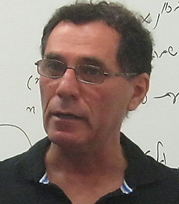 Mordechai (Moti) Segev合作论文数Russell Berrie Nanotechnology Institute, Technion - Israel Institute of Technology4Rotem Strassberg合作论文数3Orr Beer合作论文数Technion Israel Inst Technol3
 Michael Faran合作论文数Dept Biomed Engn, Tel Aviv Univ3
 Shai Levy合作论文数Dept Mat Sci & Engn, Technion Israel Inst Technol3
 Charles Roques-Carmes合作论文数Vassar College3
 Yaniv Kurman合作论文数Technion Israel Inst Technol, IL-32000 Haifa, Israel3
 Shai Tsesses合作论文数Technion Israel Inst Technol, Andrew & Erna Viterbi Dept Elect Engn, IL-32000 Haifa, Israel3D Nabben合作论文数3
 Maxim Gorlach合作论文数3
 Peter Baum合作论文数Universität Konstanz3
 García De Abajo, Francisco Javier合作论文数Catalan Institution for Research and Advanced Studies, Institut de Ciencies Fotoniques3
 Andreas Nunnenkamp合作论文数University of Vienna3Shiran Even-Haim合作论文数2Asaf A. Diringer合作论文数2Roman Schuetz合作论文数2Dmitry Yakushevskiy合作论文数2Shaul Katznelson合作论文数2Reut Shechter合作论文数2
 Sergey Hazanov合作论文数2
 Jamison Sloan合作论文数Res Lab Elect, MIT2
 Andrey Novitsky合作论文数Dept Theoret Phys & Astrophys, Belarusian State Univ2
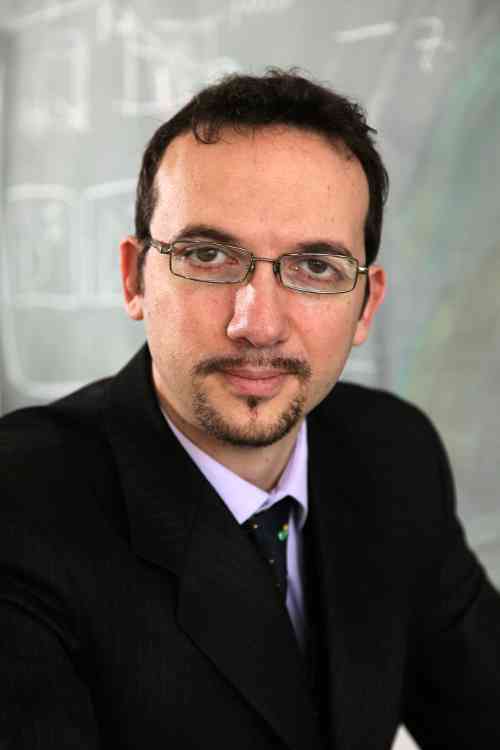 Fabrizio Carbone合作论文数Laboratory for Ultrafast Microscopy and Electron Scattering, École Polytechnique Fédérale Lausanne2
 Pavel Belov合作论文数Department of Physics and Engineering, Faculty of Physics, ITMO University;School of Physics and Engineering, ITMO University2
 A. V. Chebykin合作论文数2
 Vanacore Giovanni Maria合作论文数Department of Materials Science, University of Milano-Bicocca2
 Gadi Eisenstein合作论文数Russell Berrie Nanotechnology Institute2
 Eliahu Cohen合作论文数Faculty of Engineering, Bar Ilan University;Institute of Nanotechnology and Advanced Materials, Bar Ilan University2
 Frank Koppens合作论文数ICFO- Institute of Photonic Sciences;Axiomatic_AI;Qurv2
 Eduardo Dias合作论文数2




