This paper presents a new equation for the calculation of the thermal-electric behavior of superconductors. The equation is based on measurements of YBCO thin-films which were carried out in liquid nitrogen (LN2), varying the temperature by application of different pressures. The principle of the experimental set-up is described in [1]. Thus, the temperature and current dependent resistivity characteristics can be obtained. The equation derived from those measurements describes the current-temperature dependency of the YBCO thin-film resistivity within the range of interest for resitive Superconducting Fault Current Limiters (FCL). In a first step the equation was used to program a superconducting thermal-electric element within the commercially available 3D finite element (FEM) multipurpose program ANSYS, which was also used to cross-check the measurements by simulations. In a second step the equation was incorporated into the FEM program COMSOL and expanded to consider the magnetic field too. The resulting simulation setup is shown along with some exemplary simulations.
Turbulent boundary layer (TBL) flow consists of manifold temporal and spatial scales and is governed by the organization and decay of self-sustaining coherent flow structures driven by entrained high momentum fluid. Generic flow structures such as hairpin-like vortices and spanwise alternating wall bounded low- and high-speed streaks have been observed and extensively analyzed with both experimental and numerical methods. The role of these structures for the wall normal and spanwise fluid exchange has been highlighted mostly within an Eulerian reference frame. But for an understanding of the momentum exchange in turbulent wall flows a step towards a spatially resolved Lagrangian frame of reference would be advantageous. The data achieved from the present application of time-resolved tomographic PIV to a flat plate turbulent boundary layer flow enables for the first time the investigation of the flow structures and related particle motions within a temporally and spatially resolved Lagrangian and Eulerian frame of reference.
Abstract The momentum,exchange,mechanisms,in a turbulent boundary,layer (TBL) flow are of manifold temporal and spatial scales and governed ,by the ,organization of self-sustaining coherent ,flow structures driven by entrained high momentum,fluid. Generic flow structures such as hairpin-like vortices and spanwise alternating wall bounded ,low- and high-speed streaks have been ,observed and extensively analyzed with both experimental and numerical methods, e.g. by means of PIV (Christensen & Adrian 2001, Kähler 2004, Stanislas et al. 2008) or DNS (Spalart 1988, Robinson 1991, Kang et al. 2007). In many studies the role of these structures for the wall normal ,and spanwise ,fluid exchange ,has been highlighted mostly within an Eulerian reference frame. But for a full understanding of the momentum,exchange,in turbulent wall flows a step towards a spatially resolved Lagrangianframe of reference would be advantageous. The data achieved from the present application of time-resolved tomographic ,PIV to a flat plate turbulent boundary,layer flow in a water tunnel at Re, ~ 2460 enables for the first time a topological investigation of the flow structures and related particle motions within a temporally and spatially highly resolved Lagrangian and Eulerian reference frame.
A new MOCVD technique was developed for the deposition of oxides at a controlled low oxygen partial pressure, which enable to coat textured metal tapes with electrical conductive perovskites. In a RTR MOCVD-system metal tapes were coated with electrical conductive (La,Ba)MnO3, (La,Sr)MnO3, (La,Sr,Pb)MnO3 and (La,Ba)(2)CuO4 buffer layers and YBCO. In the same RTR-system YBCO was deposited on different buffered metal tapes. Computer calculations were used to characterise the behaviour for a weak superconducting part of a CC-tape with a conductive buffer layer system.
In the City of Karlsruhe/Germany anaerobic digestion of 7200 t a(-1) of separately collected biowaste has proven its feasibility at an organic loading rate (OLR) of up to 8.5 kg COD m(-3) d(-1). An extension of biowaste collection over the whole city area would increase the amount of biowaste to 12,000 t a(-1), leading to an OLR of the existing anaerobic reactor of up to 15 kg COD m(-3) d(-1). To test, whether the increased amount of biowaste could be stabilized in the existing plant, biowaste suspensions were digested in a laboratory reactor at a maximum OLR, that exceeded the future OLR of the full-scale plant.The laboratory reactor was started with effluent of the full-scale biowaste digester. Like in full-scale, biowaste suspension from the hydropulper was added in a fed-batch mode. The elimination of organic material (measured as COD, chemical oxygen demand) and the volumetric gas production were linearly increasing with the OLR from 4.3 to 19 kg COD m(-3) d(-1). Thus, safe operation of the full-scale plant at an OLR of 15 kg COD m(-3) d(-1) should be possible, leaving still some reserve capacity.To determine the metabolic reserves for fatty acid degradation during digestion at an OLR of 10 kg COD m(-3) d(-1), digester effluent was supplemented with either 40 mmol l(-1) acetate, propionate, i-butyrate or n-butyrate. Results of these batch assays indicated a rapid degradation of all fatty acids and fatty acid conversion rates, that would allow a stable anaerobic fermentation at 15 kg COD m(-3) d(-1) OLR.On the basis of the laboratory results the OLR of the full-scale methane reactor was increased to 15 kg COD m(-3) d(-1). After 7 months, results of full-scale digestion were still consistent with the previously obtained laboratory results. (C) 2002 Elsevier Science Ltd. All rights reserved.
We describe an x-ray interferometer optimized for operation with synchrotron radiation at the storage ring DORIS at DESY, Hamburg. Function principles, design, and manufacture are discussed. Interference fringes are created by scanning the analyzer crystal of the instrument in increments below 0.1 Å. Special attention is paid to minimize warping due to gravitational forces and disturbances from acoustic noise and ground vibration. The characteristics of two different monochromators with respect to harmonic rejection or harmonic selection and beam stability are considered. The instrument is best suited to the measurement of anomalous dispersion, for which an example is given.
We report polarization effects of the anomalous forward scattering terms at the K-adsorption edge of niobium in a LiNbO3 single crystal. Nearly linearly polarized synchrotron radiation was used to measure the directional properties of the dispersion corrections f′ and ″ by means of X-ray interferometry and adsorption experiments. Anisotropic contributions of the K-shell electrons to the niobium ionic scattering factor are observed in the near edge region for parallel and vertical orientation of the polarization vector ε with respect to the hexagonal c-axis of ferroelectric LiNbO3.
A new MOCVD technique was developed for the deposition of oxides at a controlled low oxygen partial pressure, which enable to coat textured metal tapes with electical conductive perovskites. In a RTR MOCVD-system metal tapes were coated with electrical conductive (La,Ba)MnO3, (La,Sr)MnO3, (La,Sr,Pb)MnO3 and (La,Ba)2CuO4 buffer layers and YBCO. In the same RTR-systemYBCO was deposited on different buffered metal tapes. Computer calculations were used to characterize the behaviour for a weak superconducting part of a CC-tape with a conductive buffer layer system.
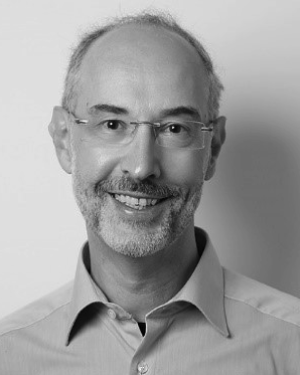 Michael Kurrat合作论文数3
 Ar Kaul合作论文数2
 C. Otto合作论文数Curtin University Kent St.2
 Jim Underschultz合作论文数Energy Initiative, Faculty of Engineering, Architecture and Information Technology, The University of Queensland2
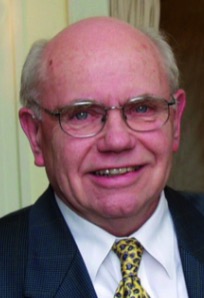 Ulrich Bonse合作论文数Department of Physics, TU Dortmund University2J. Schmidt合作论文数2Georg Wahl合作论文数2
 Lonnie R Johnson合作论文数Department of Surgical Dentistry, University of Colorado at Denver and Health Sciences Center2O.Yu. Gorbenko合作论文数2
 R. Muydinov合作论文数2Sergey Samoilenkov合作论文数Moscow State University Vorob’evy gory2O. V. Melnikov合作论文数2H. Keune合作论文数2karsten staack合作论文数2
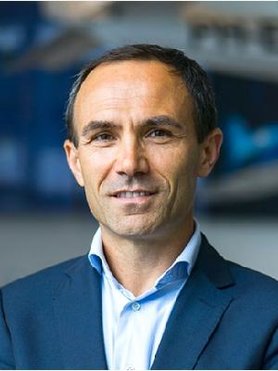 F. Scarano合作论文数Faculty of Aerospace Engineering, Delft University of Technology2Reinhard Geisler Reinhard Geisler合作论文数2Oliver Stadel合作论文数2
 G.E. Elsinga合作论文数Process and Energy Department, Delft University of Technology2Andreas SchröDer合作论文数2
 Bernhard Wieneke合作论文数LaVision GmbH, Göttingen, Germany2Josef Winter合作论文数1H. Lotsch合作论文数1
 J. Westerweel合作论文数Faculteit Voor Werktuigbouwkunde, Maritieme Techniek en Materiaalkunde, Delft University of Technology1J Grundmann合作论文数1Gabi Burgstaller合作论文数1
 C. Poelma合作论文数Department of Process & Energy, Faculty of Mechanical Engineering, Delft University of Technology1Christian Pirich合作论文数1Igor Korsakov合作论文数Moscow State University1Claudia Gallert合作论文数1




