An optically active N-heterocyclic carbene (NHC) has been metallated with [RhCl(COD)]2 to give a rhodium(I) monocarbene substituted complex. This complex has been fully characterized by 1H and 13C NMR spectroscopy and by single-crystal X-ray analysis. Preliminary tests of hydroformylation of styrene catalyzed with this compound have shown that branched to linear aldehyde ratio was rather low 0.67 (40%) and that the enantiomeric excess measured on the corresponding alcohols was only 10%. In the presence of an excess of triphenylphosphine, the ratio of branched to linear aldehyde increased markedly (91%) whereas the enantioselectivity of the reaction remained almost unchanged (12.5%).
This review deals with the application of Lewis super acids such as Al(III), In(III), and Sn(IV) triflates and triflimidates as catalysts in the synthesis of fragrance materials. Novel catalytic reactions involving C-C and C-heteroatom bond-forming reactions, as well as cycloisomerization processes are presented. In particular, Sn(IV) and Al(III) triflates were employed as catalysts in the selective cyclization of unsaturated alcohols to cyclic ethers, as well as in the cyclization of unsaturated carboxylic acids to lactones. The addition of thiols and thioacids to non-activated olefins, both in intra- and intermolecular versions, was efficiently catalyzed by In(III) derivatives. Sn(IV) Triflimidates catalyzed the cycloisomerization of highly substituted 1,6-dienes to gem-dimethyl-substituted cyclohexanes bearing an isopropylidene substituent. The hydroformylation of these unsaturated substrates, catalyzed by a Rh(I) complex with a bulky phosphite ligand, selectively afforded the corresponding linear aldehydes. The olfactory evaluation of selected heterocycles, carbocycles, and aldehydes synthesized is also discussed.
In non-racemic (1R,2R)-(1,2-dialkyl)-1,2-diaminocyclohexane palladium dichloride complexes the C-2 symmetry of the diamine ligand is broken, resulting in selective R,S-coordination.
Angewandte ChemieVolume 118, Issue 43 p. 7443-7447 Zuschrift Cycloisomerisierung von 1,6-Dienen durch Lewis-Supersäuren ohne Additive: leichter Zugang zu polysubstituierten carbocyclischen Sechsringen Fanny Grau, Fanny Grau Laboratoire de Chimie des Molécules Bioactives et des Arômes, Université de Nice-Sophia Antipolis, CNRS, UMR 6001, Parc Valrose, 06108 Nice Cedex 2, Frankreich, Fax: (+33) 492-076-151Search for more papers by this authorAndreas Heumann Dr., Andreas Heumann Dr. [email protected] Université Paul Cézanne, UMR CNRS 6180 “Chirotechnologies et Biocatalyse”, Faculté Saint-Jérôme—Case A62, 13397 Marseille Cedex 20, Frankreich, Fax: (+33) 491-288-278Search for more papers by this authorElisabet Duñach Dr., Elisabet Duñach Dr. [email protected] Laboratoire de Chimie des Molécules Bioactives et des Arômes, Université de Nice-Sophia Antipolis, CNRS, UMR 6001, Parc Valrose, 06108 Nice Cedex 2, Frankreich, Fax: (+33) 492-076-151Search for more papers by this author Fanny Grau, Fanny Grau Laboratoire de Chimie des Molécules Bioactives et des Arômes, Université de Nice-Sophia Antipolis, CNRS, UMR 6001, Parc Valrose, 06108 Nice Cedex 2, Frankreich, Fax: (+33) 492-076-151Search for more papers by this authorAndreas Heumann Dr., Andreas Heumann Dr. [email protected] Université Paul Cézanne, UMR CNRS 6180 “Chirotechnologies et Biocatalyse”, Faculté Saint-Jérôme—Case A62, 13397 Marseille Cedex 20, Frankreich, Fax: (+33) 491-288-278Search for more papers by this authorElisabet Duñach Dr., Elisabet Duñach Dr. [email protected] Laboratoire de Chimie des Molécules Bioactives et des Arômes, Université de Nice-Sophia Antipolis, CNRS, UMR 6001, Parc Valrose, 06108 Nice Cedex 2, Frankreich, Fax: (+33) 492-076-151Search for more papers by this author First published: 30 October 2006 https://doi.org/10.1002/ange.200602020Citations: 16Read the full textAboutPDF ToolsRequest permissionAdd to favorites ShareShare Give accessShare full text accessShare full-text accessPlease review our Terms and Conditions of Use and check box below to share full-text version of article.I have read and accept the Wiley Online Library Terms and Conditions of UseShareable LinkUse the link below to share a full-text version of this article with your friends and colleagues. Learn more.Copy URL Share a linkShare onEmailFacebookTwitterLinkedInRedditWechat Graphical Abstract Das Zinnsalz Sn(NTf2)4 (Tf = Trifluormethansulfonyl) erwies sich als wirksamer Katalysator in der selektiven und ringgrößenspezifischen Cycloisomerisierung von hoch substituierten 1,6-Dienen zu carbocyclischen Sechsringen (siehe Schema, Beispiele für X: C(CO2Et)2, C(CO2Me)2, C(NC)(CO2Et)). Es handelt sich um die erste Lewis-Säure-katalysierte Cycloisomerisierung solcher Substrate. Supporting Information Supporting information for this article is available on the WWW under http://www.wiley-vch.de/contents/jc_2001/2006/z602020_s.pdf or from the author. Please note: The publisher is not responsible for the content or functionality of any supporting information supplied by the authors. Any queries (other than missing content) should be directed to the corresponding author for the article. References 1T. L. Ho, Carbocycle Construction in Terpene Synthesis, Wiley-VCH, Weinheim, 1988. Google Scholar 2K. C. Nicolaou, S. A. Snyder, T. Montagnon, G. Vassilikogiannakis, Angew. Chem. 2002, 114, 1742–1773; 10.1002/1521-3757(20020517)114:10<1742::AID-ANGE1742>3.0.CO;2-Y Google ScholarAngew. Chem. Int. Ed. 2002, 41, 1668–1698. 10.1002/1521-3773(20020517)41:10<1668::AID-ANIE1668>3.0.CO;2-Z CASPubMedWeb of Science®Google Scholar 3C. Thebtaranonth, Y. Thebtaranonth, Tetrahedron 1990, 46, 1385–1489. 10.1016/S0040-4020(01)81956-6 CASWeb of Science®Google Scholar 4 4aI. Ojima, M. Tzamarioudaki, Z. Li, R. J. Donovan, Chem. Rev. 1996, 96, 635–662; 10.1021/cr950065y CASPubMedWeb of Science®Google Scholar 4bC. Aubert, O. Buisine, M. Malacria, Chem. Rev. 2002, 102, 813–834. 10.1021/cr980054f CASPubMedWeb of Science®Google Scholar 5Eine bemerkenswerte Ausnahme ist die Pd-katalysierte Cycloaddition: B. M. Trost, Angew. Chem. 1986, 98, 1–20; 10.1002/ange.19860980102 CASWeb of Science®Google ScholarAngew. Chem. Int. Ed. Engl. 1986, 25, 1–20. 10.1002/anie.198600013 CASWeb of Science®Google Scholar 6 6aB. M. Trost, M. J. Krische, Synlett 1998, 1–16; 10.1055/s-1998-1557 Web of Science®Google Scholar 6bB. Bogdanovic, Adv. Organomet. Chem. 1979, 17, 105–140. 10.1016/S0065-3055(08)60322-6 CASGoogle Scholar 7Cycloisomerisierung von 1,6-Dienen: Google Scholar 7aR. A. Widenhoefer, Acc. Chem. Res. 2002, 35, 905–913; 10.1021/ar010040n CASPubMedWeb of Science®Google Scholar 7bG. Lloyd-Jones, Org. Biomol. Chem. 2003, 1, 215–236. 10.1039/b209175p CASPubMedWeb of Science®Google Scholar 8Zu Beispielen mit Übergangsmetallen siehe: Google Scholar 8aRh: A. Bright, J. F. Malone, J. K. Nicholson, J. Powell, B. L. Shaw, Chem. Commun. 1971, 712–713; 10.1039/c29710000712 Web of Science®Google Scholar 8bR. Grigg, J. F. Malone, T. R. B. Mitchell, A. Ramasubbu, R. M. Scott, J. Chem. Soc. Perkin Trans. 1 1984, 1745–1754; 10.1039/p19840001745 CASWeb of Science®Google Scholar 8cPd: A. Heumann, L. Giordano, A. Tenaglia, Tetrahedron Lett. 2003, 44, 1515–1518; 10.1016/S0040-4039(02)02668-0 CASWeb of Science®Google Scholar 8dRu: Y. Yamamoto, Y. Nakagai, K. Itoh, Chem. Eur. J. 2004, 10, 231–236; 10.1002/chem.200305340 CASPubMedWeb of Science®Google Scholar 8eY. Terada, M. Arisawa, M. Nishida, Angew. Chem. 2004, 116, 4155–4159; 10.1002/ange.200454157 Google ScholarAngew. Chem. Int. Ed. 2004, 43, 4063–4067; 10.1002/anie.200454157 CASPubMedWeb of Science®Google Scholar 8fNi: B. Radetich, T. V. RajanBabu, J. Am. Chem. Soc. 1998, 120, 8007–8008; 10.1021/ja9738788 CASWeb of Science®Google Scholar 8gTi: S. Okamoto, T. Livinghouse, J. Am. Chem. Soc. 2000, 122, 1223–1224. 10.1021/ja9922680 CASWeb of Science®Google Scholar 9 9aB. M. Trost, J. M. D. Fortunak, Organometallics 1982, 1, 7–13; 10.1021/om00061a003 CASWeb of Science®Google Scholar 9bA. F. Barrero, J. E. Oltra, M. Alvarez, Tetrahedron Lett. 1998, 39, 1401–1404. 10.1016/S0040-4039(97)10775-4 CASWeb of Science®Google Scholar 10 10aW. D. Kerber, J. H. Koh, M. R. Gagné, Org. Lett. 2004, 6, 3013–3015; 10.1021/ol048780u CASPubMedWeb of Science®Google Scholar 10bC. Liu, X. Han, X. Wang, R. A. Widenhoefer, J. Am. Chem. Soc. 2004, 126, 3700–3701. 10.1021/ja031814t CASPubMedWeb of Science®Google Scholar 11S. Okamoto, T. Livinghouse, Organometallics 2000, 19, 1449–1451. 10.1021/om991024l CASWeb of Science®Google Scholar 12S. Thiele, G. Erker, Chem. Ber. 1997, 130, 201–207. 10.1002/cber.19971300210 CASWeb of Science®Google Scholar 13K. H. Shaughnessy, R. M. Waymouth, J. Am. Chem. Soc. 1995, 117, 5873–5874. 10.1021/ja00126a036 CASWeb of Science®Google Scholar 14 14aW. E. Piers, P. J. Shapiro, E. E. Bunel, J. E. Bercaw, Synlett 1990, 74–84; 10.1055/s-1990-20992 CASWeb of Science®Google Scholar 14bsiehe auch: P. W. Chum, S. E. Wilson, Tetrahedron Lett. 1976, 1257–1258. 10.1016/S0040-4039(00)78033-6 CASWeb of Science®Google Scholar 15W. Oppolzer, V. Snieckus, Angew. Chem. 1978, 90, 506–516; 10.1002/ange.19780900705 CASGoogle ScholarAngew. Chem. Int. Ed. Engl. 1978, 17, 476–486. 10.1002/anie.197804761 Web of Science®Google Scholar 16 16aL. F. Tietze, U. Beifuss, M. Ruther, A. Rühlmann, J. Antel, G. M. Sheldrick, Angew. Chem. 1988, 100, 1200–1201; 10.1002/ange.19881000911 CASGoogle ScholarAngew. Chem. Int. Ed. Engl. 1988, 27, 1186–1187; 10.1002/anie.198811861 Web of Science®Google Scholar 16bzur Bildung von Cyclohexanen aus 1,7-Dienen, siehe Lit. [4]; Google Scholar 16czur Bildung von Cyclohexanen aus 1,5-Dienen, siehe: T. Kato, S. Kumazawa, Y. Kitahara, Synthesis 1972, 573–575. 10.1055/s-1972-21939 CASWeb of Science®Google Scholar 17V. Jäger, W. Kuhn, U. Schubert, Tetrahedron Lett. 1986, 27, 2583–2586. 10.1016/S0040-4039(00)84590-6 CASWeb of Science®Google Scholar 18L. Coulombel, I. Favier, E. Duñach, Chem. Commun. 2005, 2286–2288. 10.1039/b501601k CASPubMedWeb of Science®Google Scholar 19C. Hahn, Chem. Eur. J. 2004, 10, 5888–5899. 10.1002/chem.200400550 CASPubMedWeb of Science®Google Scholar 20I. Favier, E. Duñach, Tetrahedron Lett. 2003, 44, 2031–2032. 10.1016/S0040-4039(03)00214-4 CASWeb of Science®Google Scholar 21A. Vij, R. L. Kirchmeier, J. M. Shreeve, R. D. Verma, Coord. Chem. Rev. 1997, 158, 413–432. 10.1016/S0010-8545(97)90069-2 CASWeb of Science®Google Scholar 22Das Vorliegen von drei nichtäquivalenten CH3-Gruppen – zwei an einem quartären Kohlenstoff (Singulett bei δ=0.82 und 0.85 ppm) und eine dritte in der Vinylposition (δ=1.7 ppm) – war aus dem 1H-NMR-Spektrum leicht ersichtlich. Die beiden Ethylreste der Estergruppe und die beiden Vinyl-Protonen (zwei breite Singuletts bei δ=4.6 und 4.75 ppm) konnten ebenfalls im 1H-NMR-Spektrum unterschieden werden. Die 13C-NMR-Analyse zeigte 17 Kohlenstoffatome, was mit der Struktur des pentasubstituierten Cyclohexanderivats 1 b vereinbar ist. Vollständige NMR-Daten für 1 b: 1H-NMR (500 MHz, CDCl3): δ=4.78 (br. s, 1 H), 4.55 (br. s, 1 H), 4.12 (br. q, 2 H, J=7.2 Hz), 4.09 (q, 2 H, J=7.2 Hz), 2.10 (ddd, 1 H, J=13.9, 6.3, 2.8 Hz), 2.03 (dd, 1 H, J=7.5, 3.1 Hz), 2.03 (dd, 1 H, J=4.6, 3.1 Hz), 1.87 (dd, 1 H, J=7.5, 4.6 Hz), 1.86 (ddd, 1 H, J=13.9, 11.2, 6.3 Hz), 1.64 (s, 3 H), 1.49 (ddd, 1 H, J=11.4, 11.2, 6.3 Hz), 1.27 (ddd, 1 H, J=11.4, 2.8, 6.3 Hz), 1.17 (t, 3 H, J=7.1 Hz), 1.14 (t, 3 H, J=7.1 Hz), 0.81 (s, 3 H), 0.78 ppm (s, 3 H); 13C-NMR (126 MHz, CDCl3): δ=172.86, 171.51, 146.83, 113.27, 61.67, 61.36, 55.95, 49.97, 39.19, 33.44, 32.77, 31.13, 27.46, 24.44, 20.44, 14.45, 14.41 ppm. Google Scholar 23Siehe z. B.: R. Mook, P. M. Sher, Org. Synth. Coll. Vol. VIII, 1993, 381–386. Google Scholar 24Die Beteiligung von Estergruppen in Cycloisomerisierungen wurde bereits vorgeschlagen: L. A. Goj, A. Cisneros, W. Yang, R. A. Widenhoefer, J. Organomet. Chem. 2003, 687, 498–507. 10.1016/j.jorganchem.2003.09.046 CASWeb of Science®Google Scholar 25Wie vorherzusehen war, war das Zinn(IV)-Katalysatorsystem unselektiv in der Cyclisierung von einfachen Dialkyldiallylmalonaten. Die Reaktion führte hauptsächlich zu einer Mischung von ungesättigten Fünfringen in mäßigen Ausbeuten. Google Scholar 26NMR-Daten für 9 b: 1H-NMR (500 MHz, CDCl3): δ=5.08 (s, 1 H), 4.11 (q, 4 H, J=7.3 Hz), 2.55 (s, 2 H), 2.14 (m, 2 H), 1.67 (s, 3 H), 1.48 (m, 2 H), 1.18 (t, 6 H, J=7.4 Hz), 0.93 ppm (s, 6 H); 13C-NMR (126 MHz, CDCl3): δ=172.38 (2 C), 136.44, 130.28, 61.56 (2 C), 57.06, 44.98, 36.10, 35.94, 30.27 (2 C), 29.96, 28.14, 14.39 ppm (2 C); NOESY: δ=5.08 ppm, Korrelation mit δ=0.93 ppm. Google Scholar 27Zur übergangsmetallkatalysierten intramolekularen Hydroarylierung von Alkenen, siehe z. B.: S. W. Youn, S. J. Pastine, D. Sames, Org. Lett. 2004, 6, 581–584. 10.1021/ol036385i CASPubMedWeb of Science®Google Scholar 28Die Arylierung von Alkenen wird in einem eigenen Forschungsprojekt untersucht. Google Scholar 29 29aReaktionsbedingungen: 5 Mol-% Tf2NH, Nitromethan, 2.5 h bei 25 °C; Google Scholar 29bReaktionsbedingungen: 5 Mol-% Tf2NH, Nitromethan, 5 h bei 101 °C. Google Scholar 30Mit konzentrierter Salzsäure oder p-Toluolsulfonsäure in Dichlorethan (60 °C, 3 h) werden Reaktionen von 1 a nicht beobachtet. Google Scholar 31H. Yamamoto, K. Futatsugi, Angew. Chem. 2005, 117, 1958–1977; 10.1002/ange.200460394 Google ScholarAngew. Chem. Int. Ed. 2005, 44, 1924–1942. 10.1002/anie.200460394 CASPubMedWeb of Science®Google Scholar 32J. J. Eisch, P. O. Otieno, K. Mackenzie, B. W. Kotowicz, ACS Symp. Ser. 2002, 822, 88–103. Google Scholar 33I. J. S. Fairlamb, S. Grant, A. C. Whitwood, J. Whitthall, A. S. Batsanov, J. C. Collings, J. Organomet. Chem. 2005, 690, 4462–4477. 10.1016/j.jorganchem.2005.01.037 CASWeb of Science®Google Scholar 34aB. M. Trost, Acc. Chem. Res. 2002, 35, 695–705; 10.1021/ar010068z CASPubMedWeb of Science®Google Scholar 34bB. M. Trost, Angew. Chem. 1995, 107, 285–307; 10.1002/ange.19951070304 Google ScholarAngew. Chem. Int. Ed. Engl. 1995, 34, 259–281; 10.1002/anie.199502591 CASWeb of Science®Google Scholar 34cB. M. Trost, Science 1991, 254, 1471–1477. 10.1126/science.1962206 CASPubMedWeb of Science®Google Scholar Citing Literature Volume118, Issue43November 6, 2006Pages 7443-7447 This is the German version of Angewandte Chemie. Note for articles published since 1962: Do not cite this version alone. Take me to the International Edition version with citable page numbers, DOI, and citation export. We apologize for the inconvenience. ReferencesRelatedInformation
AbstractChemInform is a weekly Abstracting Service, delivering concise information at a glance that was extracted from about 200 leading journals. To access a ChemInform Abstract, please click on HTML or PDF.
AbstractFor Abstract see ChemInform Abstract in Full Text.
A new strategy for the preparation of functional, multiarm star polymers via nitroxide-mediated "living" radical polymerization has been explored. The generality of this approach to the synthesis of three-dimensional macromolecular architectures allows for the construction of nanoscopically defined materials from a wide range of different homo, block, and random copolymers combining both apolar and polar vinylic repeat units. Functional groups can also be included along the backbone or as peripheral/chain end groups, thereby modulating the reactivity and polarity of defined portions of the stars. This modular approach to the synthesis of three-dimensional macromolecules permits the application of these tailored materials as multifunctional hosts for hydrogen bonding, nanoparticle formation, and as scaffolds for catalytic groups. Examples of applications of the functional stars in catalysis include their use in a Heck-type coupling as well as an enantioselective addition reaction.
A series of 1,6-dienes is cyclized to cyclopentene derivatives under neutral conditions with palladium chloride in ethanol or with in situ generated LPd2+ in acetonitrile.
ADVERTISEMENT RETURN TO ISSUEPREVCommunicationNEXTHigh-Throughput Synthesis of Nanoscale Materials: Structural Optimization of Functionalized One-Step Star PolymersAnton W. Bosman, Andreas Heumann, Gerrit Klaerner, Didier Benoit, Jean M. J. Fréchet, and Craig J. HawkerView Author Information IBM Almaden Research Center, 650 Harry Road San Jose, California 95120 Symyx Technologies, 3100 Central Expressway Santa Clara, California 95051 Department of Chemistry, University of California, Berkeley Berkeley, California 94720 Cite this: J. Am. Chem. Soc. 2001, 123, 26, 6461–6462Publication Date (Web):June 7, 2001Publication History Received15 February 2001Published online7 June 2001Published inissue 1 July 2001https://pubs.acs.org/doi/10.1021/ja010405zhttps://doi.org/10.1021/ja010405zrapid-communicationACS PublicationsCopyright © 2001 American Chemical SocietyRequest reuse permissionsArticle Views2020Altmetric-Citations177LEARN ABOUT THESE METRICSArticle Views are the COUNTER-compliant sum of full text article downloads since November 2008 (both PDF and HTML) across all institutions and individuals. These metrics are regularly updated to reflect usage leading up to the last few days.Citations are the number of other articles citing this article, calculated by Crossref and updated daily. Find more information about Crossref citation counts.The Altmetric Attention Score is a quantitative measure of the attention that a research article has received online. Clicking on the donut icon will load a page at altmetric.com with additional details about the score and the social media presence for the given article. Find more information on the Altmetric Attention Score and how the score is calculated. Share Add toView InAdd Full Text with ReferenceAdd Description ExportRISCitationCitation and abstractCitation and referencesMore Options Share onFacebookTwitterWechatLinked InRedditEmail Other access optionsGet e-AlertscloseSupporting Info (1)»Supporting Information Supporting Information SUBJECTS:Aromatic compounds,Functionalization,Mixtures,Star polymers,Styrenes Get e-Alerts
AbstractChemInform is a weekly Abstracting Service, delivering concise information at a glance that was extracted from about 100 leading journals. To access a ChemInform Abstract of an article which was published elsewhere, please select a “Full Text” option. The original article is trackable via the “References” option.
AbstractChemInform is a weekly Abstracting Service, delivering concise information at a glance that was extracted from about 100 leading journals. To access a ChemInform Abstract of an article which was published elsewhere, please select a “Full Text” option. The original article is trackable via the “References” option.
The enantiomeric purity of a chiral compound is determined by NMR spectroscopic analysis of the diastereomers formed with a chiral derivatizing agent. Fluorinated O-aryllactic acids (FAC) 1 are efficient chiral reporters, whose spectacular remote anisotropic effects allow an easy identification and measurement of diastereomers. The remote effects are attributed to the particular design of FAC esters relative to other CDAs.
Viele palladiumkatalysierte organische Reaktionen mit ausgefeilten Liganden sind neben der Prinzessin der asymmetrischen Katalyse, der allylischen Alkylierung, für die enantioselektive organische Synthese geeignet. Dies verdeutlicht die Vielzahl von vielversprechenden Beispielen, wie die Heck-Reaktion, die Wacker-Oxidation, Cycloadditionen, Cycloisomerisierungen, Carbonylierungen und die Copolymerisation von Alkenen mit Kohlenmonoxid.
AbstractChemInform is a weekly Abstracting Service, delivering concise information at a glance that was extracted from about 100 leading journals. To access a ChemInform Abstract of an article which was published elsewhere, please select a “Full Text” option. The original article is trackable via the “References” option.
Enantiomerically pure (1S, 2R)-epoxy indane and cis-(1R, 2S)-2-amino-1-indanol were synthesized via highly enantioselective lipase catalyzed transesterification of racemic trans-2-bromo-1-indanol.
The ent-kaurenes represent a class of naturally occurring diterpenes of biological importance. Several members of the ent-kaurenes contain a common, tricyclic spirolactone core as a key structural motif. This study details a concise approach toward the development of a Mizoroki–Heck reaction to access this spirolactone core. The strategy described herein was enabled in microscale high-throughput experiments to allow for the rapid identification and optimization of superior reaction conditions.
Reaction of the methyl ester of (−)-pinane-3-carboxylic acid 1 with the lithium derivative of 2-bromobut-2-ene affords, after dehydration, an isomeric mixture of 3-pinanyl cyclopentadienes 3. Successive treatment with LinBu, Mo(CO)6 and MeI gives rise to the title complex 5, whose NMR spectra and X-ray structure unambiguously demonstrate the optical integrity and purity of this compound.
The Mukaiyama and Palomo reagents have been used for the kinetic resolution of racemic carboxylic acids or alcohols with homochiral alcohols or carboxylic acids, respectively, in the presence of triethylamine. Thus, enantiomerically enriched carboxylic acids (e.e.<68%), alcohols (e.e.<41%) or diastereoisomerically enriched esters (d.e.<84%) are obtained.
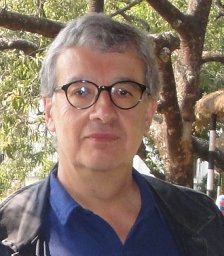 Marius Réglier合作论文数Laboratoire de Cristallochimie et Laboratoire de Bioinorganique Structurale, Université Paul Cézanne Aix-Marseille III8
 Björn Åkermark合作论文数Department of Organic Chemistry, Stockholm University5
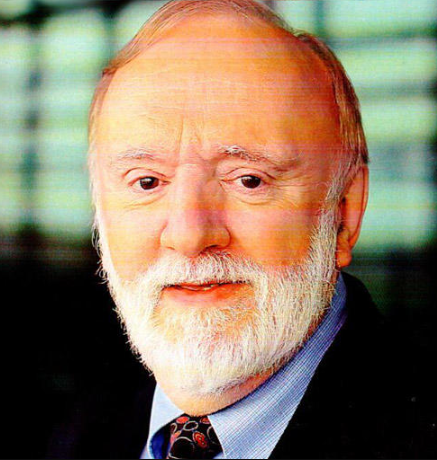 Jean M. J. Fréchet合作论文数Department of Chemical and Biomolecular Engineering, College of Chemistry, University of California, Berkeley;King Abdullah University of Science and Technology3
 Elisabet Duñach合作论文数3
 Craig Hawker合作论文数University of Queensland;California NanoSystems Institute, University of California, Santa Barbara;Materials and Research Laboratory, University of California, Santa Barbara3Tobias Rein合作论文数3Fanny Grau合作论文数3
 Carmen Nájera合作论文数Department of Organic Chemistry, Faculty of Sciences, University of Alicante3Roland Furstoss合作论文数3Sverker Hansson合作论文数3Frédéric Chauvet合作论文数2D Benoit合作论文数2
 Rafael Chinchilla合作论文数Departamento de Quı́mica Orgánica, Universidad de Alicante2Esfandiar Rafii合作论文数2
 Jan-Erling Bäckvall合作论文数Department of Organic Chemistry, Stockholm University2Richard Laï合作论文数2Gerrit Klaerner合作论文数2Anton W. Bosman合作论文数2J. Lacrampe合作论文数2J. VAGBERG合作论文数1F. CHAUVET合作论文数1M. Ranger合作论文数1
 Benjamin Dassonneville合作论文数1Thierry Soto合作论文数1Jean-Claude Daran合作论文数1Miguel Yus合作论文数1H Kolshorn合作论文数1
 Livia Giordano合作论文数Istituto Nazionale per la Fisica della Materia, Università di Milano-Bicocca1
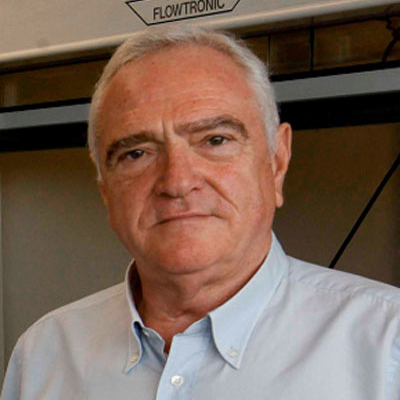 Miguel A. Yus Astiz合作论文数Department of Organic Chemistry, Faculty of Science, Institute of Organic Synthesis, University of Alicante1
 Jean Michel Brunel合作论文数Faculté de Pharmacie, Aix-Marseille Université1
 Giuliano Giambastiani合作论文数Centro CNR per la Struttura e la Reattività degli Eterocicli e loro Applicazioni, Universita di Firenze1Bernard Waegell合作论文数1Wolfgang Kraus合作论文数1G. Gil合作论文数1Jean-Louis Gras合作论文数1Laurent Bousquet合作论文数TIMA Laboratory, Grenoble, France1Migeul Yus合作论文数1Alphonse Tenaglia合作论文数1Anaïs Zaragori-Benedetti合作论文数1A. Mazon合作论文数1Rahim Tadayoni合作论文数1Kenneth L. Granberg合作论文数1Jan E. Baeckvall合作论文数DEPT ORGAN CHEM, UNIV UPPSALA1
 Eva Harth合作论文数Dept Chem, Vanderbilt Univ1Isabelle Favier合作论文数1Robert Vestberg合作论文数Royal Institute of Technology1




