We present results for the inclusive semileptonic D_s → X_s ℓ decay rate from lattice QCD. Chiral and continuum extrapolations are performed using gauge ensembles generated with 2+1 flavours of Möbius domain-wall fermions. Systematic errors are fully addressed including those from the integral over all possible final states. Our results are in agreement with currently available experimental data, with an error at the few-percent level.
We discuss the calculation of the inclusive semileptonic decay for the process B_s → X_c l ν_l using lattice QCD. This calculation could be decisive in understanding the long-standing tension between inclusive and exclusive determinations of the CKM matrix element, |V_cb|. In this talk, we investigate the main sources of systematic uncertainty in these decays, including the impact of Jacobi smearing at the source and sink, variations in source-sink separation, and the intrinsic uncertainties of the inclusive reconstruction method itself. In addition, we explain how we can restrict the reconstruction of the inclusive decay rate to just the excited-state contributions. This is achieved by treating the ground-state contributions as an exclusive decay with well-controlled conventional techniques. Systematic effects from the reconstruction then only affect excited-state contributions. Where these are sub-dominant, a suppression of systematic effects is expected. We show results based on Chebyshev reconstruction, which are part of a larger effort towards a first phenomenologically relevant computation of the inclusive decay rate in the continuum and infinite-volume limits.
We report the recent progress from our group in extracting observables of both inclusive and exclusive semileptonic heavy-meson decays directly from lattice QCD four-point correlators. On the inclusive side, we illustrate how to estimate the systematic uncertainties from omitted higher-order terms and non-zero smearing of the kernel approximation, building on two important features of the Chebyshev expansion. On the exclusive side, we perform BCL parameterizations of the pseudoscalar to pseudoscalar form factors and compare the fitted coefficients with those from earlier results by HPQCD. We also perform a HQET-based parameterization of the P-wave form factors to shed new light on the 1/2-vs-3/2 puzzle. This work constitutes a step toward a unified lattice treatment of inclusive and exclusive semileptonic decays, relevant for the Vcb puzzle. In this study, we use lattice ensembles from the RBC/UKQCD collaboration for numerical investigations. Future developments from our group will focus on the control of other systematic effects for inclusive decays and investigations of other techniques with reduced statistical errors to extract exclusive contributions from lattice four-point correlators.
We present a combined angular analysis within and beyond the Standard Model (SM) of experimental measurements for the B → D^*ℓ_ℓ angular coefficients provided by the Belle collaboration, together with lattice-calculated hadronic form-factor data from the HPQCD, JLQCD, and FNAL/MILC collaborations. We focus on determining the CKM matrix element |V_cb| and constraining a set of Wilson coefficients associated with new physics (NP) mediated by scalar and tensor currents. SM predictions for the angular coefficients are obtained using form-factor parameterisations based on the Boyd-Grinstein-Lebed (BGL) ansatz, with unitarity constraints imposed as Bayesian priors. Experimental and theoretical data are analysed jointly by considering the cases ℓ = e, μ separately and comparing with the massless approximation. For the latter, we determine |V_cb| = 0.03997(71), with no resolution of the exclusive-inclusive puzzle. Using the full expressions for the angular coefficients in the presence of scalar, vector, and tensor currents, the corresponding Wilson coefficients are constrained through a joint Bayesian fit to lattice and experimental data. By including the renormalisation group evolution of the Wilson coefficients in the SM effective field theory (SMEFT), these constraints translate into bounds on the effective scale of potential heavy NP at the TeV scale. We find, at the 68% confidence level, that NP mediated by a scalar leptoquark and a vector leptoquark/colourless scalar boson are excluded at the effective scales 1.0 and 2.5 TeV, respectively.
In this EPJ-Special Topics issue, we collect lecture notes from a summer school held at CERN in 2024. We provide a brief motivation for the selected topics and the format of the school as well as a short summary of each of the four lecture courses. The topics that were covered are “Dispersive Methods” (by Gilberto Colangelo), “Inverse problems” (by Luigi Del Debbio), “Quantum Computing” (by Zohreh Davoudi), and “Resurgence” (by Gerald Dunne).
The kaon physics programme, long heralded as a cutting-edge frontier by the European Strategy for Particle Physics, continues to stand at the intersection of discovery and innovation in high-energy physics (HEP). With its unparalleled capacity to explore new physics at the multi-TeV scale, kaon research is poised to unveil phenomena that could reshape our understanding of the Universe. This document highlights the compelling physics case, with emphasis on exciting new opportunities for advancing kaon physics not only in Europe but also on a global stage. As an important player in the future of HEP, the kaon programme promises to drive transformative breakthroughs, inviting exploration at the forefront of scientific discovery.
We present an analysis of the exclusive semileptonic decay B→ D^*ℓν̅_ℓ based on the Belle and Belle II data made public in 2023, combined with recent lattice-QCD calculations of the hadronic transition form factors by FNAL/MILC, HPQCD and JLQCD. We also consider a new combination of the Belle and Belle II data sets by HFLAV. The analysis is based on the form-factor parameterisation by Boyd–Grinstein–Lebed (BGL), using Bayesian and frequentist statistics, for which we discuss novel strategies. We compare the results of an analysis where the BGL parameterisation is fit only to the lattice data with those from a simultaneous fit to lattice and experiment, and discuss the resulting predictions for the CKM-matrix element |V_cb| , as well as other phenomenological observables, such as R^τ /μ(D^*) . We find tensions when comparing analyses based on different combinations of experimental or theoretical input, requiring the introduction of a systematic error for some of our results.
Abstract We present an analysis of the exclusive semileptonic decay $$B\rightarrow D^*\ell \bar{\nu }_\ell $$ B → D ∗ ℓ ν ¯ ℓ based on the Belle and Belle II data made public in 2023, combined with recent lattice-QCD calculations of the hadronic transition form factors by FNAL/MILC, HPQCD and JLQCD. We also consider a new combination of the Belle and Belle II data sets by HFLAV. The analysis is based on the form-factor parameterisation by Boyd–Grinstein–Lebed (BGL), using Bayesian and frequentist statistics, for which we discuss novel strategies. We compare the results of an analysis where the BGL parameterisation is fit only to the lattice data with those from a simultaneous fit to lattice and experiment, and discuss the resulting predictions for the CKM-matrix element $${|V_{cb}|}$$ | V cb | , as well as other phenomenological observables, such as $$R^{\tau /\mu }(D^*)$$ R τ / μ ( D ∗ ) . We find tensions when comparing analyses based on different combinations of experimental or theoretical input, requiring the introduction of a systematic error for some of our results.
We present a pilot study on extracting the form factors of the semileptonic decay of a B_s meson to the P-wave D_s^** states from B_s four-point correlators. With their inclusive nature, four-point correlators include contributions from all possible final states. From the extracted P-wave form factors, we obtain numerical results for the corresponding Isgur-Wise form factors. The results suggest significant contributions from radial excitations to the Uraltsev sum rule at zero-recoil. In this pilot study, a coarse lattice of 24^3× 64 with lattice spacing of 0.11 fm is used for the analysis.
Lattice QCD calculations of inclusive semileptonic decay rates involve new types of systematic effects, such as truncation errors in the estimation of energy integrals, or finite-volume effects for multibody final states. We investigate them for the lattice data of Ds -> Xsl nu decays, obtained using M & ouml;bius domain-wall fermions. Separating the ground-state and excited-state contributions results in better control over these systematic effects. With the Chebyshev polynomial approximation, the truncation error is under control, while the finite-volume effects are estimated using a model to describe two-body final states.
Lattice QCD calculations of inclusive semileptonic decay rates involve new types of systematic effects, such as truncation errors in the estimation of energy integrals, or finite-volume effects for multi-body final states. We investigate them for the lattice data of D_s → X_s ℓν decays, obtained using Möbius domain-wall fermions. Separating the ground-state and excited-state contributions results in better control over these systematic effects. With the Chebyshev polynomial approximation, the truncation error is under control, while the finite-volume effects are estimated using a model to describe two-body final states.
With the development of lattice QCD in recent years, a determination of decay rates for inclusive semileptonic decays from lattice correlators now seems viable. We report on the calculation of the inclusive semileptonic decay of the D_s meson on the lattice. We simulate the D_s → X_sℓν_ℓ process with Möbius domain-wall charm and strange quarks, whose masses were approximately tuned to the physical values. We cover the whole kinematical region. We present a general overview on how the inclusive decays are treated on the lattice and discuss ongoing challenges, such as the estimation of systematic errors and future prospects of the project.
We present a study on the nonperturbative calculation of observables for inclusive semileptonic decays of $B_{(s)}$ mesons using lattice QCD. We focus on the comparison of two different methods to analyse the lattice data of Euclidean correlation functions, specifically Chebyshev and Backus-Gilbert approaches. This type of computation may eventually provide new insight into the long-standing tension between the inclusive and exclusive determinations of the Cabibbo-Kobayashi-Maskawa (CKM) matrix elements $|V_{cb}|$ and $|V_{ub}|$. We report the results from a pilot lattice computation for the decay $B_s \rightarrow X_c \, l\nu_l$, where the valence quark masses are approximately tuned to their physical values using the relativistic-heavy quark action for the $b$ quark and the domain-wall formalism for the other valence quarks. We address the computation of the total decay rate as well as leptonic and hadronic moments, discussing similarities and differences between the two analysis techniques.
We report on the calculation of the inclusive semileptonic decay of the D_s meson on the lattice. We simulate the D_s → X_sℓν_ℓ process with Möbius domain-wall charm and strange quarks, whose masses are approximately tuned to their physical values. Our simulations cover the whole kinematical region. The focus of this work is to present updates on our strategies towards estimating the systematic uncertainties in the determination of the inclusive decay rate. We specifically focus on the systematic errors due to the choice of our approximation strategy and finite-volume effects.
Kaon physics is at a turning point – while the rare-kaon experiments NA62 and KOTO are in full swing, the end of their lifetime is approaching and the future experimental landscape needs to be defined. With HIKE, KOTO-II and LHCb-Phase-II on the table and under scrutiny, it is a very good moment in time to take stock and contemplate about the opportunities these experiments and theoretical developments provide for particle physics in the coming decade and beyond. This paper provides a compact summary of talks and discussions from the Kaons@CERN 2023 workshop, held in September 2023 at CERN.
We report on the calculation of the inclusive semileptonic decay of the $D_s$ meson on the lattice. We simulate the $D_s \rightarrow X_s\ell\nu_\ell$ process with M\"obius domain-wall charm and strange quarks, whose masses were approximately tuned to the physical values. We cover the whole kinematical region. The focus of this work is on the systematic error due to finite-volume effects. We construct a model of two-body final states to describe the data on a finite volume lattice of $L \simeq 0.055 \, \text{fm}$ to investigate the extrapolation to the infinite-volume limit.
We compute the standard Euclidean window of the hadronic vacuum polarization using multiple independent blinded analyses. We improve the continuum and infinite-volume extrapolations of the dominant quark-connected light-quark isospin-symmetric contribution and address additional sub-leading systematic effects from sea-charm quarks and residual chiral-symmetry breaking from first principles. We find $a_\mu^{\rm W} = 235.56(65)(50) \times 10^{-10}$, which is in $3.8\sigma$ tension with the recently published dispersive result of Colangelo et al., $a_\mu^{\rm W} = 229.4(1.4) \times 10^{-10}$, and in agreement with other recent lattice determinations. We also provide a result for the standard short-distance window. The results reported here are unchanged compared to our presentation at the Edinburgh workshop of the g-2 Theory Initiative in 2022.
We discuss our recently proposed model-independent framework for fitting hadronic form-factor data, which are often only available at discrete kinematical points, using parameterisations based on unitarity and analyticity. The accompanying dispersive bound on the form factors (unitarity constraint) is used to regulate the ill-posed fitting problem and allow model-independent predictions over the entire physical range. Kinematical constraints, for example for the vector and scalar form factors in semileptonic meson decays, can be imposed exactly. The core formulae are straight-forward to implement with standard math libraries. We demonstrate the method for the exclusive semileptonic decay B_s→ Kℓν, an example requiring one to use a generalisation of the original Boyd Grinstein Lebed (BGL) unitarity constraint. We further present a first application of the method to B → D^*ℓν decays.
Semileptonic Bs -Key decays provide an alternative b-decay channel to determine the Cabibbo-Kobayashi-Maskawa (CKM) matrix element IVubI and to obtain a R-ratio to investigate lepton-flavor -universality violations. Results for the CKM matrix element may also shed light on the discrepancies seen between analyses of inclusive or exclusive decays. We calculate the decay form factors using lattice QCD with domain-wall light quarks and a relativistic b-quark. We analyze data at three lattice spacings with unitary pion masses down to 268 MeV. Our numerical results are interpolated/extrapolated to physical quark masses and to the continuum to obtain the vector and scalar form factors f+(q2) and f0(q2) with full error budgets at q2 values spanning the range accessible in our simulations. We provide a possible explanation of tensions found between results for the form factor from different lattice collaborations. Model-and truncation-independent z-parametrization fits following a recently proposed Bayesian-inference approach extend our results to the entire allowed kinematic range. Our results can be combined with experimental measurements of Bs -Ds and Bs -K semileptonic decays to determine IVubI = 3.8(6) x 10-3. The error is currently dominated by experiment. We compute differential branching fractions and two types of R ratios, the one commonly used as well as a variant better suited to test lepton -flavor universality.
 Peter Boyle合作论文数University of Edinburgh55
 Antonin Portelli合作论文数School of Physics and Astronomy, The University of Edinburgh49
 Christopher T. Sachrajda合作论文数Department of Physics and Astronomy, University of Southampton45
 Jonathan Flynn合作论文数University of Southampton40Justus Tobias Tsang合作论文数23
 Luigi Del Debbio合作论文数Institute for Particle and Nuclear Physics, School of Physics and Astronomy, University of Edinburgh23
 Christoph Lehner合作论文数Dept Phys, Brookhaven Natl Lab21
 Michele Della Morte合作论文数Institut fur Physik21Taku Izubuchi合作论文数21Oliver Witzel合作论文数19Takashi Kaneko合作论文数19
 Shoji Hashimoto合作论文数19James M. Zanotti合作论文数School of Physics;University of Edinburgh;School of Physics, University of Edinburgh16
 Hartmut Wittig合作论文数university of mainz15
 Norman H. Christ合作论文数Department of Physics, Columbia University15Alessandro Barone合作论文数14
 Ryan C Hill合作论文数University of Colorado Denver School of Medicine, University of Colorado Denver14
 Felix Erben合作论文数School of Physics and Astronomy, The University of Edinburgh13
 Amarjit Soni合作论文数Physics Department, Brookhaven National Laboratory13Chris M. Maynard合作论文数School of Physics;University of Edinburgh;School of Physics, University of Edinburgh12R. J. Tweedie合作论文数12J Tobias Tsang合作论文数10Renwick Hudspith合作论文数9Francesco Sanfilippo合作论文数Sch Phys & Astron, Univ Southampton9T. Blum合作论文数9
 Marina Marinkovic合作论文数DES9Ryan Kellermann合作论文数8Nils Hermansson-Truedsson合作论文数8Vera Guelpers合作论文数School of Physics and Astronomy, The University of Edinburgh8Randy Lewis合作论文数8
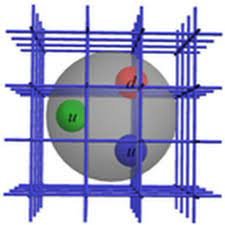 C. Kelly合作论文数School of Physics;University of Edinburgh;JZ;School of Physics, University of Edinburgh8Kim Maltman合作论文数8
 Michael Donnellan合作论文数8J. Noaki合作论文数8
 Nicolas Garron合作论文数School of Computer Science and the Environment, Liverpool Hope University;Theoretical Physics Division, School of Maths, University of Liverpool8Robert D. Mawhinney合作论文数Columbia University8
 Benjamin Jager合作论文数Swansea University8D. J. Antonio合作论文数7a soni合作论文数7F. O. hOgain合作论文数7Matteo Di Carlo合作论文数School of Physics and Astronomy, The University of Edinburgh7Chris Dawson合作论文数7
 Rainer Sommer合作论文数Humboldt-Universitat Zu Berlin7
 Xu Feng (冯旭)合作论文数Peking University7
 Chulwoo Jung合作论文数Columbia University7
 Gilberto Colangelo合作论文数Institute for Theoretical Physics, Faculty of Science, Universität Bern7B. J. Pendleton合作论文数RBC and UKQCD Collaborations7V. Gülpers合作论文数6




